Oct 10, 2026
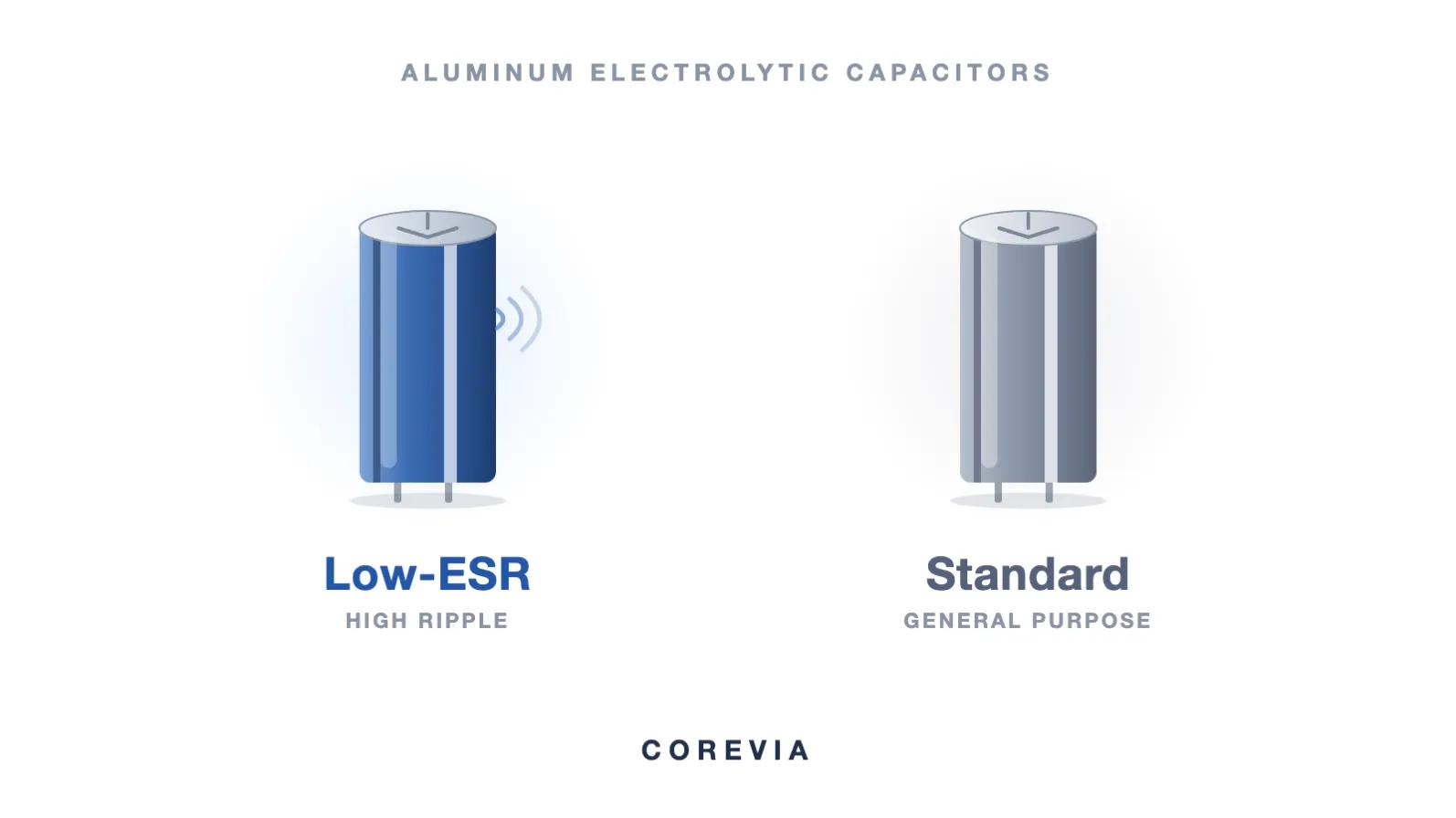
Low-ESR vs General-Purpose Capacitors: How to Choose
A general-purpose capacitor can age quickly in a high-ripple circuit. Learn when a low-ESR series is worth the cost — with ESR, ripple current and lifetime compared.
Technical Insights
Practical guidance on aluminum electrolytic capacitor selection, operating conditions, replacement and service life.
A general-purpose capacitor can age quickly in a high-ripple circuit. Learn when a low-ESR series is worth the cost — with ESR, ripple current and lifetime compared.
Learn how temperature, ripple current, ESR and cooling affect aluminum electrolytic capacitor life—and what data is needed for a realistic service-life estimate.
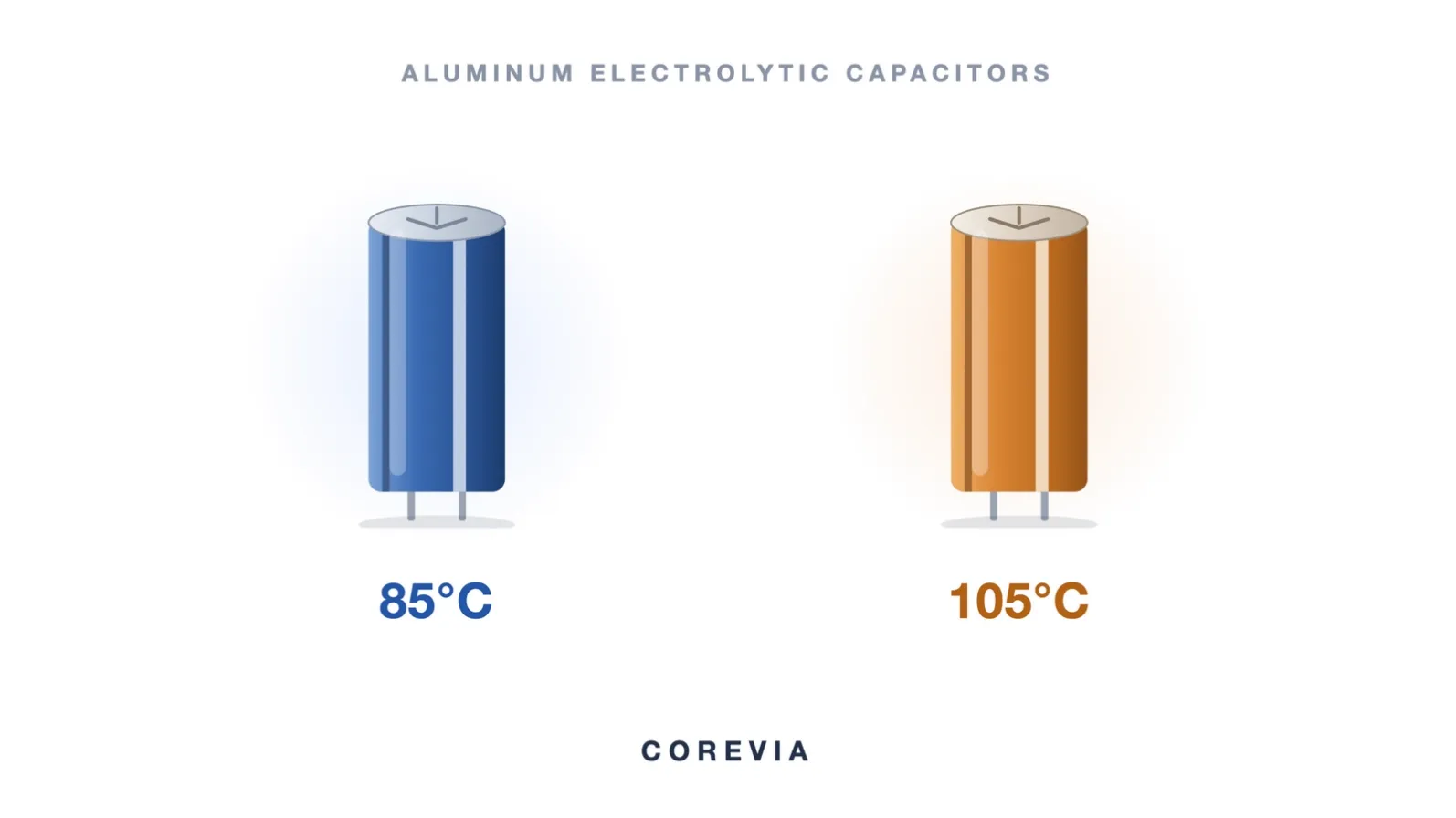
An 85°C and a 105°C capacitor can look identical on the shelf. Learn what the temperature rating really means, when the upgrade is worth it, and how it changes service life.
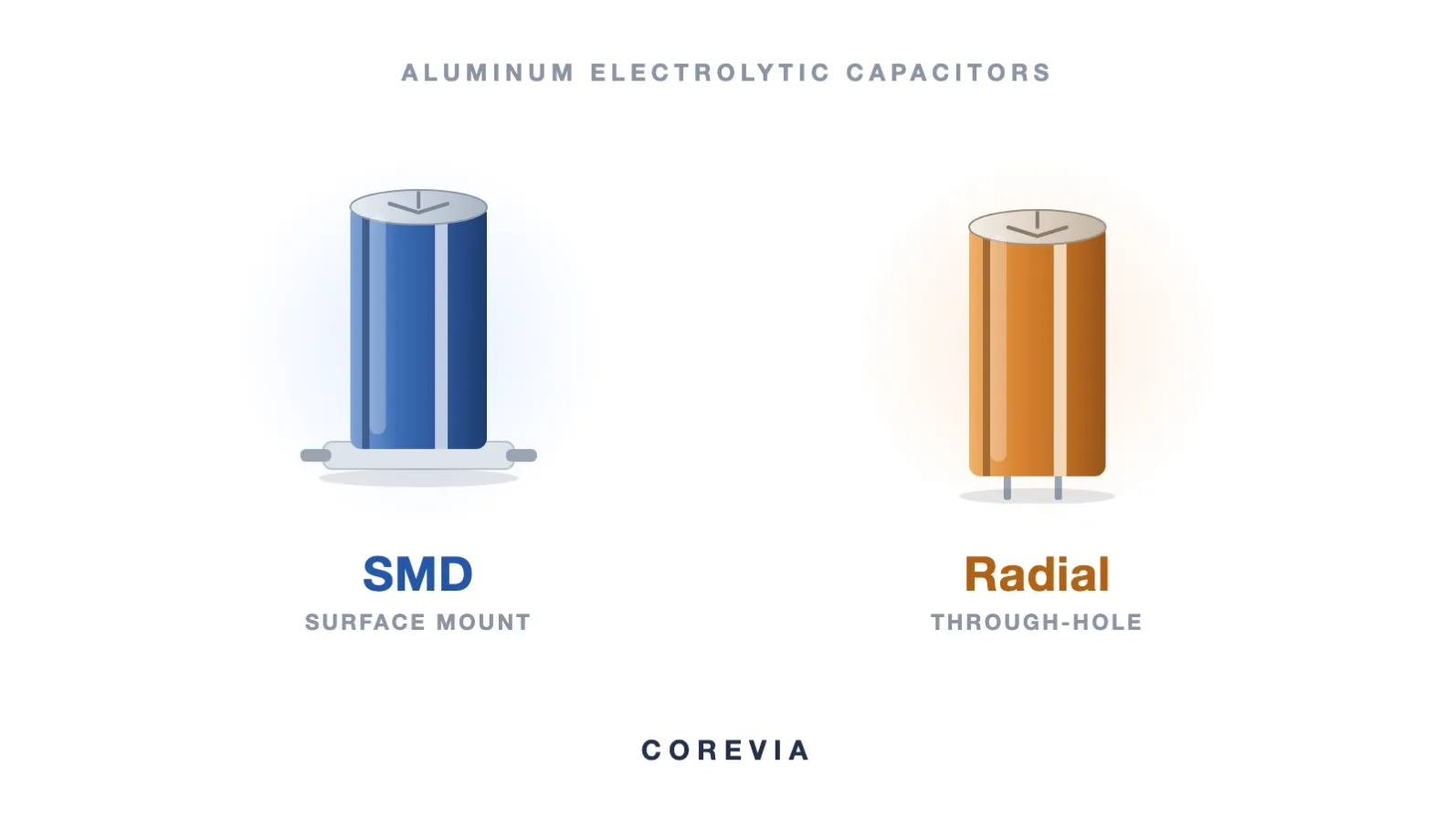
SMD and radial electrolytic capacitors can share the same µF and voltage. See how the assembly process decides — with clear ranges and a comparison table.
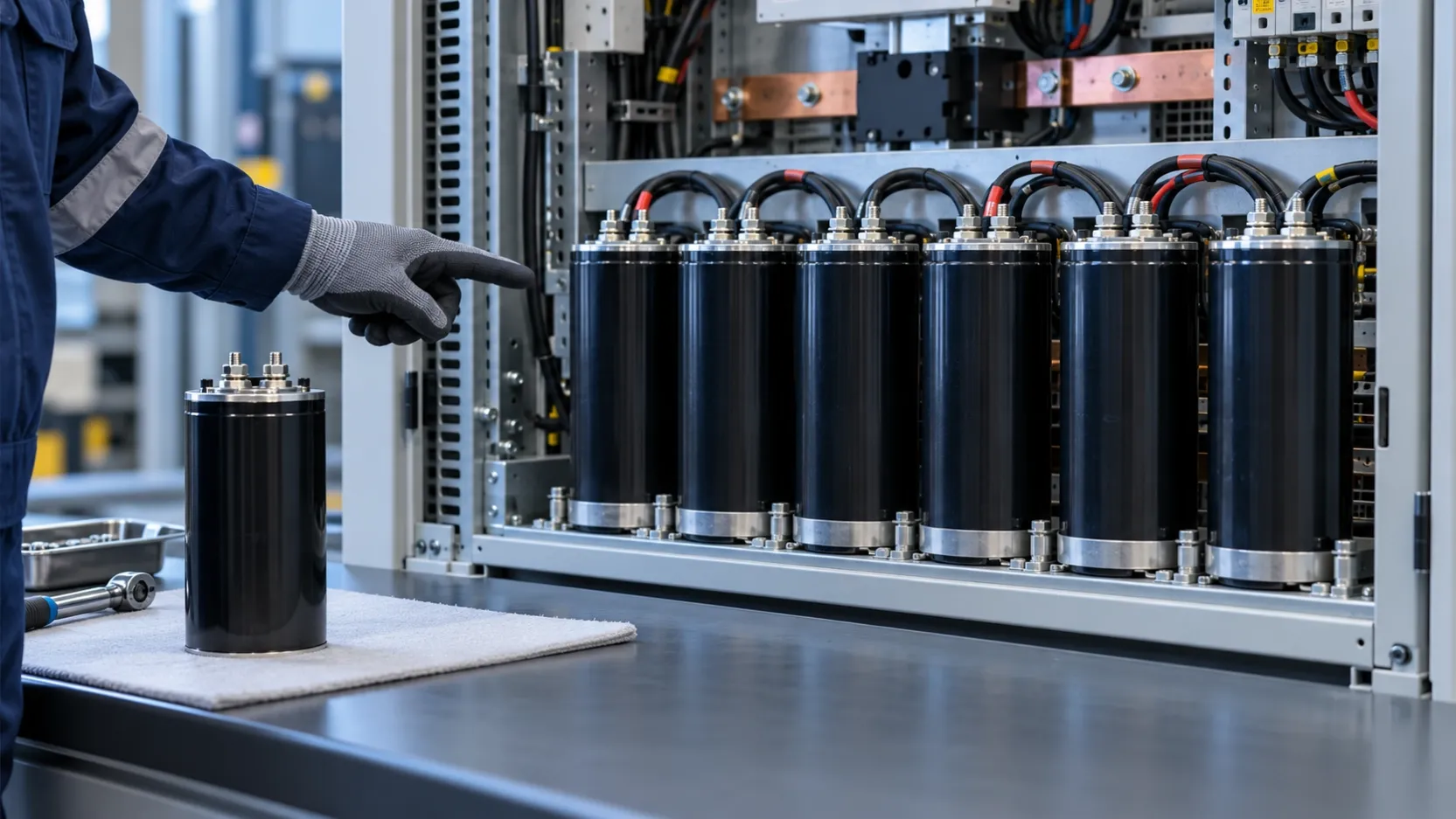
One failed capacitor in a UPS DC-link bank? Learn when a single replacement may be reasonable, when to review the whole bank, and what to check before restarting.
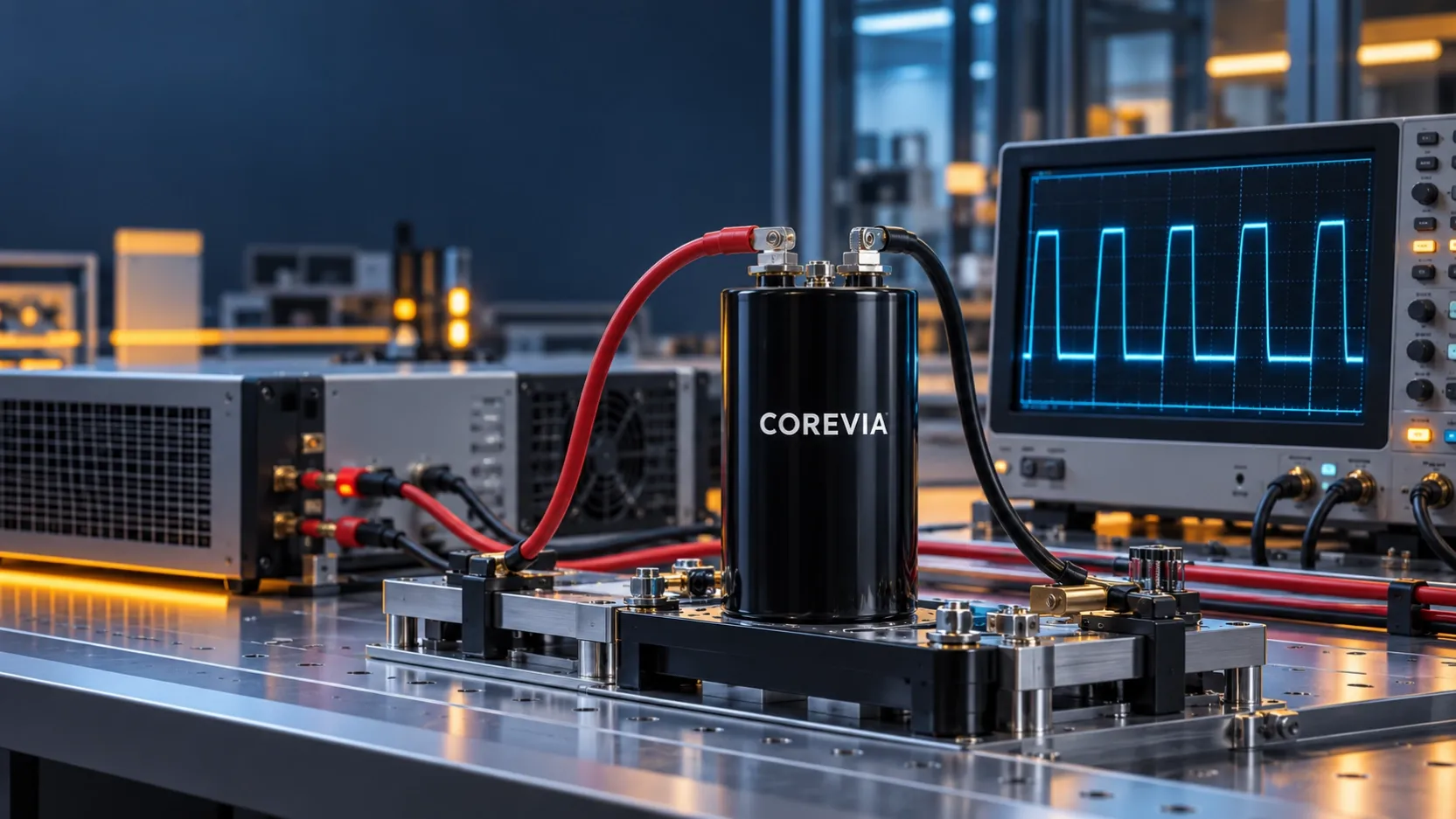
Learn why general-purpose aluminum electrolytic capacitors may not suit repeated rapid charge-discharge circuits and what operating data engineers should check.
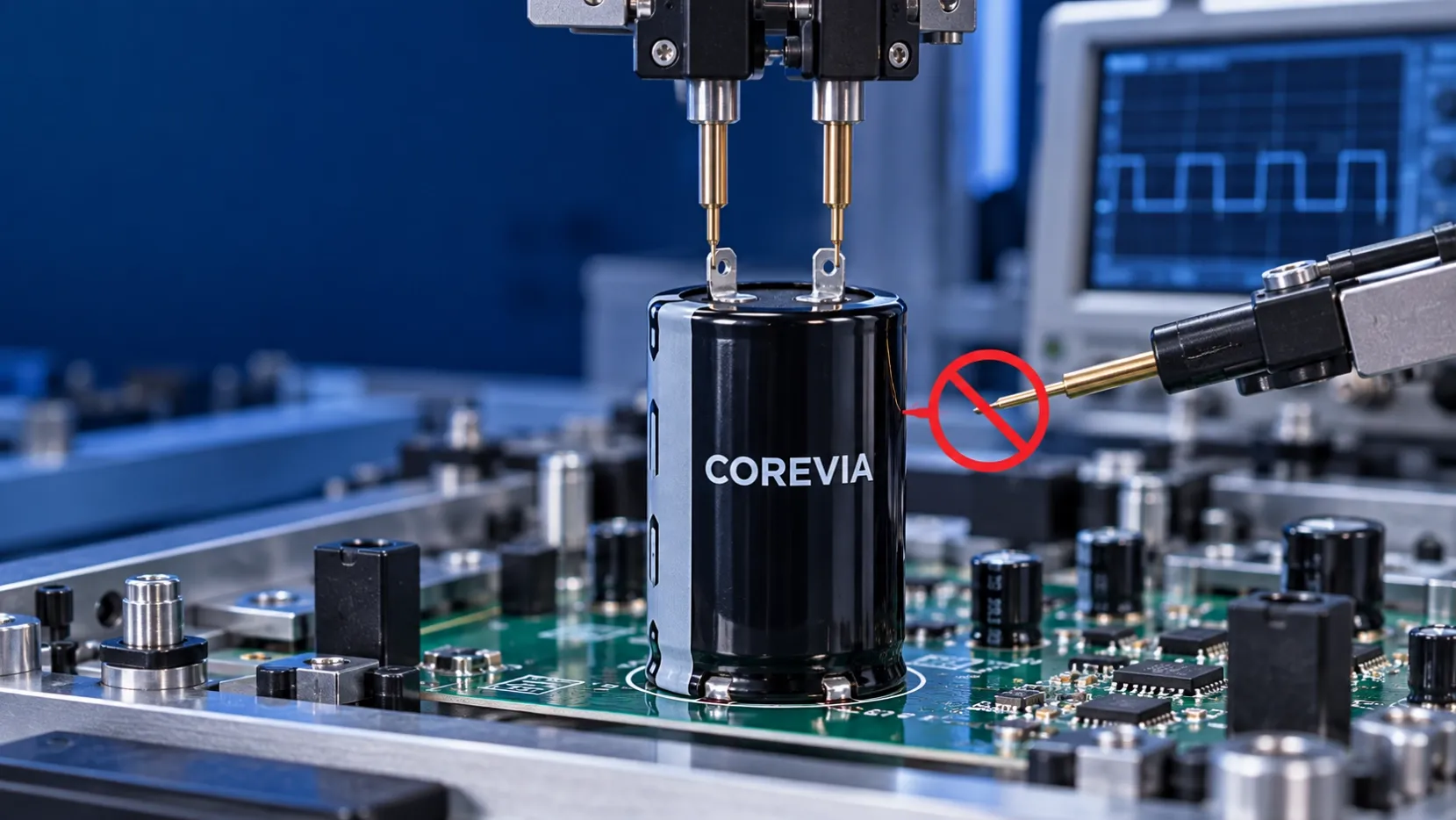
Learn why using an aluminum electrolytic capacitor can as an ICT electrode causes unstable readings and false PCB failures, and how to test correctly.
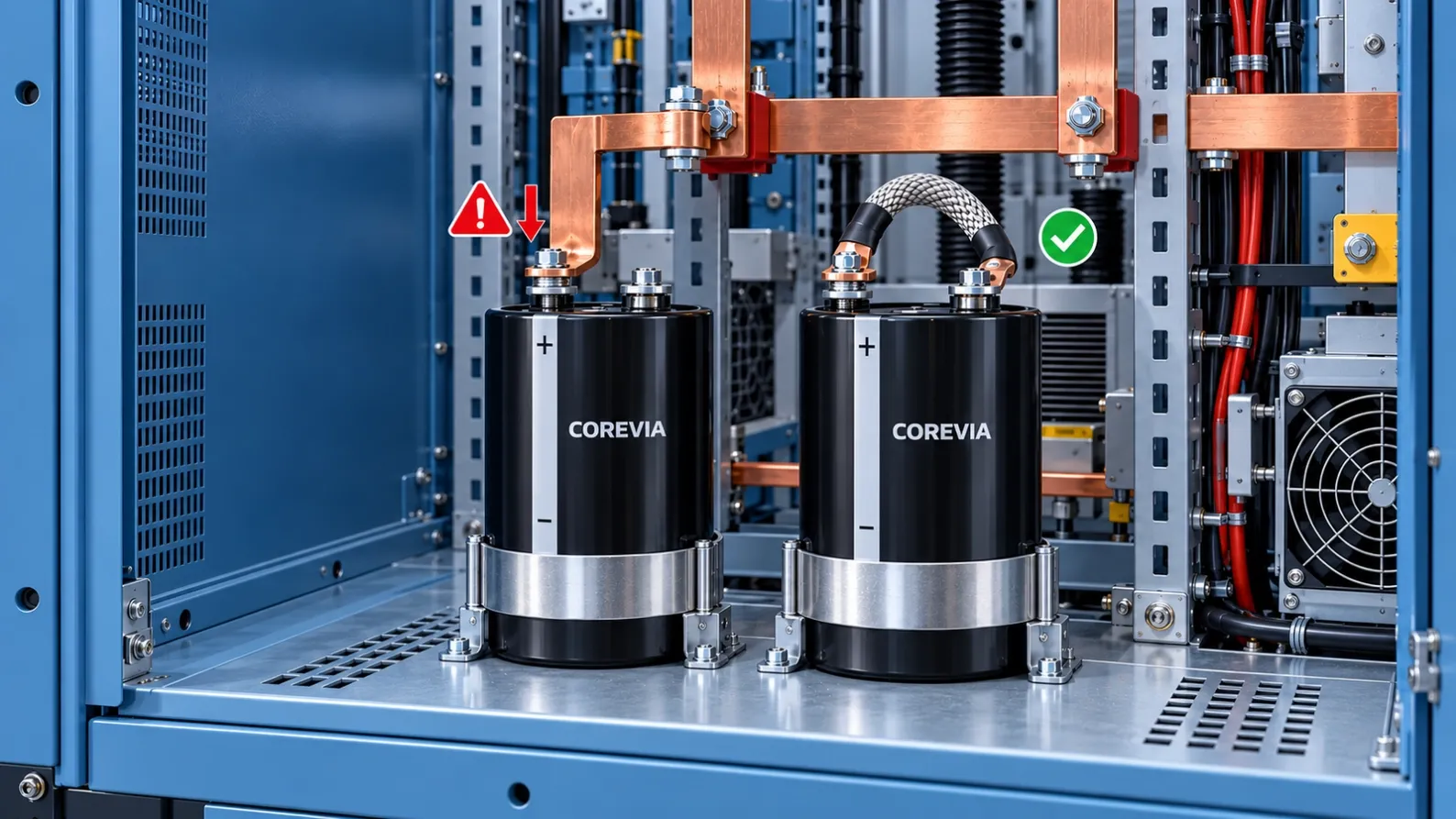
Learn how rigid busbars, heavy cables and poor alignment can stress screw-terminal aluminum electrolytic capacitors and cause unreliable connections.
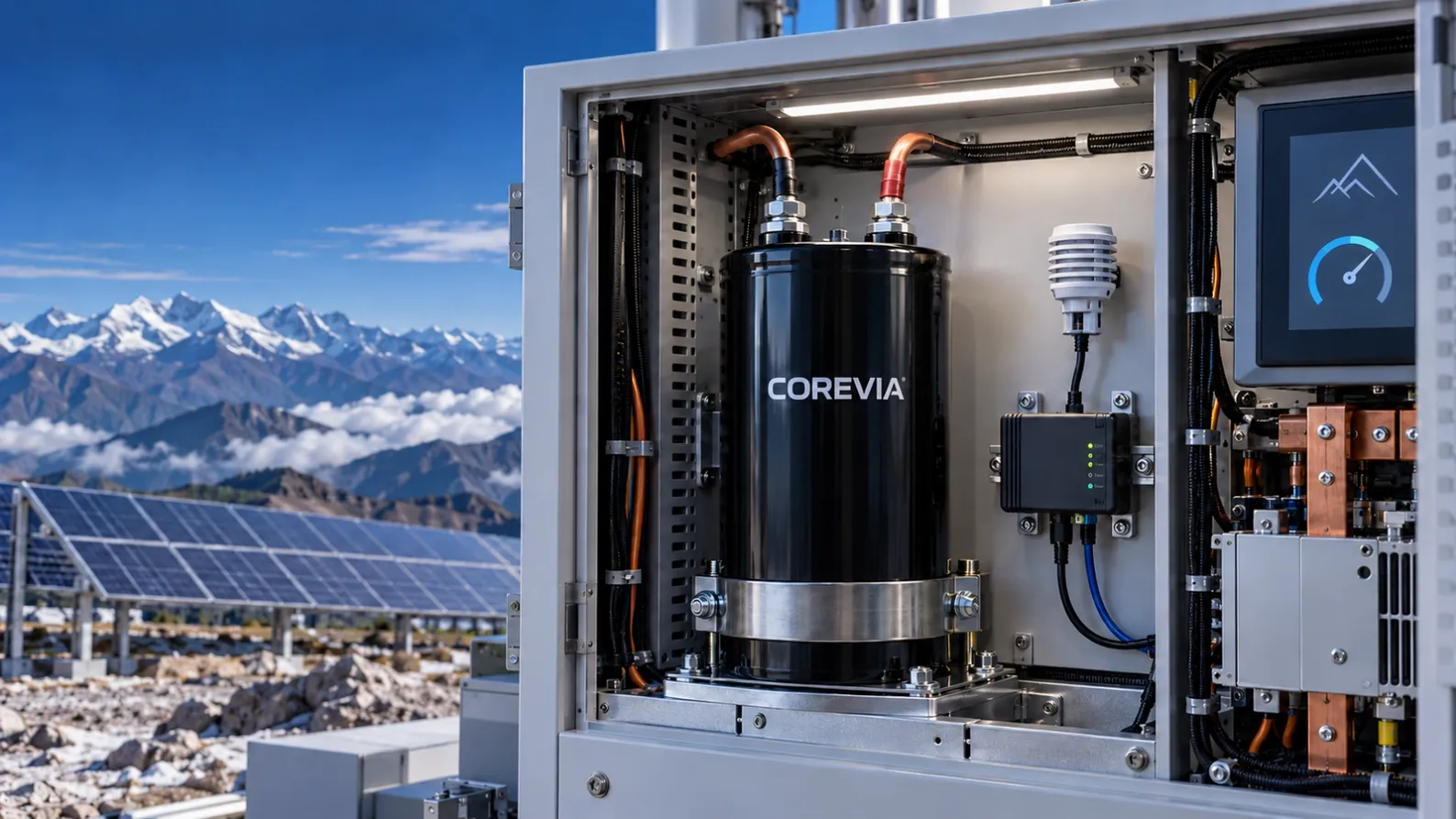
Learn what engineers should check when inverters, UPS systems and energy-storage equipment use aluminum electrolytic capacitors at high altitude.
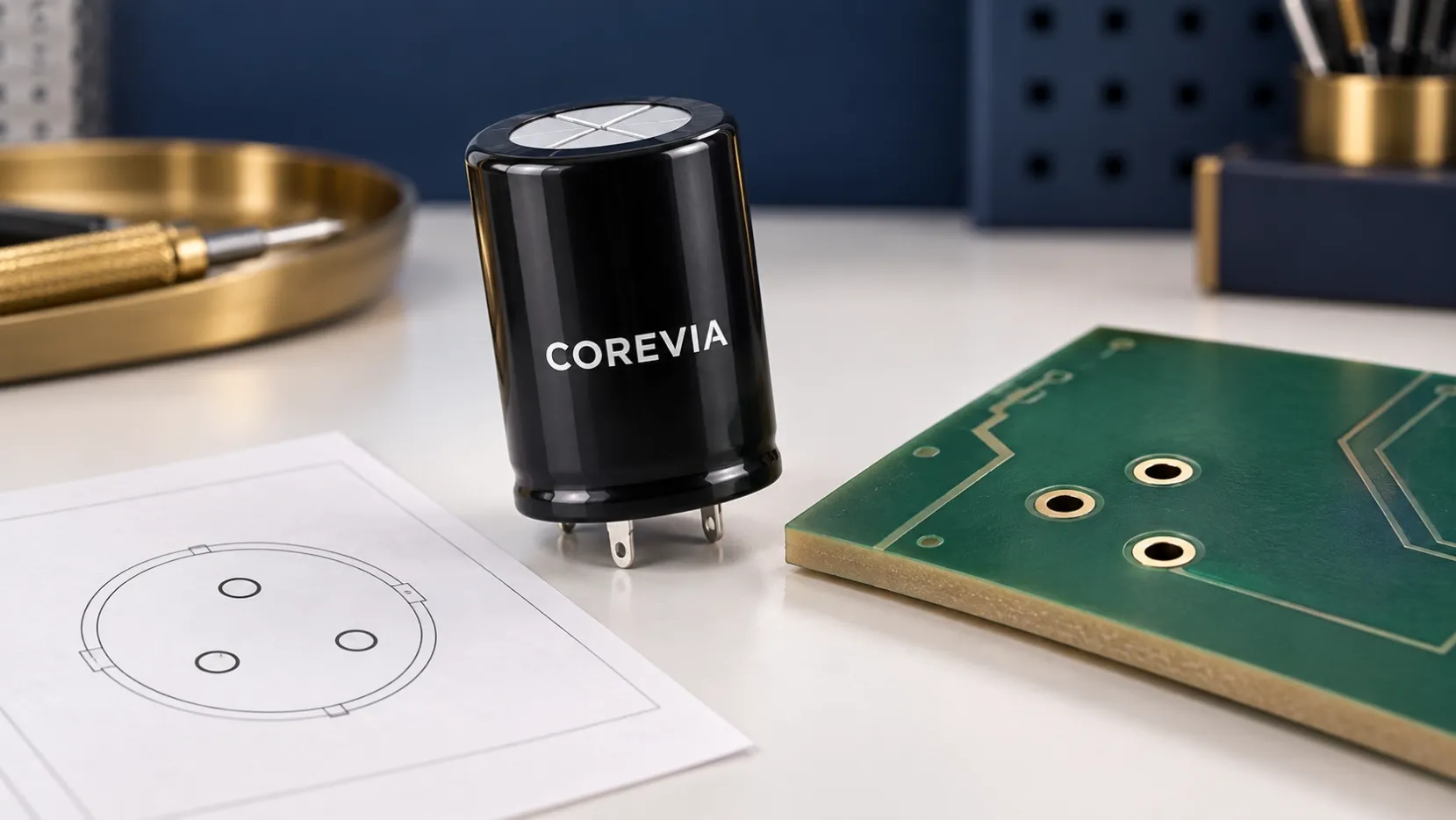
Why does a snap-in aluminum electrolytic capacitor have a third pin? Check the terminal drawing, polarity and PCB footprint before approving a part.
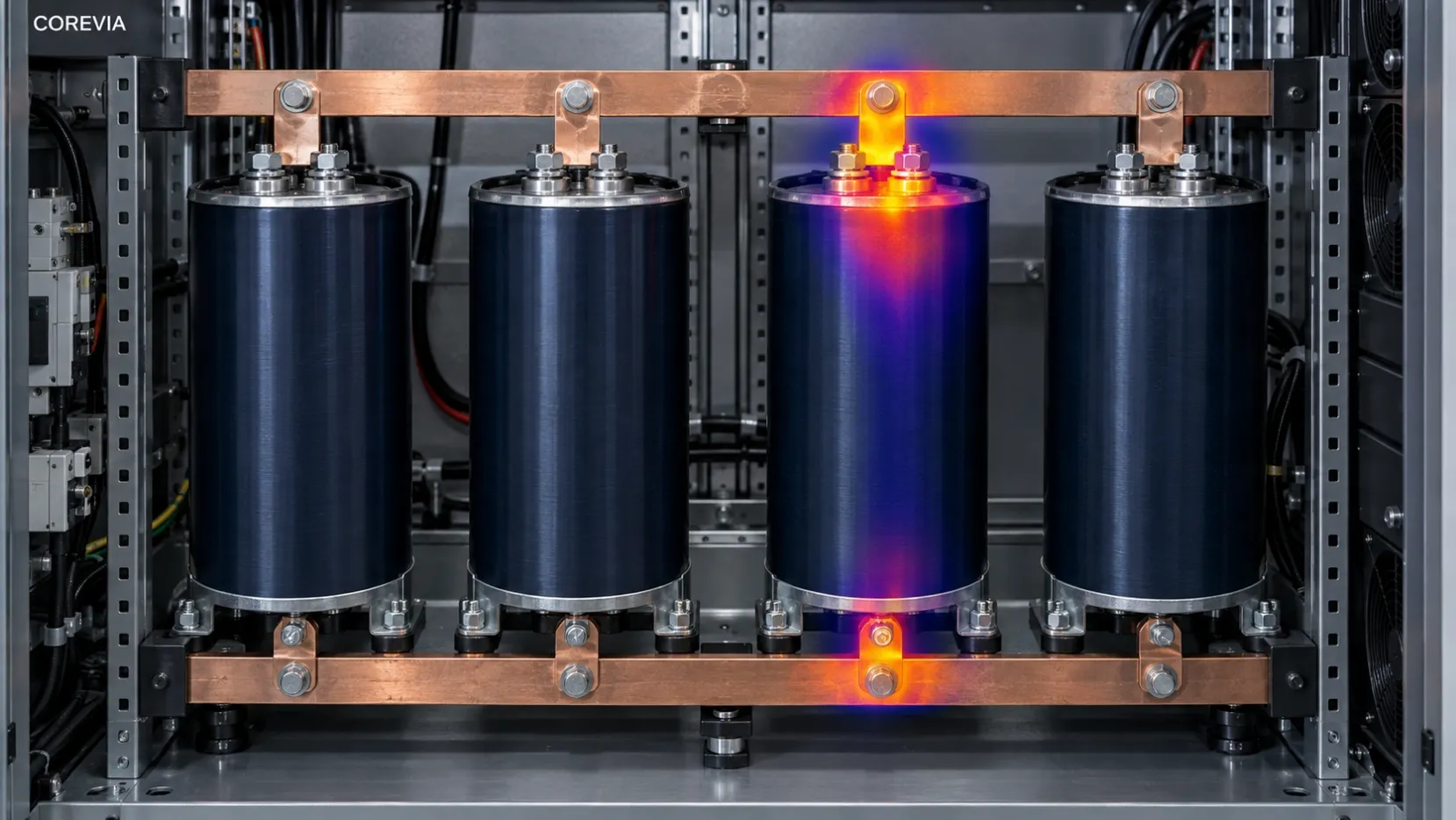
Identical capacitors do not always share current equally. Learn how busbar layout, connection resistance and mounting position can cause one capacitor to run hotter than the rest.
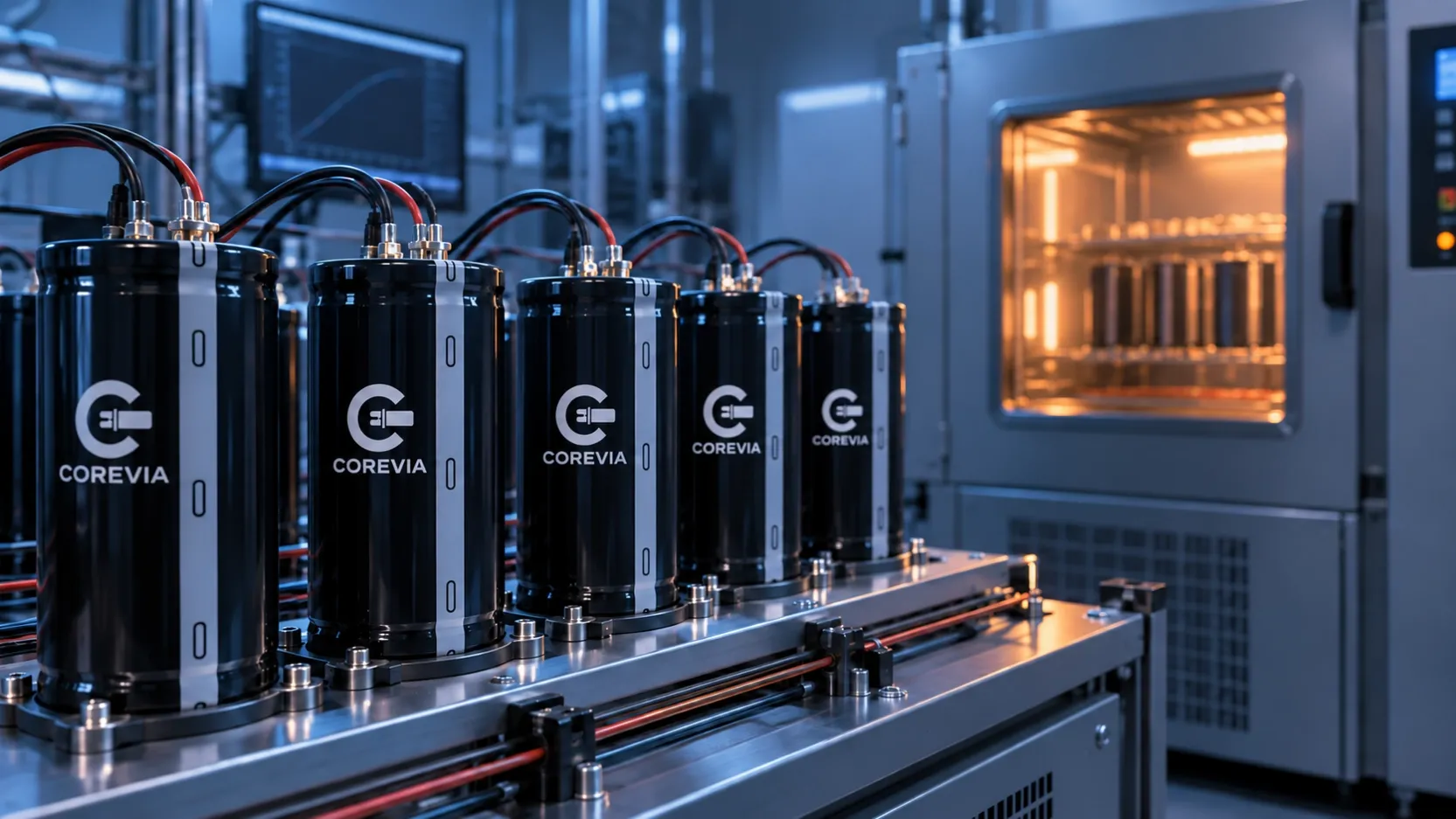
How temperature, ripple current, ESR, cooling and duty cycle affect endurance when selecting aluminum electrolytic capacitors for power electronics.
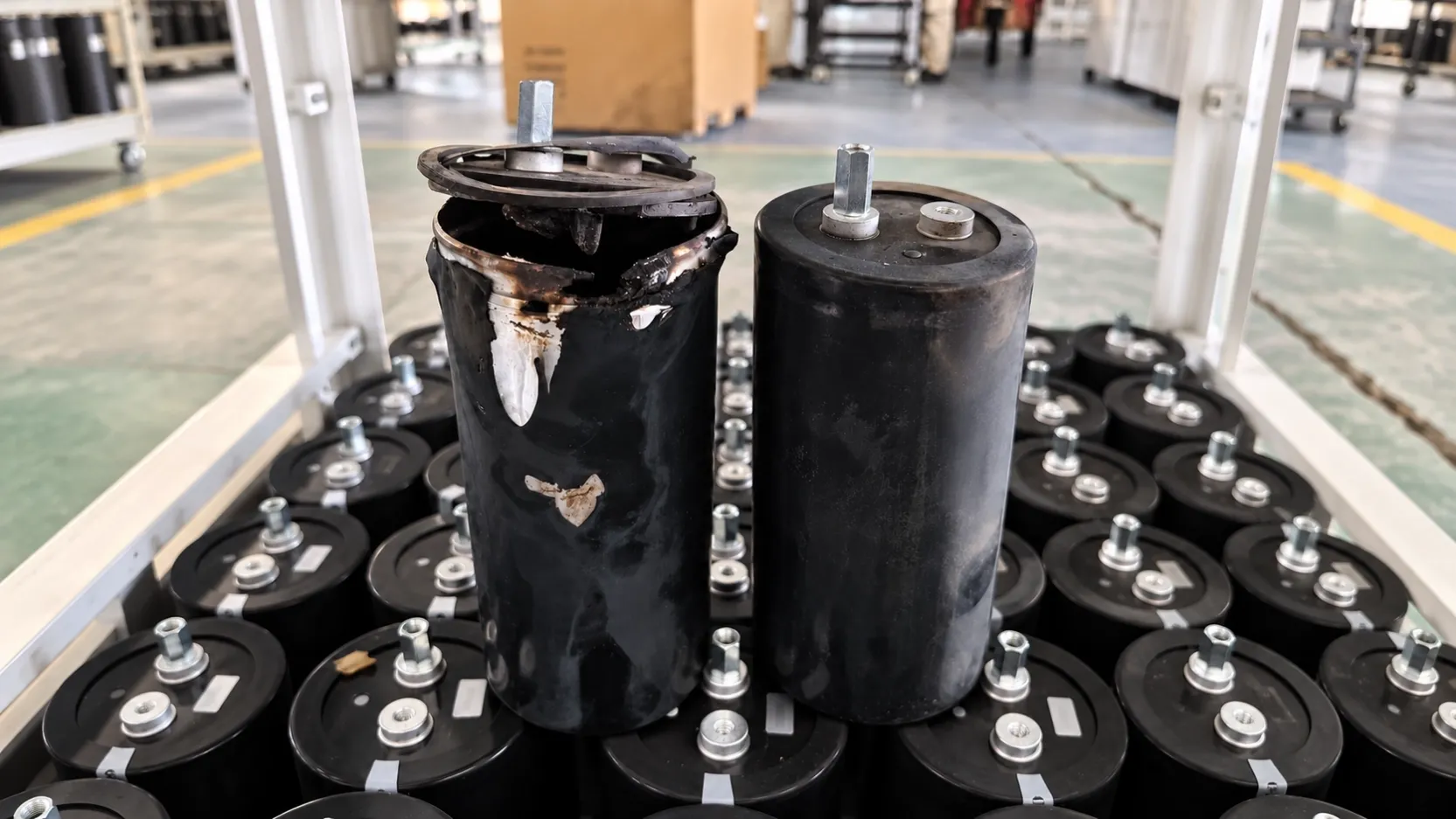
A field-based analysis of what a lifted terminal cover, scorched rim and deformed can reveal about internal pressure, electrical stress and overheating.
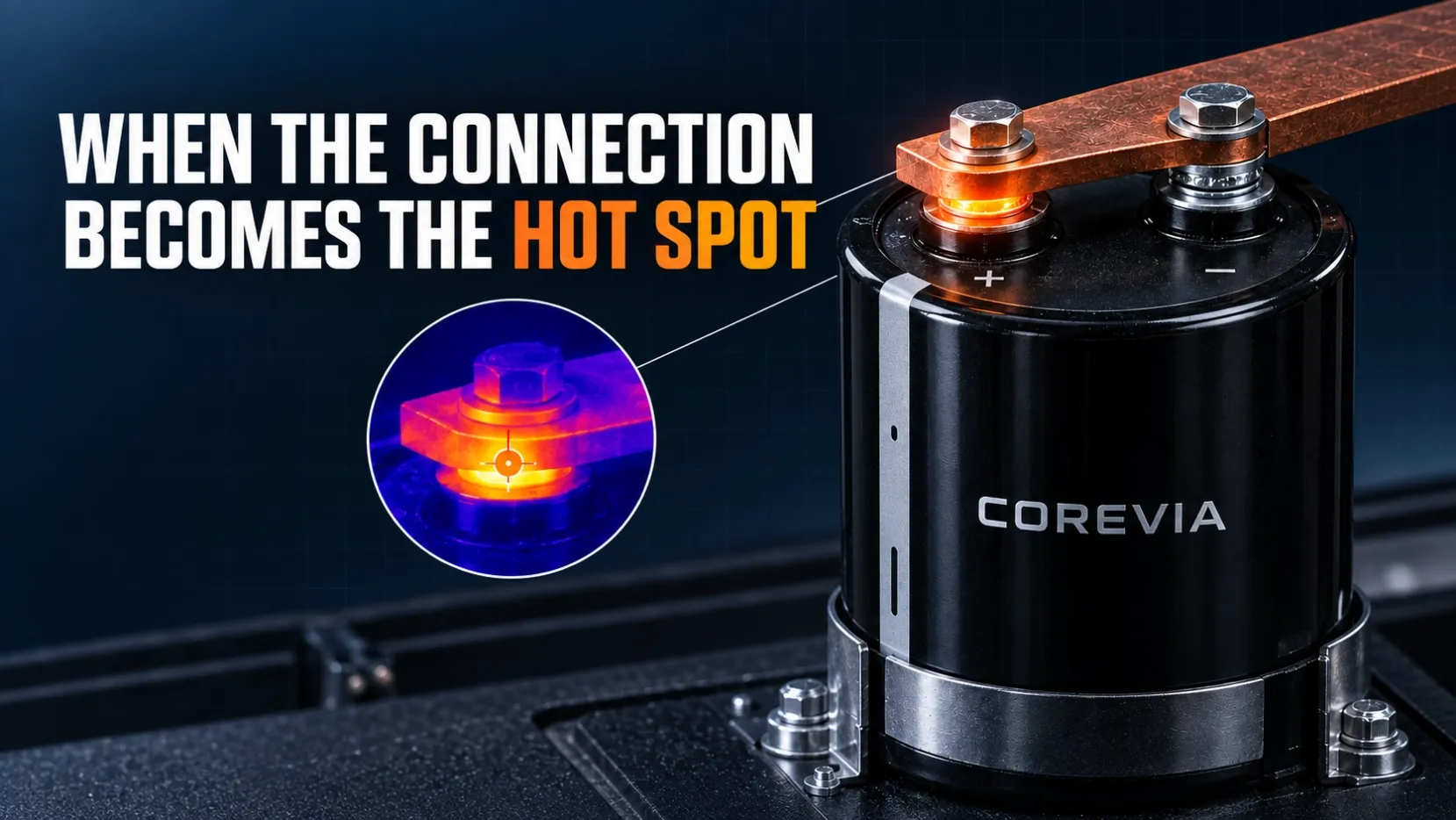
A practical guide to finding local heating at screw-terminal capacitor connections, including torque, busbar contact, vibration and thermal inspection.
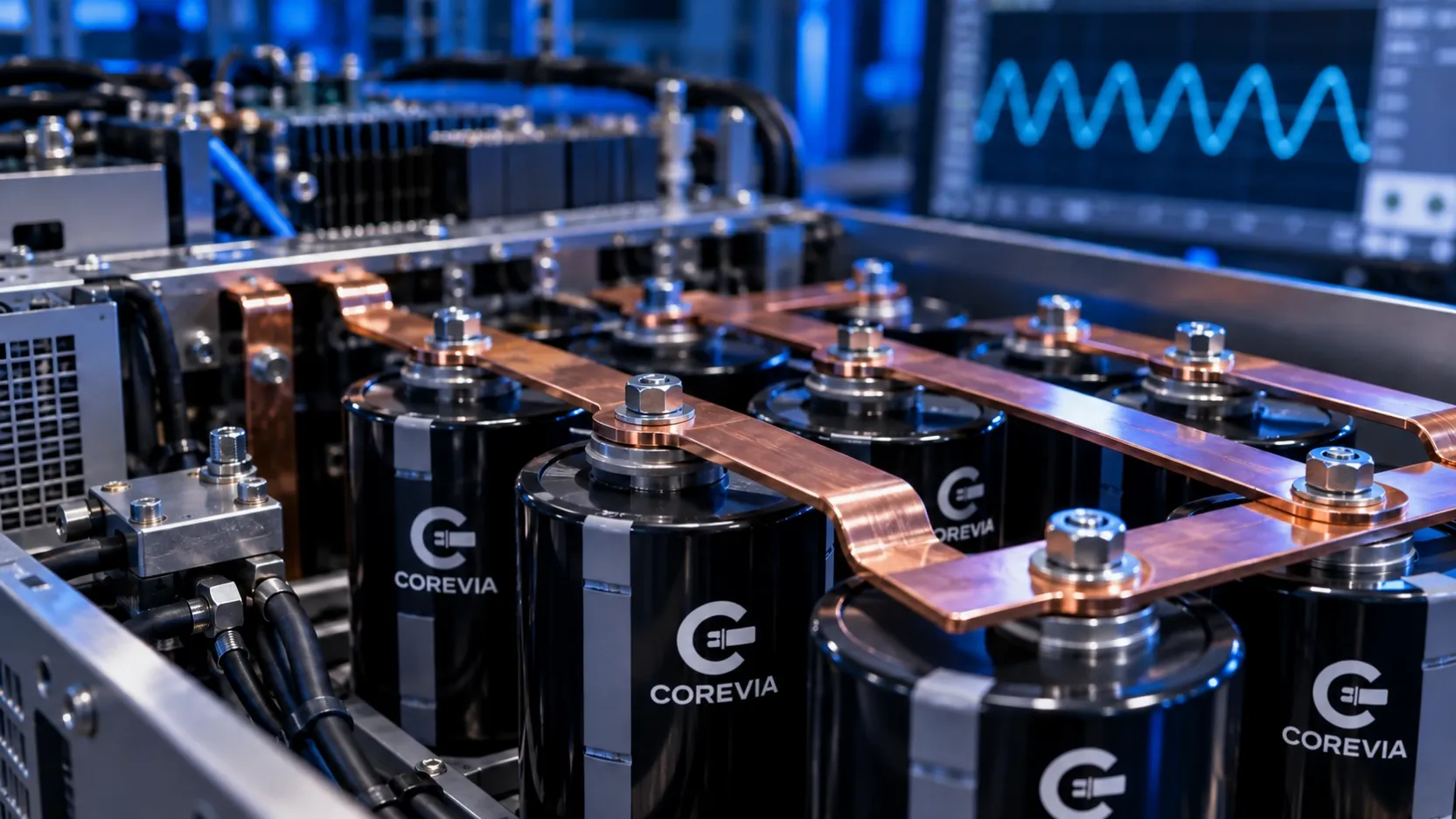
How to specify high-ripple-current aluminum electrolytic capacitors using ripple frequency, ESR, temperature, cooling, case size and endurance.
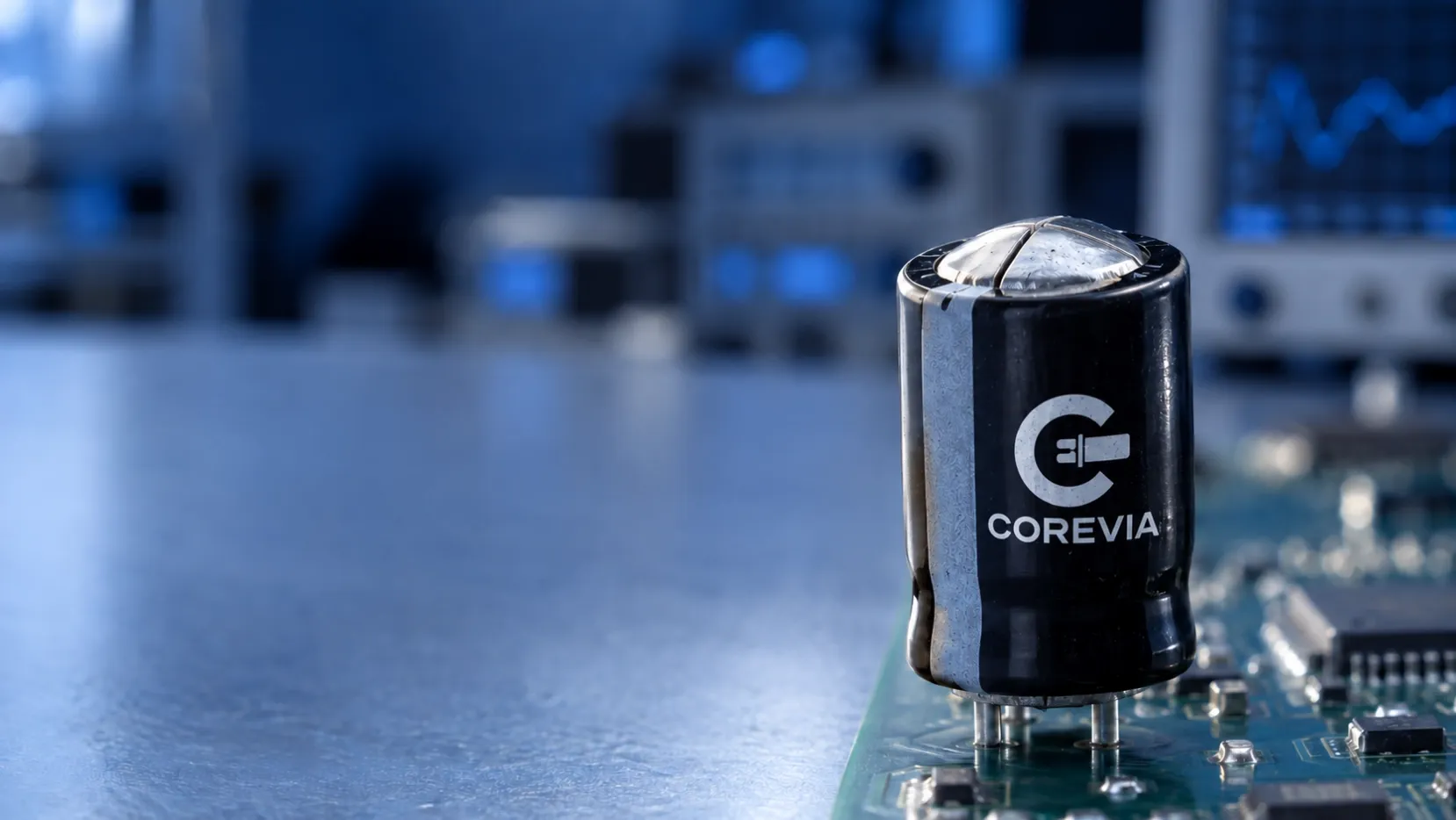
A practical guide to electrical, thermal and installation conditions that can cause aluminum electrolytic capacitor bulging or premature failure.
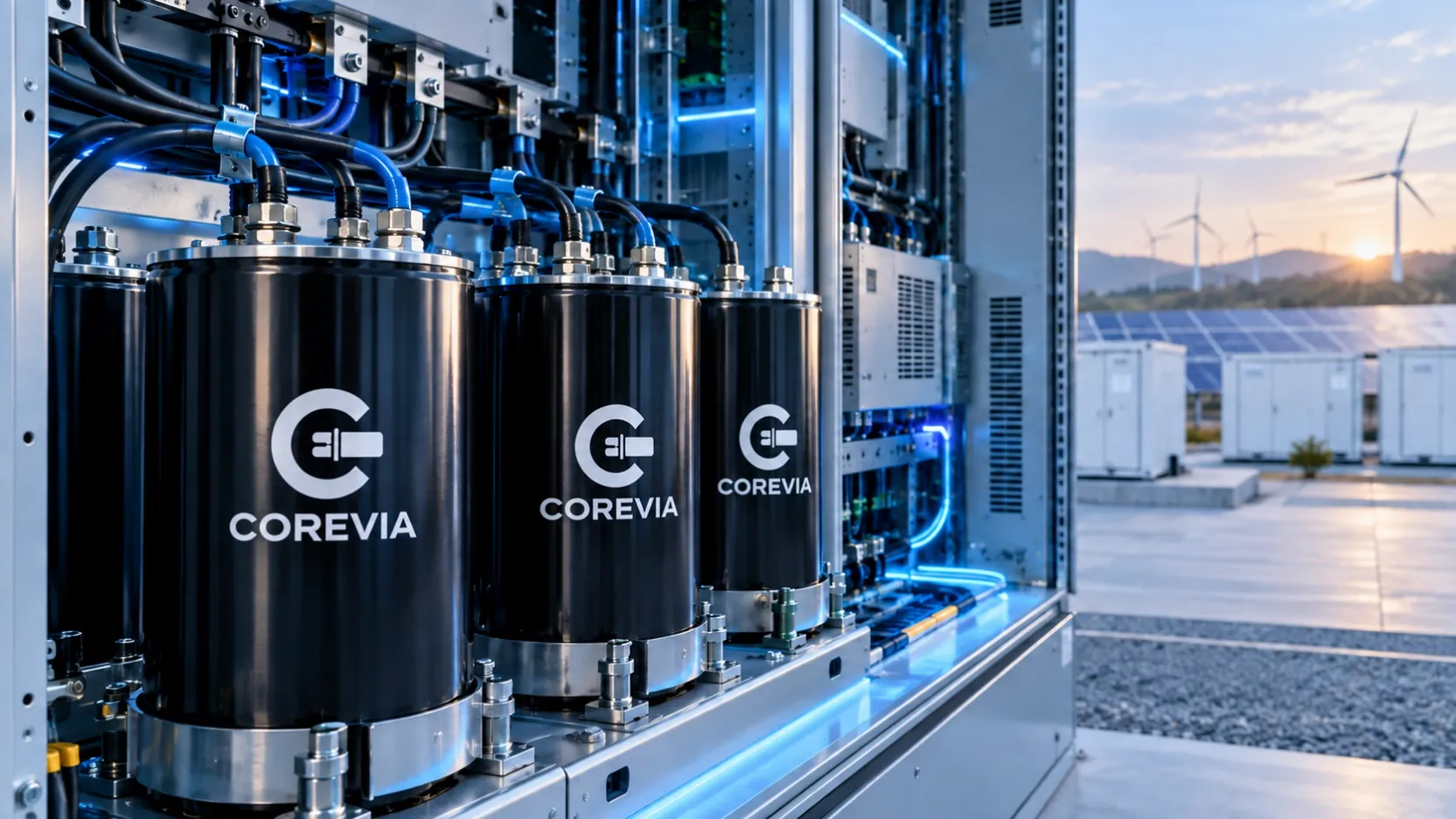
How to select aluminum electrolytic capacitors for energy-storage converters using voltage, ripple current, ESR, temperature, cooling and endurance.
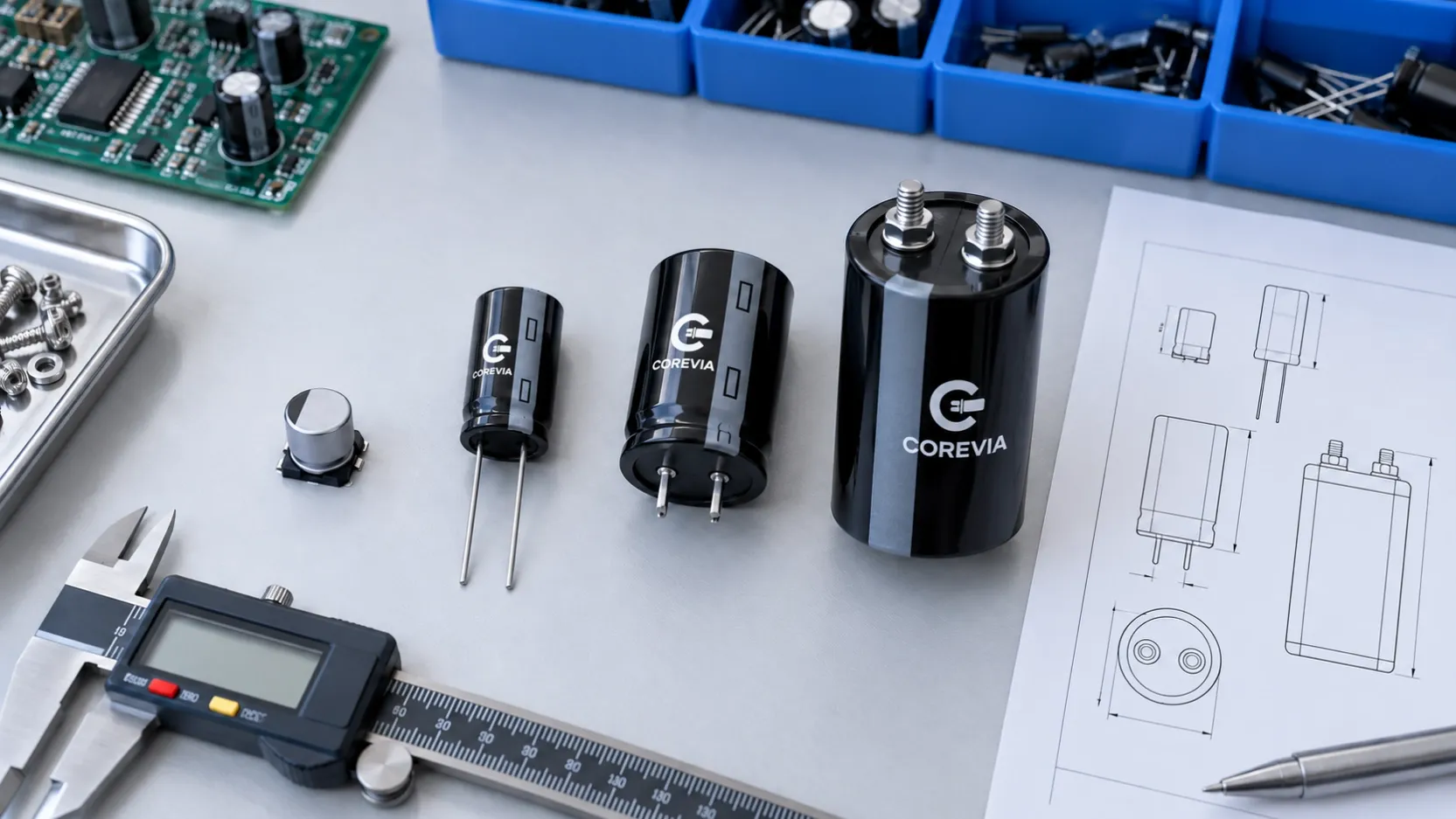
A practical cross-reference guide covering ripple current, ESR, temperature, endurance, dimensions, terminals and application conditions.
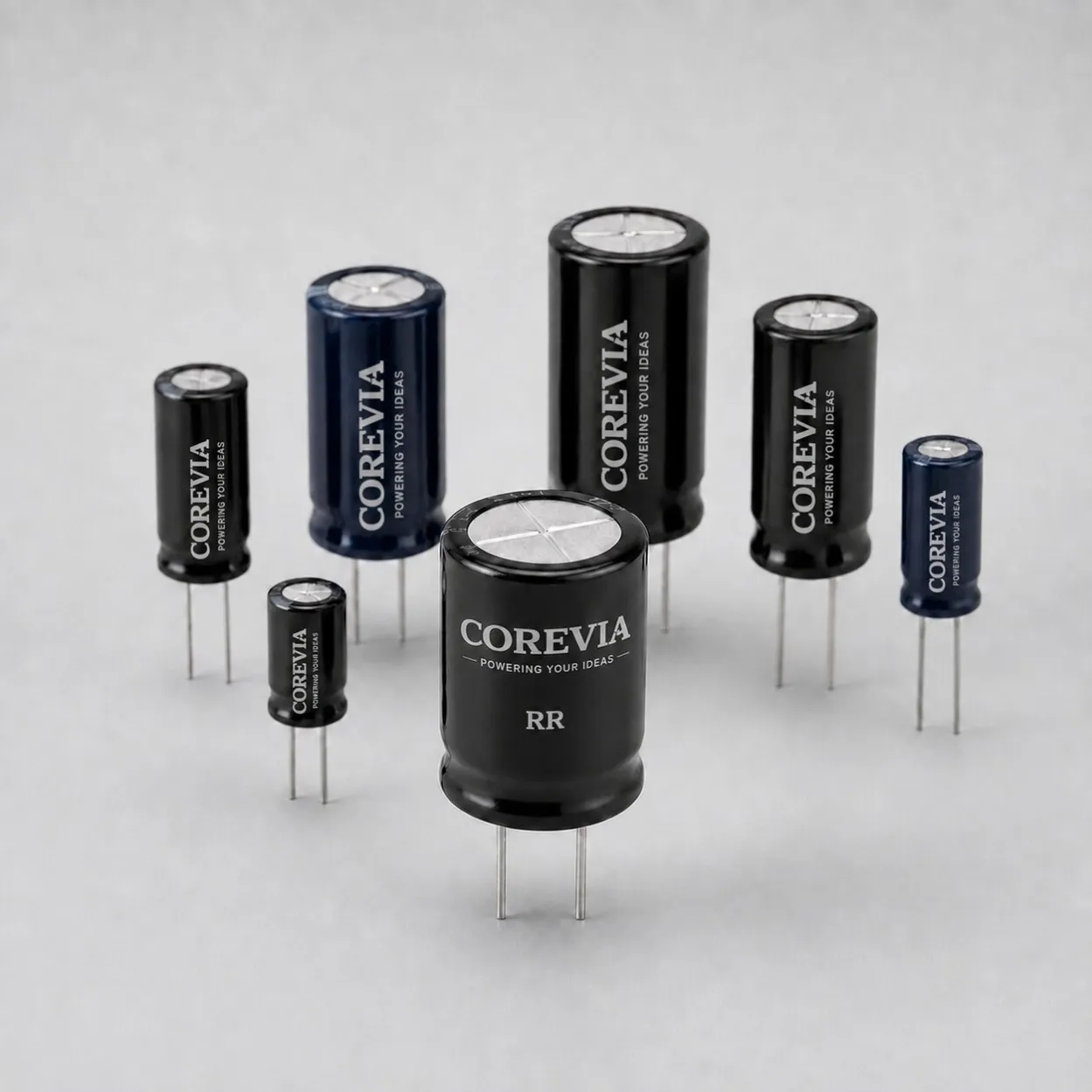
A reliable capacitor replacement must also match ripple current, ESR, temperature, dimensions, mounting and endurance.
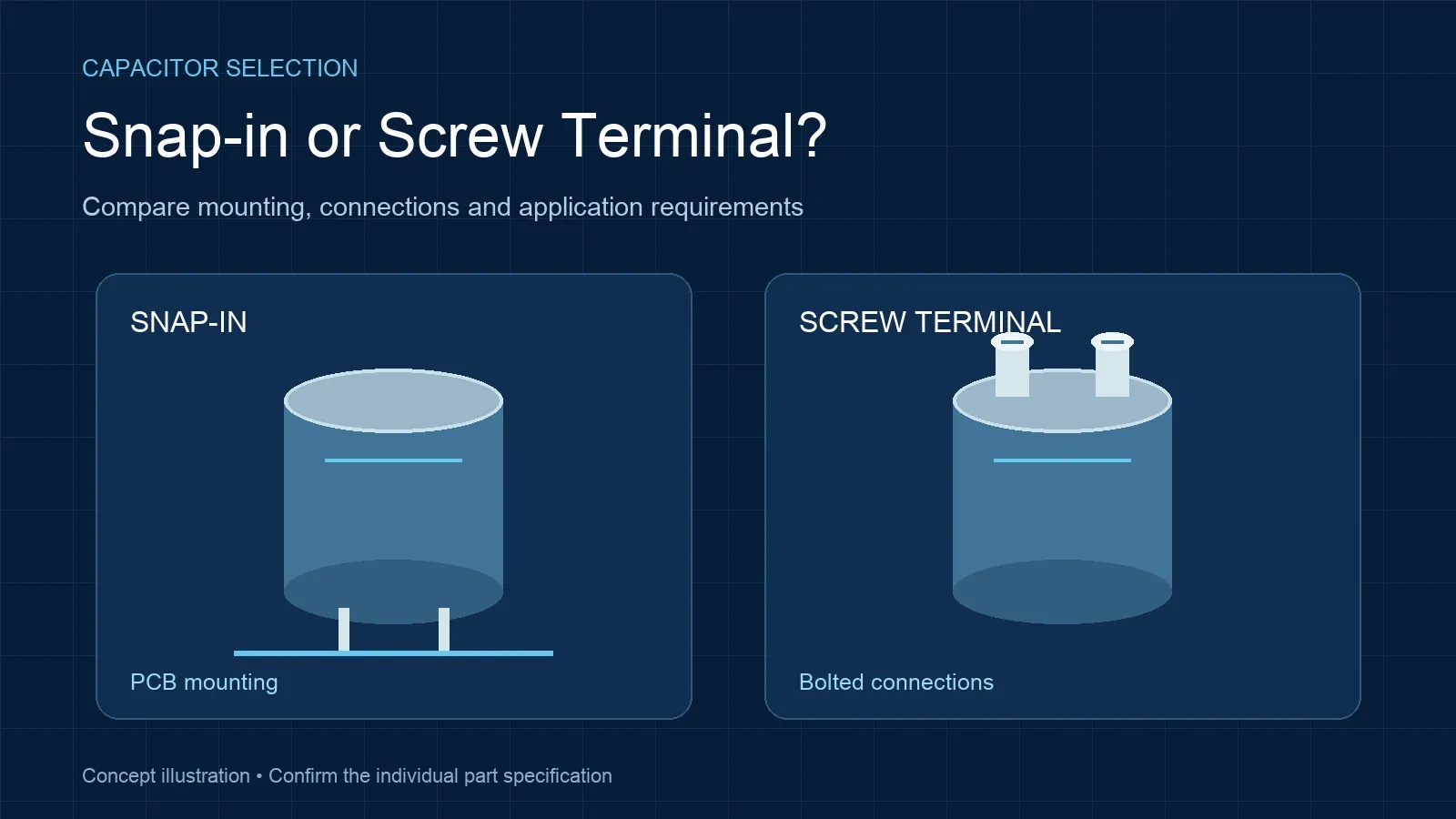
Compare electrical demand, mounting method, case size and service conditions when selecting snap-in or screw terminal capacitors.
Product families
Compare terminal formats, voltage ranges and application profiles across the COREVIA portfolio.
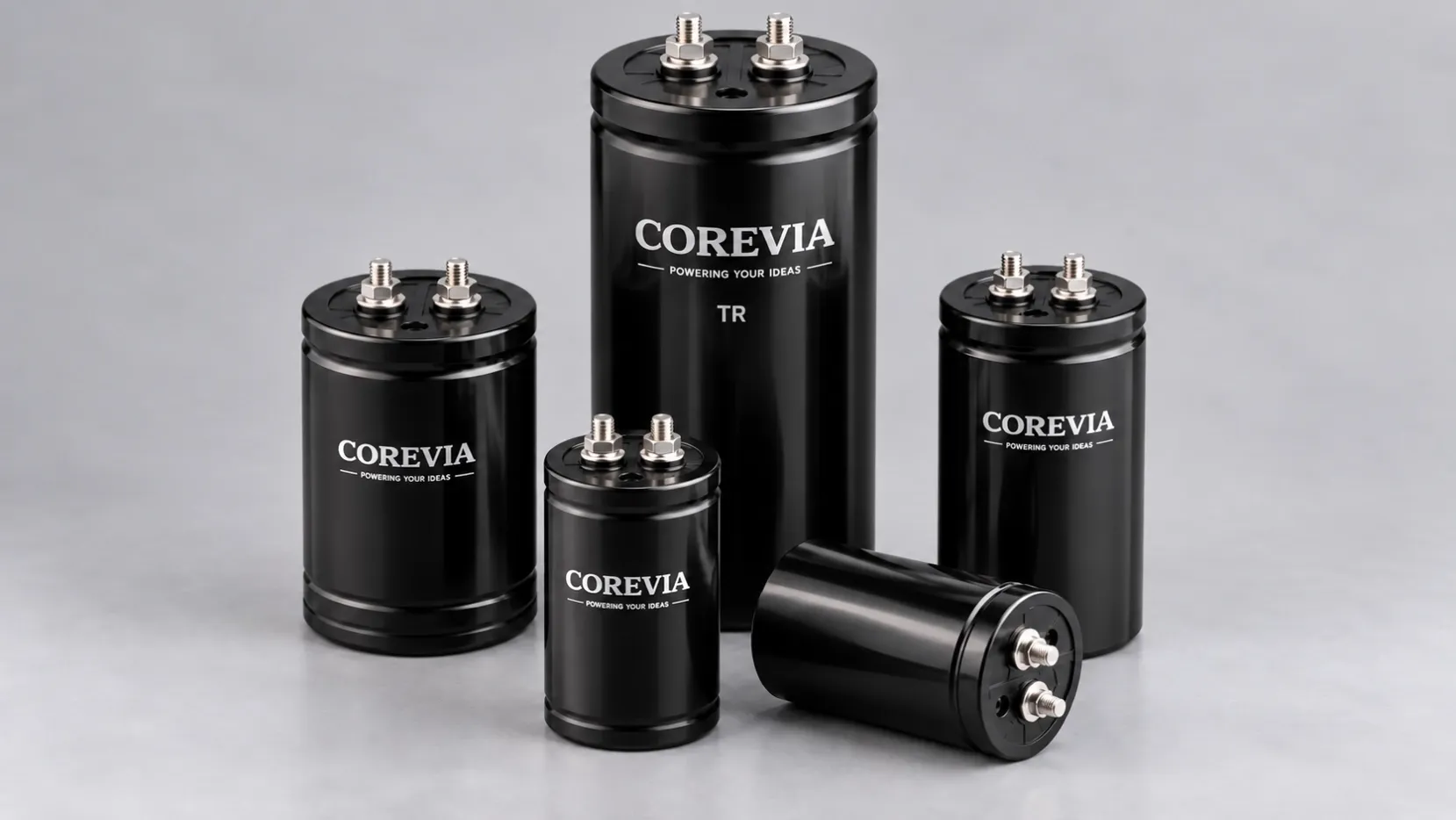
Screw Terminal capacitors: TR, TT, TX, TF, TK, TG, TN, TM, TD, TH and TA. Representative TR: 470–820,000 µF and 2,000-hour endurance; consult the exact series datasheet for voltage and temperature limits.
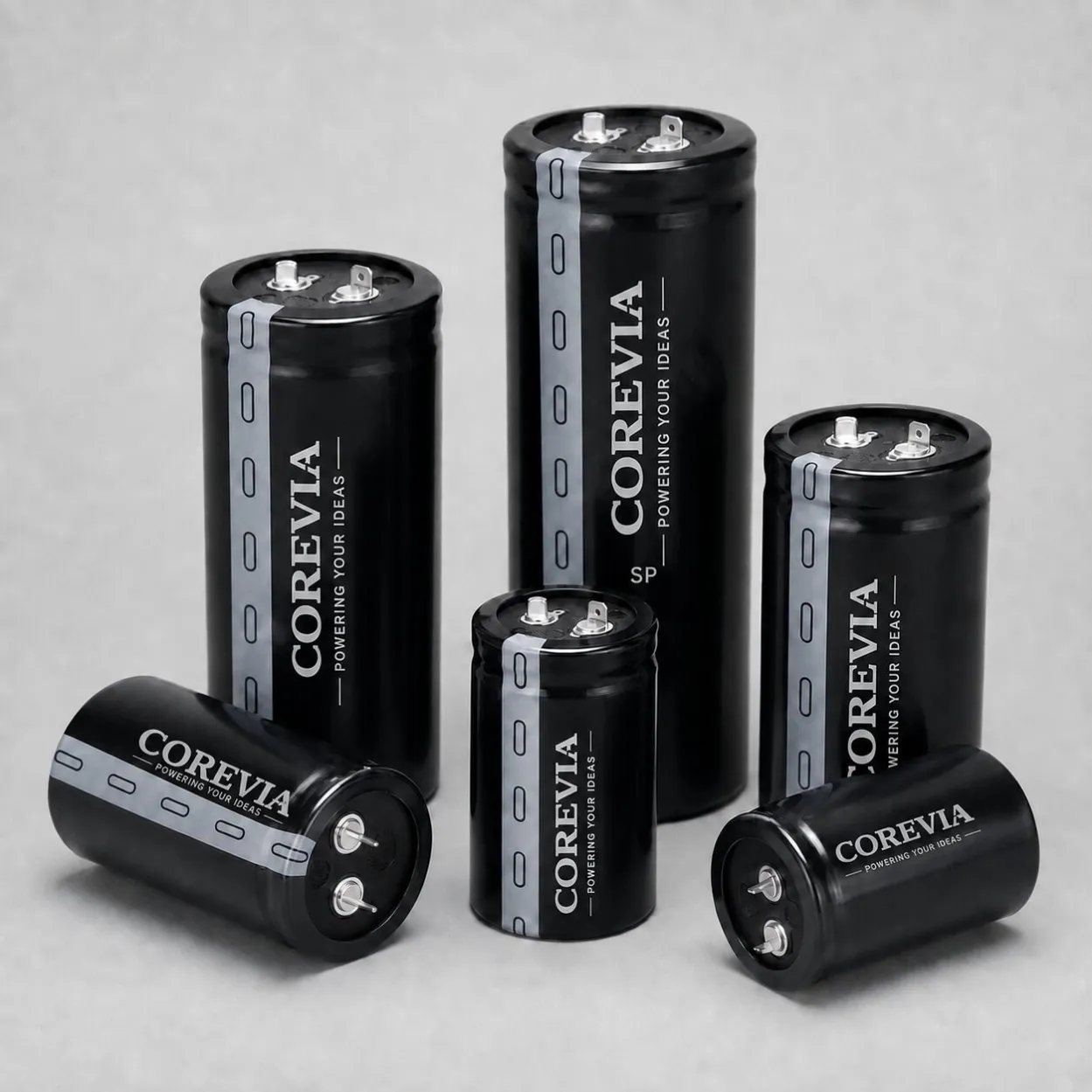
Snap-in capacitors: SP, SH, SS, SC, SF, SU, SD and SZ. Representative SP: 68–82,000 µF and 2,000-hour endurance; consult the exact series datasheet for voltage and temperature limits.
Radial Leaded capacitors: RR, RK, RH, RS, RG, RD, RF, RL, RT and RE. Representative RR: 0.1–15,000 µF and 2,000-hour endurance; consult the exact series datasheet for voltage and temperature limits.