Sep 26, 2026
High Ripple Current Aluminum Electrolytic Capacitors
How to specify high-ripple-current aluminum electrolytic capacitors using ripple frequency, ESR, temperature, cooling, case size and endurance.
High Ripple Current Aluminum Electrolytic Capacitors
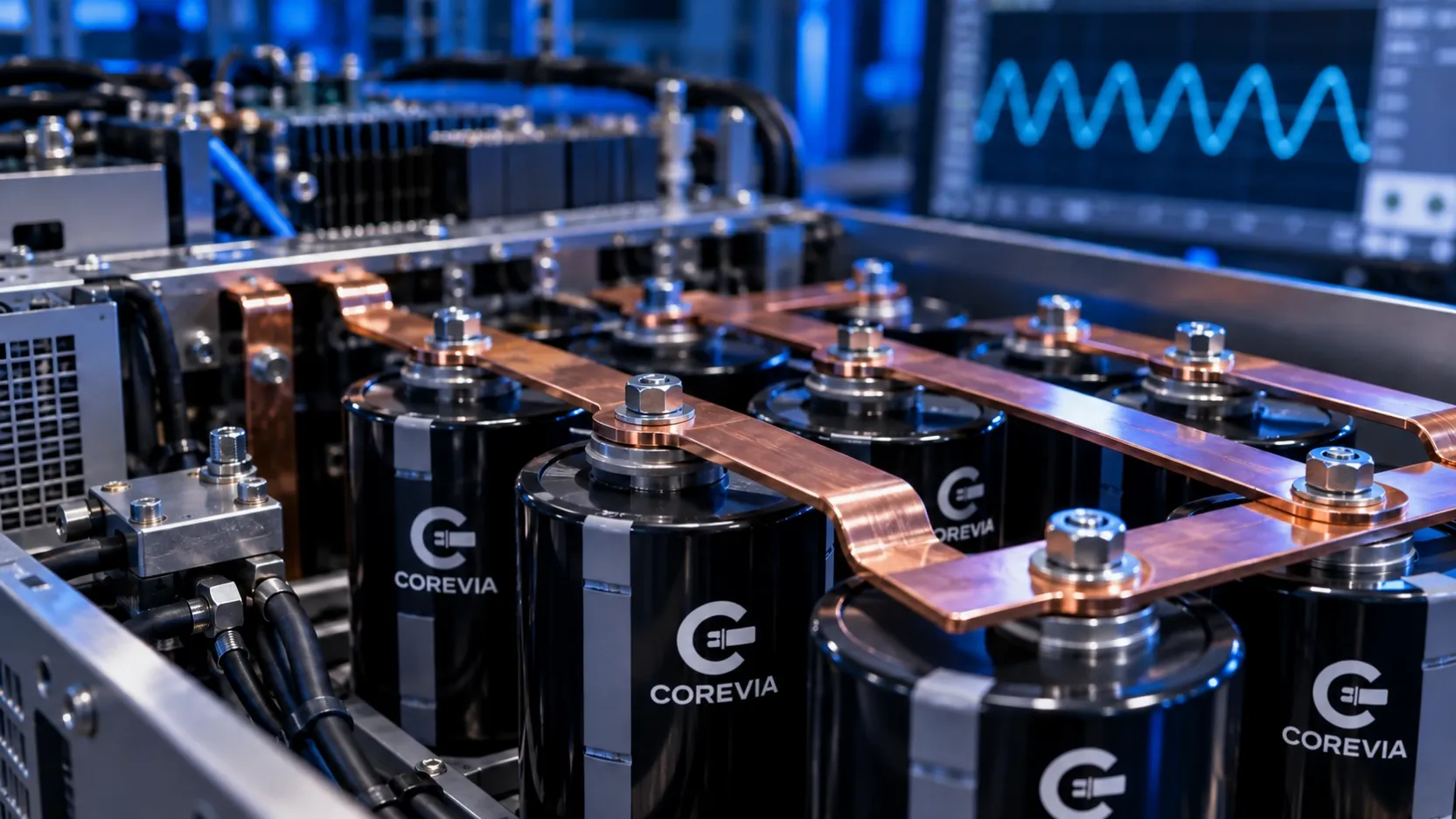
High ripple current creates internal heating in an aluminum electrolytic capacitor. The correct choice depends on ripple magnitude and frequency, ESR or impedance, ambient temperature, cooling, case size, mounting and the required endurance—not on voltage and capacitance alone.
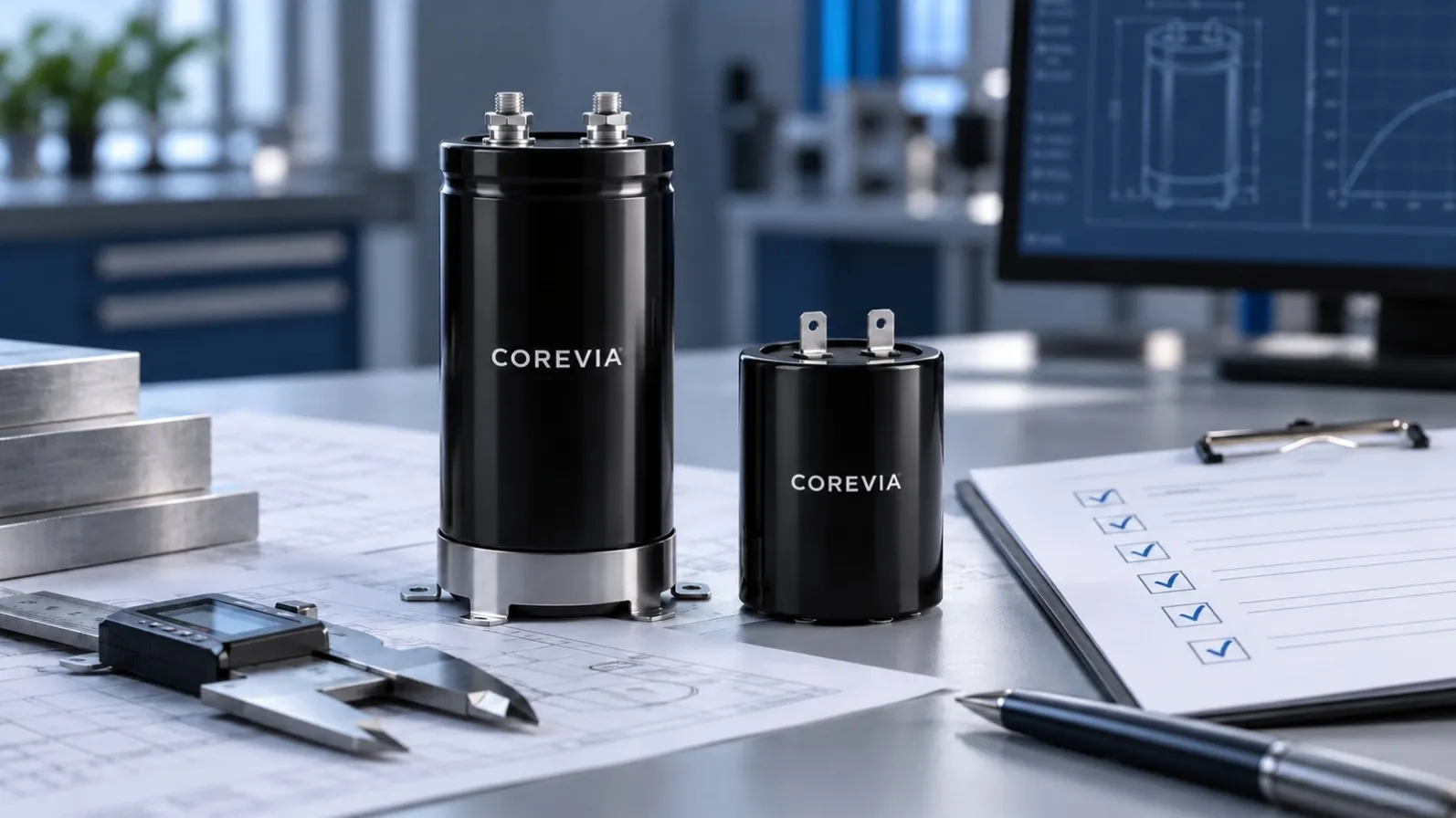
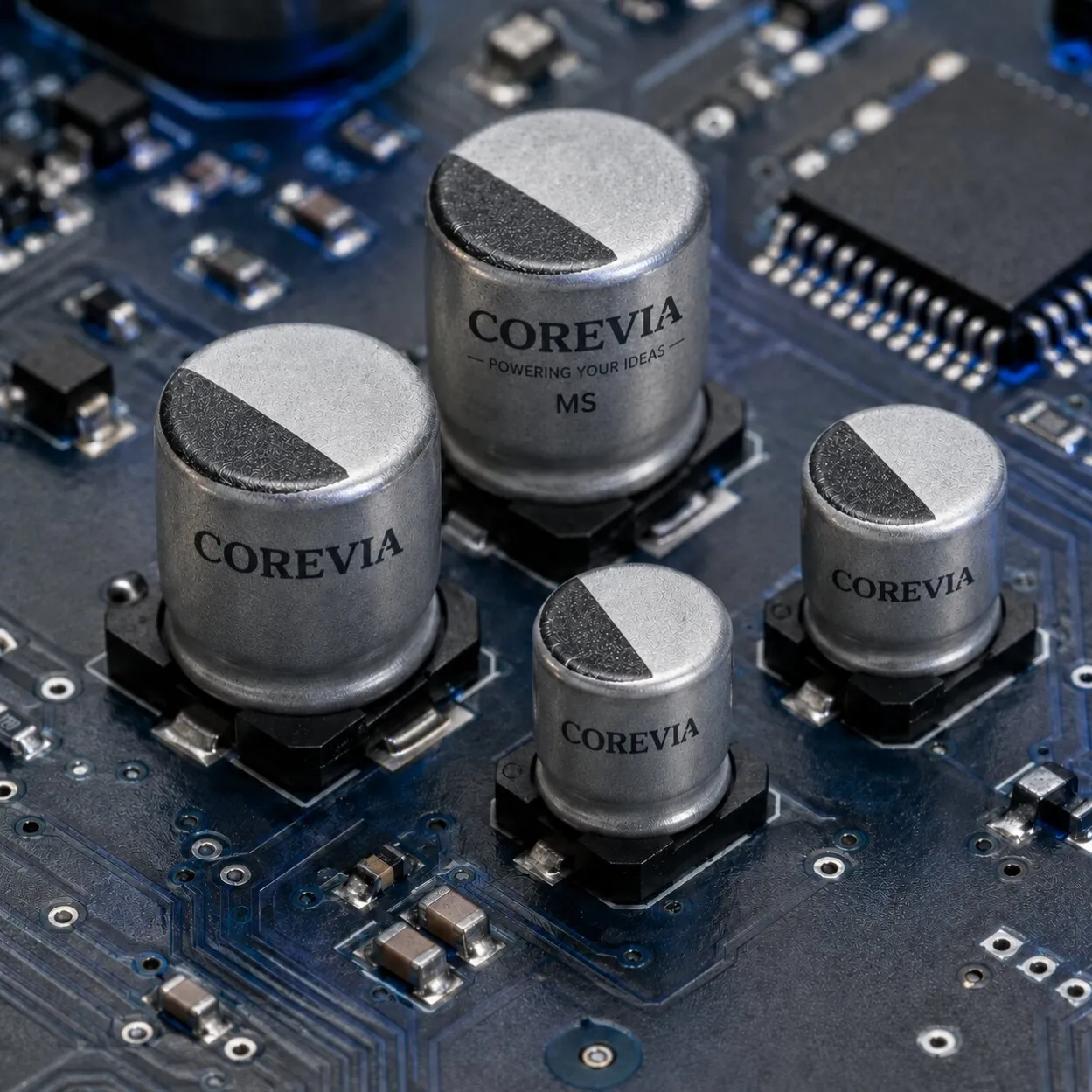
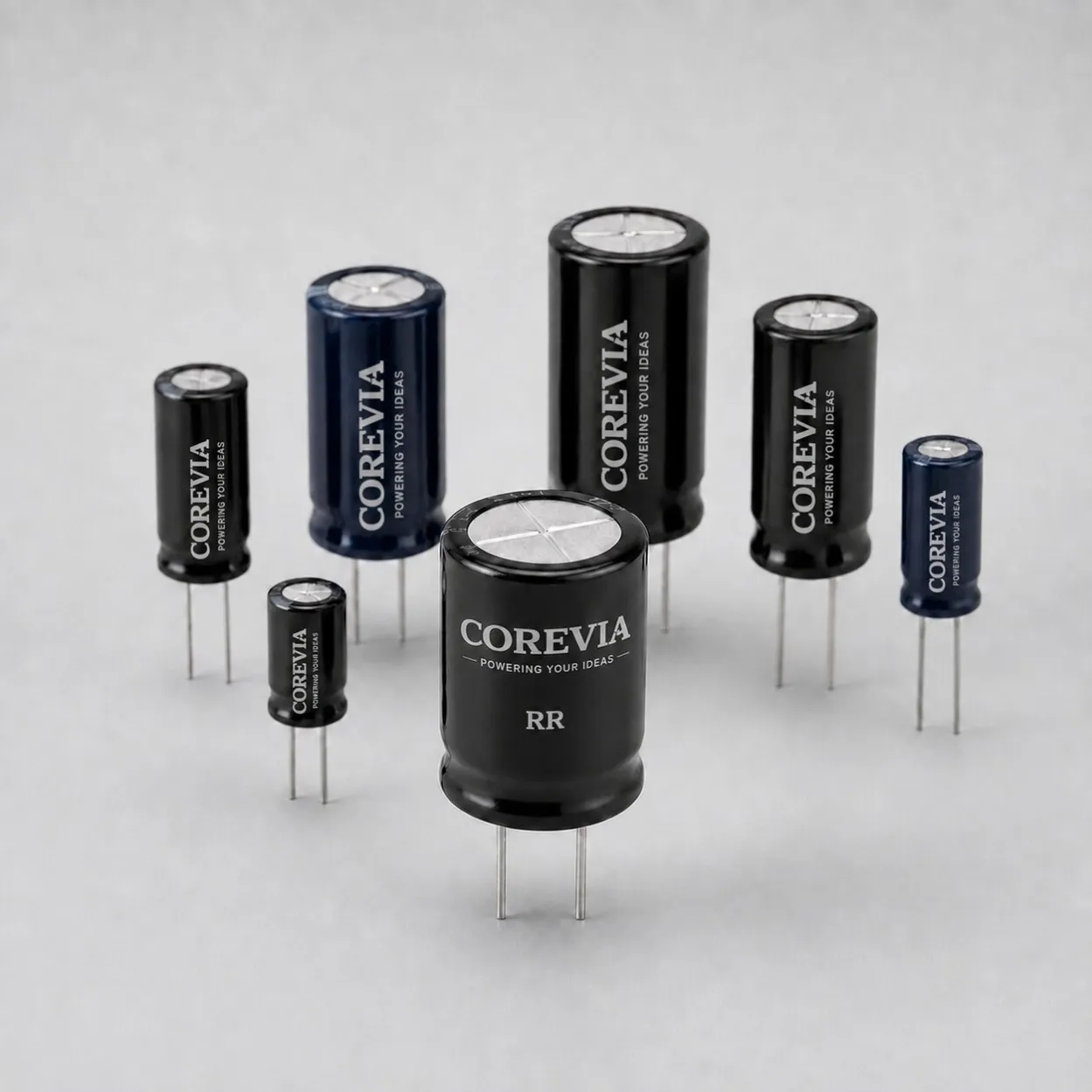
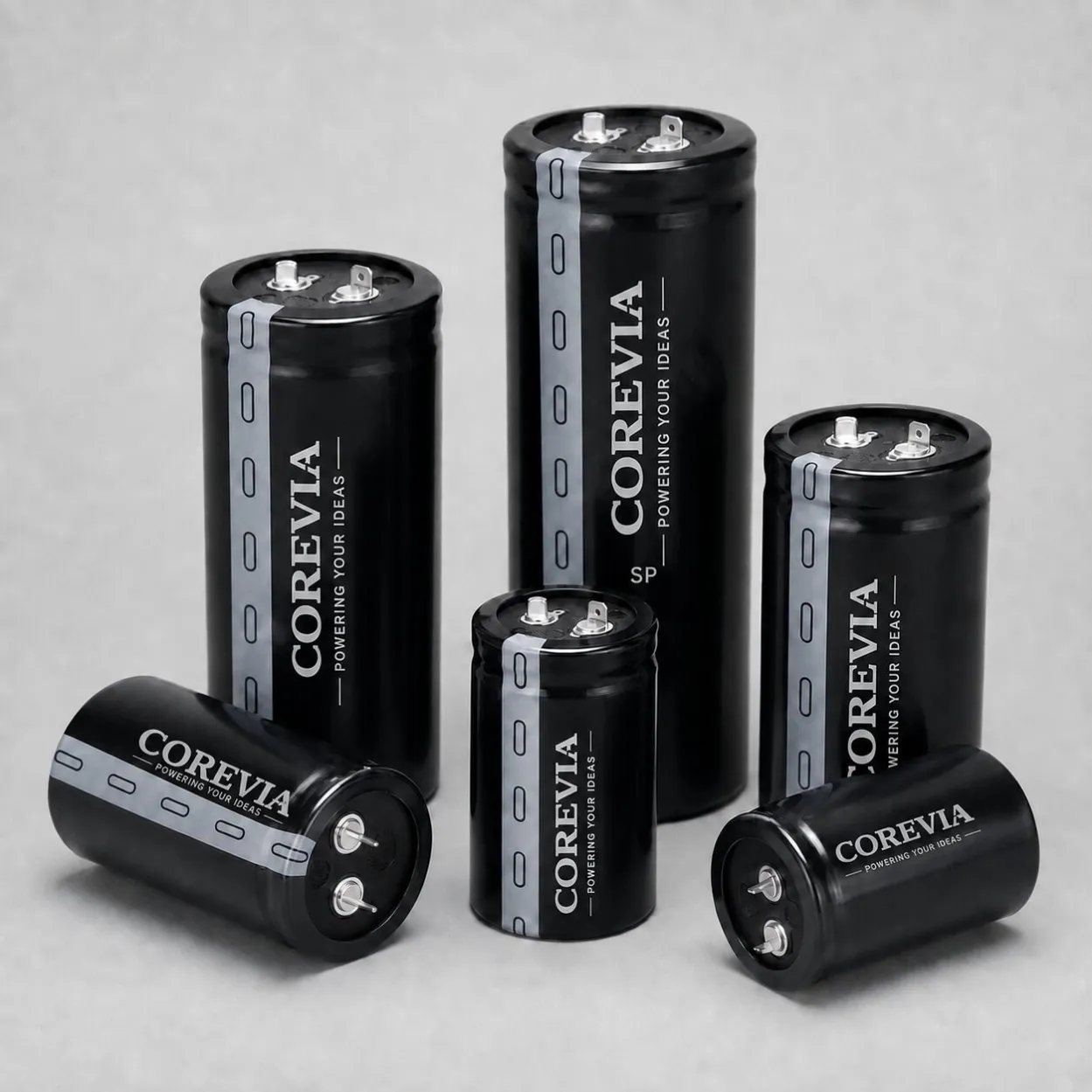
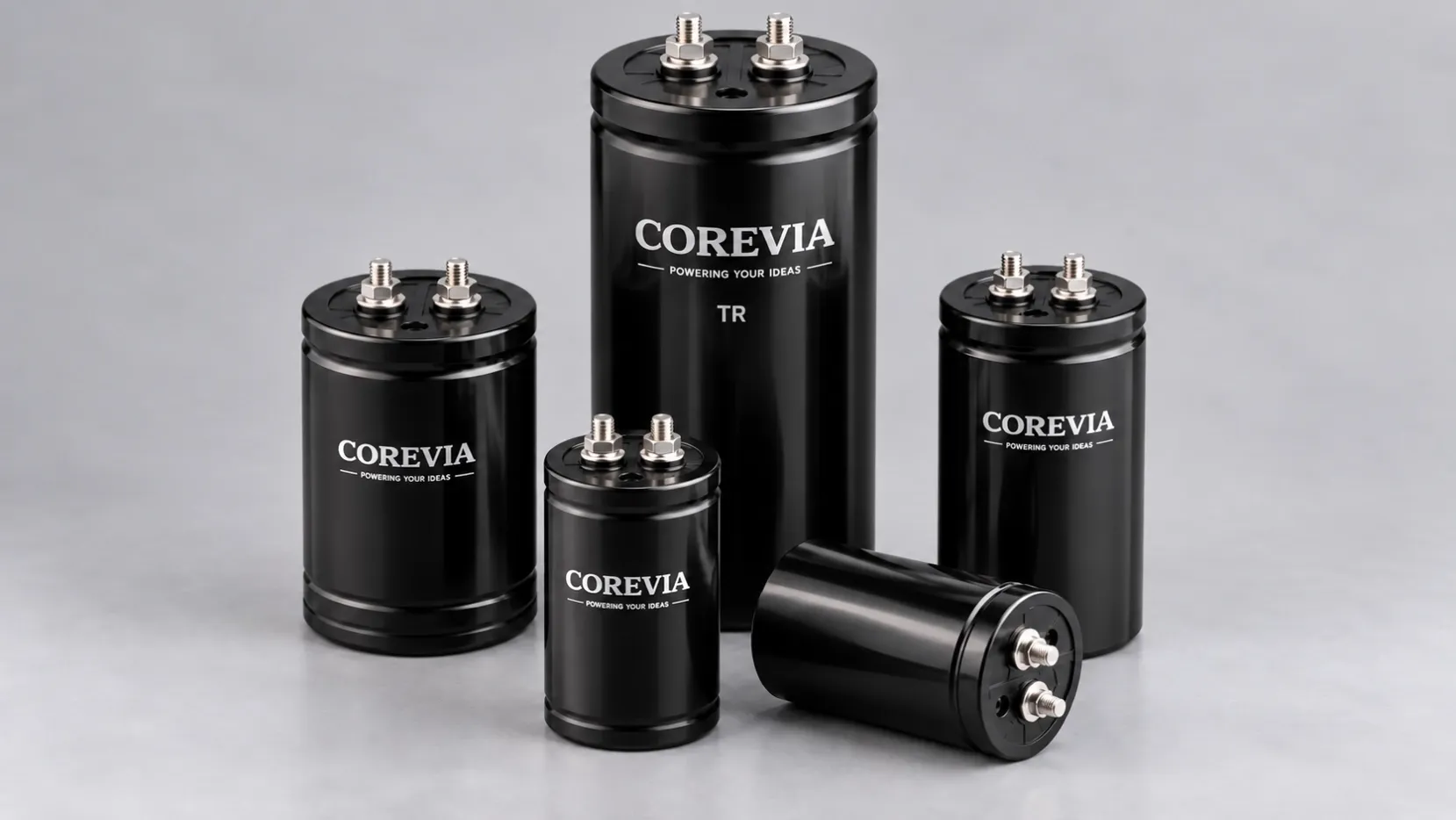
COREVIA offers surface-mount, radial leaded, snap-in and screw-terminal product families for different power levels and assembly methods. Exact ripple-current ratings must be selected from the applicable series data and corrected for real operating conditions.
For selection support, provide rated and working voltage, capacitance, ripple current and frequency, ESR requirement, ambient temperature, cooling method, case dimensions, expected quantity and application.
Start with the current through the capacitor
Distinguish capacitor ripple current from the load current or converter output current. They are not interchangeable. Ask the design engineer for the capacitor current waveform at the relevant operating points, including maximum load, light load, startup and any recurring overload condition. Record the RMS value and significant frequency components rather than providing only a peak reading.
A useful inquiry identifies where the capacitor sits in the circuit. A rectifier reservoir, an inverter DC link and an output filter can expose a capacitor to different waveforms. State the switching frequency, line frequency where relevant, operating duty cycle and whether the current information comes from measurement or simulation. This gives the supplier a clear basis for checking a candidate instead of interpreting an unexplained current value.
Compare ratings under the same conditions
A ripple-current rating is tied to specified conditions. Before comparing two candidates, put their frequency and temperature references beside each other. Use only the correction factors supplied for the particular series; do not transfer factors from another supplier or assume that every frequency receives the same allowance.
ESR contributes to internal heat generation, but an ESR number is also frequency- and temperature-dependent. A room-temperature measurement alone does not establish suitability throughout the operating range. When the waveform contains several substantial frequency components, ask for a series-specific assessment rather than treating the entire RMS current as a single-frequency test.
Check the installation, not just the catalogue
Record the air temperature near the capacitor, nearby heat sources, enclosure arrangement and airflow. The temperature elsewhere in the cabinet may not represent the capacitor's environment. Keep photographs or a mounting sketch with the electrical requirements so that component spacing and cooling assumptions are visible during review.
For a parallel bank, include the number of capacitors and the connection layout. Do not assume that dividing total bank current by the number of parts proves equal current sharing. A prototype assessment should examine individual parts and connections, especially where the busbar or cooling arrangement is asymmetric. The measurement plan belongs with the design review, not only with the purchasing specification.
Select a mounting family before a series
For a PCB-mounted power stage, compare the COREVIA snap-in series. For a bank using bolted connections, compare the COREVIA screw terminal series. These links identify construction families, not interchangeable parts or guaranteed ripple ratings.
The published series overview provides voltage, capacitance, temperature and endurance ranges. It does not replace a complete part-specific datasheet. If the required ripple-current value, ESR limit or dimensional drawing is absent, request it before approving a candidate. A category's portfolio maximum must not be assigned to its representative series.
Prepare a reviewable request
Send working and maximum voltage, capacitance and tolerance, ripple RMS current with frequency information, ambient conditions, cooling, available diameter and height, mounting method, expected quantity and application. Identify any values that remain unknown. Include the original part number and datasheet when evaluating a replacement.
Ask for the proposed part's rated ripple conditions, applicable corrections, dimensional drawing and endurance test conditions. Endurance is a specified test requirement; it is not a promise of the same number of operating hours in every installation. Final approval should use the equipment's validation process and actual operating conditions.
Technical background: Nichicon application guidelines. Supplier-specific limits and calculations must come from the datasheet for the selected COREVIA part.
Explore the relevant COREVIA product family and request a series recommendation.