Sep 26, 2026Capacitor Selection
Capacitor Replacement and Cross-Reference Support
A practical cross-reference guide covering ripple current, ESR, temperature, endurance, dimensions, terminals and application conditions.
Capacitor Replacement and Cross-Reference Support
A safe aluminum electrolytic capacitor replacement starts with the original electrical and mechanical requirements. Matching only rated voltage and capacitance can produce a part that fits the nameplate but fails under real operating stress. Ripple current, ESR or impedance, temperature, endurance, case dimensions, terminal arrangement, mounting method and the converter duty cycle all affect suitability.
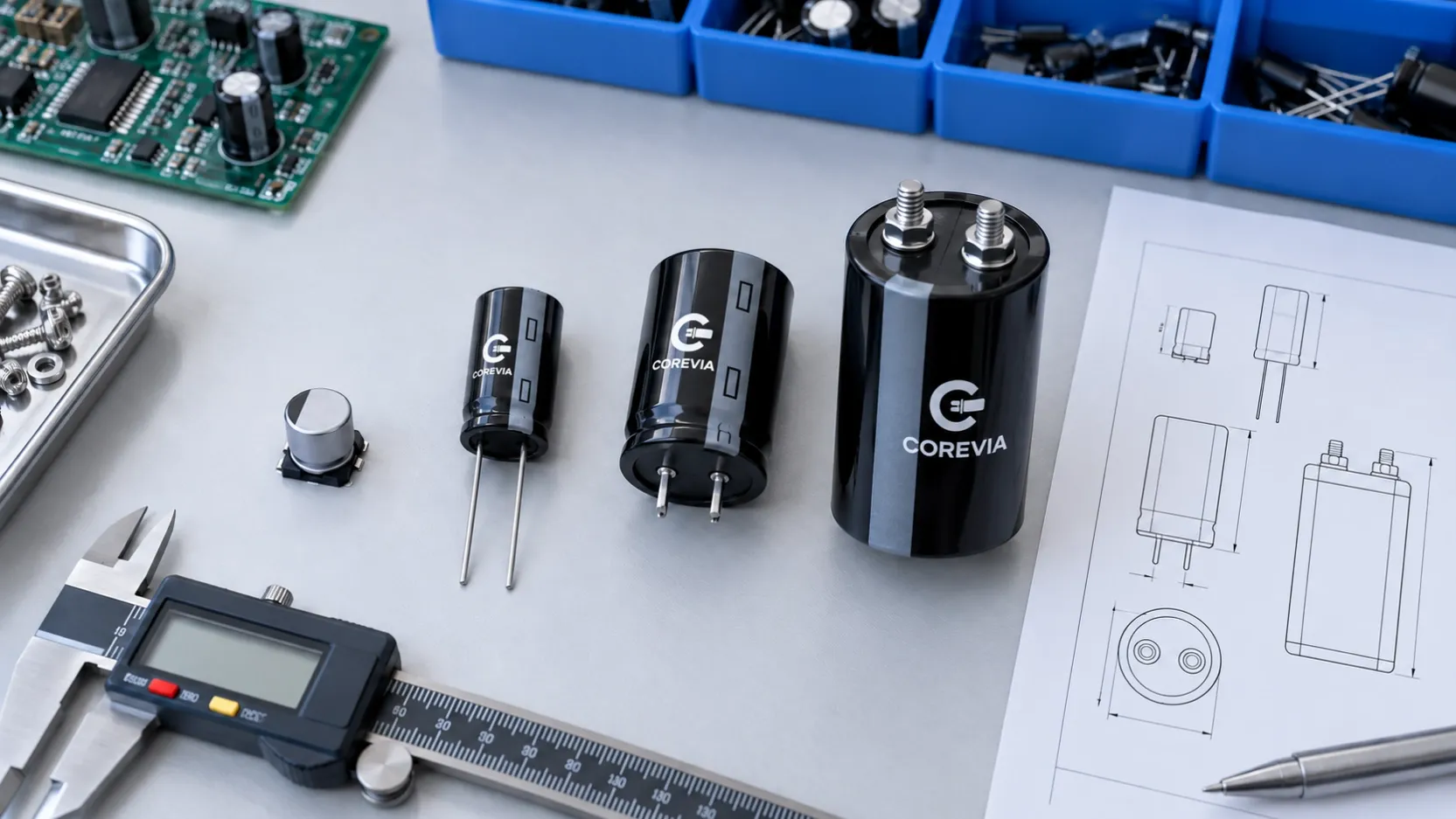
Begin by recording the complete identification of the existing capacitor. Include the manufacturer, full part number, rated voltage, capacitance, temperature category, tolerance, case diameter and length, terminal or lead spacing, polarity marks and any sleeve or mounting details. A photograph helps confirm construction, but it does not replace a datasheet. If the original datasheet is unavailable, record every readable marking and measure the available installation envelope.
The replacement voltage rating must meet or exceed the maximum continuous voltage and any known transient condition. A higher voltage rating is not automatically interchangeable because the case size, capacitance range, ESR and ripple-current capability may change. For series-connected capacitor banks, also review voltage sharing, balancing resistors and the effect of leakage-current differences.
Ripple-current capability must be checked at the actual frequency and ambient condition. Datasheets may specify ripple current at different frequencies or temperatures, so two headline values are not directly comparable until their test conditions are aligned. Review ESR or impedance at the frequencies that dominate the application. Excess ESR increases internal heating, while a different impedance profile can change DC-link ripple, control-loop behavior or current sharing in a parallel bank.
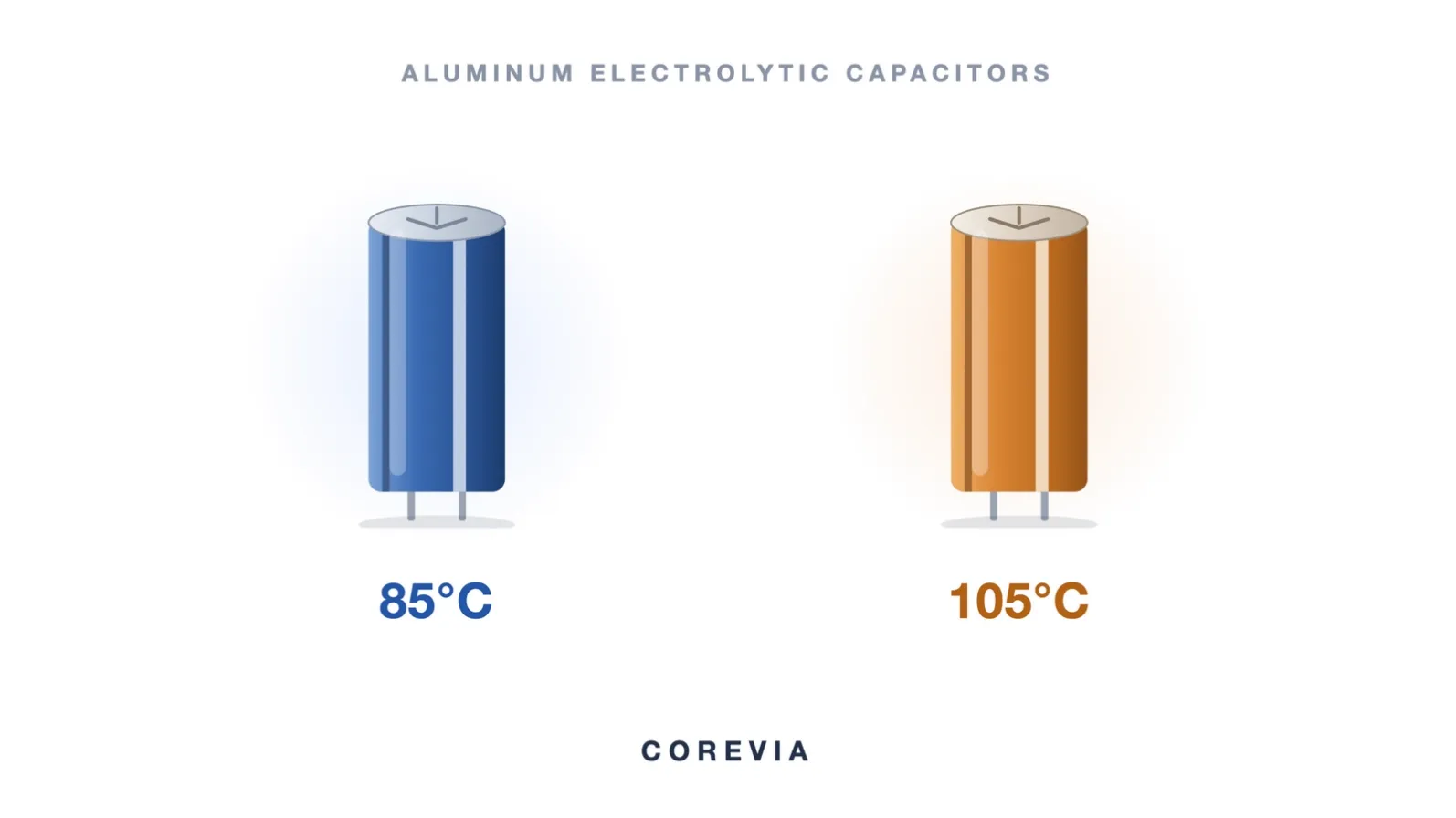
Temperature and endurance ratings require the same care. An endurance figure is valid only under the stated voltage, ripple-current and temperature conditions. It is not a guaranteed operating life for every application. Check the expected hotspot temperature around the capacitor, airflow, proximity to heat sources, duty cycle, start-stop frequency and time spent at high load. A part with a higher temperature category may still be unsuitable if its ripple-current capability or thermal path is lower.
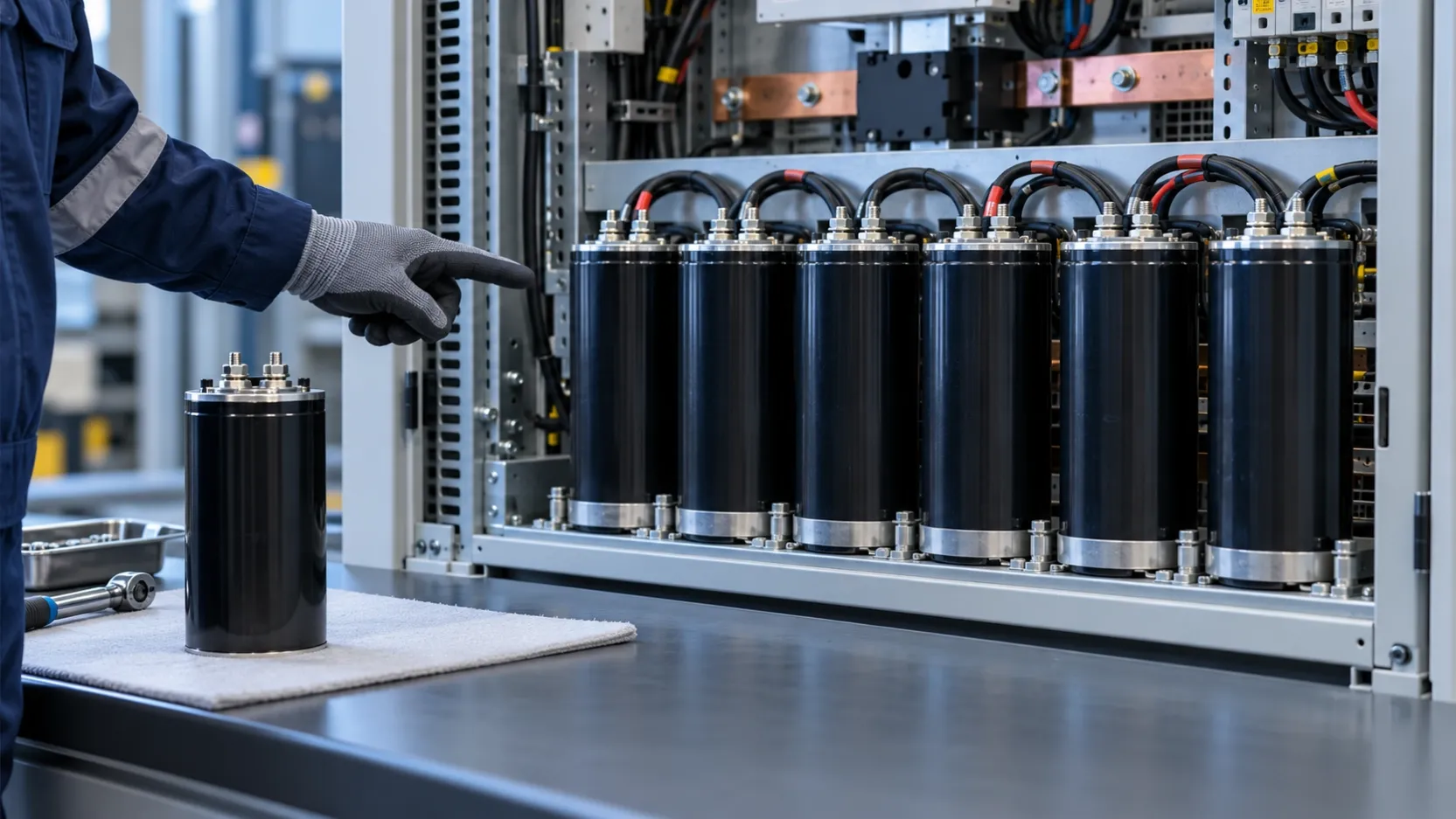
Mechanical compatibility includes more than fitting inside the enclosure. Confirm the case diameter and length, lead pitch or terminal spacing, terminal thread, busbar alignment, clamp arrangement, safety-vent clearance and insulation distance. Do not force terminals or busbars into alignment. Mechanical stress at a seal or terminal can create a reliability problem even when the electrical specification is correct.
For a parallel capacitor bank, compare the proposed replacement with every capacitor in the branch. Mixing parts with materially different ESR, capacitance, temperature or connection resistance can create uneven current sharing. When only one failed unit is replaced, inspect the remaining units and their connections before assuming the rest of the bank is healthy.
A useful cross-reference request should include the original part number and datasheet, rated voltage, capacitance, ripple-current requirement with frequency and temperature, ESR or impedance requirement, case dimensions, terminal details, expected quantity and application. Also describe why the original part is being replaced: routine sourcing, redesign, overheating, bulging, leakage, repeated fuse operation or another observed condition. That context helps separate a sourcing question from a system fault.
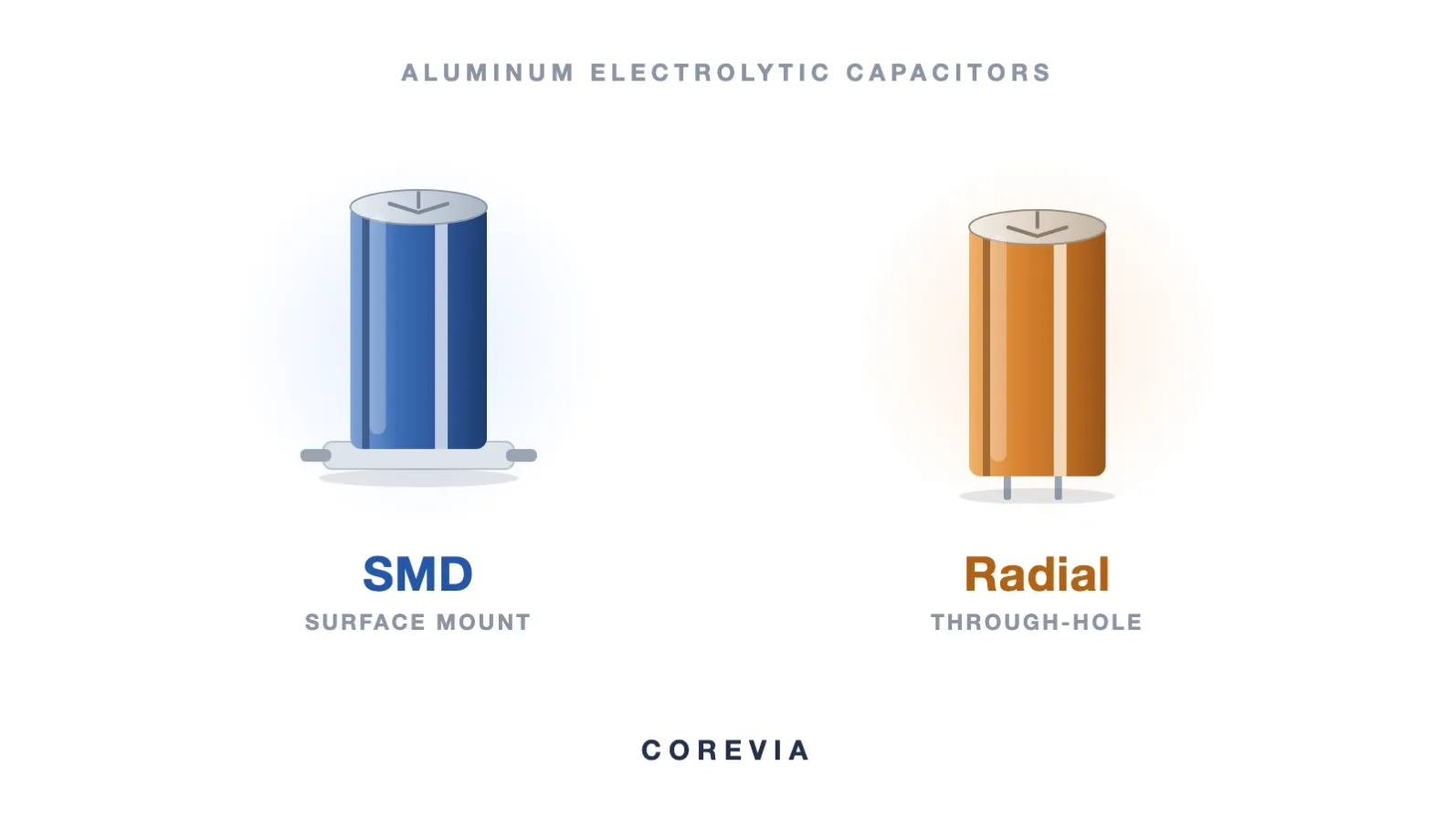
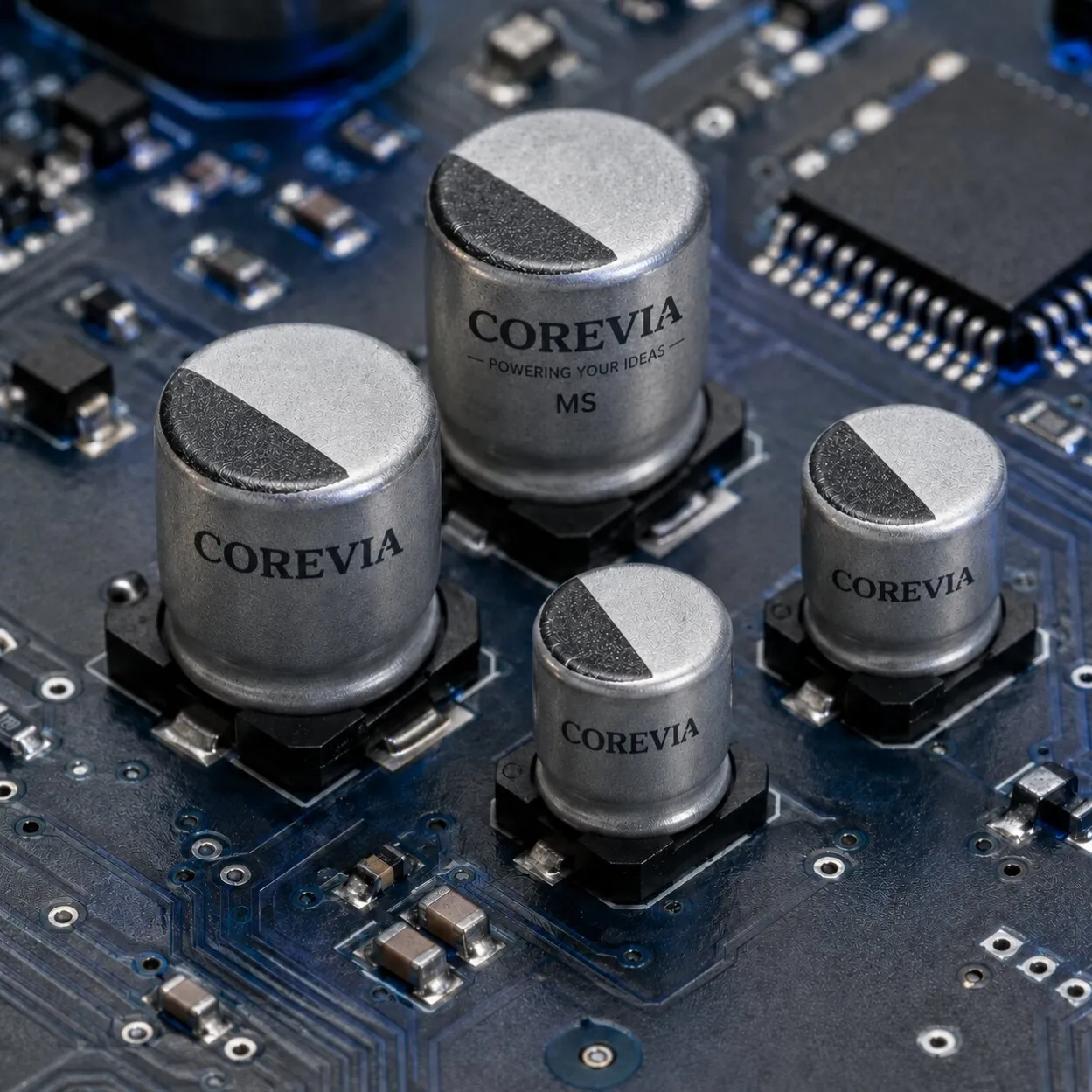
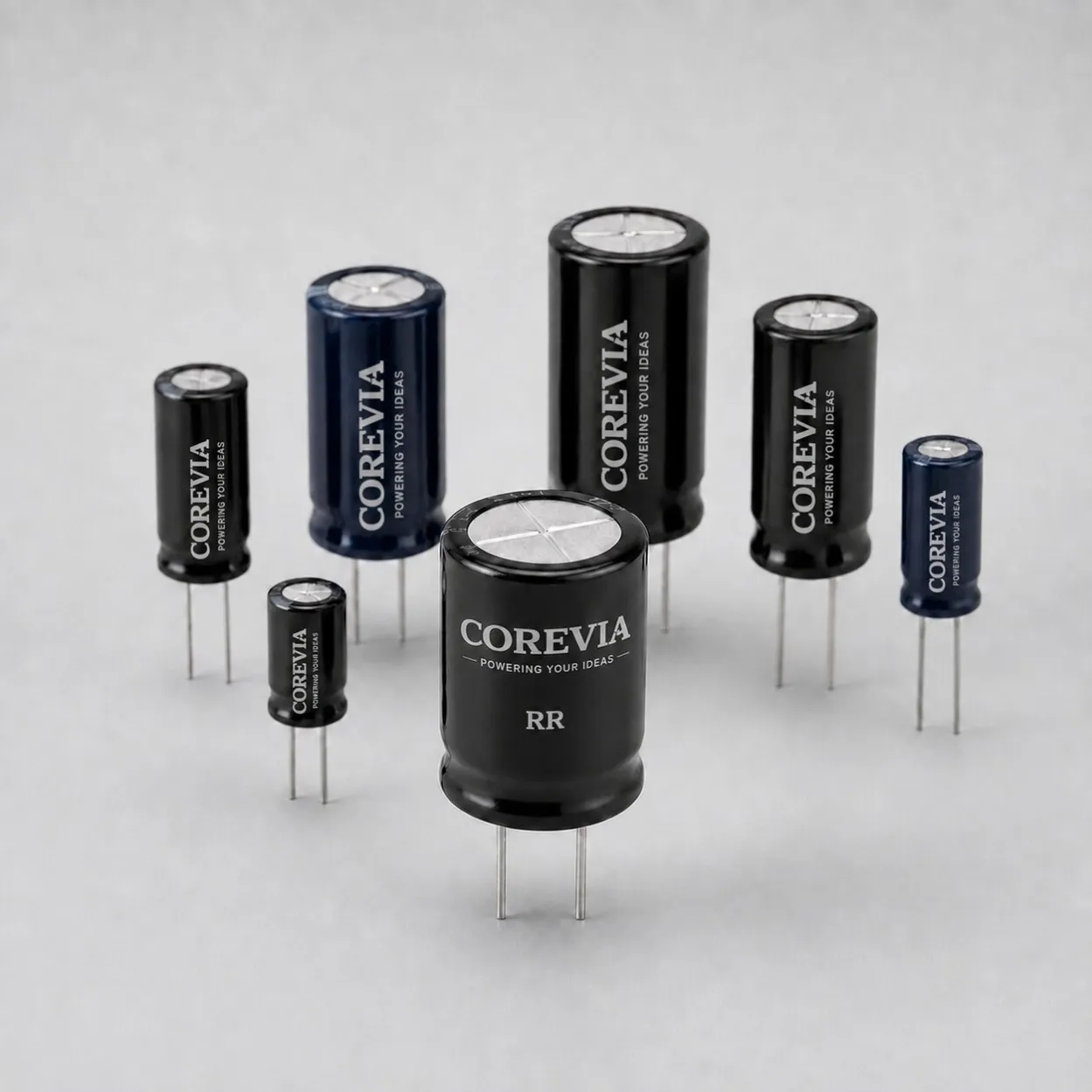
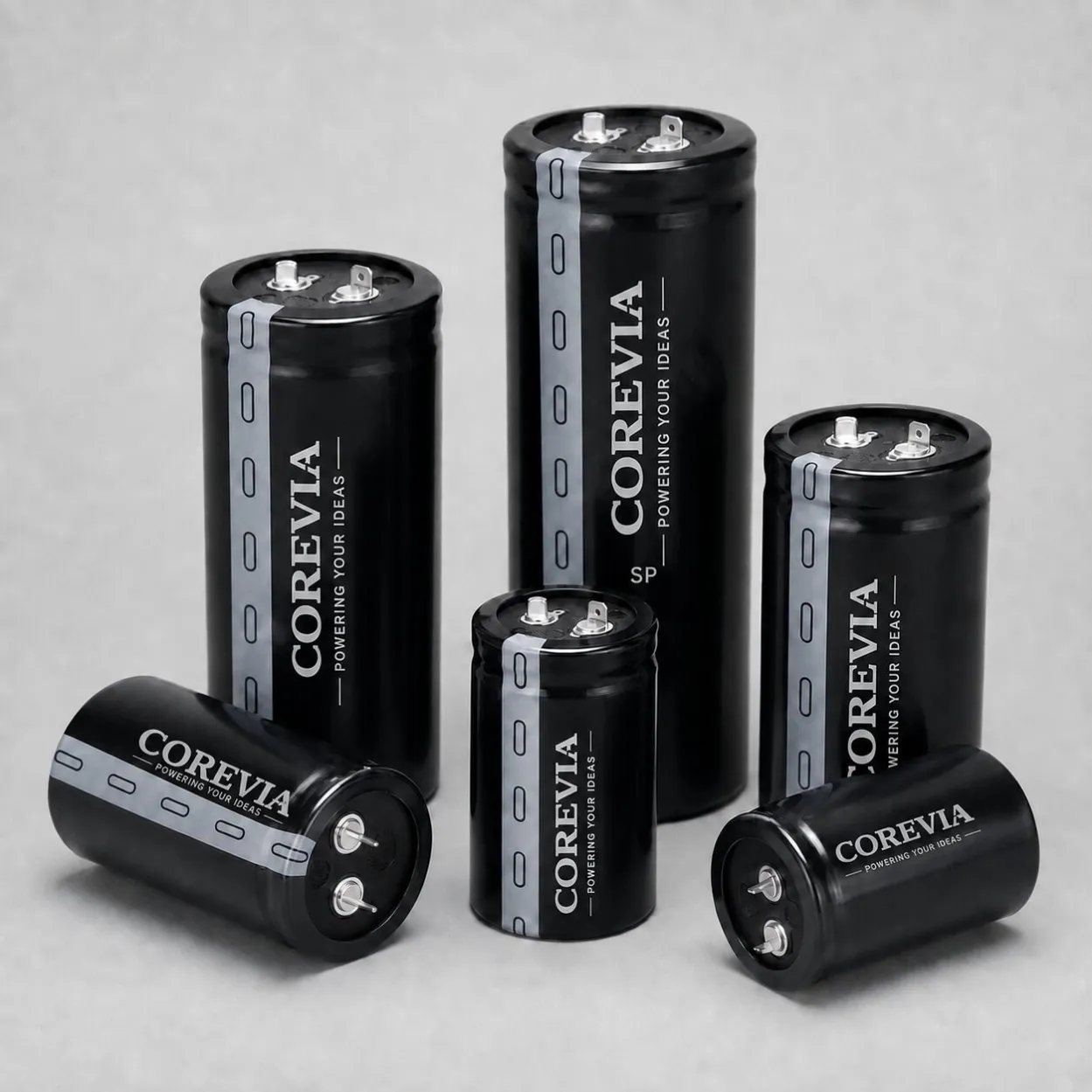
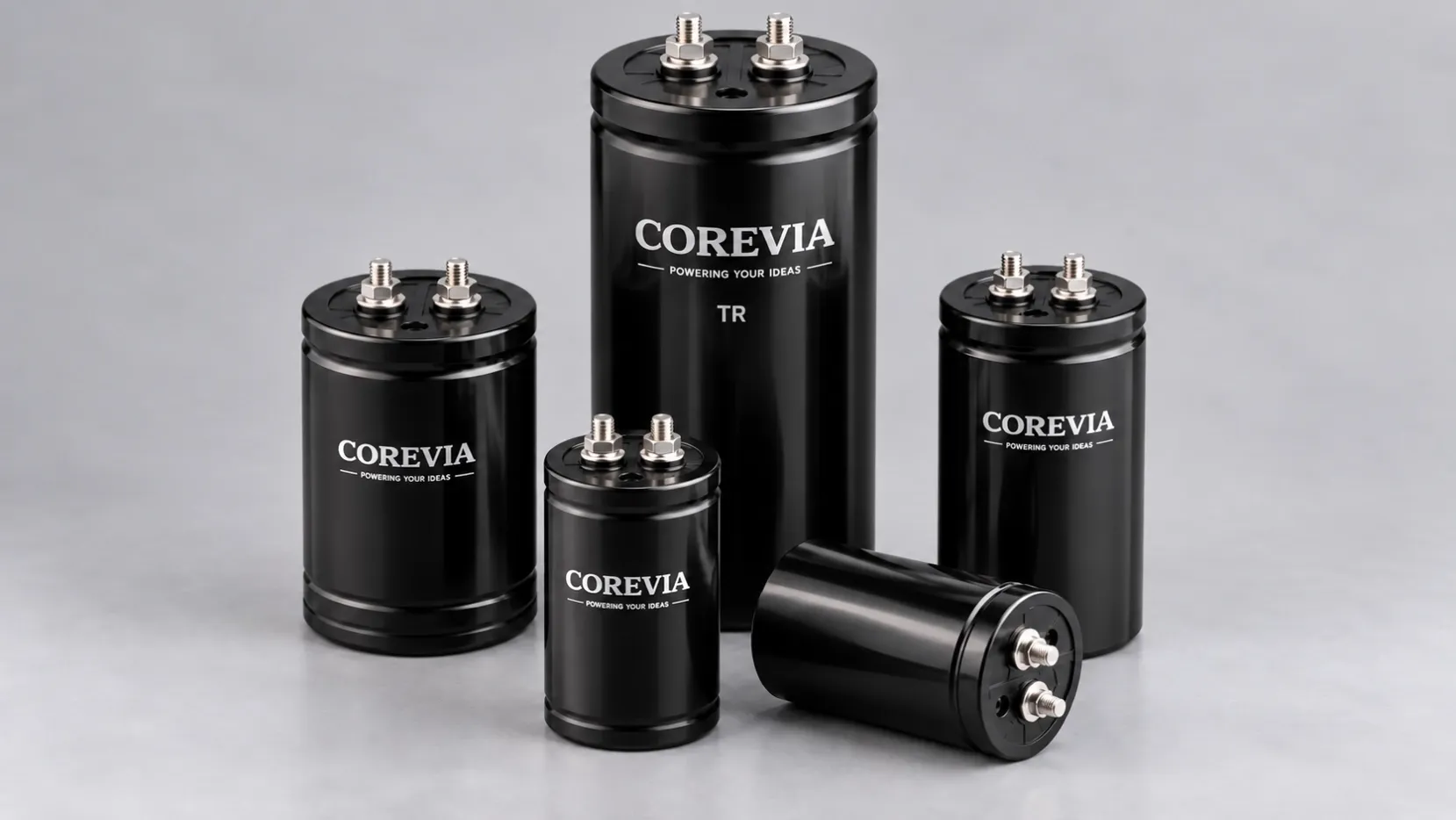
COREVIA supports cross-reference review across SMD, radial leaded, snap-in and screw-terminal aluminum electrolytic capacitor families. Recommendations are limited to confirmed specifications. If a critical value is missing or incompatible, the result should remain an open engineering check rather than being presented as an equivalent part.
Send the available specifications to [email protected] for a focused review. Include drawings or installation photographs when mechanical clearance or terminal geometry is important.