Sep 26, 2026
Long-Endurance Aluminum Electrolytic Capacitors
How temperature, ripple current, ESR, cooling and duty cycle affect endurance when selecting aluminum electrolytic capacitors for power electronics.
Long-Endurance Aluminum Electrolytic Capacitors
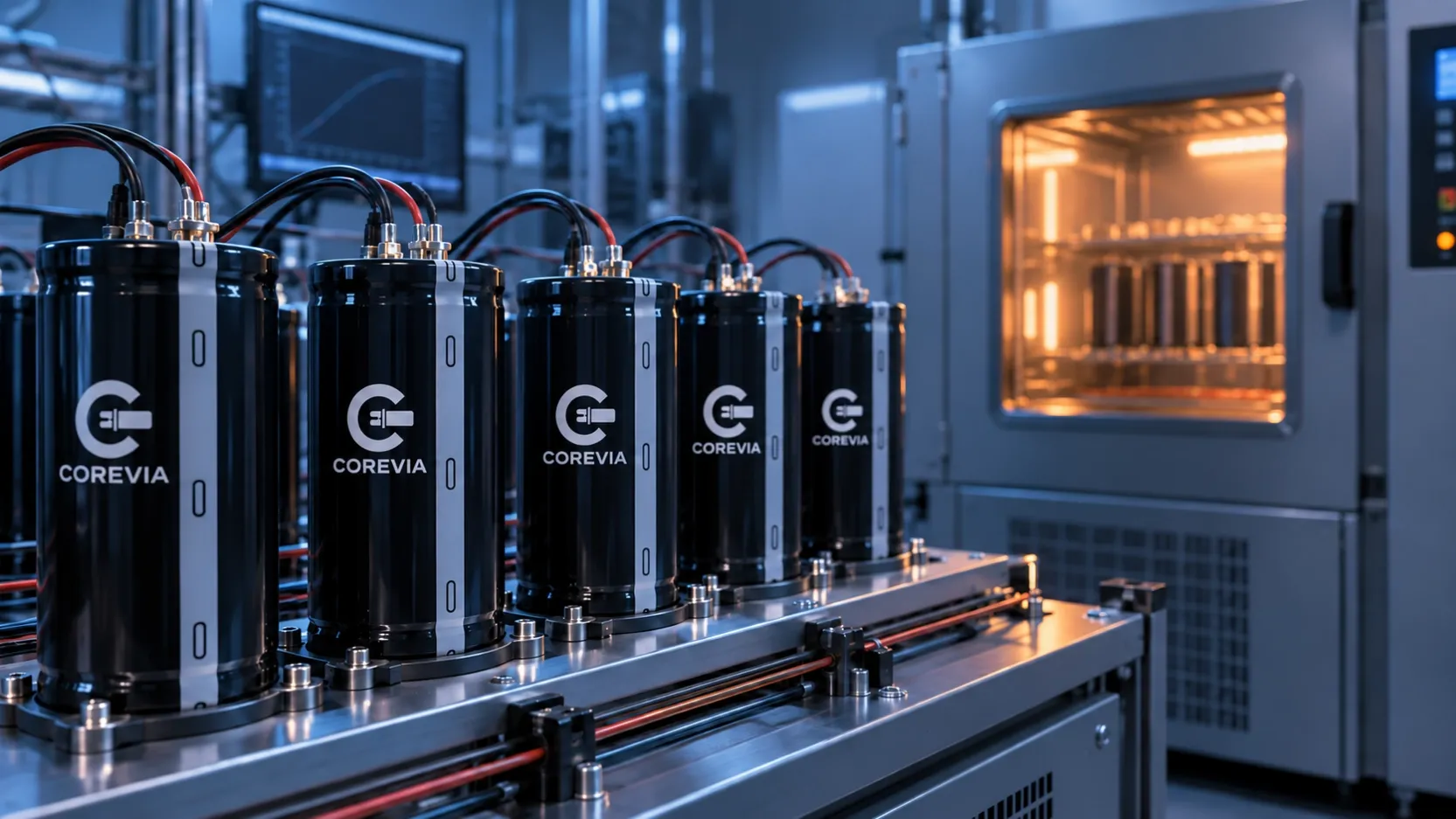
Endurance is strongly affected by capacitor core temperature, which reflects ambient temperature, ripple-current heating, ESR, airflow, nearby heat sources and mounting. A catalogue endurance rating is a test condition, not a guaranteed service-life figure for every application.
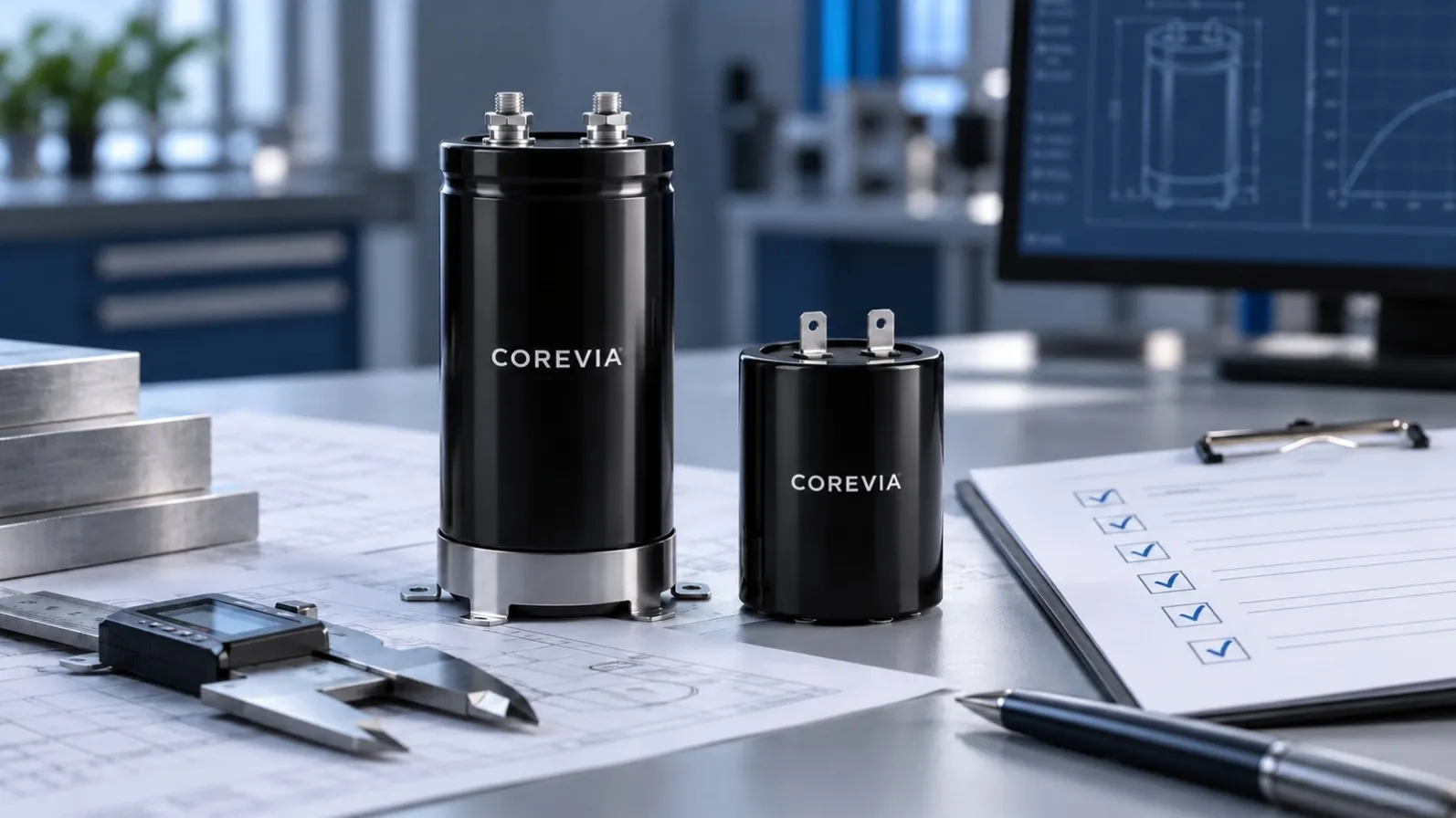
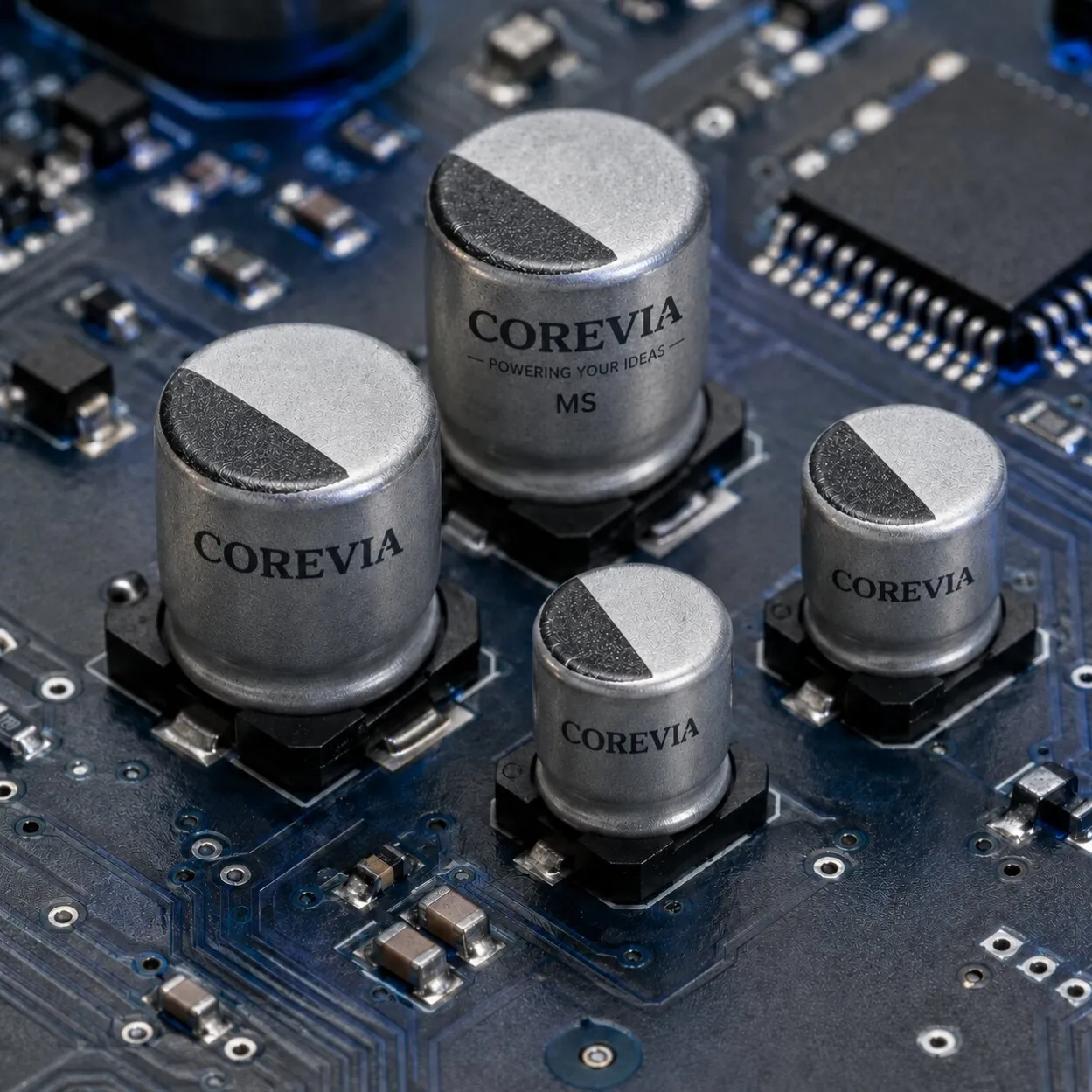
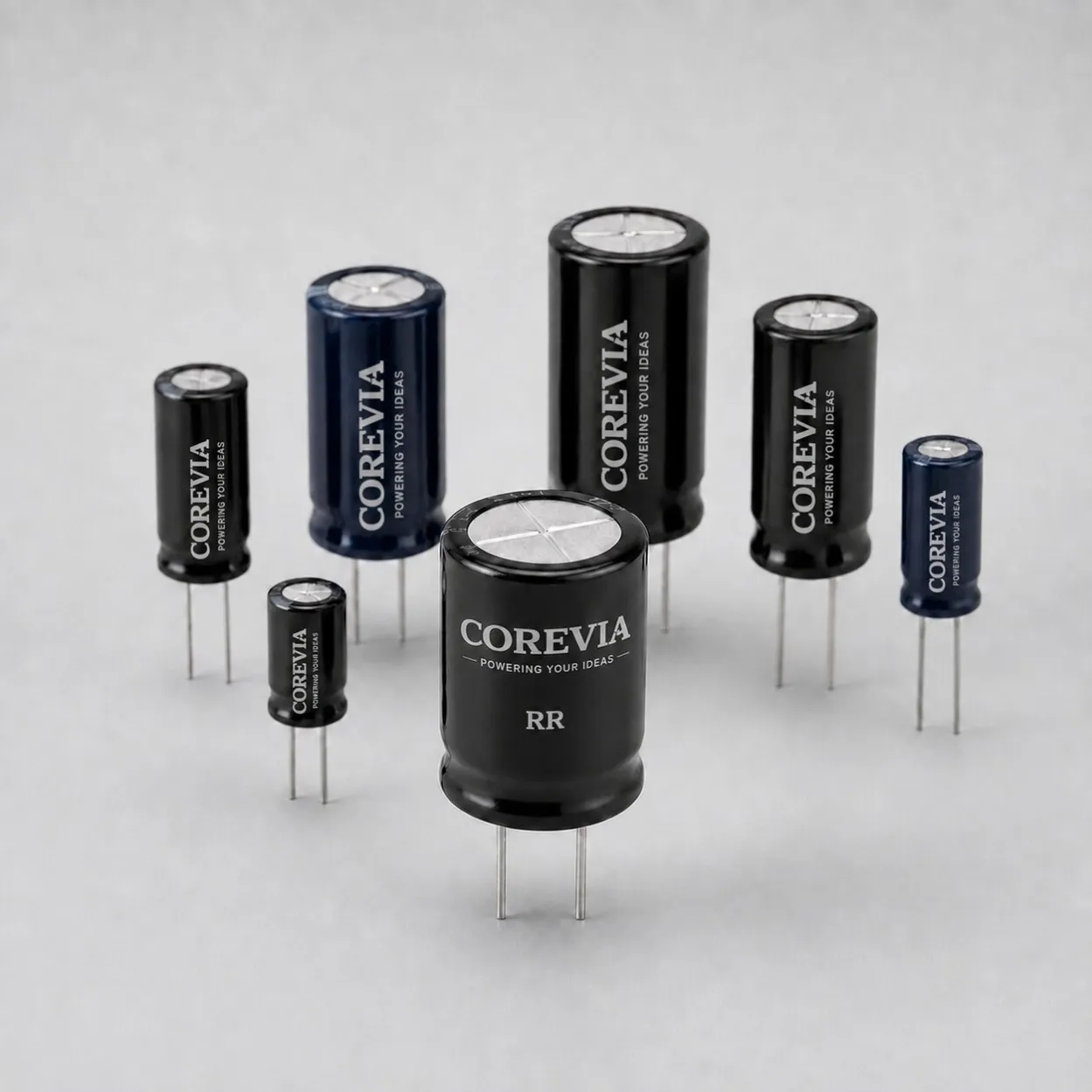
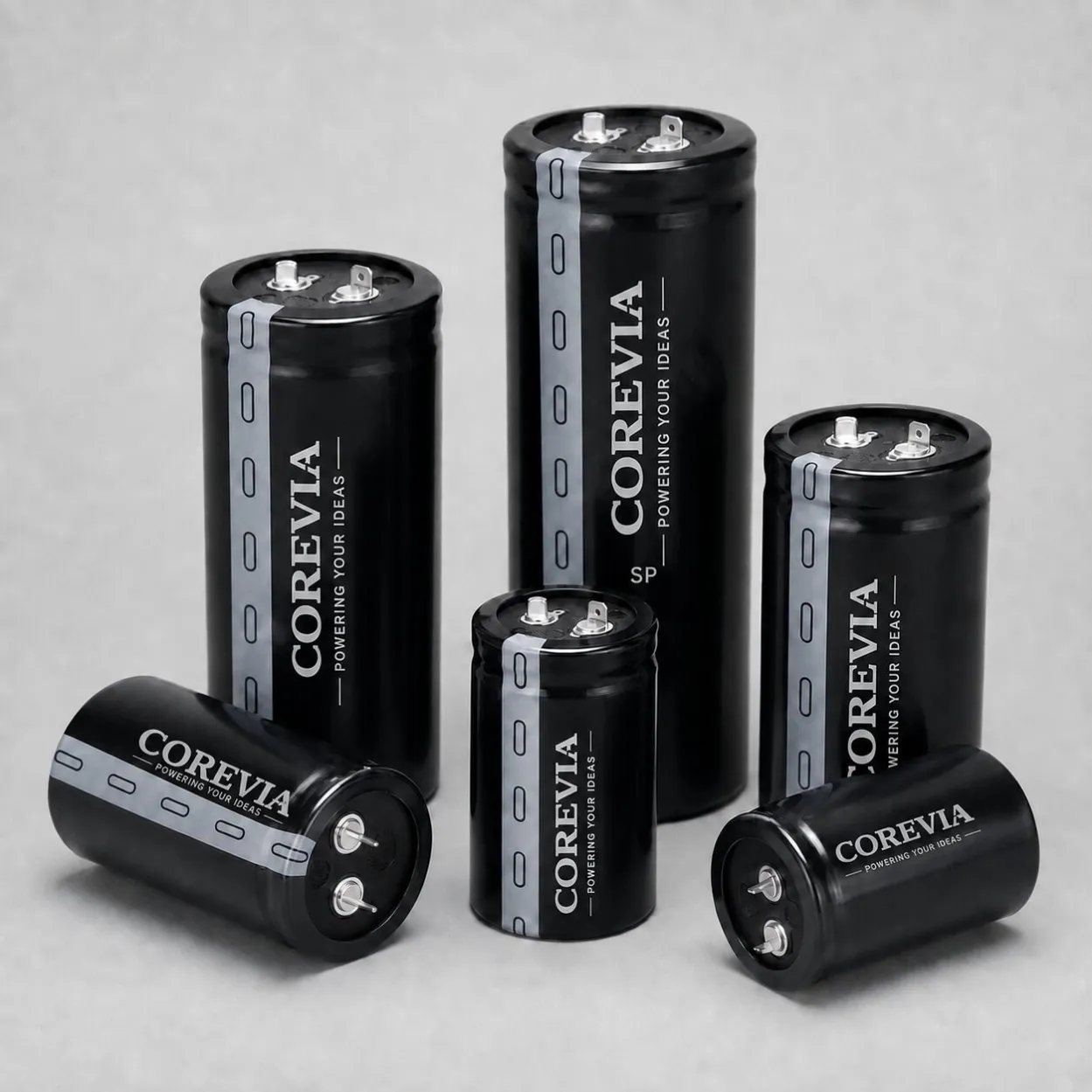
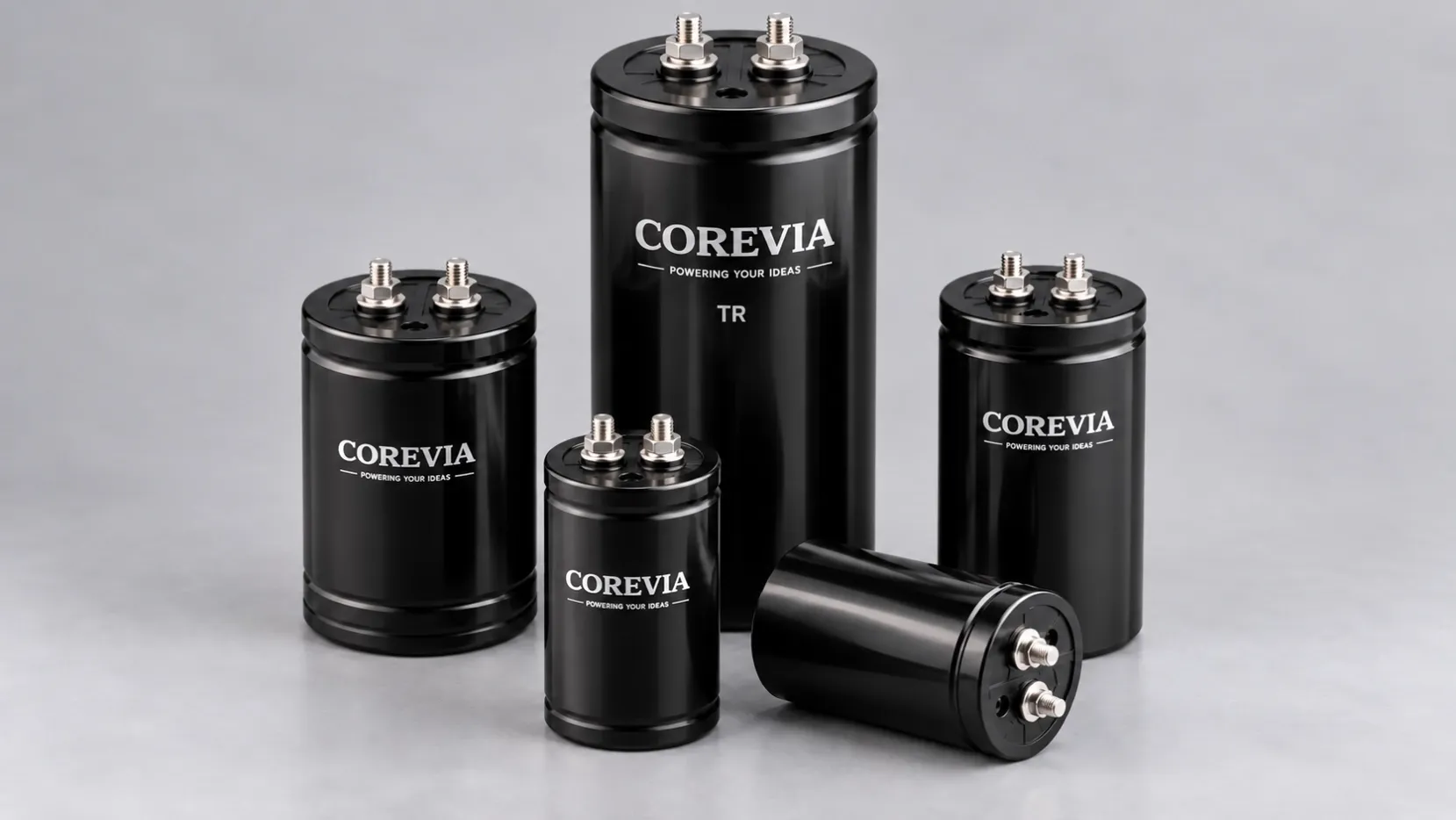
COREVIA supports selection across surface-mount, radial leaded, snap-in and screw-terminal aluminum electrolytic capacitor families. The appropriate series should be chosen from confirmed voltage, capacitance, temperature and endurance data together with the real electrical and thermal profile.
For a recommendation, provide the working voltage, capacitance, ripple current and frequency, ambient temperature, cooling, duty cycle, available case dimensions, expected quantity and target application.
Read the endurance conditions first
Compare the test conditions alongside the hours figure. Record the specified temperature, applied voltage, ripple-current conditions and acceptance limits. Two series with the same endurance hours are not necessarily equivalent if those conditions differ. Conversely, a larger number printed in a catalogue does not establish a longer operating life in an installation with a different thermal environment.
The COREVIA overview is a series-selection starting point. It does not contain every part's ripple-current rating, dimensional drawing or life-estimation model. Request the complete specification for the intended voltage, capacitance and case size before making a service-life commitment. Keep that document with the approved bill of materials so that purchasing and engineering are comparing the same revision.
Define a mission profile
Write down how the equipment will actually operate. Include daily operating hours, standby periods, load changes, expected ambient range, airflow and nearby sources of heat. Identify which conditions occur continuously and which are occasional. A single room-temperature value or the temperature outside a closed cabinet is not enough to describe the capacitor's surroundings.
Record capacitor ripple current with its frequency information for the important operating points. Note whether these values were measured or simulated and whether the cooling system was running normally. The purpose is to make assumptions explicit. Where information is unavailable, mark it as an open requirement instead of substituting a convenient catalogue value.
Review the installation and maintenance plan
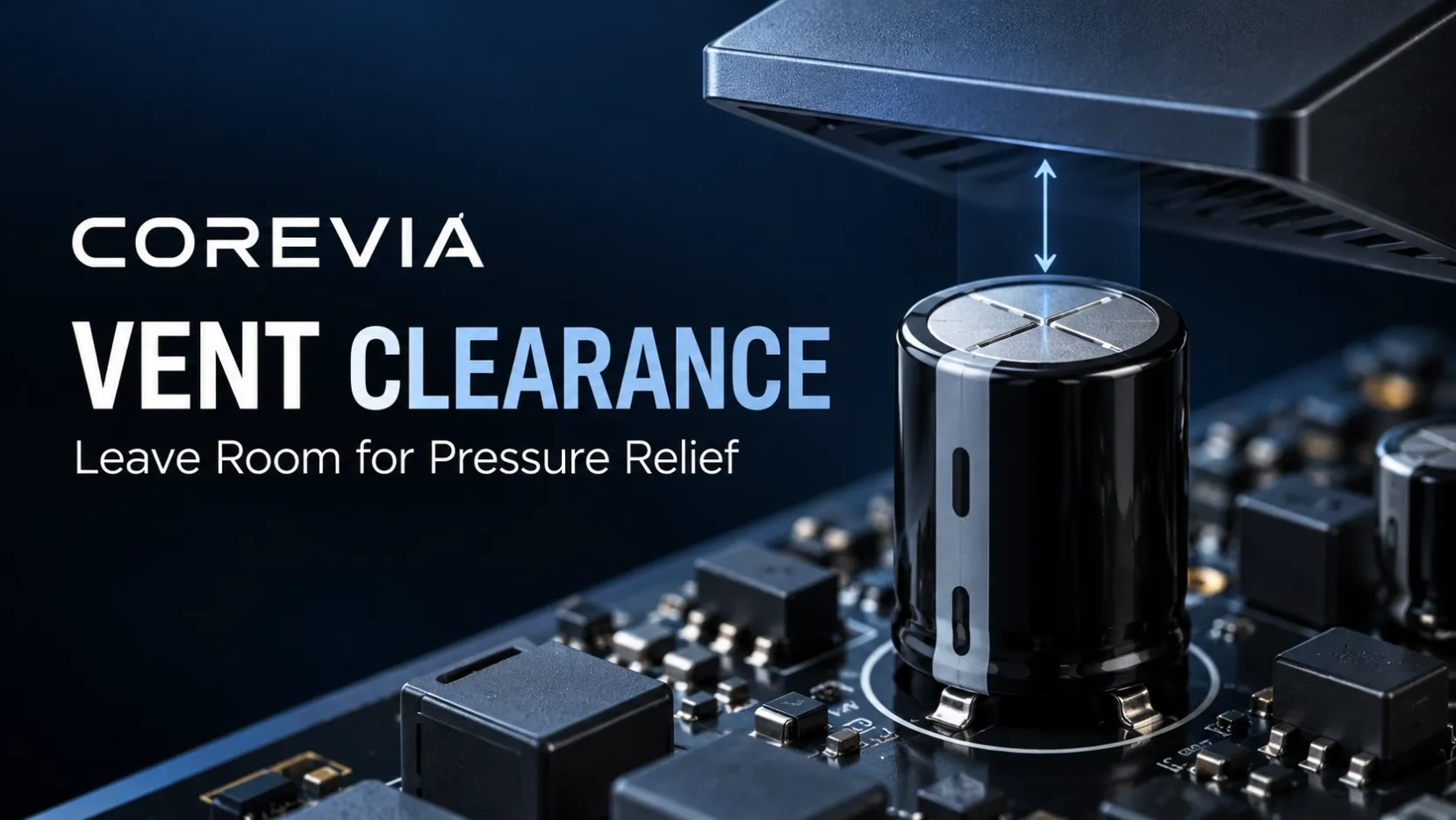
Allow for the actual mechanical arrangement: mounting orientation, spacing, terminal connections and ventilation. In equipment that depends on forced cooling, include the expected condition of filters and fans in the review. A design assessment should explain how the equipment detects or responds to a loss of cooling; a longer-endurance component is not a substitute for that system requirement.
Avoid using a generic temperature rule as a guaranteed prediction. An estimate should use the selected series' applicable model and limits, and should state the voltage, current and temperature assumptions. Ask the supplier to identify the model's permitted range rather than extrapolating it indefinitely. The resulting estimate remains an engineering input to equipment validation, not a warranty for every operating condition.
Match construction to the equipment
For a compact control or auxiliary power board, start with the radial leaded series and compare their individual endurance and temperature entries. For an industrial bank with bolted connections, review the screw terminal series. A family comparison helps narrow the search, but it does not establish that every series fits the same footprint or electrical duty.
Document acceptance before ordering
Prepare a short comparison sheet containing the proposed series, exact part specification, mounting drawing, operating profile and unresolved questions. Define the equipment-level checks needed before release, including performance under the agreed thermal and electrical conditions. If the application changes, revisit the selection rather than carrying an earlier estimate into a new design without review.
Send Your Specifications with the target endurance requirement, application and expected quantity. COREVIA can review the information against available series data; missing limits must be confirmed before a part is approved.
Explore the relevant COREVIA product family and request a confirmed series match.