Oct 8, 2026
Low-ESR vs General-Purpose Capacitors: How to Choose
A general-purpose capacitor can age quickly in a high-ripple circuit. Learn when a low-ESR series is worth the cost — with ESR, ripple current and lifetime compared.
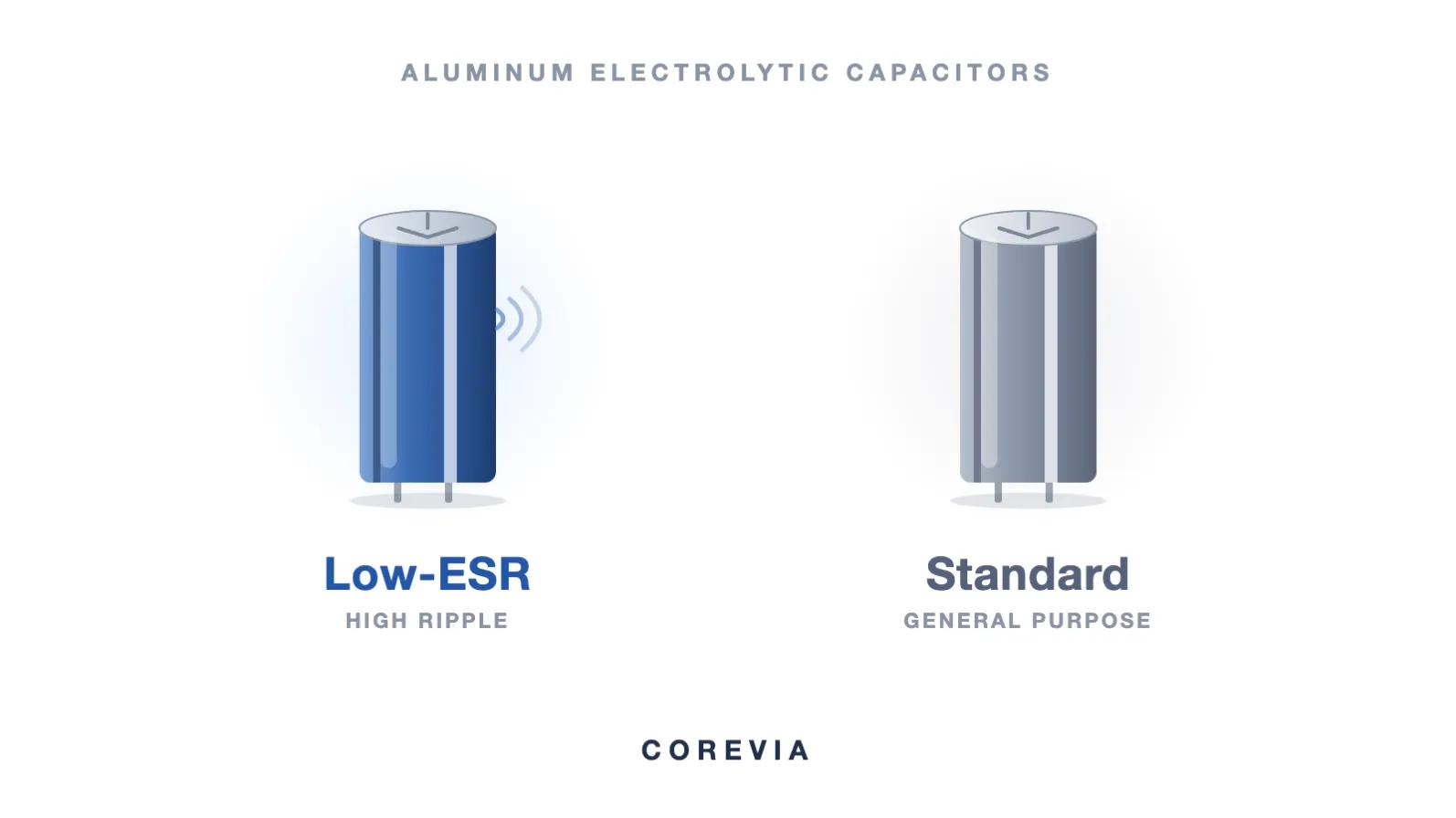
Two aluminum electrolytic capacitors with the same capacitance, the same voltage and even the same size can behave completely differently in your circuit. One stays cool for years; the other heats up, drifts out of tolerance and opens its vent early. The line on the datasheet that separates them is ESR. Here is how to decide whether your board needs a low-ESR series — or whether a general-purpose part is the smarter buy.
Quick answer: Choose a low-ESR series when the capacitor sits in a high-ripple position — the input and output filters of switching converters, DC links of inverters and drives, and anywhere the capacitor feeds fast, pulsed current. A general-purpose series is the right choice for mains-frequency smoothing, coupling, timing and low-current DC rails, where it costs less and offers a wider size selection. Match the series to the ripple, not to the price tag.
What "low-ESR" actually changes
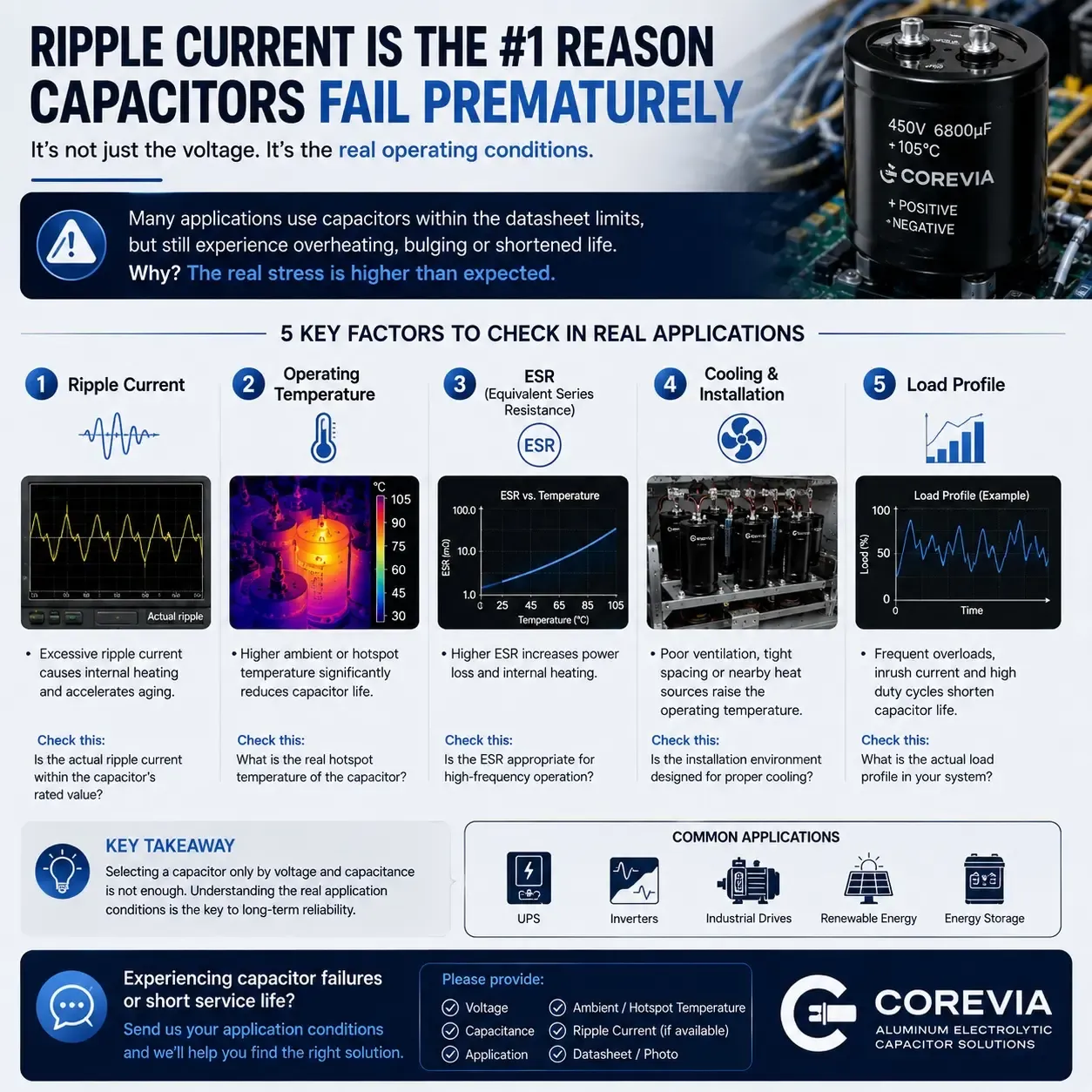
ESR — equivalent series resistance — is the real resistance inside the capacitor: the foil and tab resistance plus the losses in the electrolyte and separator. Every ripple current that flows through the capacitor dissipates power in this resistance, and that power becomes heat inside the can.
A low-ESR (sometimes labeled "low impedance") series attacks that resistance with design changes: more and thicker tab connections, foil and winding geometry optimized for high frequency, and electrolyte formulations with higher conductivity. The result, in datasheet terms:
- ESR at 10–100 kHz typically an order of magnitude below a general-purpose series of the same size
- A rated ripple current two to three times higher for the same case size
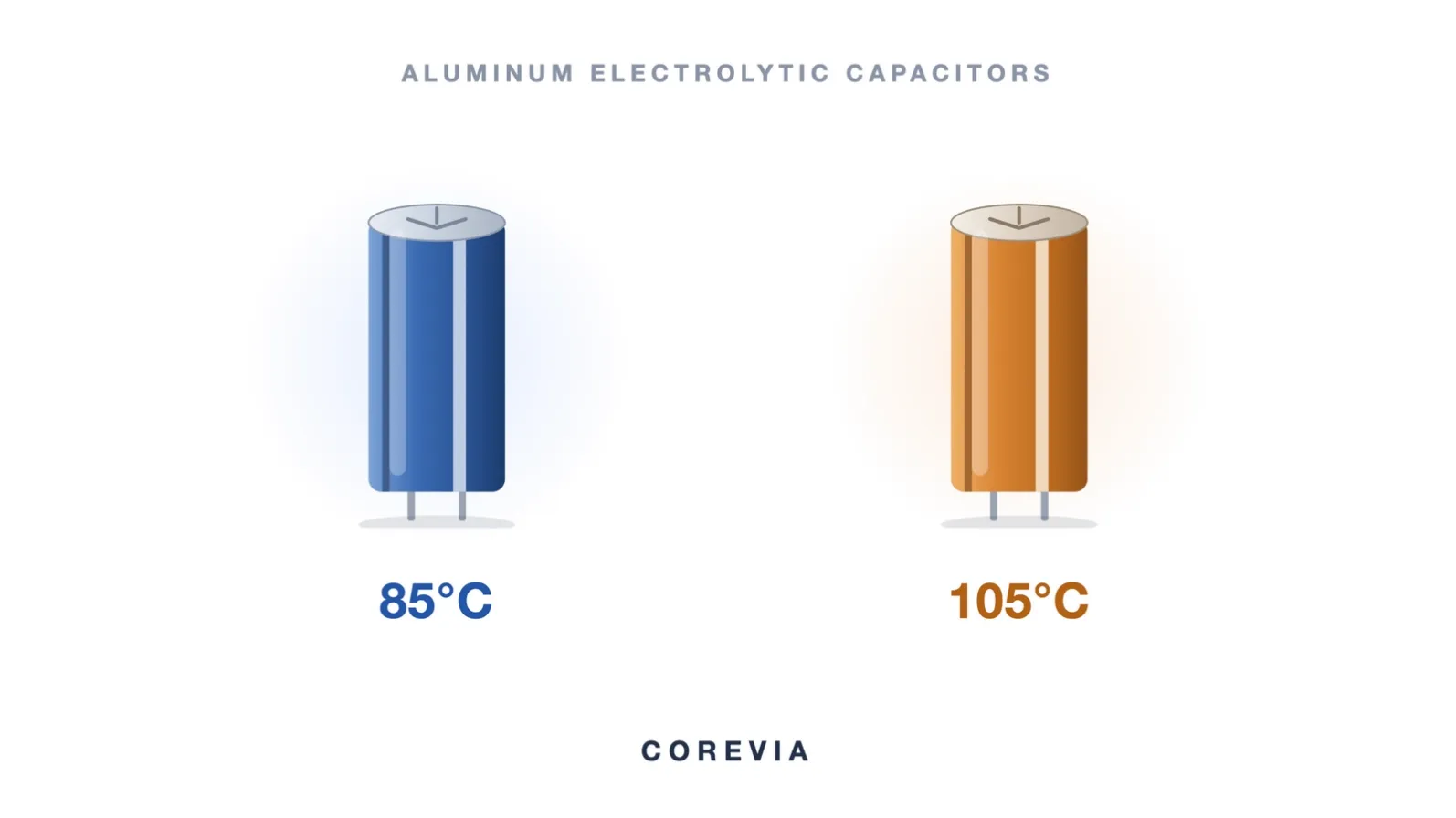
- Endurance classes to match — often 2,000 to 5,000 hours at 105°C
The capacitor inside is the same chemistry. What changed is how much heat each amp of ripple generates.
Where a general-purpose series is the right choice
Most capacitors on most boards are not in high-ripple positions, and paying for low ESR there buys nothing:
- Mains-frequency smoothing after a bridge rectifier in linear supplies and appliance controls
- Coupling, timing and snubber-adjacent roles where the ripple current is small by design
- Standby and low-current DC rails where discharge currents are milliamps
- Cost-sensitive consumer designs with modest lifetime expectations
In these positions the ripple-induced heating is negligible, so the ESR figure is irrelevant to the part's real life. A general-purpose series gives you the widest range of case sizes and voltages at the lowest cost.
When the circuit demands a low-ESR series
Step up to a low-ESR series when the capacitor works for a living:
- Switch-mode power supplies — input filters that charge at the switching frequency, output filters that carry the load's pulsating current
- DC links in inverters, VFDs and EV charging modules — continuous high ripple from the switching stage
- Positions next to fast-switching semiconductors where the capacitor must source and sink current at 20 kHz and above
- Retrofit fixes for capacitors that failed early in the same position
The last point matters: if a field failure analysis shows a vented capacitor with drifted capacitance in a switching stage, the usual root cause is a general-purpose part that was placed where the ripple demanded a low-ESR series. The failure mode and its prevention are covered in our guide to how ripple current and ESR affect capacitor reliability.
Compare like for like
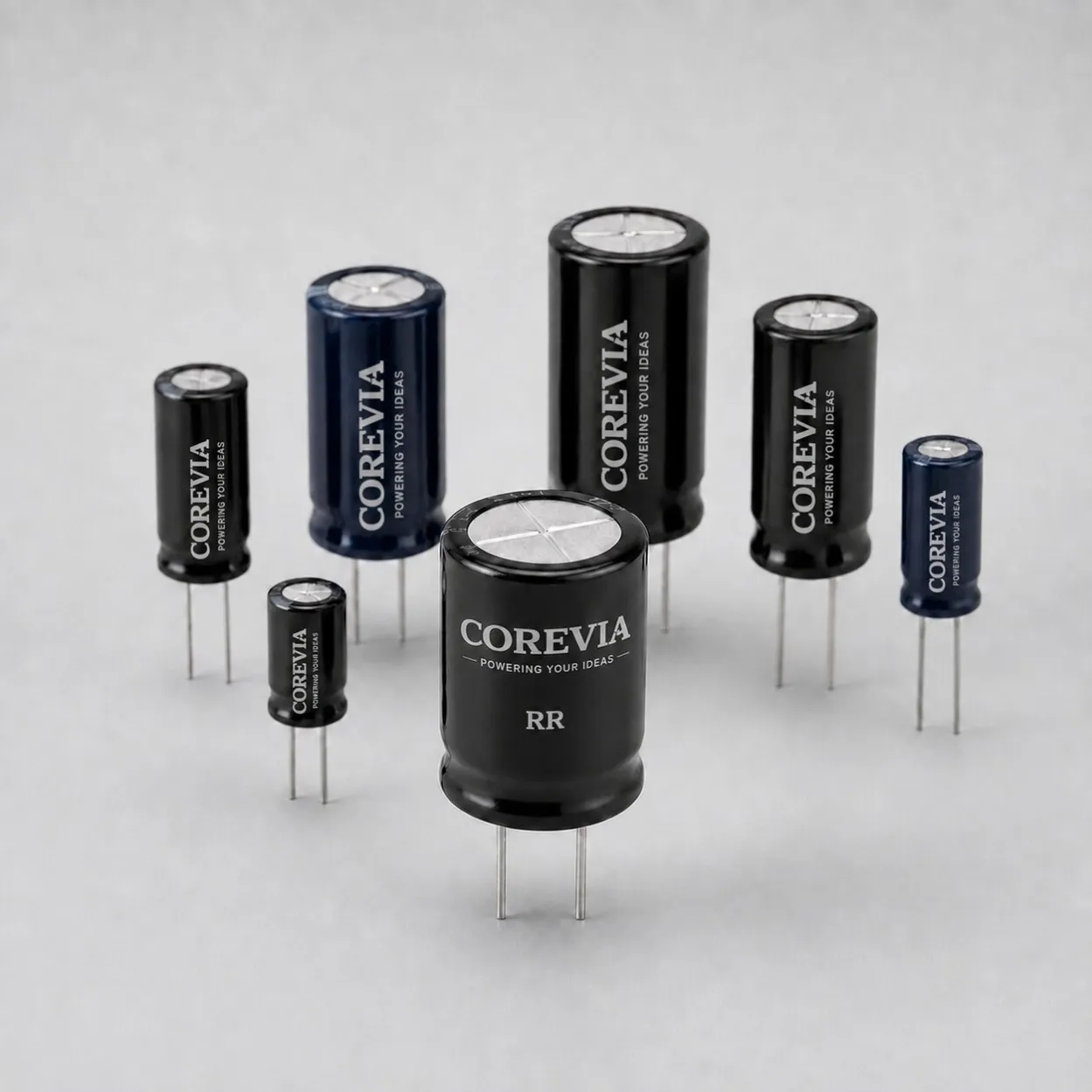
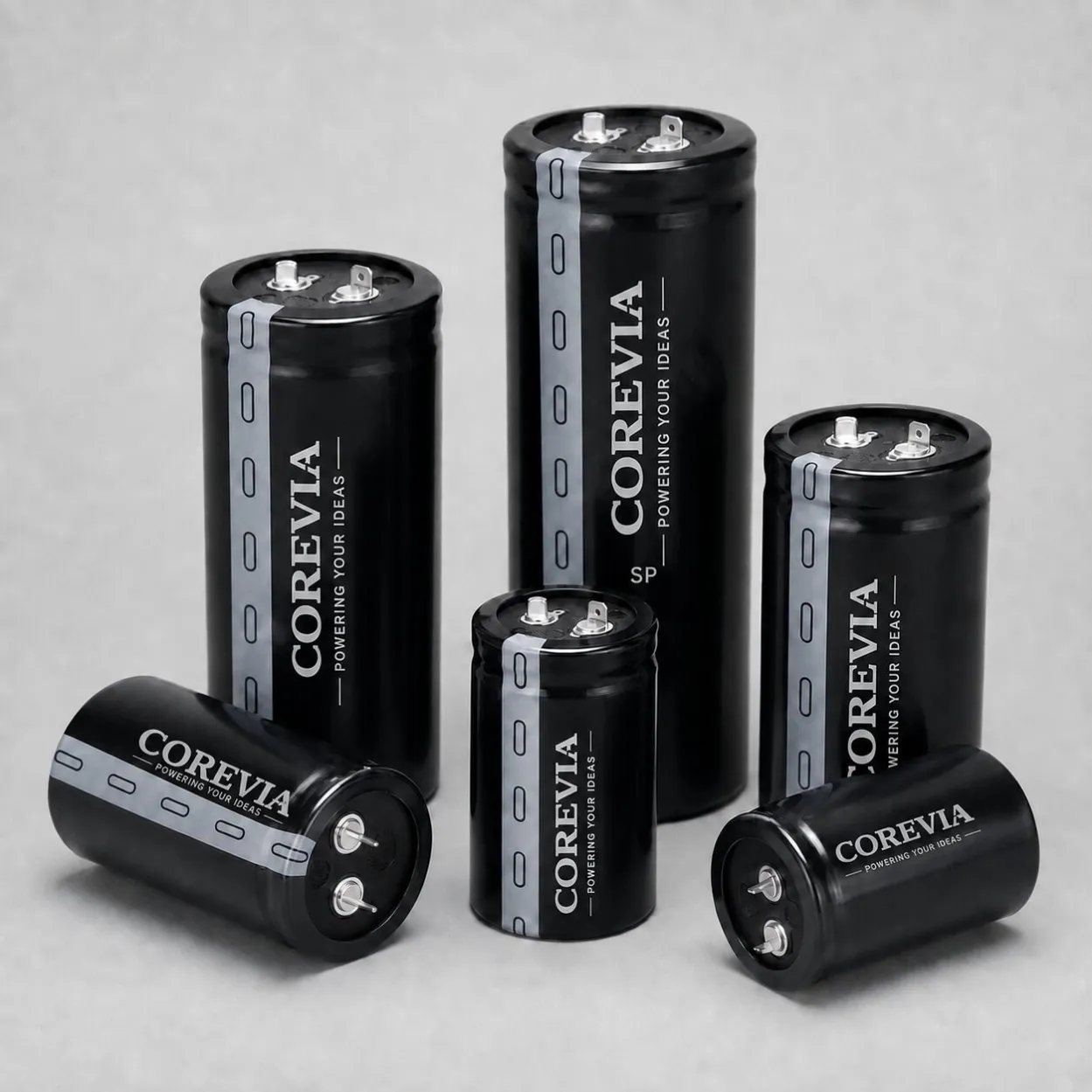
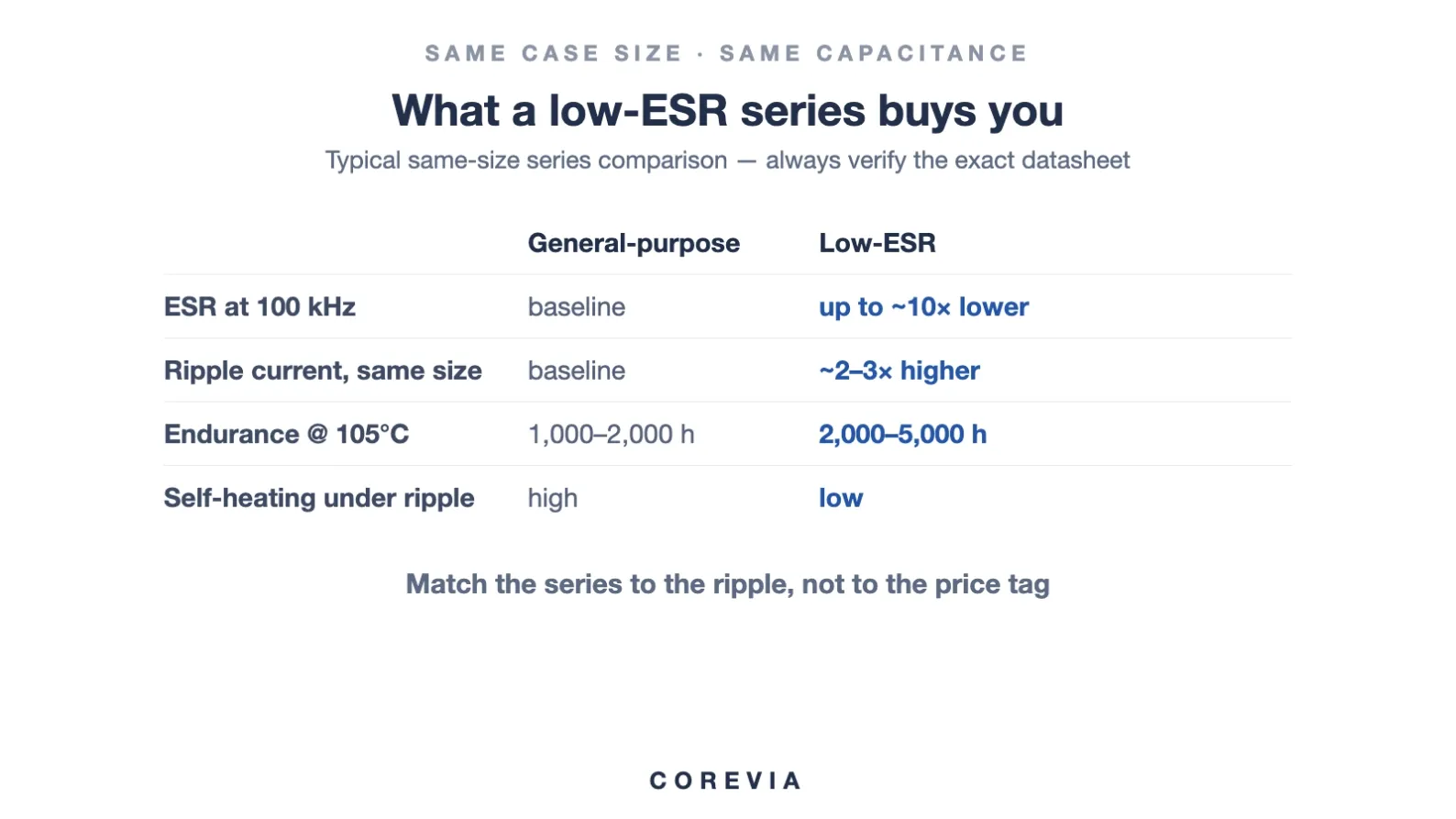
Typical differences between series of the same case size and voltage. Always verify against the exact series datasheet — our radial leaded series and snap-in series pages list the actual lineups, including high-ripple-current options.
| General-purpose | Low-ESR series |
ESR at 100 kHz | baseline | up to ~10× lower |
Ripple current rating (same size) | baseline | ~2–3× higher |
Endurance class | 1,000–2,000 h @ 105°C | 2,000–5,000 h @ 105°C |
Self-heating at high ripple | High | Low |
Price | Lower | Higher |
Typical role | Mains smoothing, coupling | SMPS, DC link, converters |
One comparison trap worth naming: ESR is frequency- and temperature-dependent. A series that looks average at 100 Hz can be excellent at 100 kHz. Compare the ESR curves at your switching frequency and operating temperature, not a single number at a frequency you don't use.
The lifetime math you get for free
The lifetime of an aluminum electrolytic capacitor is governed by its internal temperature, which is ambient plus the self-heating from ripple. A low-ESR series running the same ripple current heats less — and electrolytic capacitor life roughly doubles for every 10°C its internal temperature drops. The method behind that rule is in our guide to how aluminum electrolytic capacitor lifetime is estimated.
In a hot enclosure with high ripple — a LED driver, an inverter in a sealed cabinet — choosing the low-ESR series is often the cheapest lifetime upgrade available: same footprint, same assembly, several times the service life.
FAQ
Can I replace a general-purpose capacitor with a low-ESR one?
Almost always, if voltage, capacitance, size and lead spacing match. In a high-ripple position it is a strict upgrade; in a low-ripple position the benefit is negligible and the general-purpose part may be cheaper and easier to source. The one caution: some very old circuits rely on a certain ESR for stability, so check the circuit notes before swapping in bulk-filter replacements.
Does low ESR automatically mean longer life?
Only under ripple. In a position with negligible ripple current, a low-ESR part and a general-purpose part of the same endurance class age at essentially the same rate. The lifetime advantage comes from reduced self-heating, which only exists when ripple flows.
Is the ripple current rating enough to compare two series?
No. The ripple rating assumes a given frequency and frequency-multiplier table in the datasheet. Two series with the same 105°C/2,000 h endurance can distribute their ripple capability differently across frequencies. Check ESR at your switching frequency and the ripple multiplier table, not just the headline number.
What happens if a standard series runs where ripple is high?
The capacitor runs hot, capacitance drifts down and ESR climbs — which makes it heat even more, a self-reinforcing loop. Endurance is consumed far earlier than the datasheet promises, and eventually the vent opens. If you see this pattern in the field, the fix is usually a series change, not a bigger capacitance.
Choose the series with us
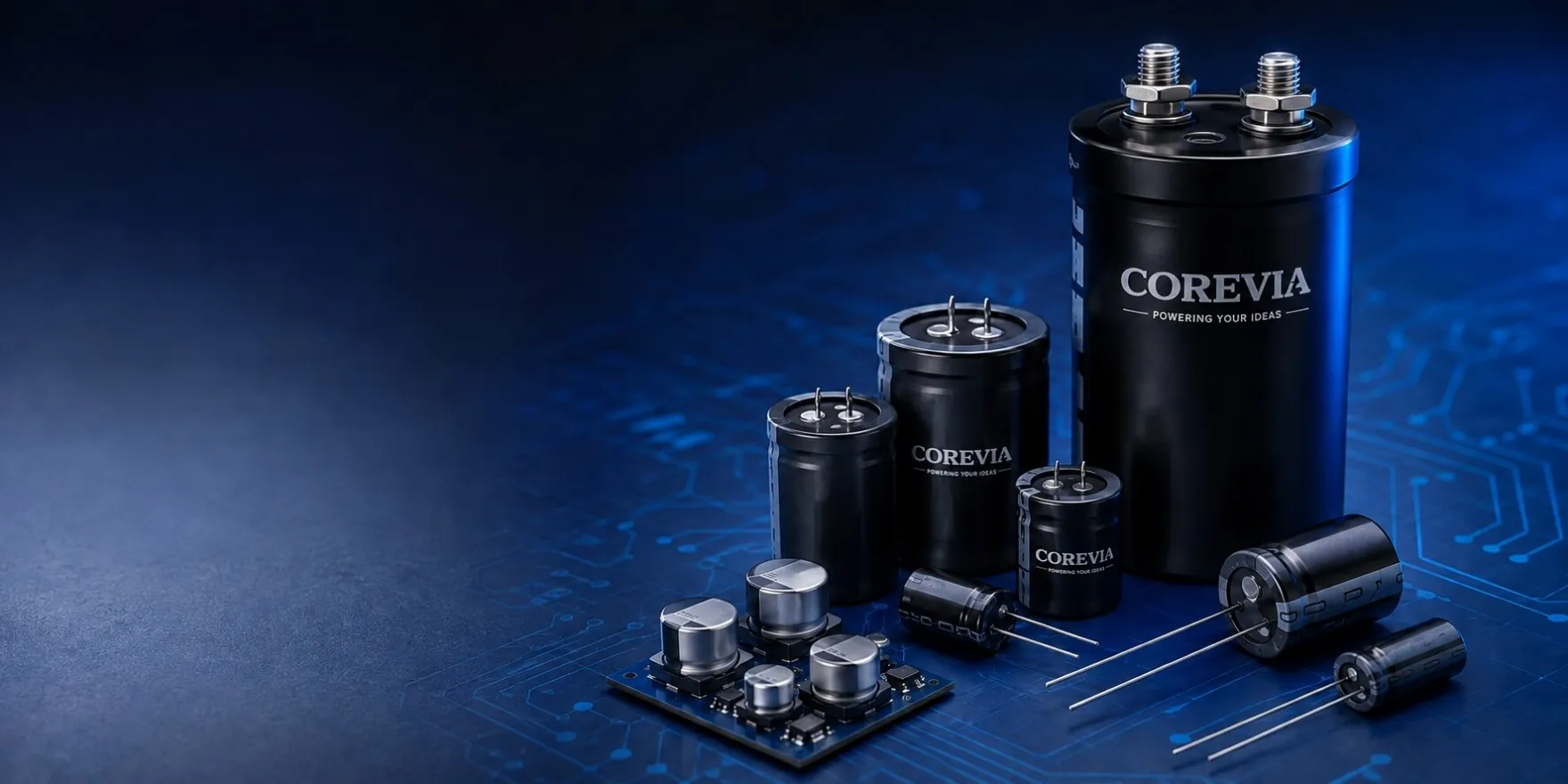
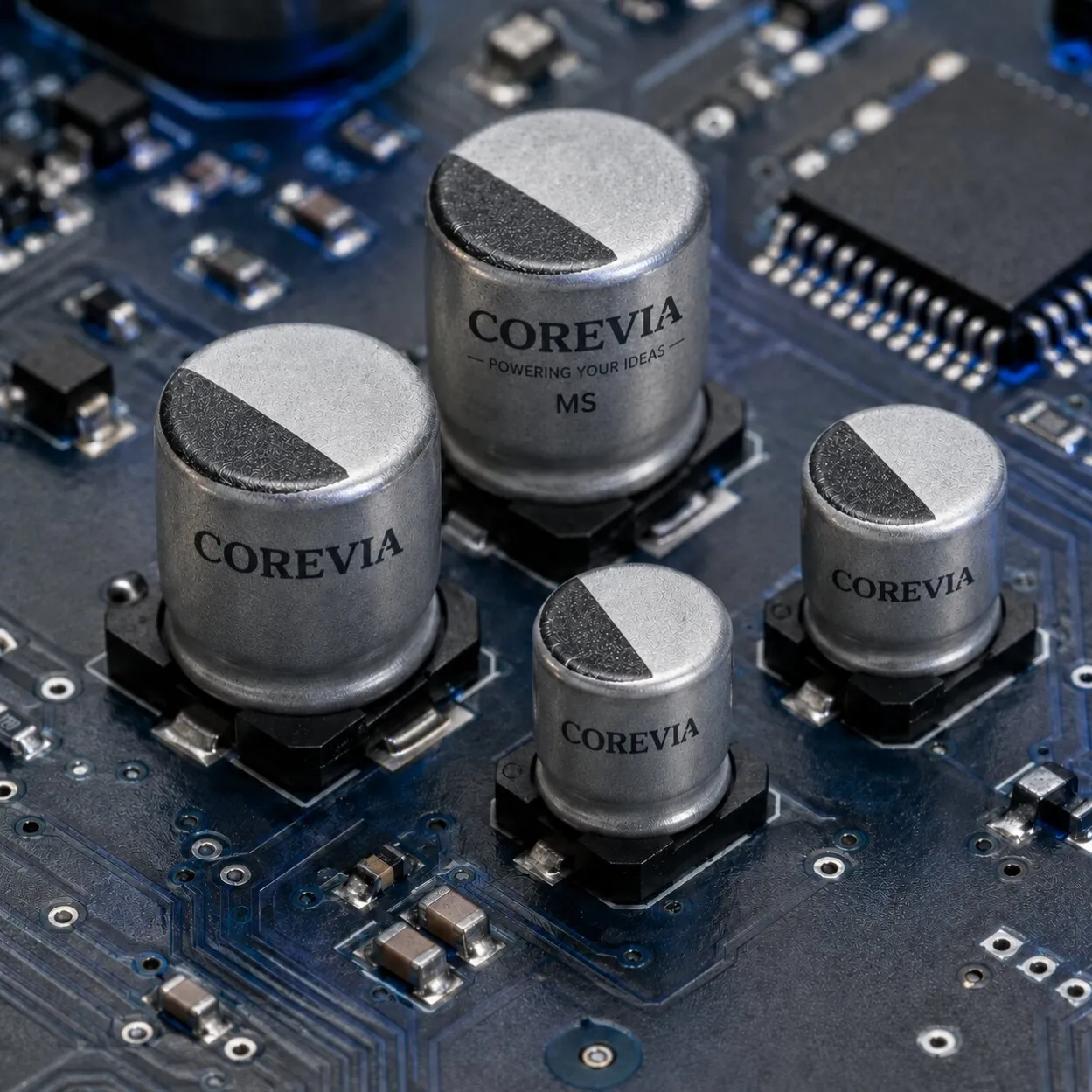
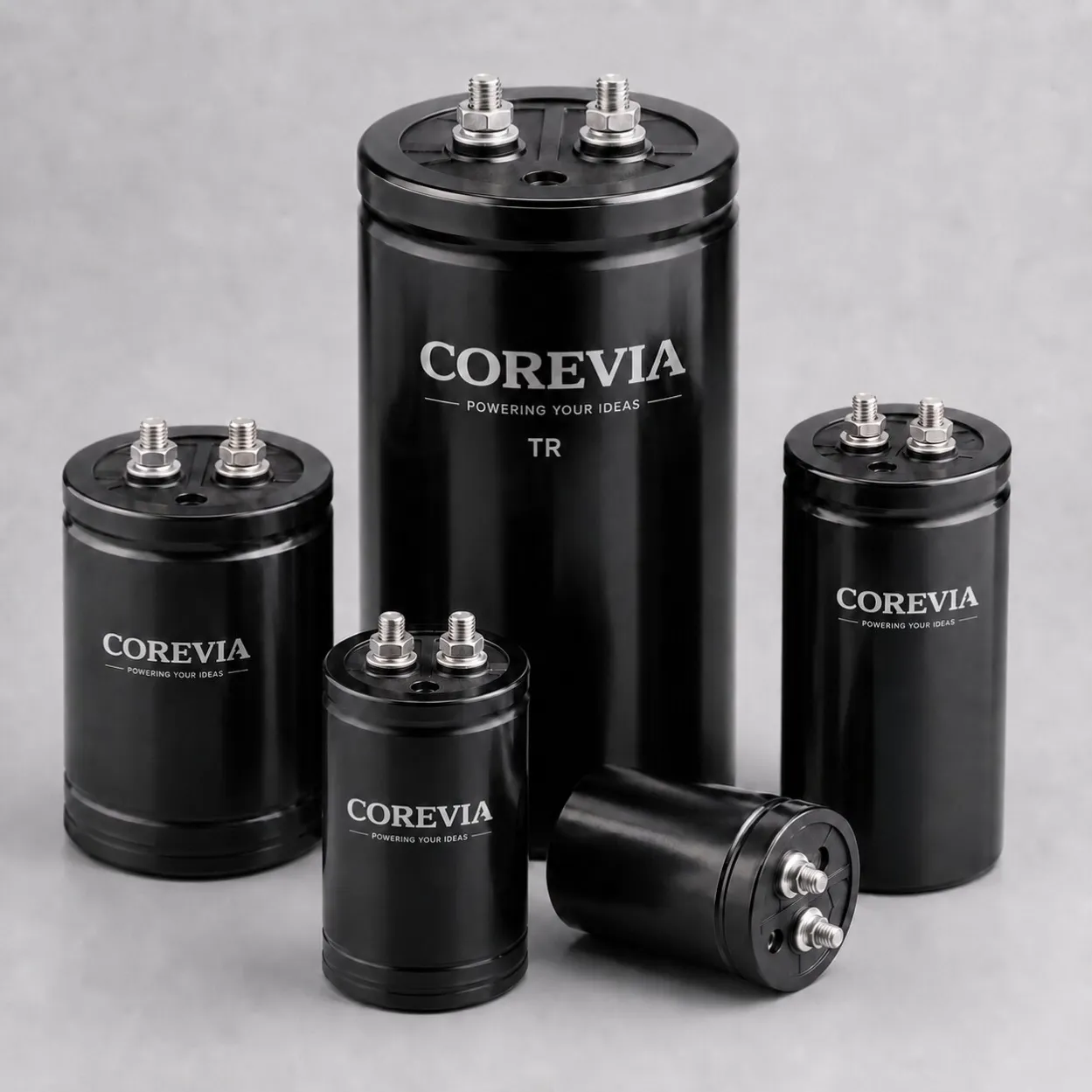
COREVIA supplies aluminum electrolytic capacitors in radial leaded, SMD, snap-in and screw terminal formats, with general-purpose and low-ESR series across the range. Send us your switching frequency, ripple conditions and lifetime target, and we will recommend the series that fits: [email protected] · WhatsApp +86 137 7126 2062.