Sep 25, 2026Capacitor Selection
Why Voltage and Capacitance Are Not Enough for Capacitor Replacement
A reliable capacitor replacement must also match ripple current, ESR, temperature, dimensions, mounting and endurance.
Why Voltage and Capacitance Are Not Enough for Capacitor Replacement
Rated voltage and capacitance are the first two values people compare when replacing an aluminum electrolytic capacitor, but they do not define an equivalent part. A replacement can show the same numbers on its label and still overheat, fail mechanically or change the behavior of the circuit. A reliable cross-reference must include the actual electrical, thermal and mechanical requirements.
The voltage rating must cover the highest continuous voltage across the capacitor and any known transient condition. Measure the voltage at the individual component, especially in series-connected banks where leakage-current differences or failed balancing resistors can produce uneven voltage sharing. Selecting a higher voltage rating can add margin, but it can also change the available capacitance, case size, ESR and ripple-current performance. The complete specification still needs review.
Capacitance affects energy storage, filtering, hold-up time and control behavior. Check the permitted tolerance and the minimum value needed after tolerance and expected aging. In a parallel bank, one weak or disconnected capacitor may be hidden by the total bank reading. Inspect and test each branch when the failure history or current sharing is uncertain.
Ripple current is a major selection limit because it creates internal heat. Record the RMS ripple current and its frequency content under representative load. Datasheets may state ratings at different frequencies and temperatures, so headline values cannot be compared until their conditions are aligned. The rectifier-frequency component and the switching-frequency component may both matter in a DC-link application.
ESR or impedance determines how much heat a given ripple current produces and can affect voltage ripple, transient response and current sharing. A practical screening relationship is that ripple loss rises approximately with the square of current multiplied by ESR. Even a moderate current increase can therefore create a much larger thermal load. Compare ESR or impedance at the frequencies and temperatures relevant to the equipment.
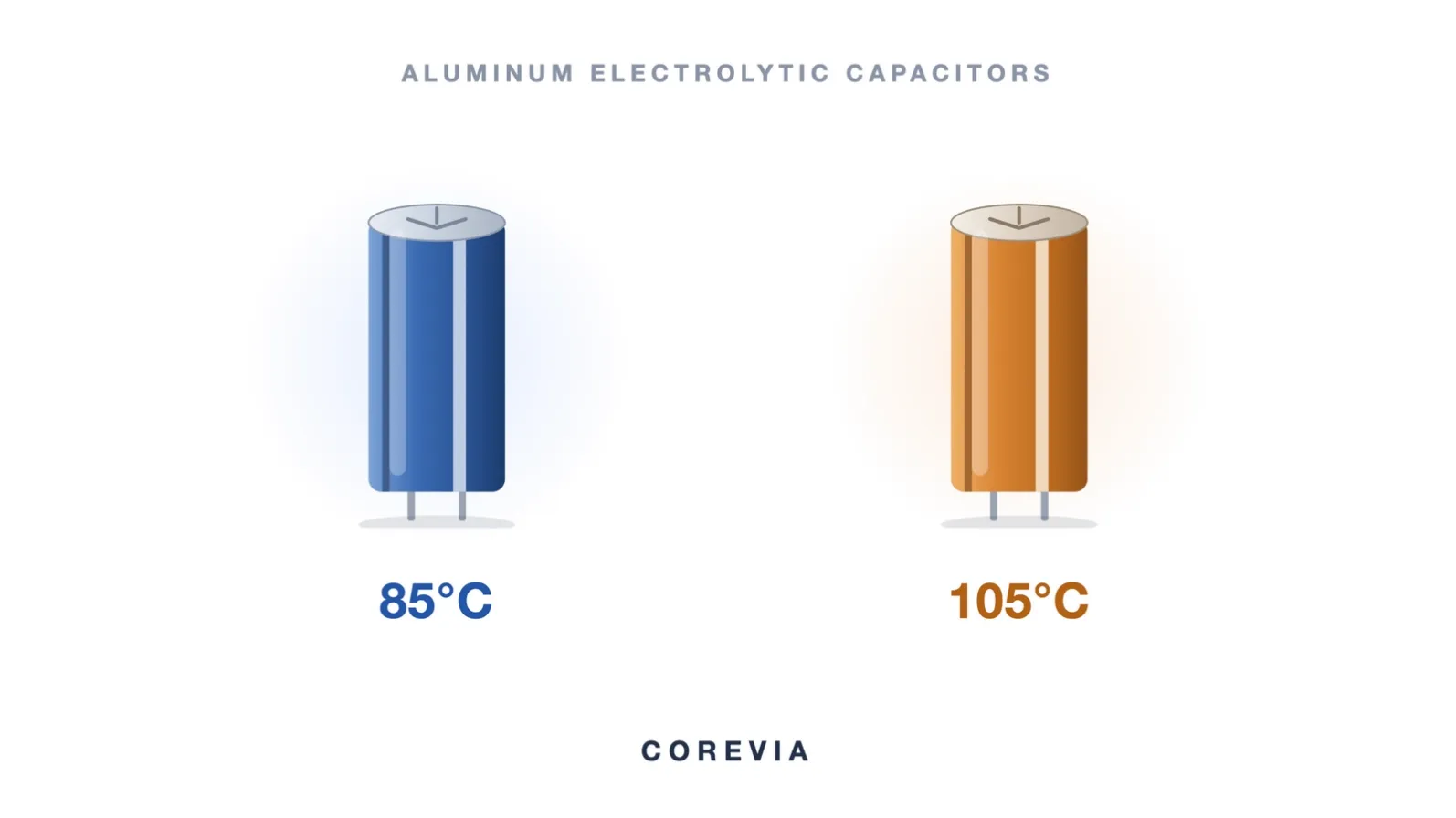
Temperature rating and endurance require careful interpretation. An endurance value is measured under defined test conditions; it is not a guaranteed service-life number for every converter. Record the ambient temperature, airflow, measured case or hotspot temperature, nearby heat sources, duty cycle and annual operating hours. A 105 °C part can still be unsuitable if its ripple rating, ESR or cooling environment differs from the original design.
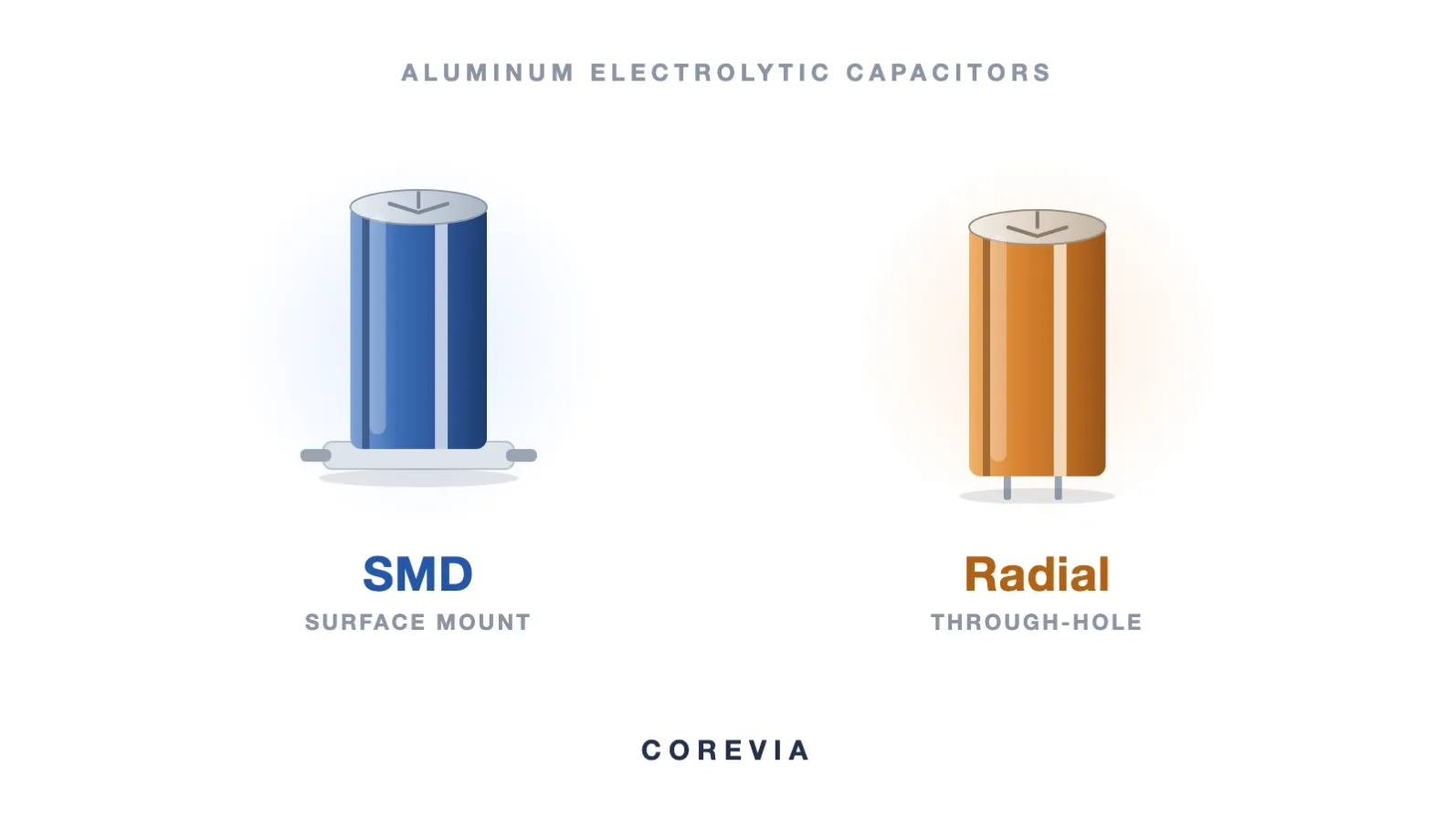
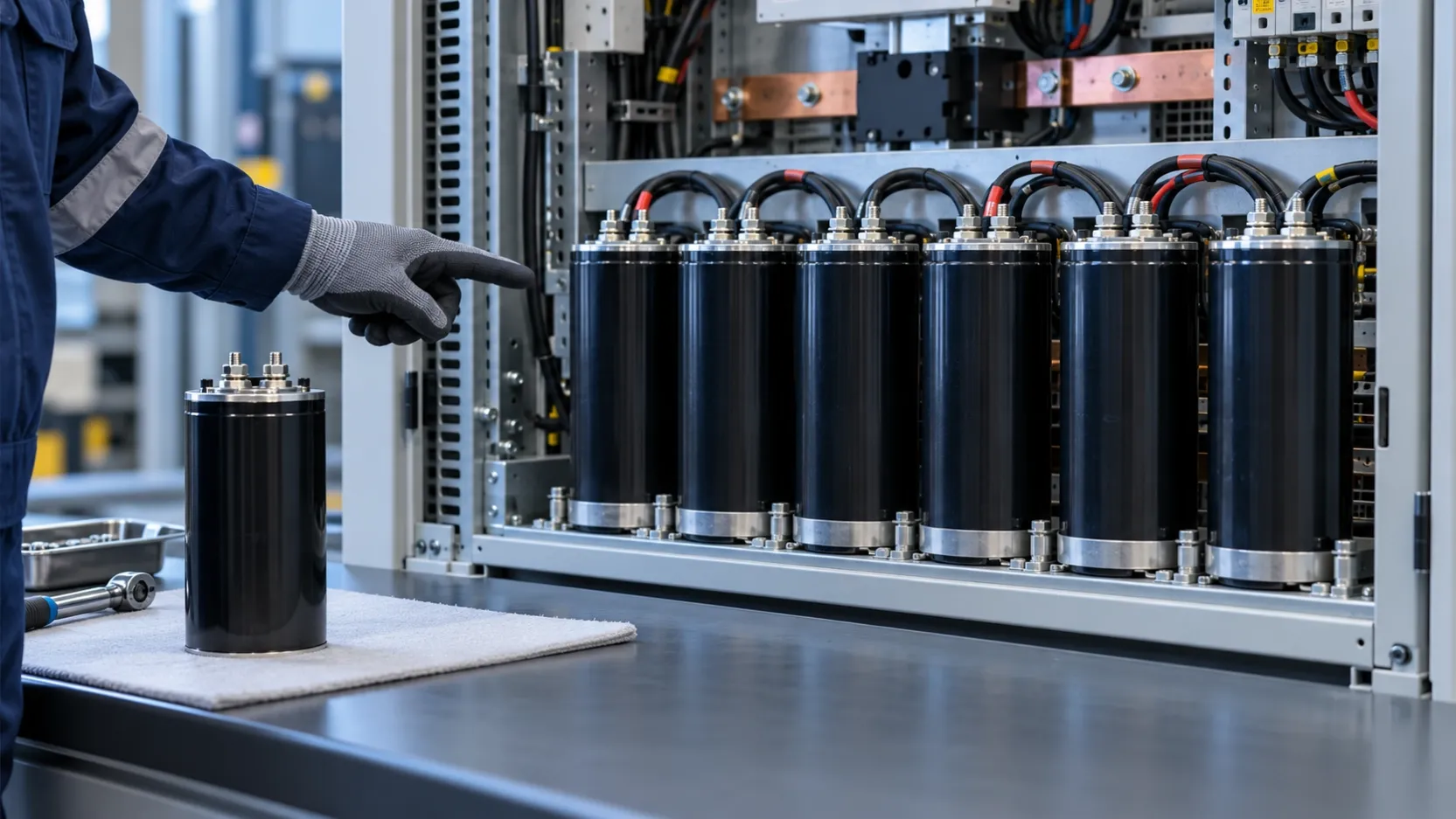
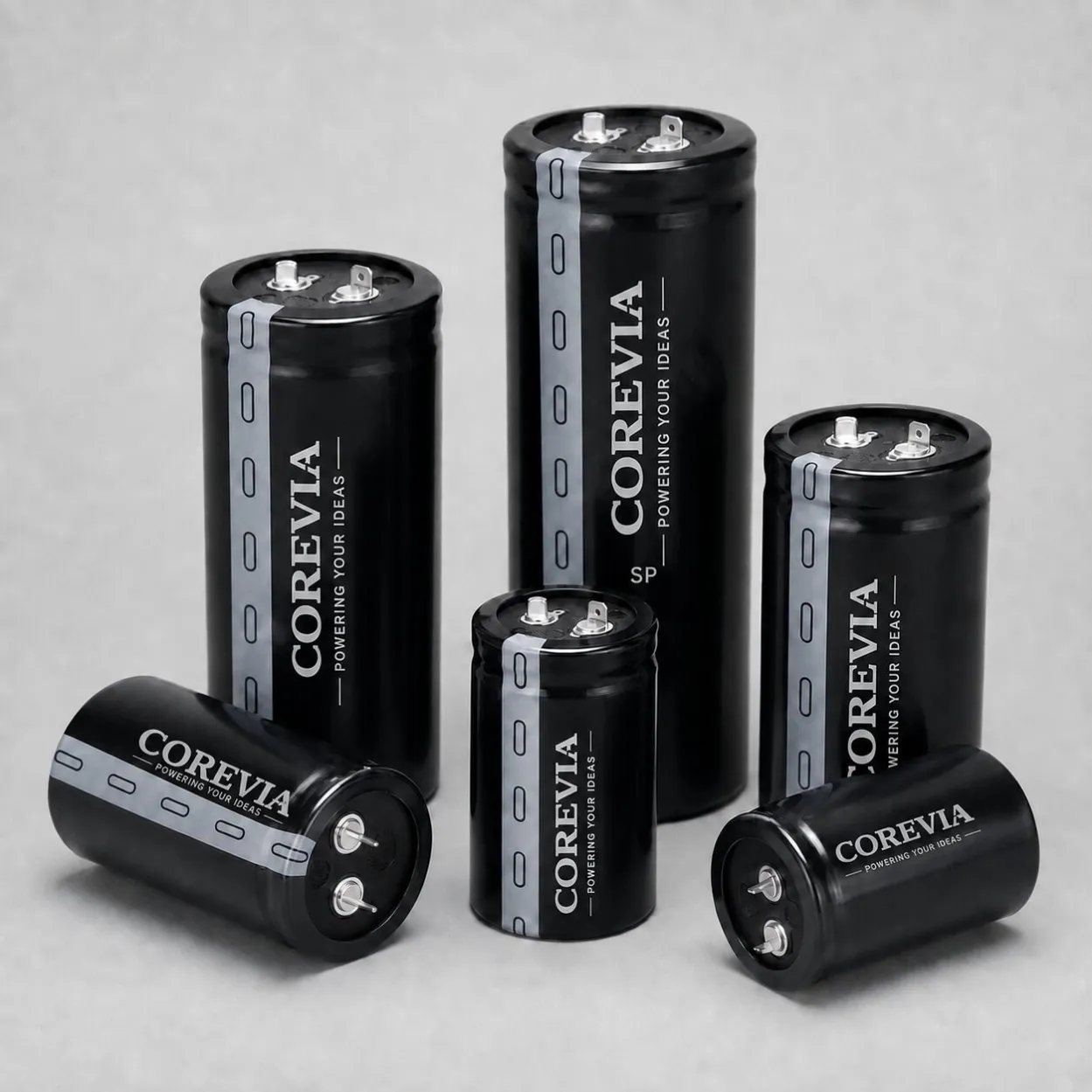
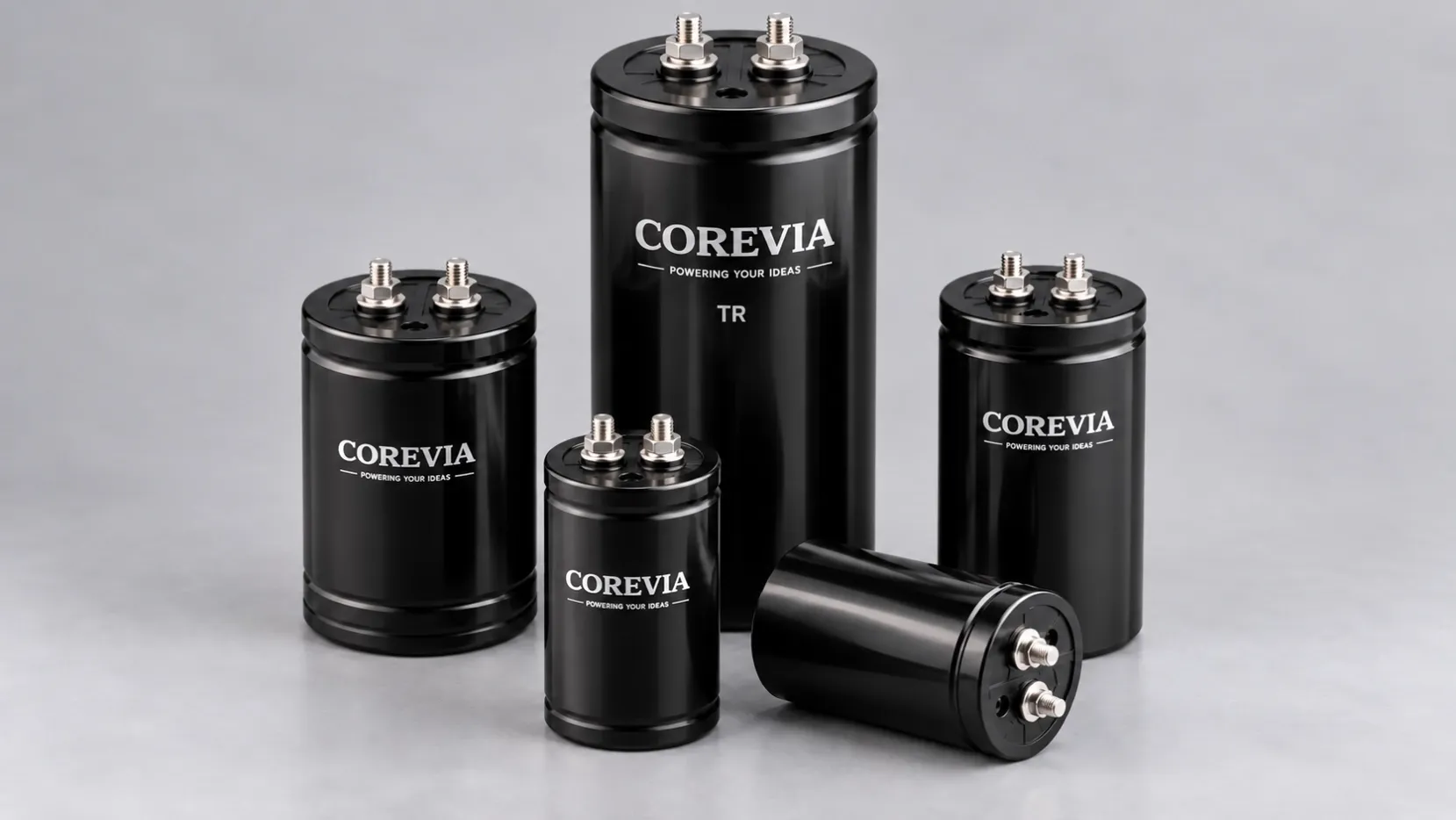
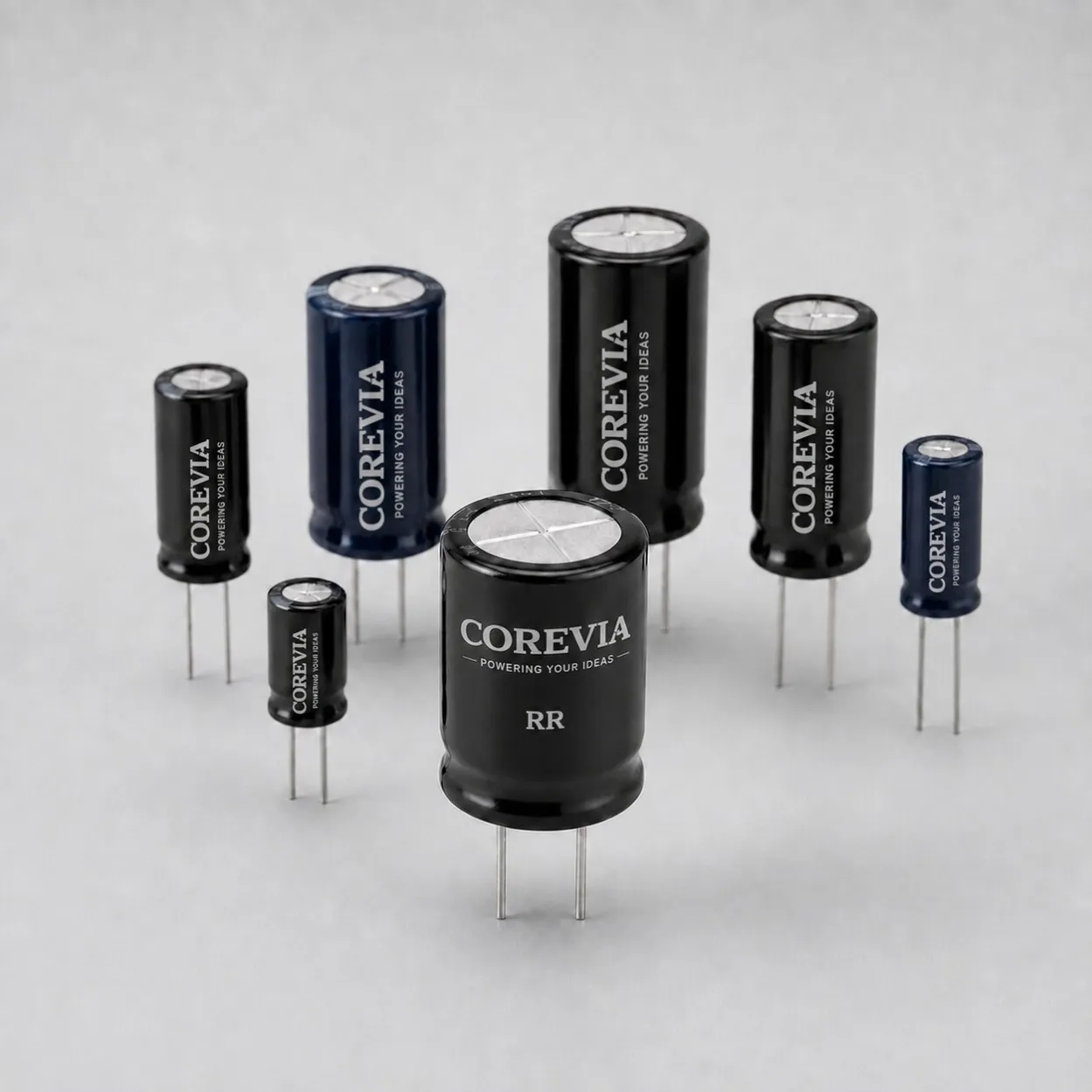
Mechanical compatibility includes case diameter and length, lead pitch or terminal spacing, polarity, terminal thread, permitted torque, clamp arrangement and safety-vent clearance. For radial leaded and SMD parts, confirm the footprint and soldering process. For snap-in capacitors, confirm PCB support and lead spacing. For screw-terminal capacitors, confirm busbar alignment, insulation distance and connection hardware. Do not bend terminals or force conductors into place to make an incompatible part fit.
Application behavior also matters. Review pre-charge current, repeated start-stop cycles, discharge requirements, vibration, storage history and any abnormal event that caused the original failure. Replacing a bulged or overheated capacitor without checking cooling, contactors, resistors and connections can leave the root cause in the equipment.
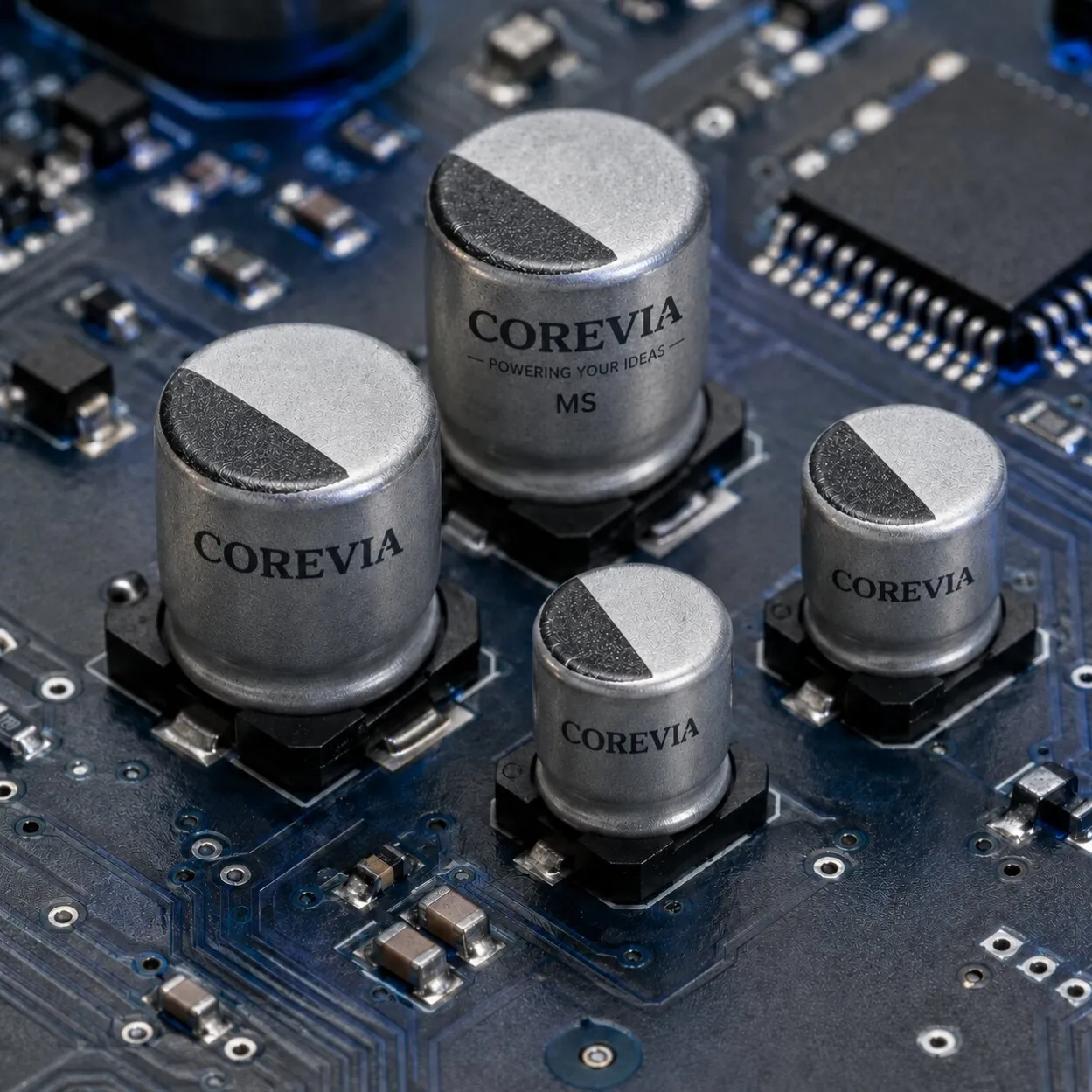
The product family should match the construction need. COREVIA supplies SMD, radial leaded, snap-in and screw-terminal aluminum electrolytic capacitor series. SMD and radial parts support compact board-level applications, while snap-in and screw-terminal families cover many DC-link and energy-storage arrangements. The correct family and series must be selected from confirmed data, not from the broadest portfolio range.
For a replacement review, provide the original manufacturer and full part number, datasheet, rated voltage, capacitance, ripple-current conditions, ESR or impedance requirement, temperature, case dimensions, leads or terminals, expected quantity, application and the reason for replacement. Send the information to [email protected]. If a critical value is unavailable, it should remain an open engineering check instead of being presented as a confirmed equivalent.