Oct 7, 2026Capacitor Selection
SMD vs Radial Electrolytic Capacitors: How to Choose
SMD and radial electrolytic capacitors can share the same µF and voltage. See how the assembly process decides — with clear ranges and a comparison table.
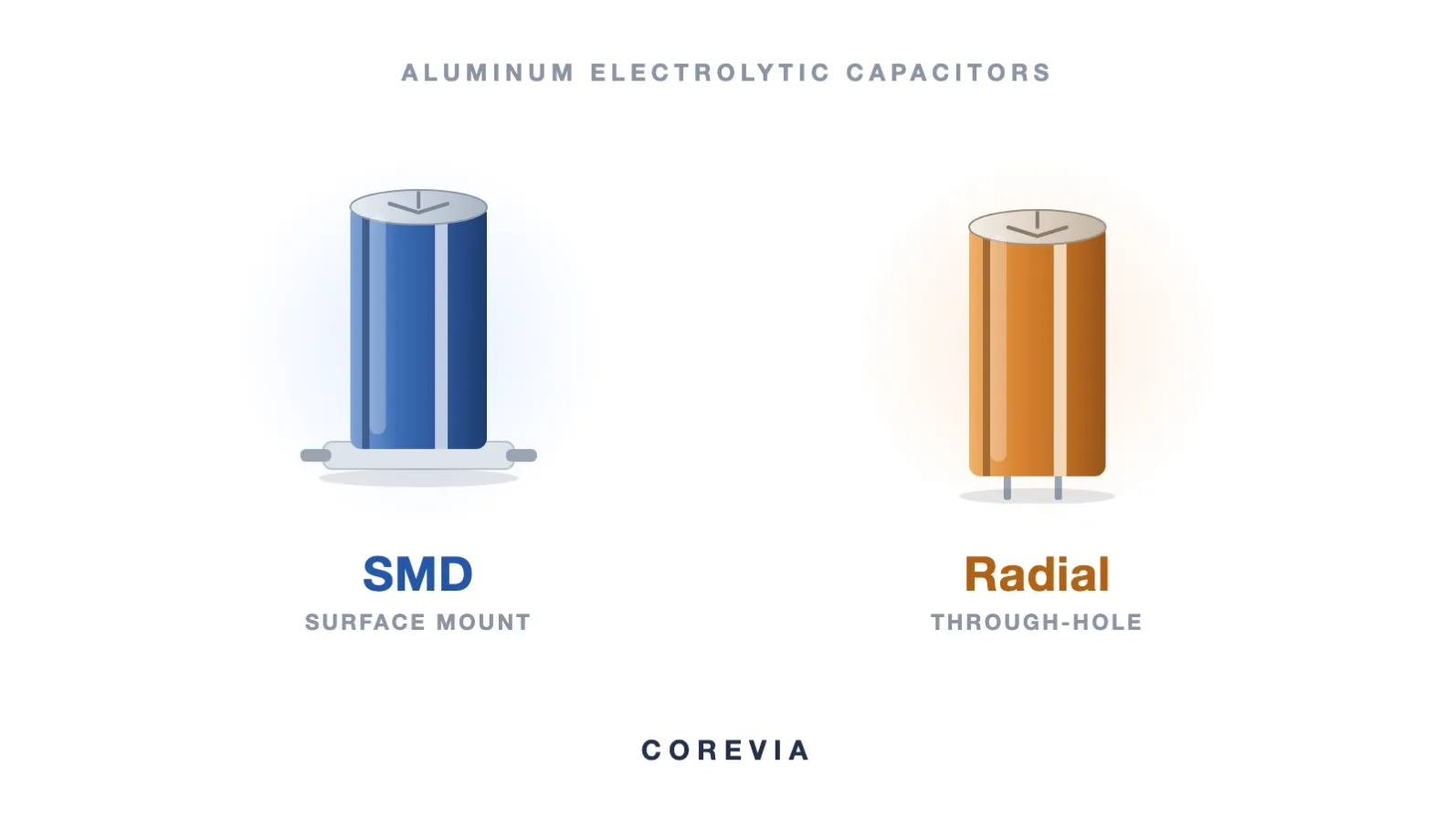
Two aluminum electrolytic capacitors can hold the same capacitance and the same voltage rating and still never end up on the same board. One is an SMD can mounted on a plastic base for the reflow oven; the other is a radial part with two leads through the PCB. The difference is not quality — it is the package, and how your board is assembled. Here is how to choose between SMD and radial electrolytic capacitors without guesswork.
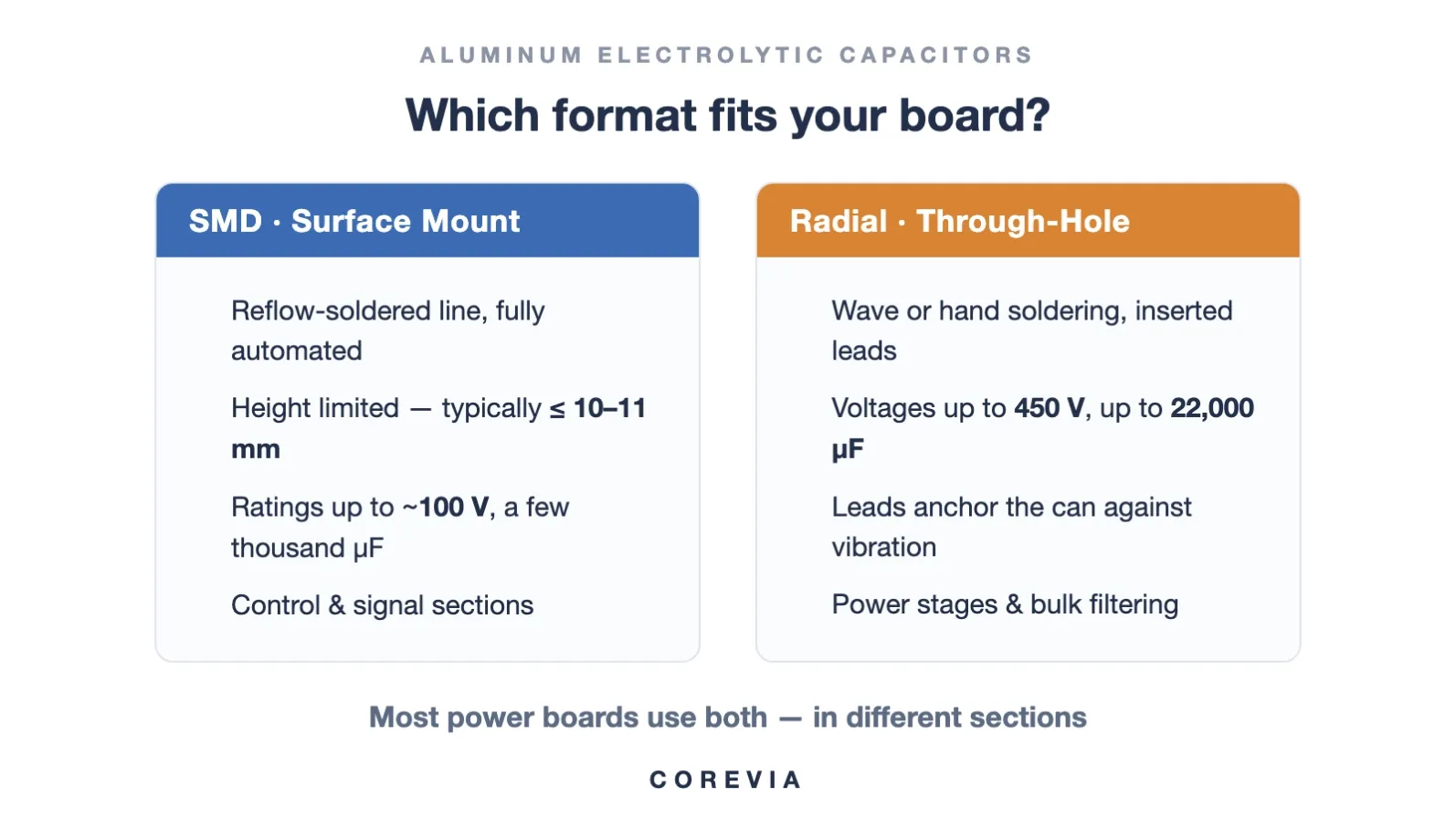
Quick answer: Choose SMD electrolytic capacitors when the board is reflow-soldered and the ratings fit the SMD range — typically up to 100 V and a few thousand µF. Choose radial parts when the board is wave- or hand-soldered, when you need higher voltage or larger capacitance, or when the joint must survive vibration and handling. On many power boards the answer is both, in different sections.
What actually separates the two formats
Inside, the two are built the same way: an aluminum can, a wound foil element, an electrolyte-soaked separator. Both age by the same chemistry and follow the same endurance logic. What differs is the package — and the package changes everything downstream.
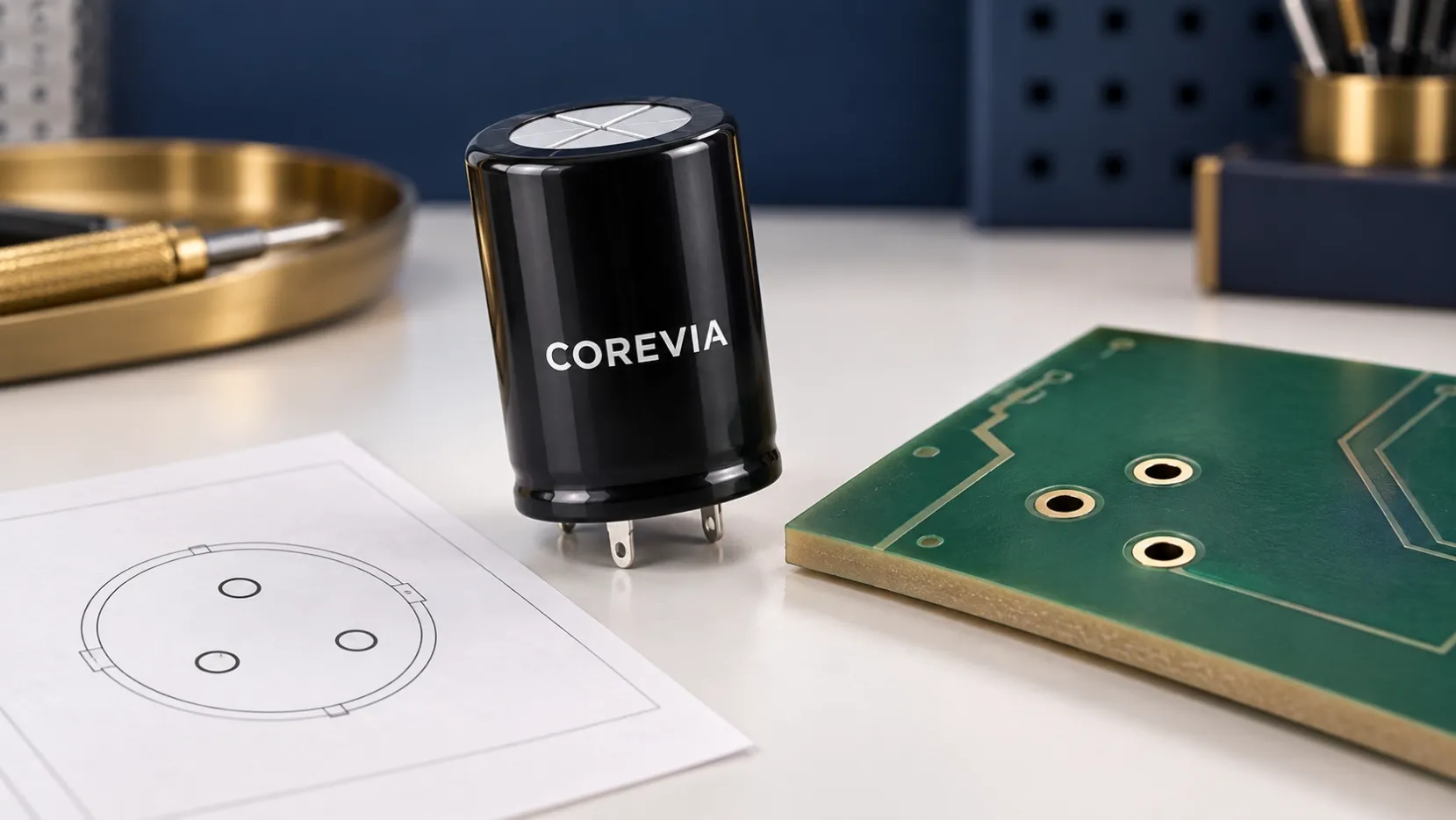
- A radial leaded capacitor is a standing can with two leads at the bottom. The leads go through the PCB and are soldered by wave or by hand. They also anchor the part mechanically.
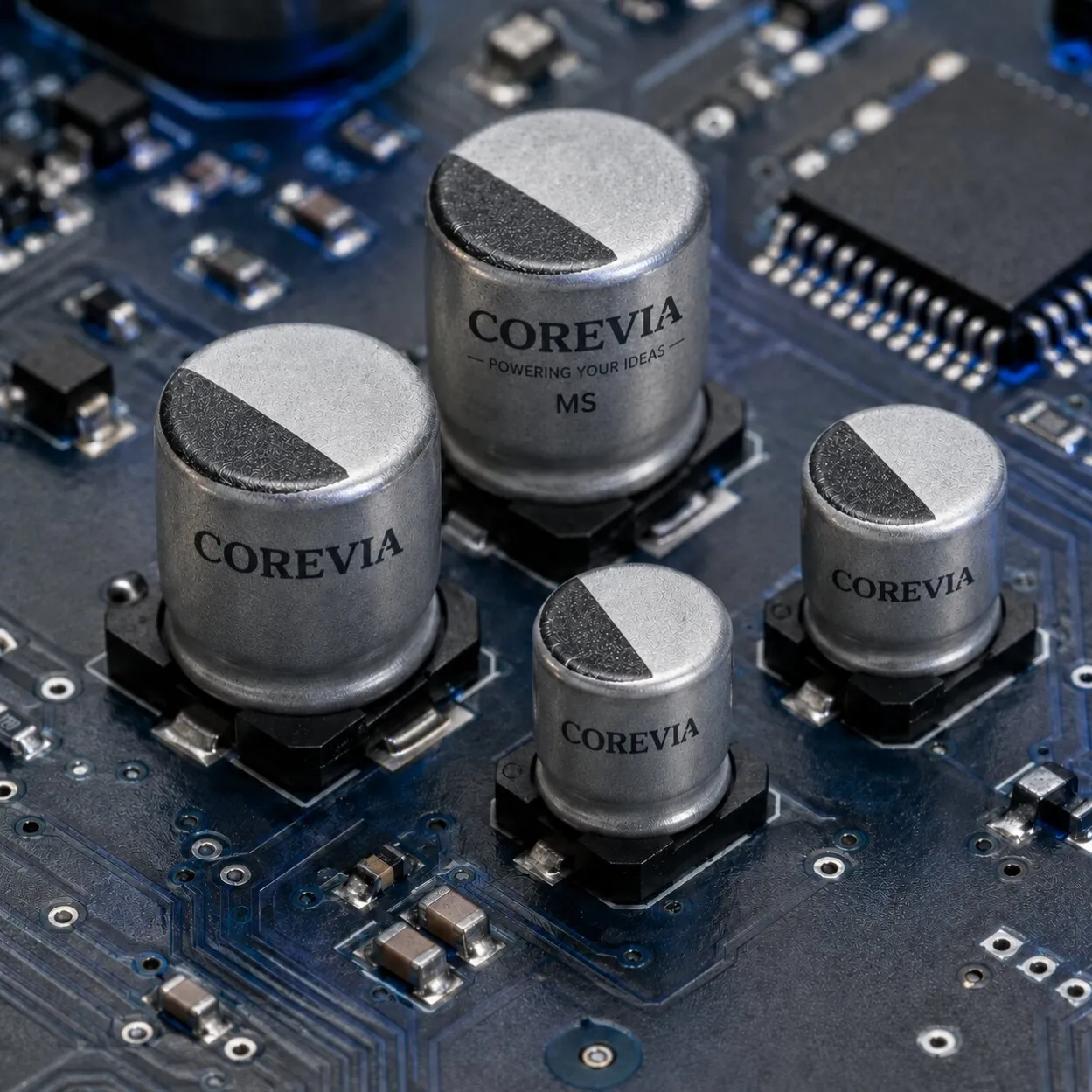
- An SMD aluminum electrolytic capacitor is the same kind of can mounted on a plastic base disc with two flat terminals. It sits on surface pads and goes through the reflow oven together with the rest of the surface-mount components.
Because the SMD part hangs on solder joints instead of anchored leads, the mechanical story of the two formats is different — and that is where most selection mistakes start.
Let the assembly process decide first
When a new board comes to us for a recommendation, this is the order of questions that settles the format fastest:
- How is the board soldered? A reflow-only line cannot place radial parts without an extra insertion step. A wave- or hand-soldering line gains nothing from an SMD base. The process usually decides the format before the datasheet is even opened.
- How much height is available? SMD electrolytics typically stop around 10–11 mm of case height — beyond that, reflow profiles and pick-and-place handling get awkward. Low enclosures — adapters, thin control boards — point straight to SMD.
- What do the ratings need to be? Radial series cover far more ground: case diameters from 5 to 18 mm and up, voltages to 450 V, capacitance into the tens of thousands of µF. SMD series cluster below roughly 100 V and a few thousand µF.
If steps 2 and 3 pull in opposite directions — very low height but high voltage — the board design usually needs a second look, because the two constraints are fighting each other.
What SMD and radial series cover
Typical ranges across standard series. Always verify against the exact datasheet of the series you are quoting — our SMD series and radial leaded series pages list the actual lineups.
| SMD (surface mount) | Radial leaded (through-hole) |
Soldering | Reflow, on surface pads | Wave or hand, through-hole |
Case diameter | ~4–10 mm | ~5–18 mm and larger |
Voltage range | ~6.3–100 V | ~6.3–450 V |
Capacitance range | up to a few thousand µF | up to 22,000 µF and beyond |
Mechanical holding | Solder joints on pads | Leads through the board |
Typical role | Control and signal sections | Power stages, bulk filtering |
The same board often uses both
In the power boards I've reviewed, the common answer is not "SMD or radial" — it is both. An SMD part handles the low-voltage control and timing circuits, where automated placement and low profile matter most. A radial part takes the heavy current jobs — bulk filtering after the rectifier, DC bus capacitance, output filtering — where the ratings and the anchored leads earn their keep.
Two details worth checking before you lock the BOM:
- Vibration and shock. Radial leads anchor the can through the board; SMD parts rely on solder joints. For products that travel or vibrate — drives, compressors, portable equipment — check the vibration specification of the exact series, and consider adhesive or a clamp under taller SMD cans.
- Rework. Swapping a radial capacitor by hand is quick. An SMD electrolytic wants hot air and a careful hand — the plastic base and the sleeve do not forgive a rough iron tip. If your field teams service boards, that bias favors radial in the power section.
FAQ
Can I replace a radial electrolytic capacitor with an SMD one?
Electrically yes, if voltage, capacitance, ESR and ripple ratings match — but not on the same PCB. The two formats have different terminal layouts, so the board must be designed for whichever format you intend to use. A format change is a board revision, not a drop-in swap.
Are SMD electrolytic capacitors less reliable than radial ones?
For comparable series quality, no — the internal construction and endurance ratings are similar. The difference is mechanical: the SMD part relies on solder joints, so heavy vibration or board flexing is harder on it than on a leaded part.
Why do SMD electrolytic capacitors sit on a plastic base?
The base disc insulates the aluminum can from the PCB pads, carries the two flat terminals, and holds the can at a standoff so the solder fillets form cleanly in the reflow oven. It is part of the package design — the internal construction is the same aluminum electrolytic system.
Which is cheaper, SMD or radial electrolytic capacitors?
For equivalent ratings the component prices are close. The real difference shows up in assembly cost: SMD rides the reflow line with no extra step, while radial parts need wave soldering or manual insertion. Judge by total process cost, not the price per part.
Do SMD and radial parts age the same way?
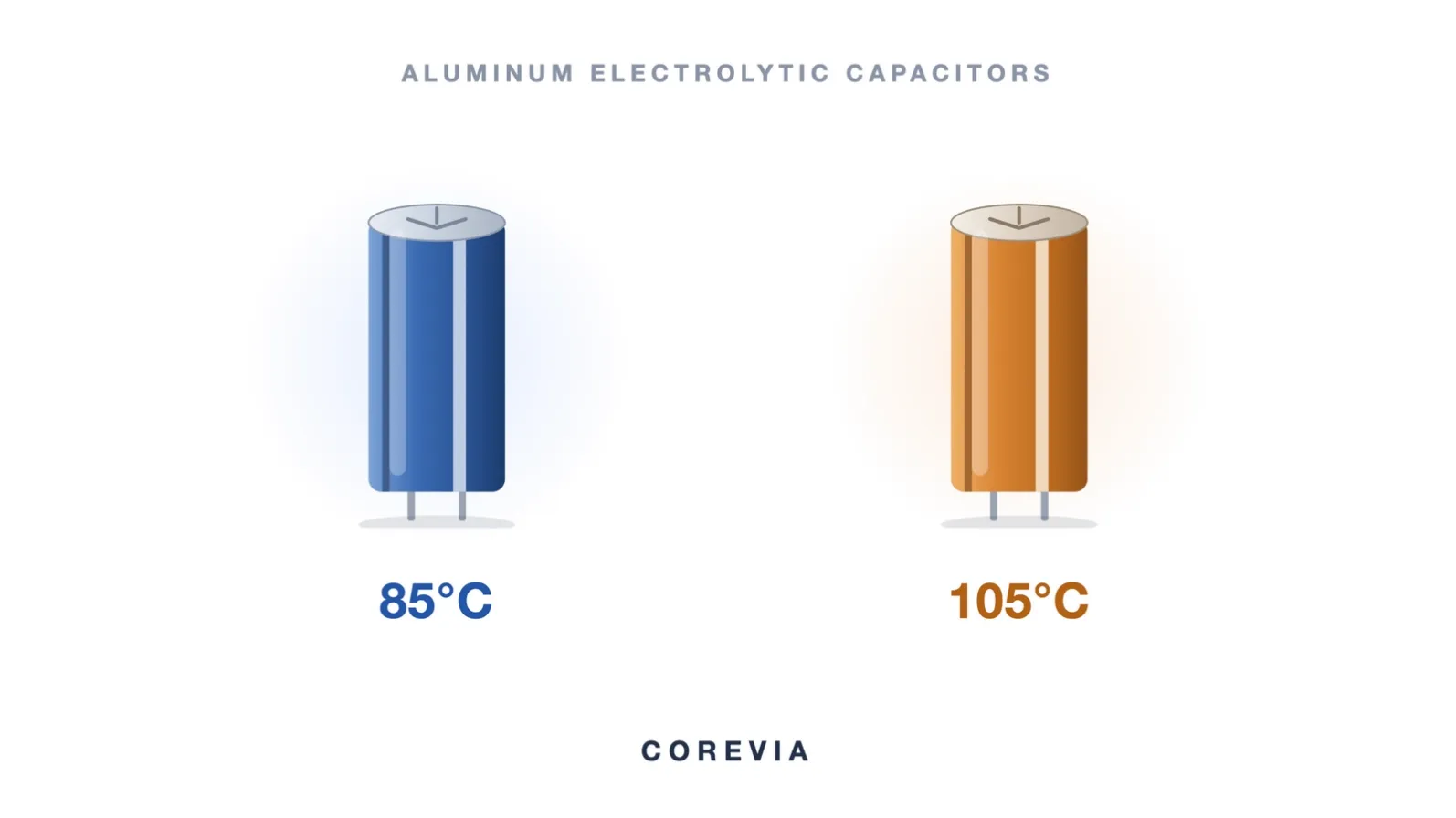
Yes — same chemistry, same endurance logic, and life roughly doubles for every 10°C below the rated temperature (the background is in our guide to how lifetime is estimated). What matters far more than the format is the temperature class — here is how to choose between 85°C and 105°C parts.
Choose the format with us
COREVIA supplies aluminum electrolytic capacitors in radial leaded, SMD, snap-in and screw terminal formats, with 85°C and 105°C classes across the range. Tell us how your board is soldered, how much height you have and the ratings you need — we will recommend the format and series that fit: [email protected] · WhatsApp +86 137 7126 2062.