Oct 6, 2026Capacitor Selection
85°C vs 105°C Capacitors: Which Do You Need?
An 85°C and a 105°C capacitor can look identical on the shelf. Learn what the temperature rating really means, when the upgrade is worth it, and how it changes service life.
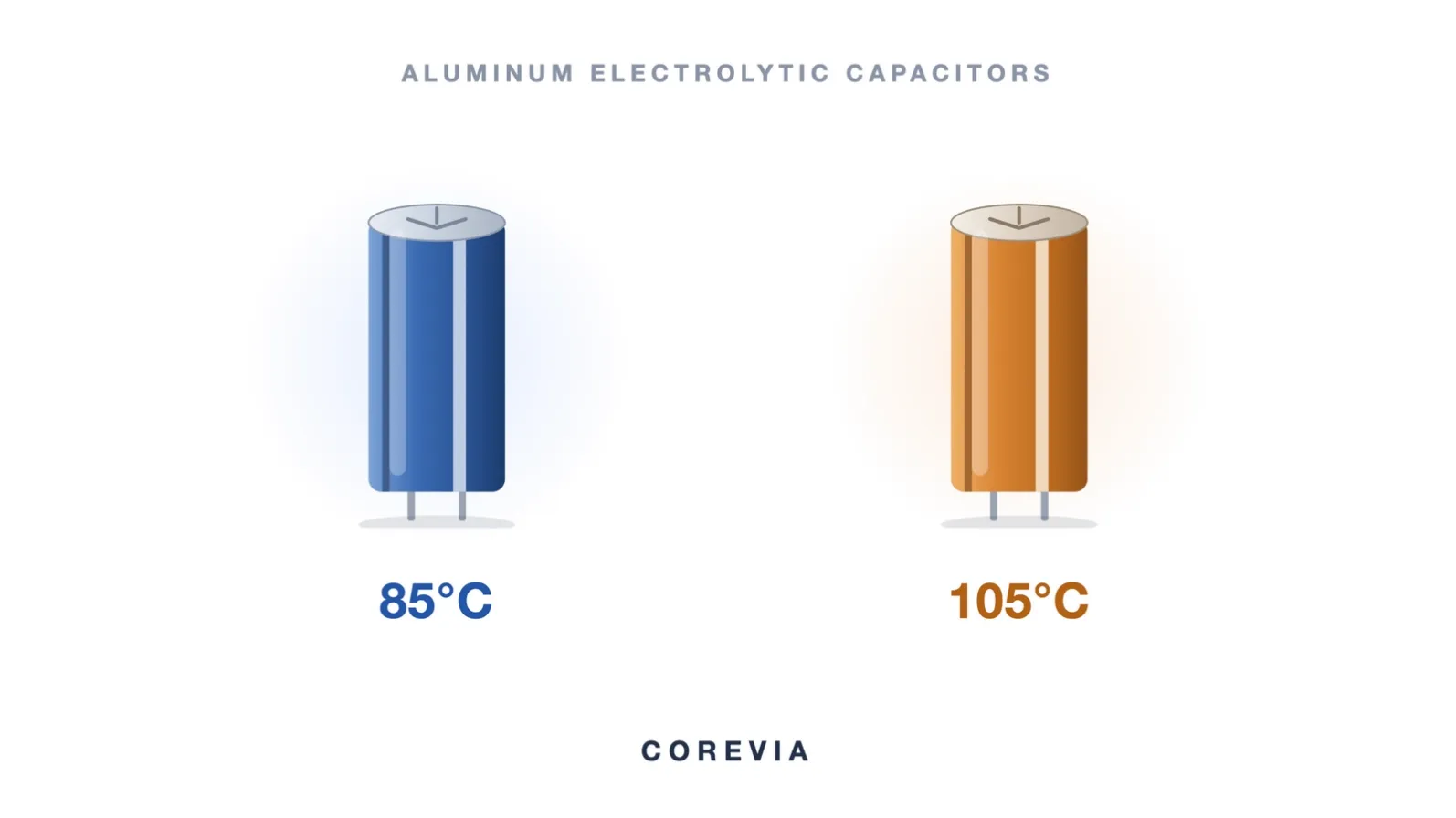
Two aluminum electrolytic capacitors can sit side by side on a shelf with the same capacitance, the same voltage rating and the same size — separated only by one line on the label: 85°C or 105°C. That single line changes the price, and it can change the life of your product. Here is what the temperature rating actually means, and how to decide which one belongs on your board.
Quick answer: The rating is the maximum ambient temperature at which the capacitor delivers its rated performance with full rated voltage applied. If your product's capacitors will sit at or above roughly 65–70°C in real operation — sealed enclosures, outdoor electronics, anything mounted near heat — choose a 105°C series. For indoor equipment with a cool, stable ambient, a well-selected 85°C part is usually the more economical choice.
What the temperature rating actually tells you
The number on the sleeve is the category temperature range: the maximum ambient temperature at which the capacitor can run continuously at rated voltage and still meet its datasheet limits.
Two things about that definition are worth spelling out:
- It refers to the environment around the capacitor, not the case surface and not the core. The hottest point inside the capacitor runs several degrees above whatever you can measure on the outside.
- It is a performance boundary, not a lifetime promise. A 105°C capacitor is guaranteed to operate at 105°C — for its rated endurance hours, typically 1,000–2,000 hours. That is one to three months of continuous operation, not years.
So the real question is never "does my application reach 105°C?" Almost none do. The real question is how far below the rating your capacitors sit, because that margin — not the rating itself — is what decides how long they live.
What actually changes inside a 105°C part
A higher temperature rating is not just a stricter test. The series is designed differently: an electrolyte formulation that evaporates more slowly at high temperature, sealing and material systems rated for continuous operation above 100°C, and — in most product families — an endurance class to match.
That design work costs money and, in some families, case size options. It also means the two ratings are not interchangeable specifications: a low-impedance 105°C series and a general-purpose 85°C series can differ in ESR and ripple capability just as much as they differ in temperature class. Always compare the full datasheet, not the sleeve temperature alone.
When 85°C is the right choice
An 85°C series is not a compromise — for the right environment it is simply the correct part:
- Indoor equipment in a controlled environment: office electronics, instrumentation, audio equipment
- Products whose internal measured ambient around the capacitors stays at or below roughly 50–60°C even at full load
- Cost-driven consumer designs where the product's service life expectation is modest
The practical rule: measure the actual temperature near the capacitors in a finished unit at full load, in the worst realistic position. If the number has comfortable margin below 85°C, there is nothing to gain from paying for a higher class.
When you should move up to 105°C
Step up a class when the capacitor's operating environment gets close to the limit of the 85°C part:
- Sealed or poorly ventilated enclosures — LED drivers, outdoor signage, weather-exposed equipment
- Capacitors mounted near heat sources — heat sinks, transformers, inverter stacks
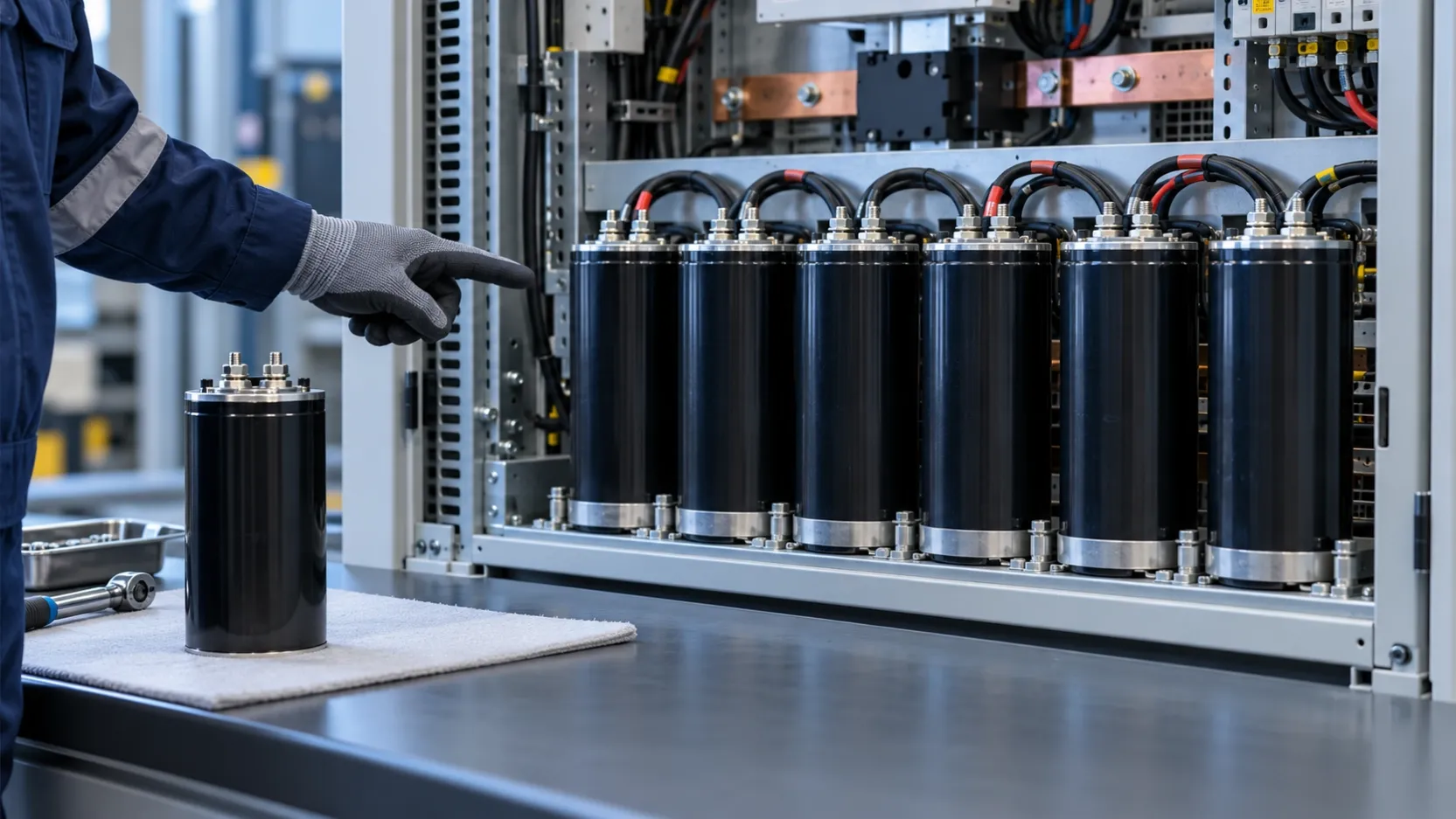
- Industrial power electronics — VFDs, UPS systems, solar and storage inverters, EV charging modules
- Any product with a long service-life expectation — industrial equipment that must run for a decade
In these applications the internal ambient near the capacitors commonly lands between 60 and 85°C, and a hot spot adds several degrees on top. An 85°C part would be running at its limit; a 105°C part has room to breathe.
How the rating choice changes real lifetime
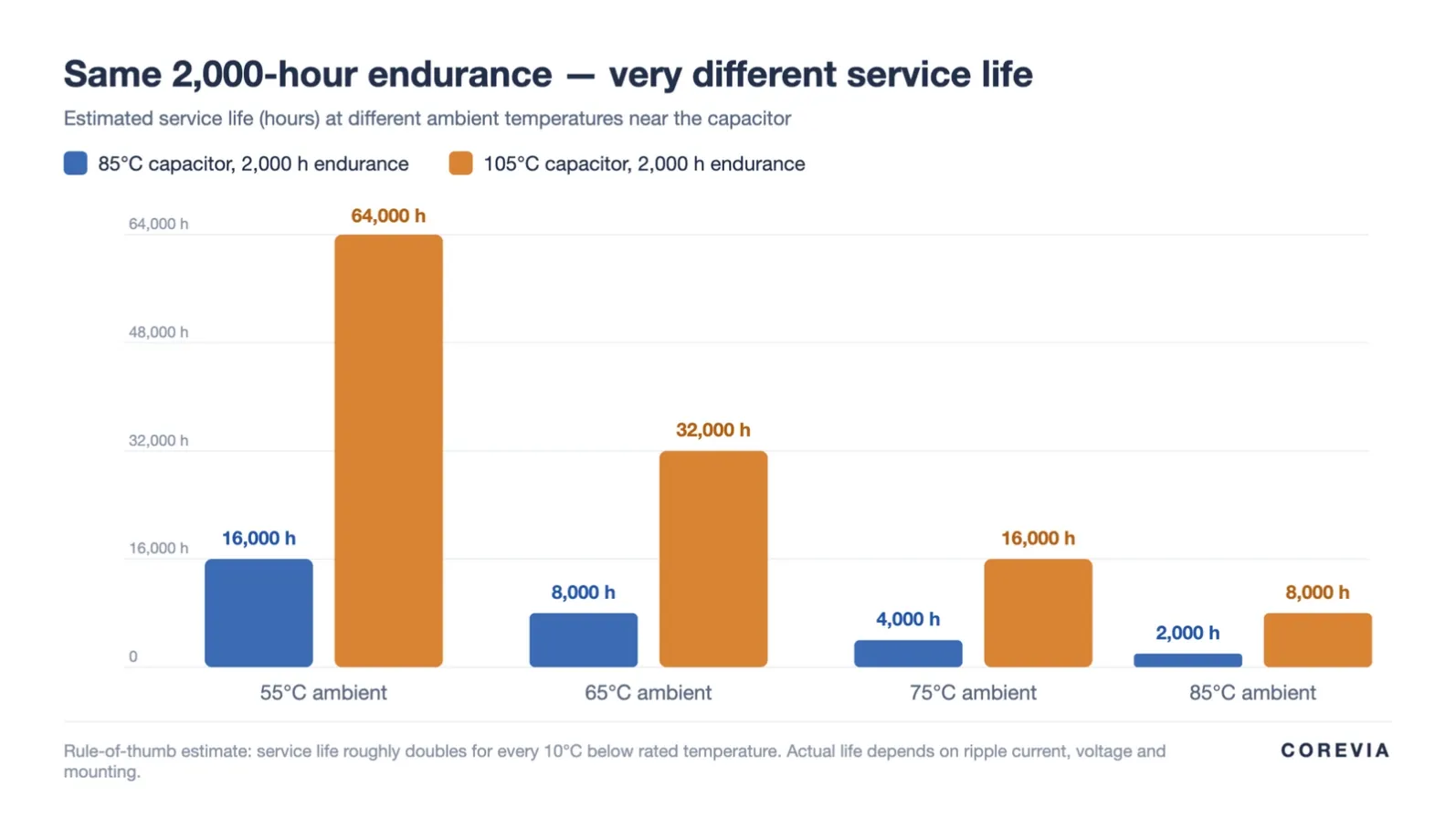
This is where the temperature class pays for itself. Using the standard rule of thumb for electrolytic capacitor aging — service life roughly doubles for every 10°C below the rated temperature — the same 2,000-hour endurance spec translates very differently:
Ambient near the capacitor | 85°C, 2,000 h part | 105°C, 2,000 h part |
55°C | ~16,000 h | ~64,000 h |
65°C | ~8,000 h | ~32,000 h |
75°C | ~4,000 h | ~16,000 h |
85°C | ~2,000 h (rating limit) | ~8,000 h |
Common misunderstandings
- "105°C means it survives for years at 105°C." No — the endurance rating at full rated temperature is typically 1,000–2,000 hours. The high rating is what enables long life below that temperature.
- "A higher temperature class automatically means lower ESR." Not necessarily. ESR and ripple capability are series-level design choices. Verify them on the datasheet for the exact series.
- "The label temperature is the case temperature." It is the ambient limit for rated operation. The core of the capacitor always runs hotter than the surface you can touch or probe.
FAQ
Can I always replace an 85°C capacitor with a 105°C one?
Almost always, provided capacitance, voltage, size, lead spacing and ripple class match. A higher temperature rating is an upgrade in hot environments and a neutral one in cool ones. The reverse replacement — 85°C for a 105°C part — is not recommended.
Is a 105°C capacitor always the better purchase?
No. In a cool, stable indoor environment, the lifetime difference between the two classes is modest, and an 85°C series may offer better value or a wider size selection. Pay for the higher class when the measured ambient justifies it.
What happens if an 85°C capacitor runs at 90°C?
The guarantee no longer holds: electrolyte loss accelerates sharply, parameters drift out of limits early, and the safety vent may open well before the expected service life. This is the classic root cause behind premature failures in sealed outdoor equipment.
How do I know the real temperature near my capacitors?
Measure a finished unit at full load with a thermocouple near the capacitor body, in the hottest realistic position — not on the lab bench at half load. The reading, plus 5–10°C for the internal hot spot, is the number to compare against the rating.
Choose the temperature class with us
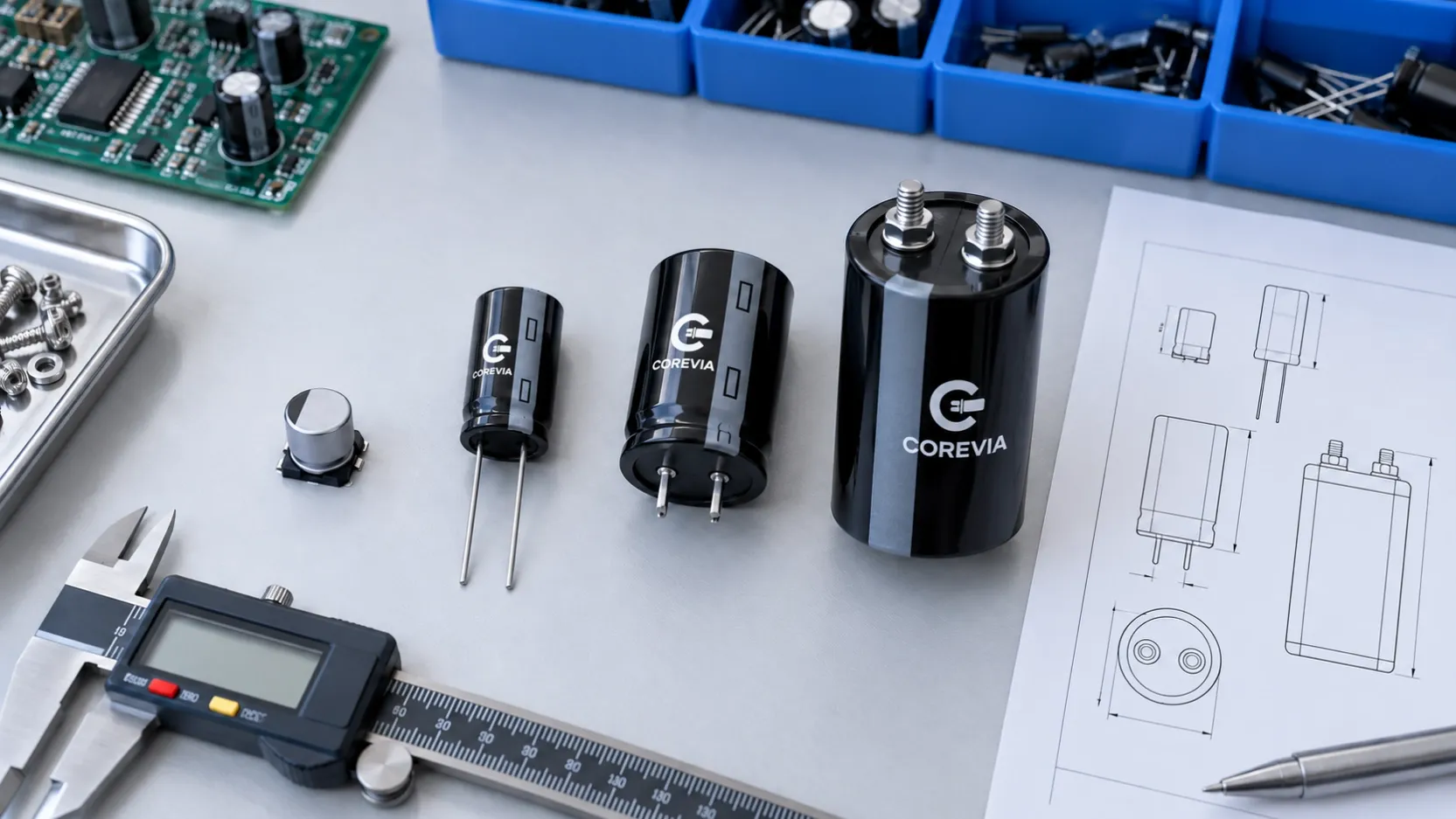
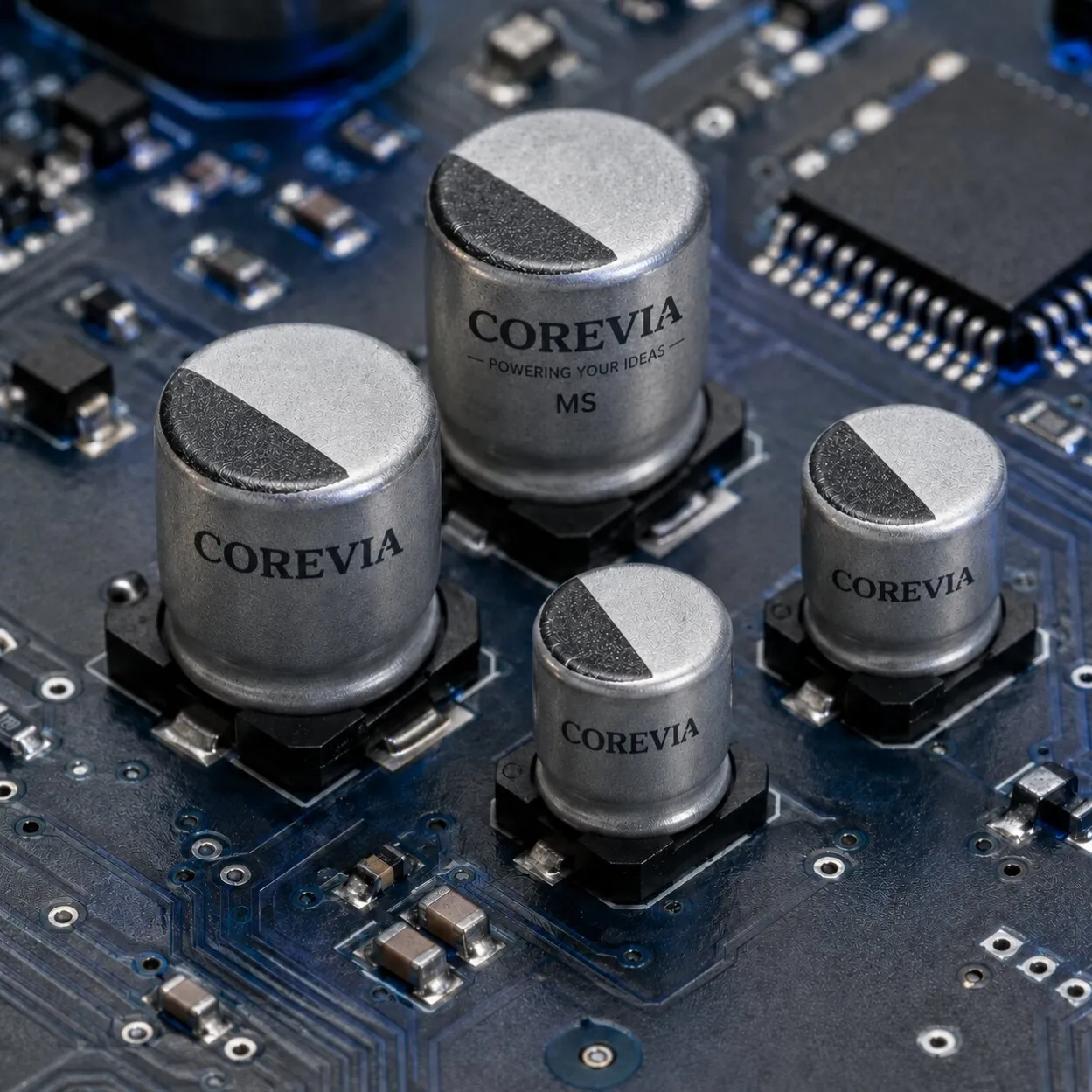
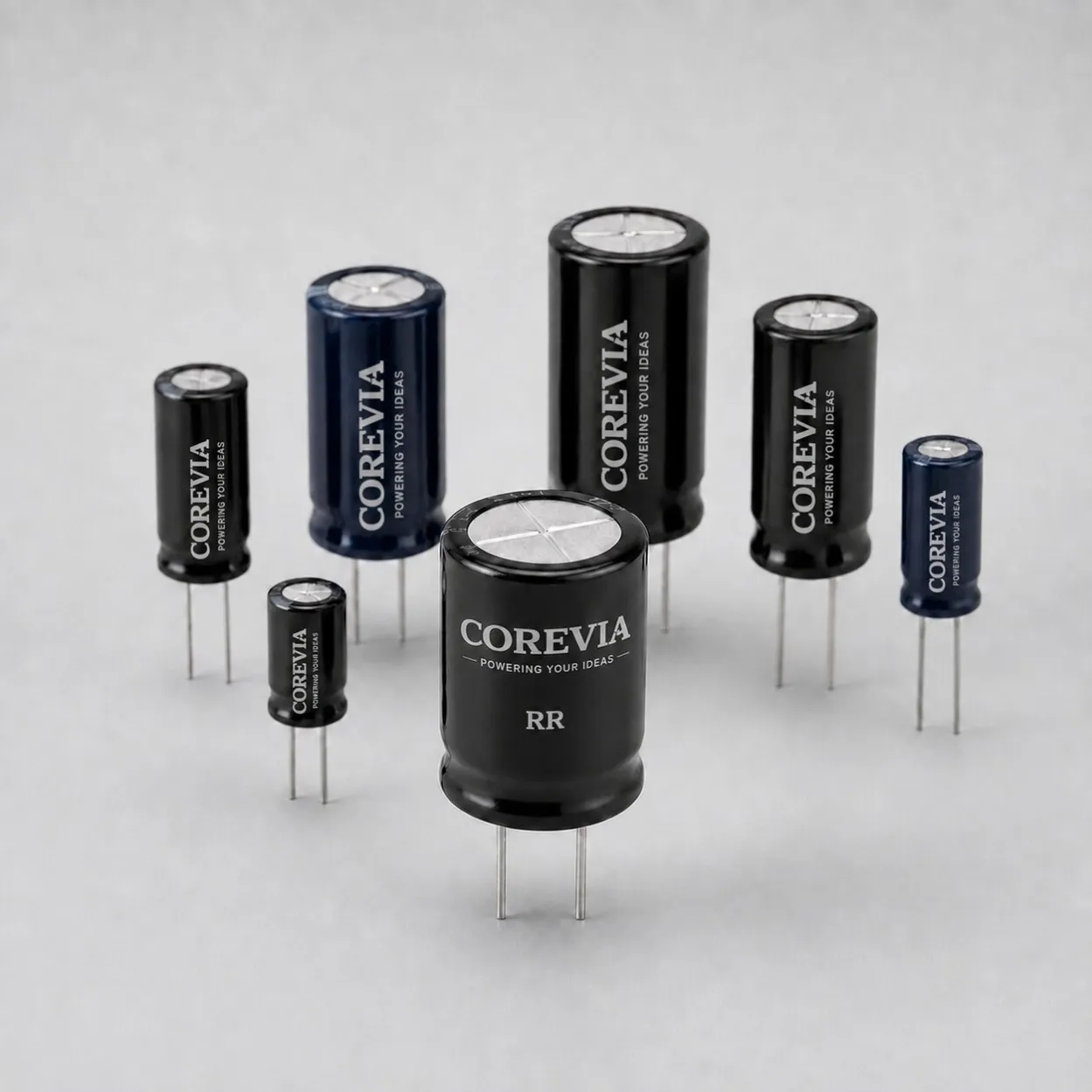
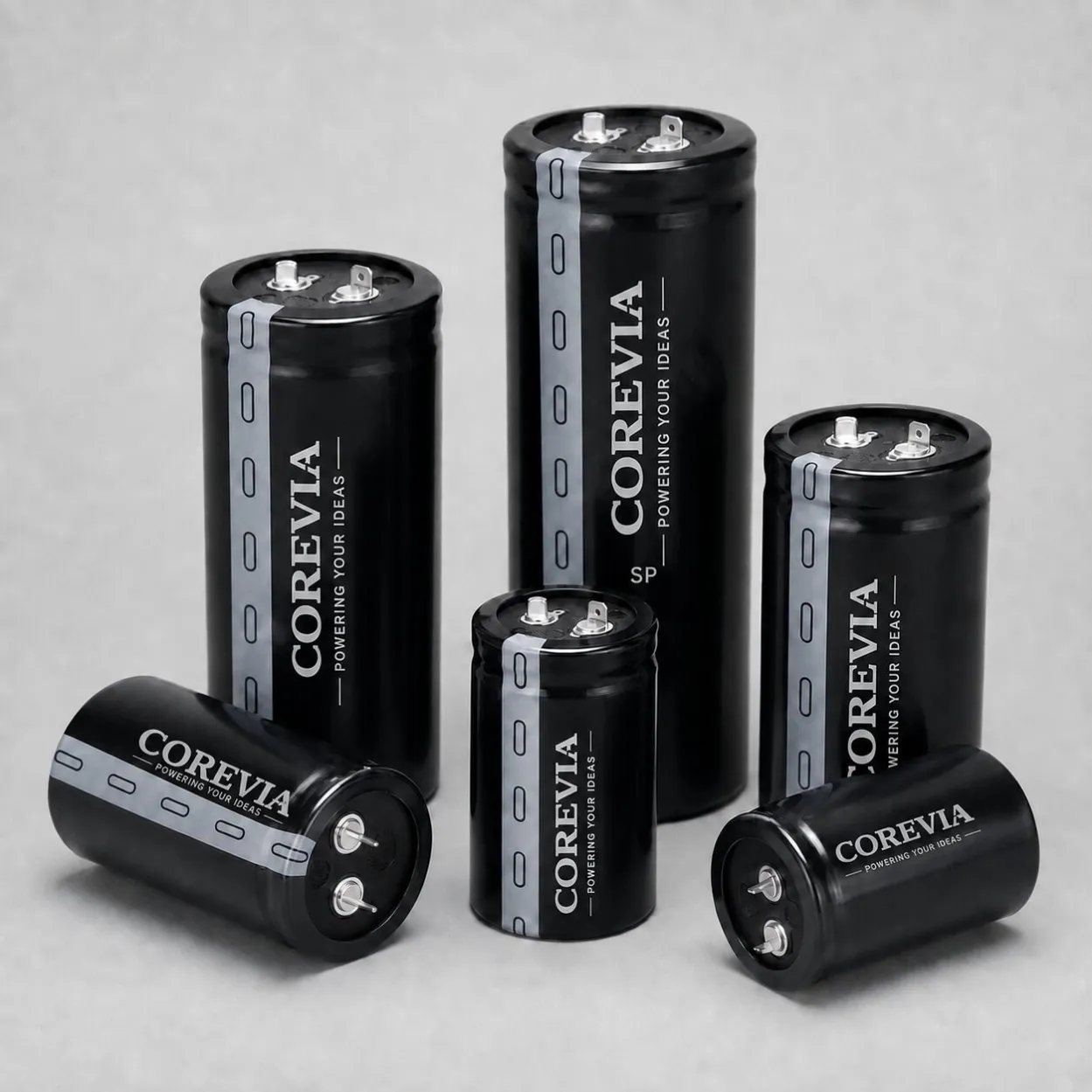
COREVIA supplies aluminum electrolytic capacitors in all four formats — radial leaded, SMD, snap-in and screw terminal — with 85°C and 105°C series across the range, including low-ESR and long-life options for hot-running applications. Send us your measured ambient, ripple conditions and board space, and we will recommend the temperature class and series that fit: [email protected] · WhatsApp +86 137 7126 2062.