Oct 15, 2026Reliability Engineering
SMD Aluminum Electrolytic Capacitor Reflow: Qualification Checklist
Qualify an SMD aluminum electrolytic capacitor for reflow by measuring the profile at the capacitor body and checking the exact series limits after soldering.

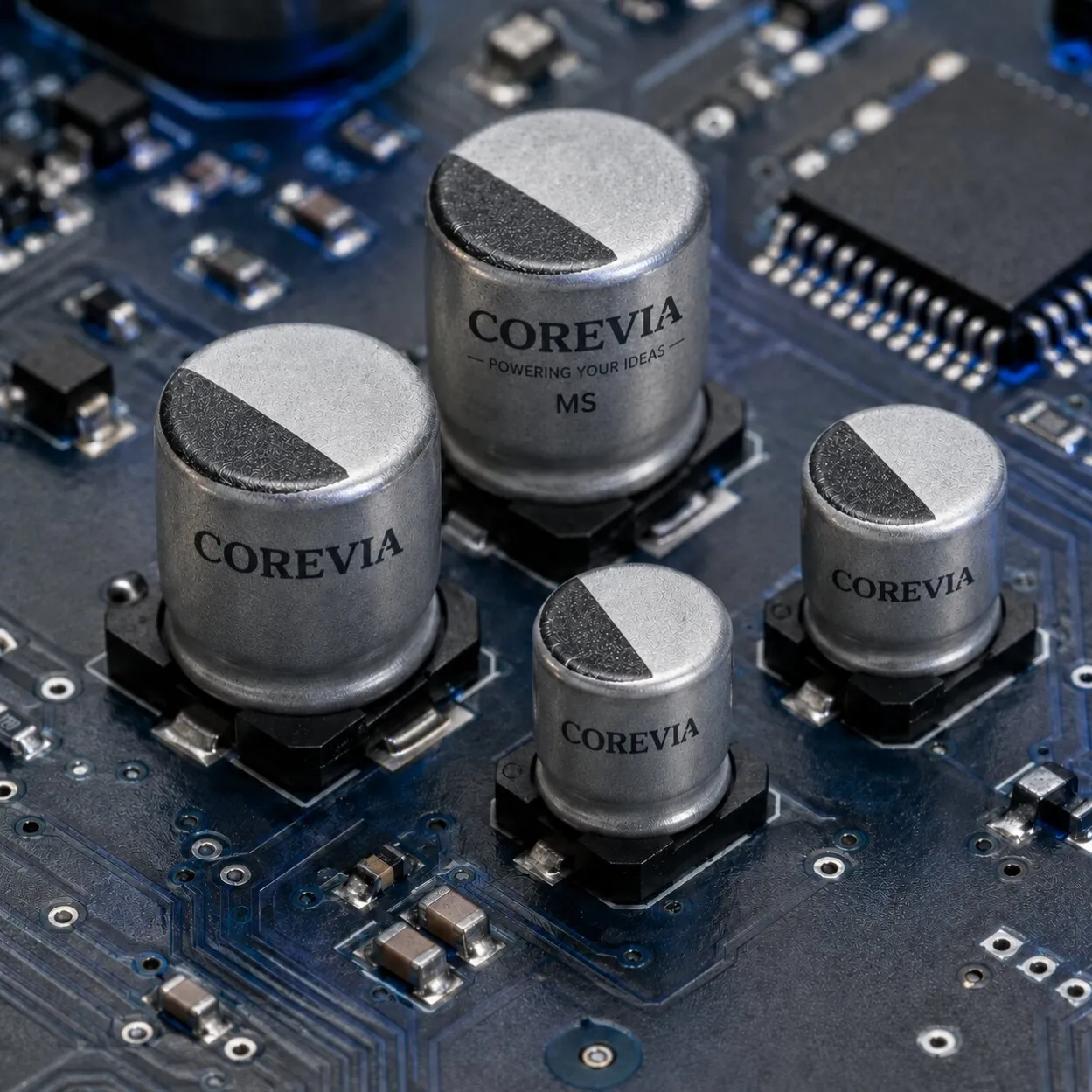
SMD aluminum electrolytic capacitors survive reflow only inside limits that the can, the sleeve and the electrolyte set together. Unlike a multilayer ceramic chip, an aluminum electrolytic is a sealed part containing liquid: push the profile past what the series allows, and the damage shows up later as sleeve shrinkage, seal degradation or vent stress — sometimes after the board has already shipped. Qualification therefore answers one question: does your actual profile, measured at the capacitor itself, stay inside what the series permits?
What Reflow Actually Stresses in an SMD Electrolytic
Three things take the stress:
- The electrolyte and seal system. Internal pressure rises with temperature. The rubber seal and crimp are engineered for the allowed excursion — not for unlimited ones.
- The PET sleeve. It tolerates the peak briefly. Too long near the peak, and it shrinks, glazes or pulls back from the can base.
- The adhesive joint and cradle. The can sits in its mounting cradle on an adhesive pad that softens near the peak and must regain full strength after cooling.
Profile Limits: Where the Real Numbers Live
The governing numbers are series-specific and stated in each datasheet: peak temperature, total time in the molten-solder range, and the number of permitted reflow passes. The general frame most datasheets align with is IPC J-STD-020 for lead-free assembly, where the allowable peak depends on package thickness and volume — and an aluminum electrolytic always sits at the conservative end of that table. Two rules hold across every series: a second reflow pass needs explicit engineering approval rather than assumption, and limits do not transfer between series. Confirm the exact series before releasing the profile to the line.
Measure the Profile at the Capacitor Body
A profile measured on the panel's reference coupon tells you about the coupon. Attach the thermocouple to a capacitor body — high-melting solder or high-temperature tape at the can wall — and place it at the worst position on the panel, typically a corner far from the convection source. Record the ramp rate, time above liquidus, peak and time near peak. Re-measure after any board or oven change that could shift heat distribution. The profile you approve should be the one the capacitor actually experiences, not the one the oven displays.
Moisture Control Before Reflow
Follow the floor life stated on the packing bag once it is opened, and keep partly used reels in sealed packaging with desiccant. If a bag arrives damaged or the floor life has been exceeded, bake the parts per the datasheet or packing instruction before reflow — the J-STD-033 framework describes the handling logic. Reflowing parts that have absorbed moisture turns it into internal pressure on top of the soldering thermal load, which is exactly the combination the seal does not want.
Placement, Polarity and Land Pattern Checks
- Polarity: the stripe on the sleeve is the negative marking. Confirm it against the silkscreen in your placement program — a reversed electrolytic is the one defect that turns reflow qualification into a scrapping event.
- Nozzle and placement force: vacuum pickup on the can top is normal; avoid dragging the part laterally across the panel while the adhesive is the only thing holding it.
- Land pattern: use the pattern in the series datasheet — the cradle tie bars are part of the mechanical design, not decoration.
Post-Reflow Inspection and Electrical Checks
Inspect visually first: sleeve free of shrinkage or glazing at the top edge, no electrolyte residue anywhere on the board, can seated flat in the cradle without tilt. Then, once the board has returned to room temperature, measure capacitance, ESR (or dissipation factor) and leakage current against the datasheet. Leakage deserves its own attention — how the limit is defined and measured is covered in leakage current testing: conditions, limits and acceptance.
When a Failed Qualification Is Terminal
Some findings end the trial rather than invite another loop: a bulged can, an actuated vent, electrolyte leakage, or capacitance far outside limits after a single pass mean either the profile violated the series limit or the series was wrong for the board's process. Re-running the same parts through a "fixed" profile produces compromised evidence — qualify again with fresh samples.
Reflow Qualification FAQ
Can SMD electrolytics run the same profile as the MLCCs on the board?
Often the MLCC profile is hotter and faster than an aluminum electrolytic tolerates. Compare the board profile against the series limit; if the line cannot run two profiles, choose a series whose limit covers the board profile.
How many reflow passes are allowed?
One, by default. A second pass — for double-sided boards or rework — needs approval against the specific series.
The reel bag has been open for weeks. Can I still run the parts?
Check the floor life against the exposure time. If it is exceeded, bake per the datasheet first. If you are unsure, send us the timeline and we will advise.
Is hand soldering acceptable for prototypes?
Within the series' soldering conditions, yes — brief contact, and never with the iron resting on the sleeve. Reflow qualification is still required before mass production.
Can SMD electrolytics go through wave soldering?
No — that applies to through-mount families. The wave process for snap-in parts is covered in snap-in capacitors and wave soldering.
Choosing between SMD and through-mount for a new design starts here: SMD vs radial electrolytic capacitors. Ready to qualify a specific series? Send us the series, the case size and your target profile — we will review it against the datasheet before you commit the line. The family overview is on the SMD aluminum electrolytic capacitors product page.