Oct 15, 2026Reliability Engineering
How to Read Aluminum Electrolytic Capacitor Endurance Test Reports
Read an aluminum electrolytic capacitor endurance test report by checking test conditions, sample identity and pass limits before comparing results.
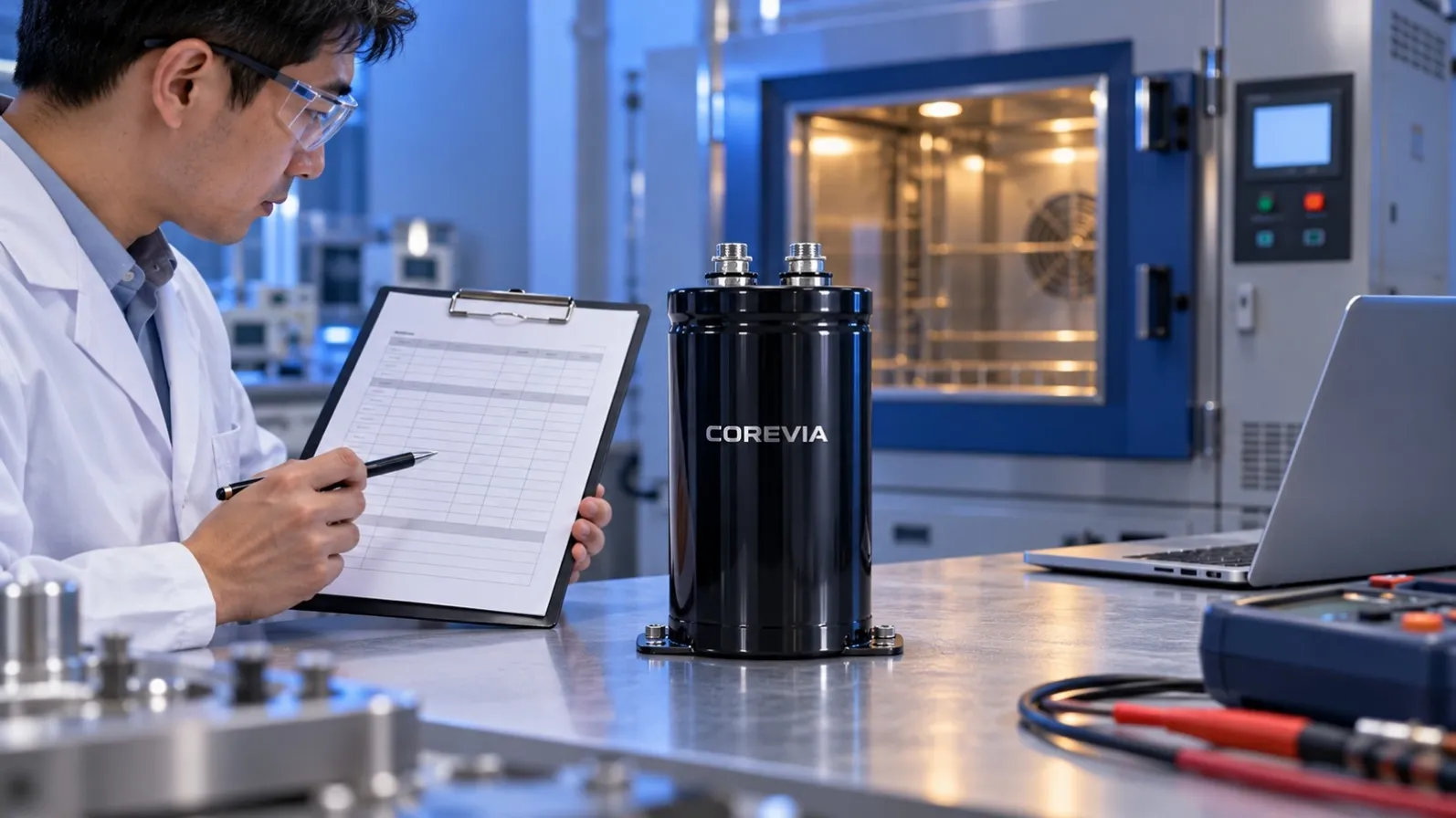
An endurance rating on a datasheet — 1,000 hours, 2,000 hours, sometimes more — is a claim. The endurance test report is the evidence behind it, and it is worth reading properly, because two reports can both say "passed" while describing tests that cannot be compared at all. This page walks through the blocks of a report: what was applied, what was measured, what counted as a pass, and where the gaps are.
What an Endurance Test Confirms — and What It Doesn't
An endurance test demonstrates that a sample of capacitors survived a defined stress — applied voltage, ripple current and temperature, held for a defined number of hours — with electrical drift inside defined limits. It does not translate directly into a field lifetime. The link between the two runs through the lifetime model, which converts temperature and ripple into acceleration; that model is covered in lifetime, temperature and ripple current. Use the report to qualify the part — and the supplier's testing discipline. Use the model to estimate service life in your own application.
Reading the Conditions Block
The conditions are the part of the report that decides what the results are worth:
- Applied voltage: normally the rated voltage. A report at reduced voltage is a weaker statement for a qualification.
- Ripple current: how much of the stress is ripple heating on top of the DC. For a DC-link or smoothing part, a report with superimposed ripple says more than one at pure DC — the ripple heats the can from the inside through the ESR.
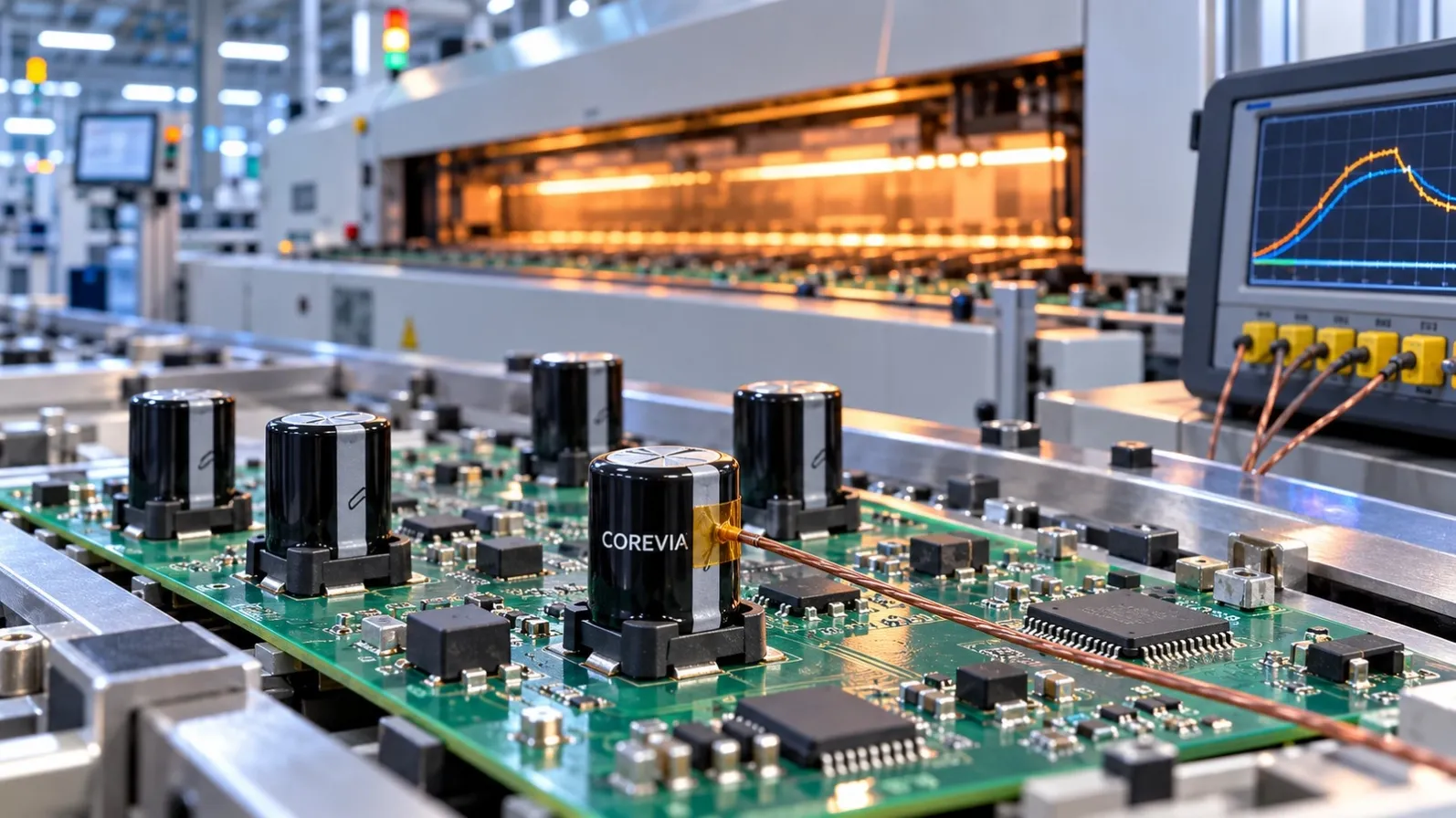
- Temperature: the category upper temperature (85°C or 105°C), with the parts inside a chamber. The capacitor body, not the chamber air display, is what the test is about — well-written reports state how the temperature was verified.
- Duration: under the IEC 60384-4 framework, the standard endurance test at category temperature runs 1,000 hours or longer, with longer durations for long-life grades.
Sample Identity and Recovery
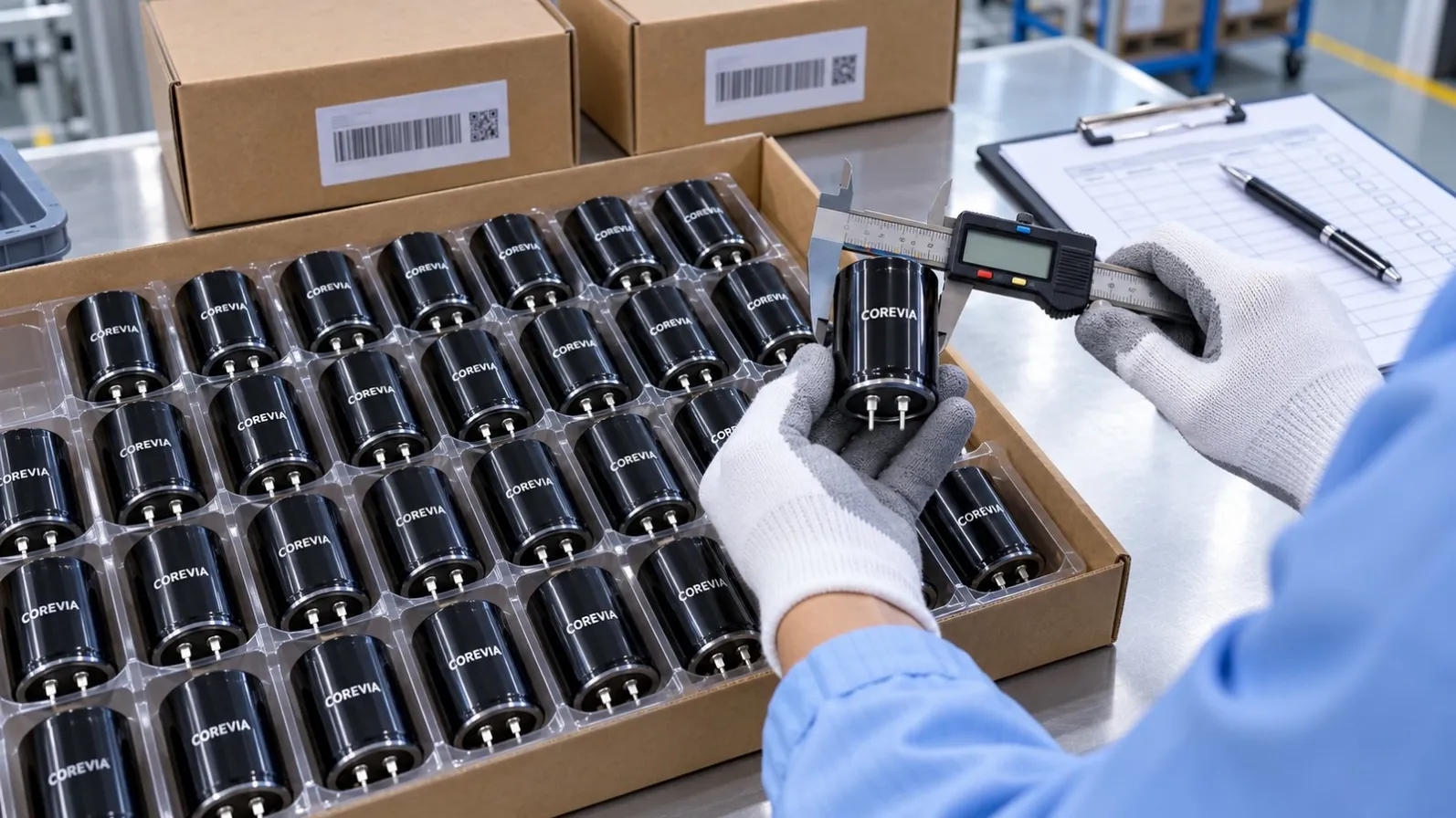
A report should state what was tested: part number, case size, sample quantity and which lot the samples came from. After the hours are completed, the parts are recovered at room temperature — commonly 12 to 16 hours under the IEC framework — before any measurement. Recovery matters because measurements taken hot are not comparable to the standard schedule, and a report that skips recovery silently changes the basis of every number that follows.
The Pass Limits That Decide
The structure is typical across the industry — the limits printed in the report itself are the authoritative ones:
- Capacitance change within a defined percentage of the initial measured value — commonly ±15%, with tighter bands for long-life grades.
- Dissipation factor / ESR within a multiple (commonly 1.5 to 2×) of the initial specified limit.
- Leakage current back within the initial datasheet limit after the test — the dielectric should self-repair at rated voltage, and it does unless the test damaged it.
Read the limits together with the conditions: ±15% after 5,000 hours at 105°C with ripple is a much stronger statement than ±15% after 1,000 hours at 85°C without.
Comparing Two Reports Fairly
- Match duration and temperature first — they set the size of the claim.
- Match the voltage and ripple share — the stress that actually drives aging.
- Match the measurement conditions — frequency and temperature for C and ESR must be the same, or the numbers are not the same quantity.
- A report line that says only "passed", without conditions and limits, is a claim repeated — not evidence.
Evidence Gaps That Block Qualification
- No sample size or lot identity — you cannot know what the result generalizes to.
- No recovery conditions before measurement.
- Limits that change between pages of the same report.
- Test temperature that does not match the series' declared category temperature.
Any one of these is a question for the supplier, not a reason to panic — but they are questions you want answered before the part is in your product, not after.
Endurance Report FAQ
Is 5,000 hours at 85°C better than 2,000 hours at 105°C?
Not comparable as printed. The lifetime model normalizes both to your application temperature — run each report's conditions through it, then compare the results in your terms.
Does the ripple in the test reflect my application?
The report ripple demonstrates capability, not your duty. Your ripple heating depends on the ESR of the parts you receive and the airflow around them — measure it on your own board for the real number.
Can we get endurance reports for the exact series we buy?
Send us the series and what your qualification process needs — documents are provided per customer requirement, and confirming what can be supplied is part of the sample and qualification stage described in sample qualification.
The report shows capacitance dropped 12%. Pass or fail?
If the limit is ±15%, it passes — but read the set, not the single number. A uniform small drop across all samples is normal aging; one sample far from the others is the finding, even when the set technically passes.
For the difference between a lifetime rating and an endurance test result, see long endurance aluminum electrolytic capacitors. When you qualify a COREVIA series, tell us which standards your incoming process requires — the review happens before the first shipment, not after it.