Oct 15, 2026Application Guides
Radial Aluminum Electrolytic Capacitors: Lead Forming and PCB Assembly
Check lead pitch, forming distance, mounting height and soldering conditions before assembling radial aluminum electrolytic capacitors on a PCB.
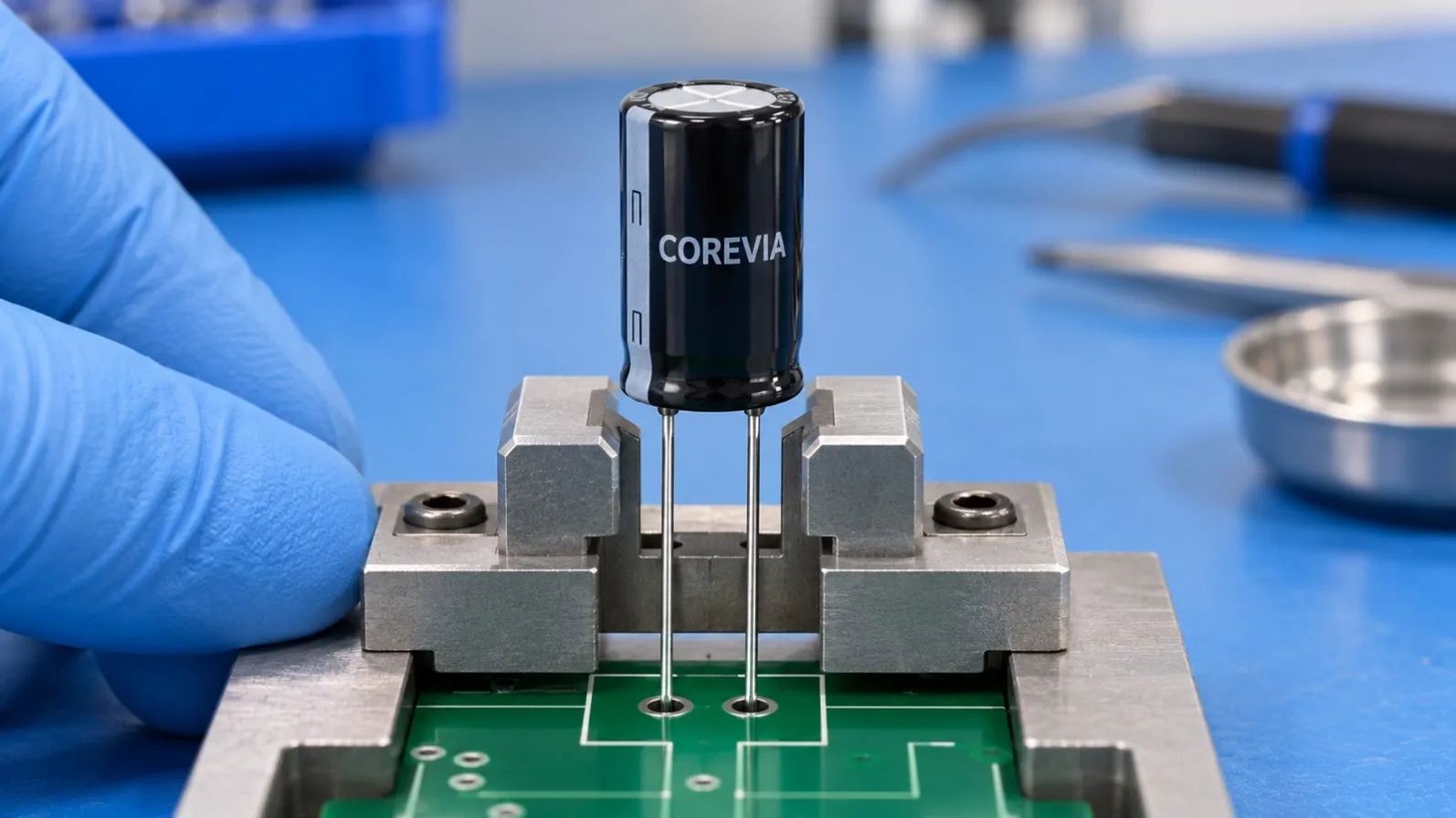
Radial leaded aluminum electrolytic capacitors rarely fail because someone chose the wrong capacitance. They fail because a lead was bent by hand, the can was pressed hard against the board, or a cleaning agent attacked the sleeve. Assembly is where this family is won or lost — and the checks below take minutes at the bench, compared with weeks of failure analysis after a field return.
Confirm Pitch, Lead Diameter and Hole Pattern Before Anything Is Bent
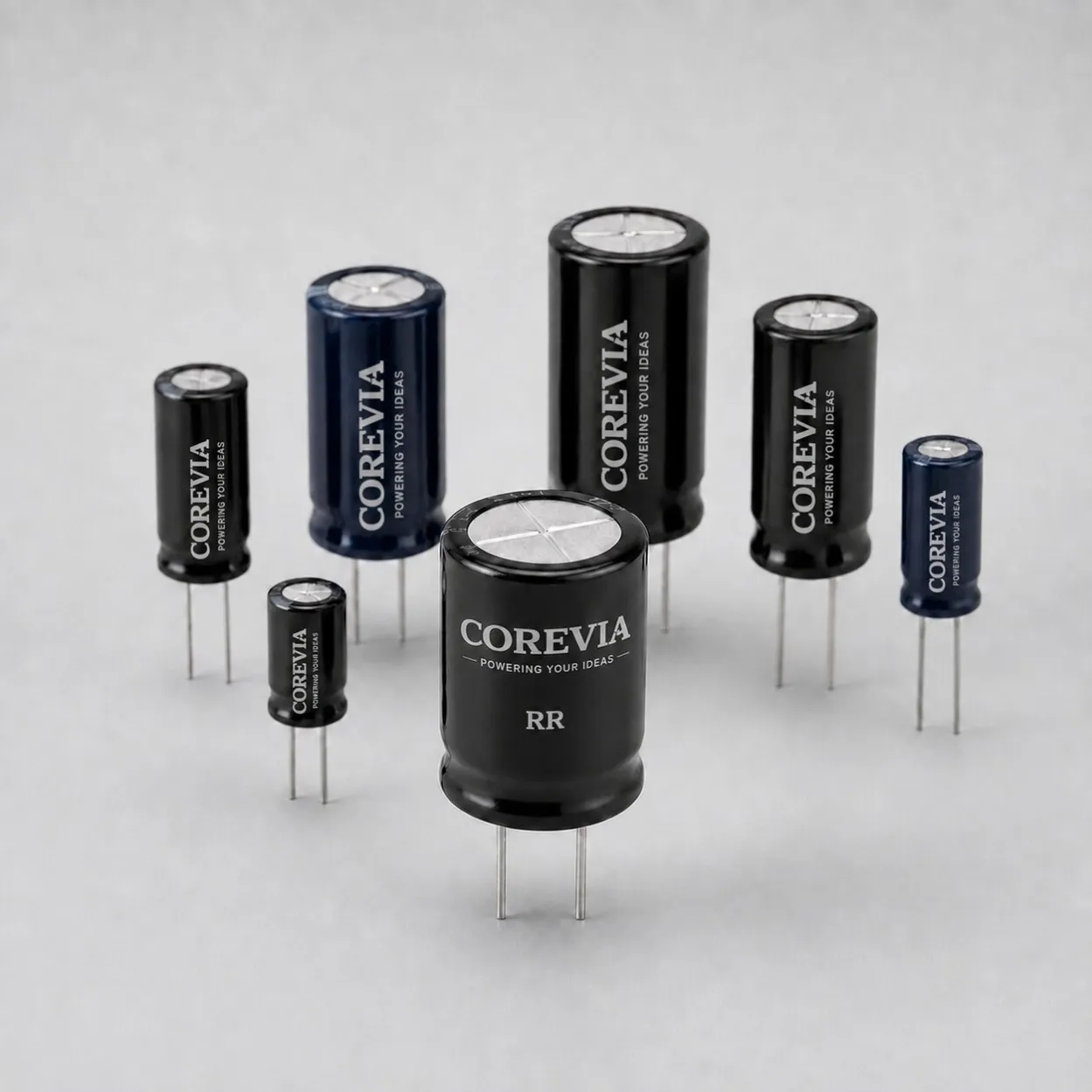
The lead pitch is fixed by the case size, and the PCB hole pattern should match it. When a layout forces a different pitch, the leads must be formed — with a proper forming tool that clamps the lead below the can and bends it to the new spacing. What never works: bending leads by hand against the can body, or twisting two leads with pliers to close a hole-spacing gap. Both wind mechanical stress into the junction where the lead enters the seal, which is the one point on this capacitor that cannot tolerate it.
Lead Forming Rules That Protect the Seal
- Keep a straight lead length between the can and the first bend. The datasheet states the minimum; forming closer than that transfers bending stress into the seal resin.
- Bend with a radius, not a sharp corner. A sharp bend work-hardens the lead and can crack it later under vibration.
- No torsion. Aligning holes by twisting leads looks harmless and is not — torsion at the lead root opens a slow leak path around the seal.
The reason for all three rules is the same: the seal resin junction is where gas escapes over life. A lead bent correctly behaves like it was never touched.
Insertion Height and Stress Relief
Seat the can at the height the assembly drawing specifies — never press it down onto the board. The leads are the part's mechanical suspension: rigid, tensioned leads leave no room for thermal expansion of the board, and the stress ends up at the seal. Where the capacitor stands tall and vibration is a concern, the fix is mechanical support (a clamp, an adhesive bond or a mounting bracket) — not pre-tensioned leads.
Soldering and Cleaning Conditions
Wave and contact soldering conditions are series-specific and stated in the datasheet — many general-purpose radial series allow around 260°C for up to 10 seconds at the lead root, but the number that governs is the one printed for your series. Do not carry limits between series. For cleaning: water-based and alcohol-based systems are the normal route; avoid chlorinated solvents entirely, because chloride residue on an aluminum can is a corrosion recipe. If your process uses aggressive ultrasonic cleaning, confirm the condition with us before running it on assembled boards.
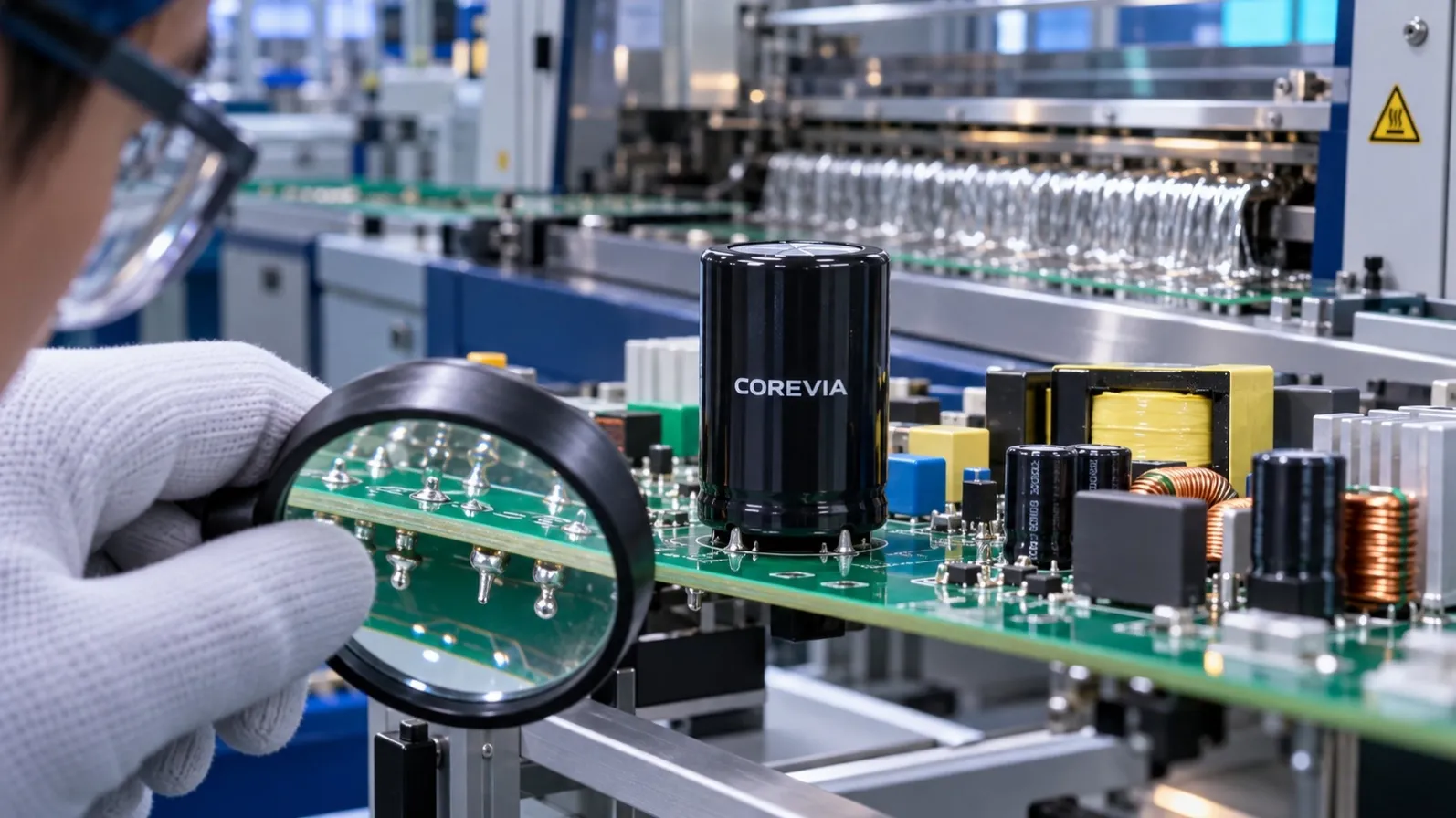
Post-Assembly Inspection and Electrical Checks
- Visual: sleeve intact with no hairline cracks on the formed side, polarity stripe matching the silkscreen, seating height consistent, no tilted cans.
- Electrical: after the board returns to room temperature — capacitance, ESR and leakage current against the datasheet. The leakage limit is the one most often misread; the measurement conditions are set out in leakage current testing.
Assembly Defects That Need Engineering Review
- Hairline sleeve crack on the bend side — the can underneath is usually fine, but the sleeve is the insulation, so the part should not ship.
- Can lifted or tilted after wave. Often a hole-size or preform issue; check before blaming the part.
- Lead pull-out — the lead separates from the can. This is a terminated part, not a rework candidate.
- Reversed polarity caught in AOI. Rework by desoldering is possible, but a second thermal cycle on the same part needs an engineering decision, not a habit.
Radial Assembly FAQ
Can I re-form leads from bulk parts for prototypes?
Yes, within the same rules: form below the can with a tool, keep the straight length, no torsion. Prototype convenience is not an exemption from the seal.
Our hole pattern doesn't match the natural pitch. What should we do?
Send us the drawing and the required pitch. We will confirm what is feasible to supply formed and what should stay standard.
Does lead forming affect the electrical parameters?
Not when the rules are followed. When it is done wrong, the electrical drift appears later — typically as rising leakage or open circuit after vibration, which is why the mechanical rules matter more than any bench test.
Can radial parts be mounted horizontally?
Bending both leads for horizontal mounting is a classic technique — allowed where the datasheet permits, with the leads insulated and the can supported, not floating on bent leads.
If you are still deciding between mounting styles for a new board, start with SMD vs radial electrolytic capacitors. The family overview is on the radial leaded aluminum electrolytic capacitors product page — and for the wave process on snap-in parts, see snap-in capacitors and wave soldering.