Oct 14, 2026Application Guides
EV Charger Condensation and Electrolytic Capacitors: What to Check
Condensation inside an outdoor EV charger can affect capacitor terminals and nearby connections. Learn what to inspect before replacing parts.
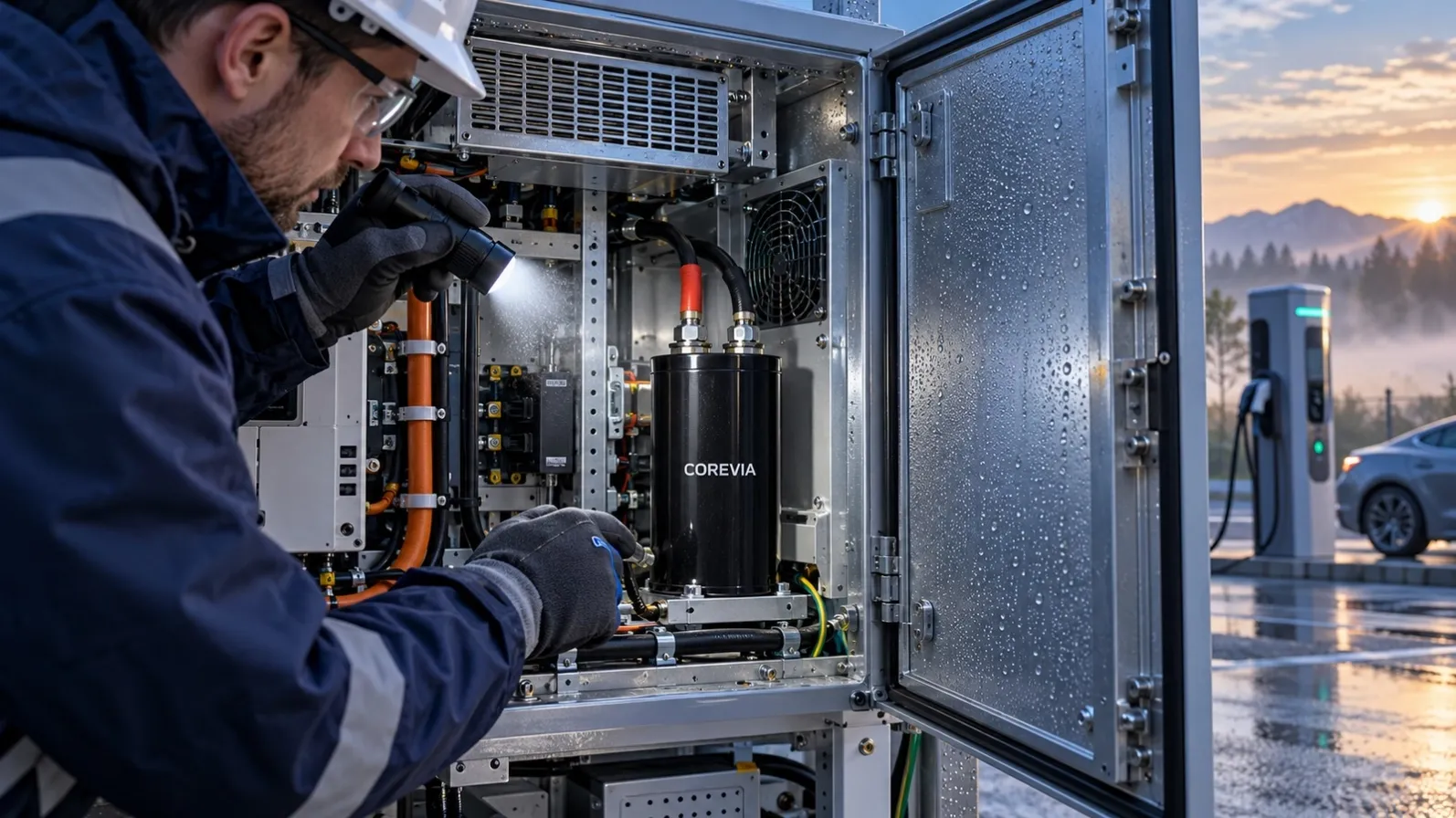
An outdoor EV charger trips after a damp night. By afternoon, it may run normally again. A technician opens the cabinet and sees moisture on the inside of the door. The DC-link capacitors are nearby, so they become the first suspects. But the wet door is a clue, not a diagnosis.
Where the moisture goes matters
Changes in temperature can leave condensation inside an enclosure. Moisture can contribute to rust at capacitor terminals and deterioration of the case sleeve or other exposed parts. It can also affect nearby connectors, busbars and insulation. The capacitor itself may still be sound while a connection around it needs attention.
Start with the pattern
Does the alarm appear after rain, a cold night or a long stop? Check the fault log and take clear photos before anything is cleaned or moved. Compare the condition on a dry day. A repeated weather pattern helps narrow the search, but it does not identify the failed component on its own.
Inspect the whole connection path
Follow the equipment maker's isolation and discharge procedure before opening or touching the DC link. Then inspect door seals, cable entries, drains and any cabinet heater or ventilation system. Look for water tracks, corrosion, residue and loose or discolored connections around the capacitor terminals and busbars. Check the PCB and other connectors in the same area.
When should you replace the capacitor?
A wet cabinet is not, by itself, a reason to replace every capacitor. If the capacitor shows damage or electrical tests point to a problem, compare the results with the exact series datasheet and the maker's test conditions. If the evidence instead points to a corroded connection or a water entry path, address that cause too. Otherwise, a new capacitor may face the same conditions.
What to send for a technical review
Share the charger model, capacitor model and rating, fault code, weather and operating conditions, photos of the cabinet and terminals, and any test results. These details let us review the capacitor application and the connection around it together.
COREVIA — Industrial Aluminum Electrolytic Capacitor Solutions
WhatsApp: +86 137 7126 2062