Oct 10, 2026Reliability Engineering
Why Aluminum Electrolytic Capacitors Fail Early: Ripple Current, ESR and Heat
Why aluminum electrolytic capacitors can fail early within rated voltage—and how ripple current, ESR, temperature, cooling and load profile affect service life.
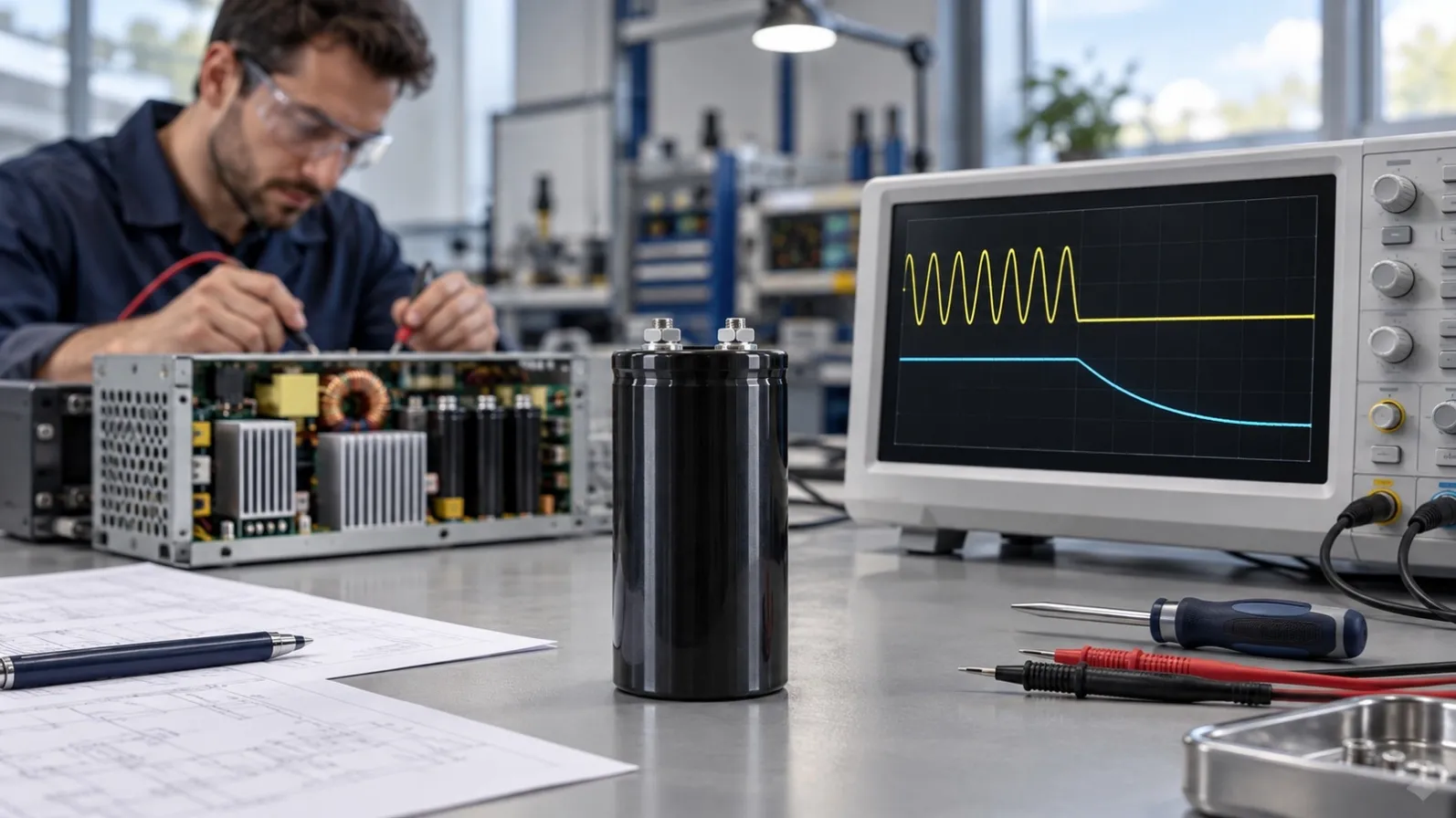
Why does an aluminum electrolytic capacitor fail early—even when the applied voltage remains within its rated limit?
In UPS systems, inverters, industrial drives and other power-electronics applications, premature failure is not always caused by overvoltage. One of the first operating conditions worth checking is ripple current.
Why Ripple Current Matters
Ripple current flowing through an aluminum electrolytic capacitor produces internal heat. The resulting power loss is closely related to the capacitor's equivalent series resistance (ESR) at the relevant frequency.
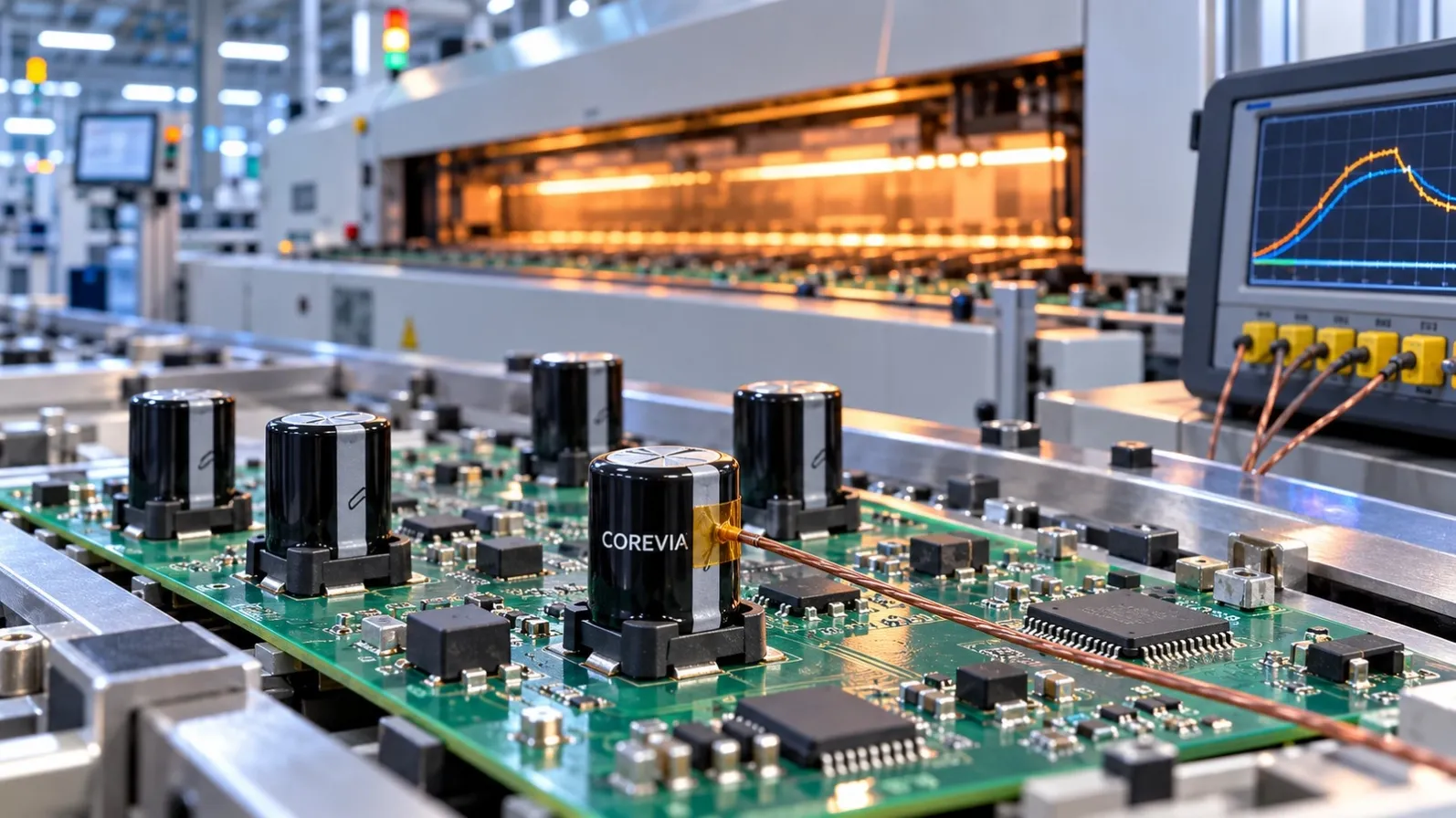
When actual ripple current is too high, additional internal heating can raise the capacitor's core temperature. Combined with high ambient temperature, restricted airflow or nearby heat sources, this accelerates electrolyte degradation and can shorten service life.
Voltage and Capacitance Are Not Enough
A capacitor may appear correct on paper because its rated voltage and capacitance match the original part. However, those two parameters do not fully describe how the capacitor will behave in a real application.
A reliable application review should also consider:
• Actual RMS ripple current and harmonic content
• Ambient temperature and capacitor hotspot temperature
• ESR or impedance at the relevant operating frequency
• Cooling, ventilation, spacing and installation orientation
• Real load profile, including overloads, inrush current and duty cycle
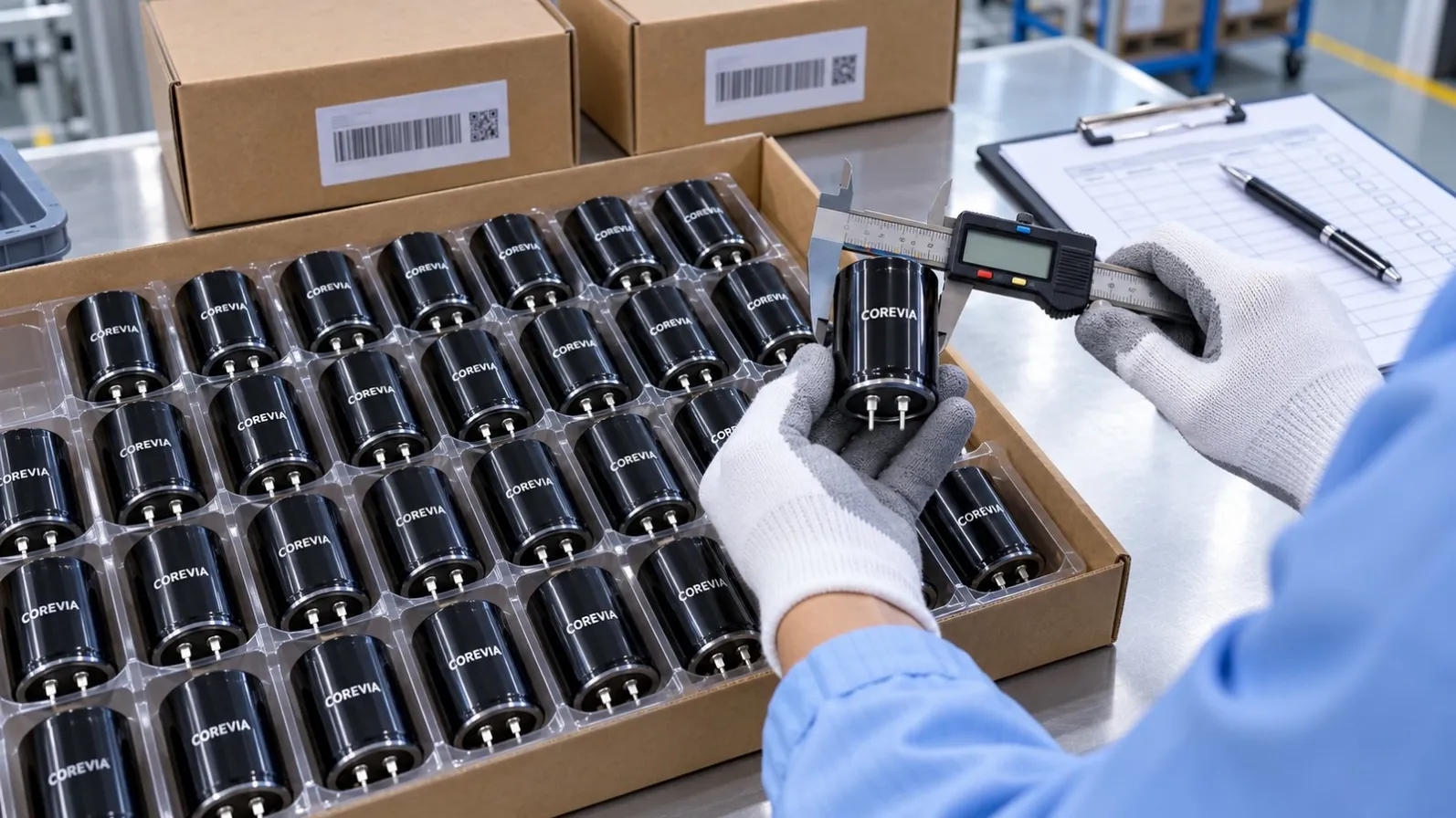
• Required endurance, case dimensions and terminal configuration
The Interaction Between ESR and Temperature
Higher ESR increases internal power loss for a given ripple current. As internal temperature rises, electrolyte degradation accelerates. This means a capacitor can operate below its rated voltage and still experience overheating, bulging or unexpectedly short life if the thermal and ripple-current conditions are poorly matched.
Applications Where This Review Is Especially Important
These checks are particularly important in UPS systems, frequency inverters, industrial drives, energy-storage equipment and renewable-energy power converters. In these systems, the electrical load can vary significantly, and the surrounding thermal environment may be more demanding than the nominal design assumptions.
What to Provide for a Failure Review
If an aluminum electrolytic capacitor is overheating, bulging or failing earlier than expected, provide the original capacitor specification together with the application conditions:
• Rated voltage and capacitance
• Actual ripple current, if available
• Ambient or measured hotspot temperature
• ESR, impedance or frequency requirements
• Case dimensions and mounting method
• Load profile, expected quantity and application details
• Datasheet, product photo or original part number
A proper replacement review should examine the real electrical, thermal and mechanical conditions before simply selecting another part number with the same voltage and capacitance.
Need help reviewing a capacitor application? Contact COREVIA at [email protected] or send the original specification through our technical inquiry form.
COREVIA | Aluminum Electrolytic Capacitor Solutions