Can Aluminum Electrolytic Capacitors Run in a Condensing Outdoor Cabinet?
Condensation inside an outdoor cabinet needs enclosure controls and part-specific review. Check dew point, water paths and capacitor terminals before approval.
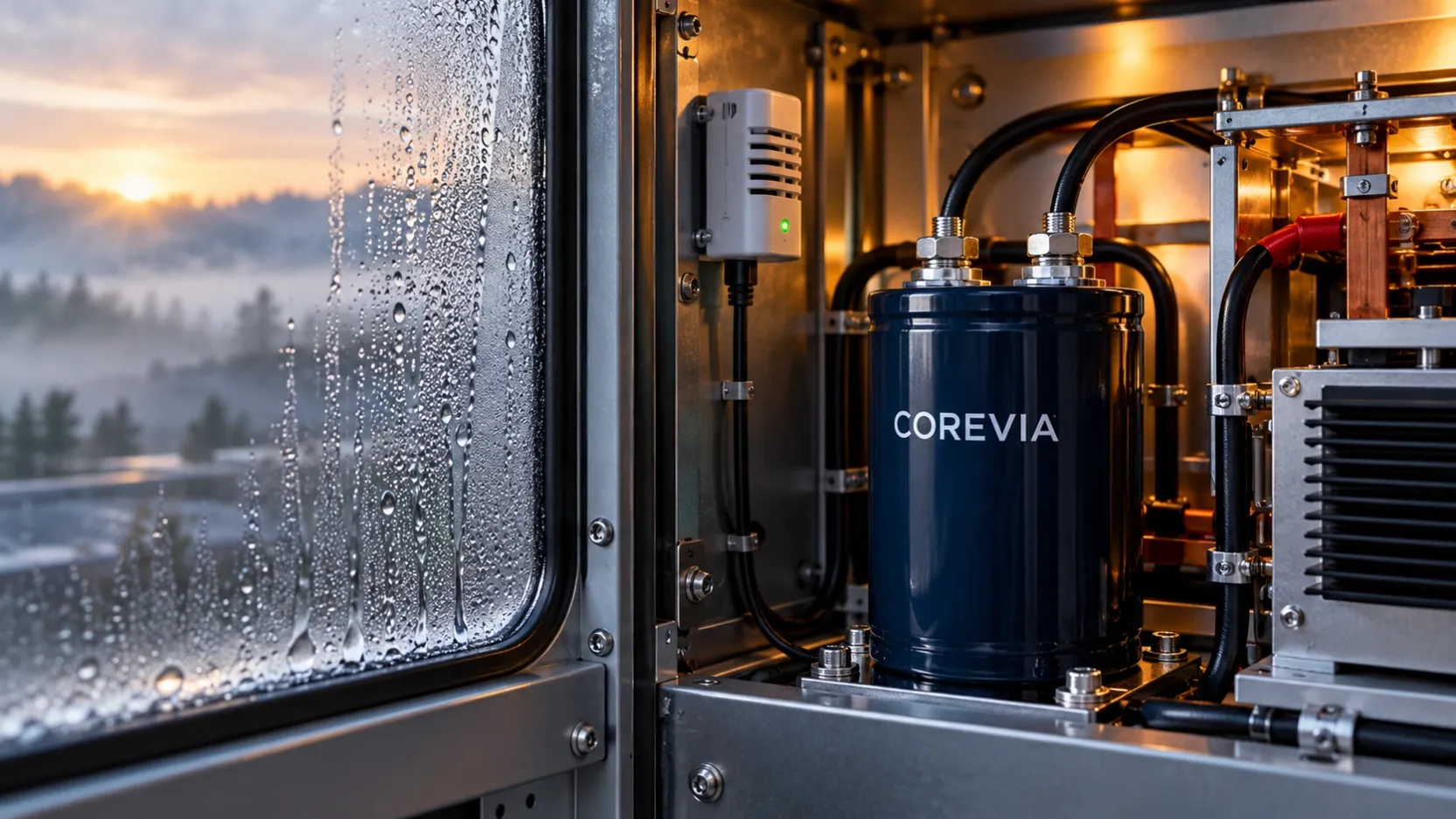
Do not approve an aluminum electrolytic capacitor for a cabinet that regularly condenses water without a part-specific environmental review and a way to keep moisture away from the capacitor and its connections. A normal temperature or ripple-current rating does not establish that the installed part can tolerate droplets on its seal, terminals or mounting hardware. Control the enclosure environment, then verify the selected COREVIA series and complete assembly.
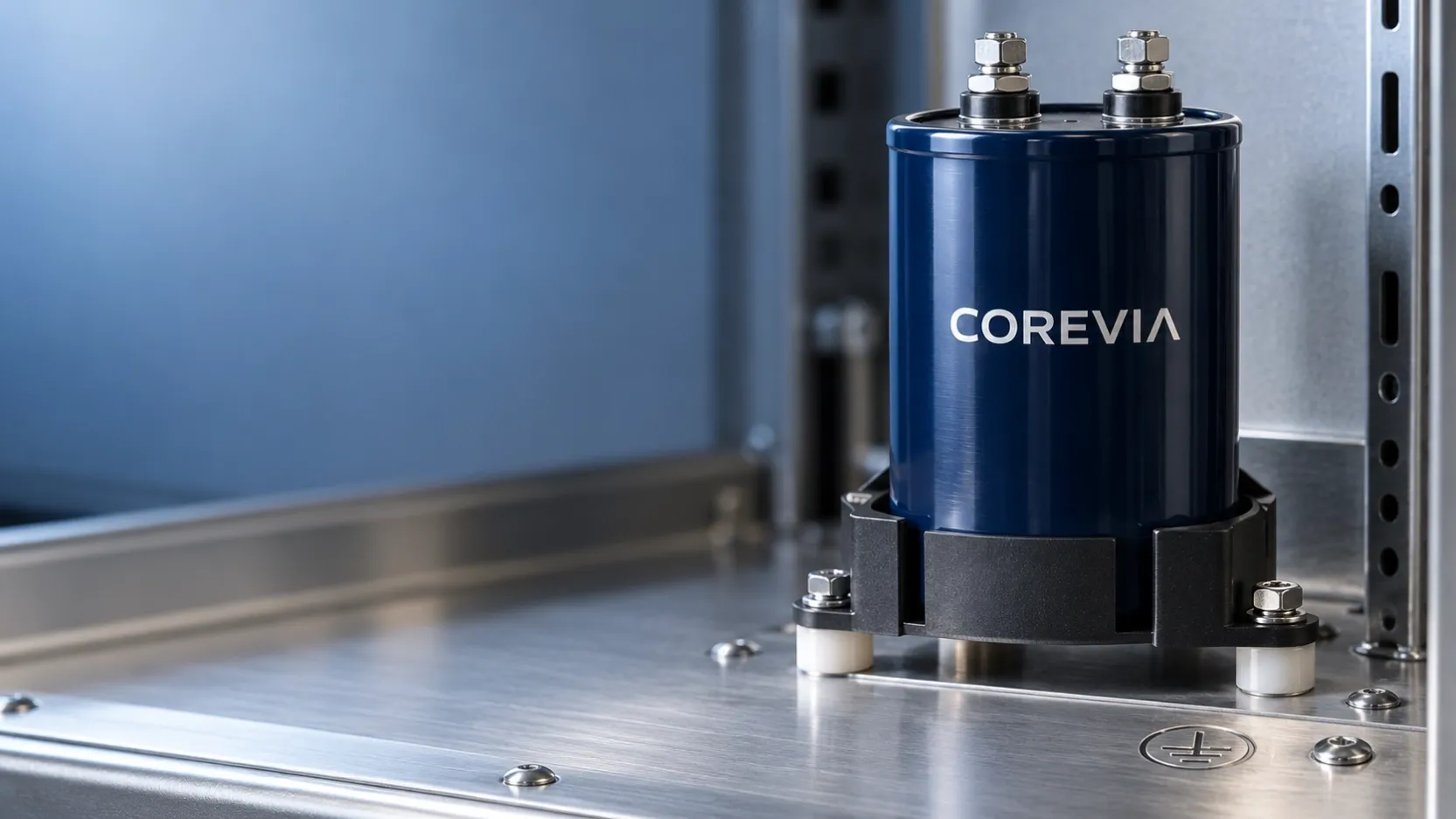
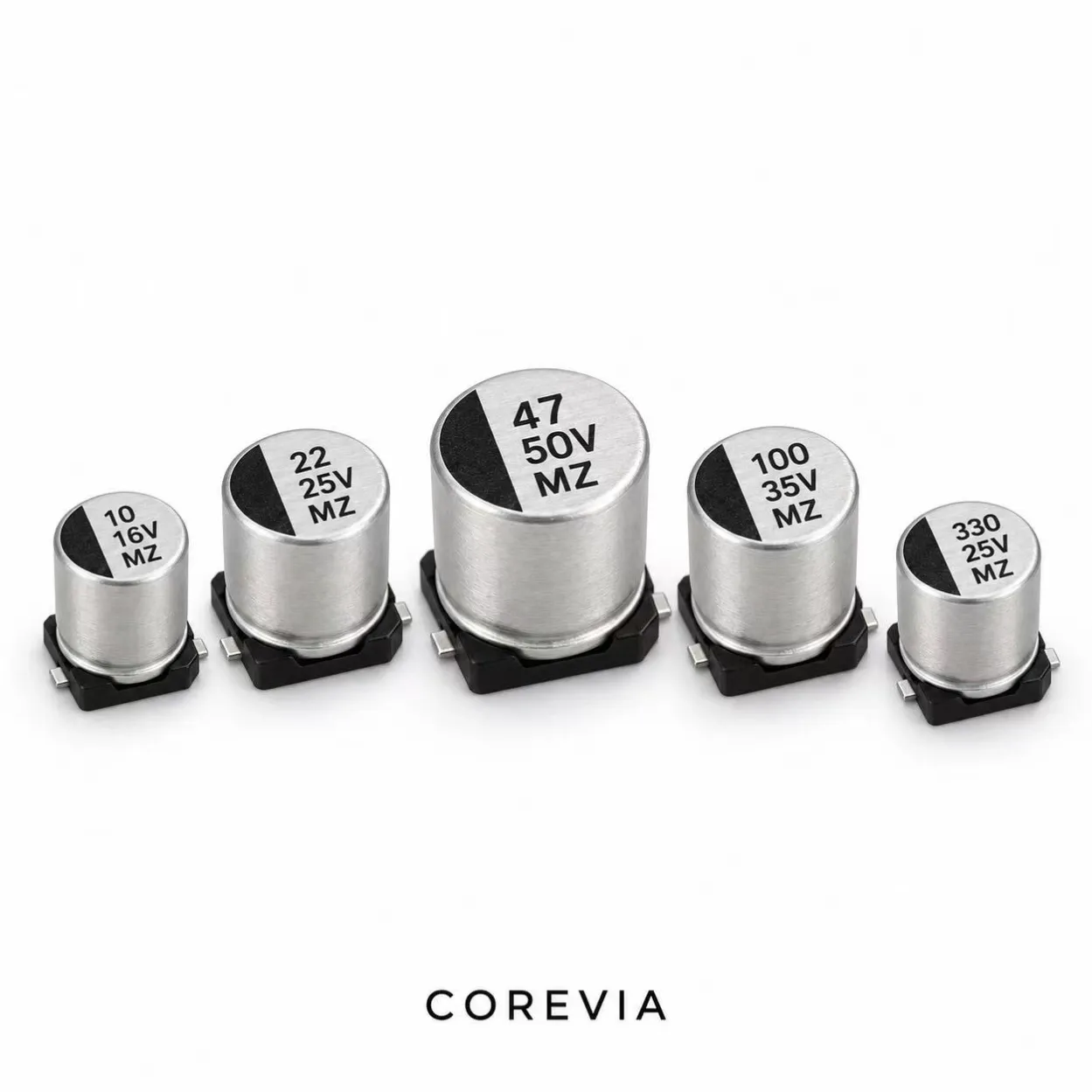
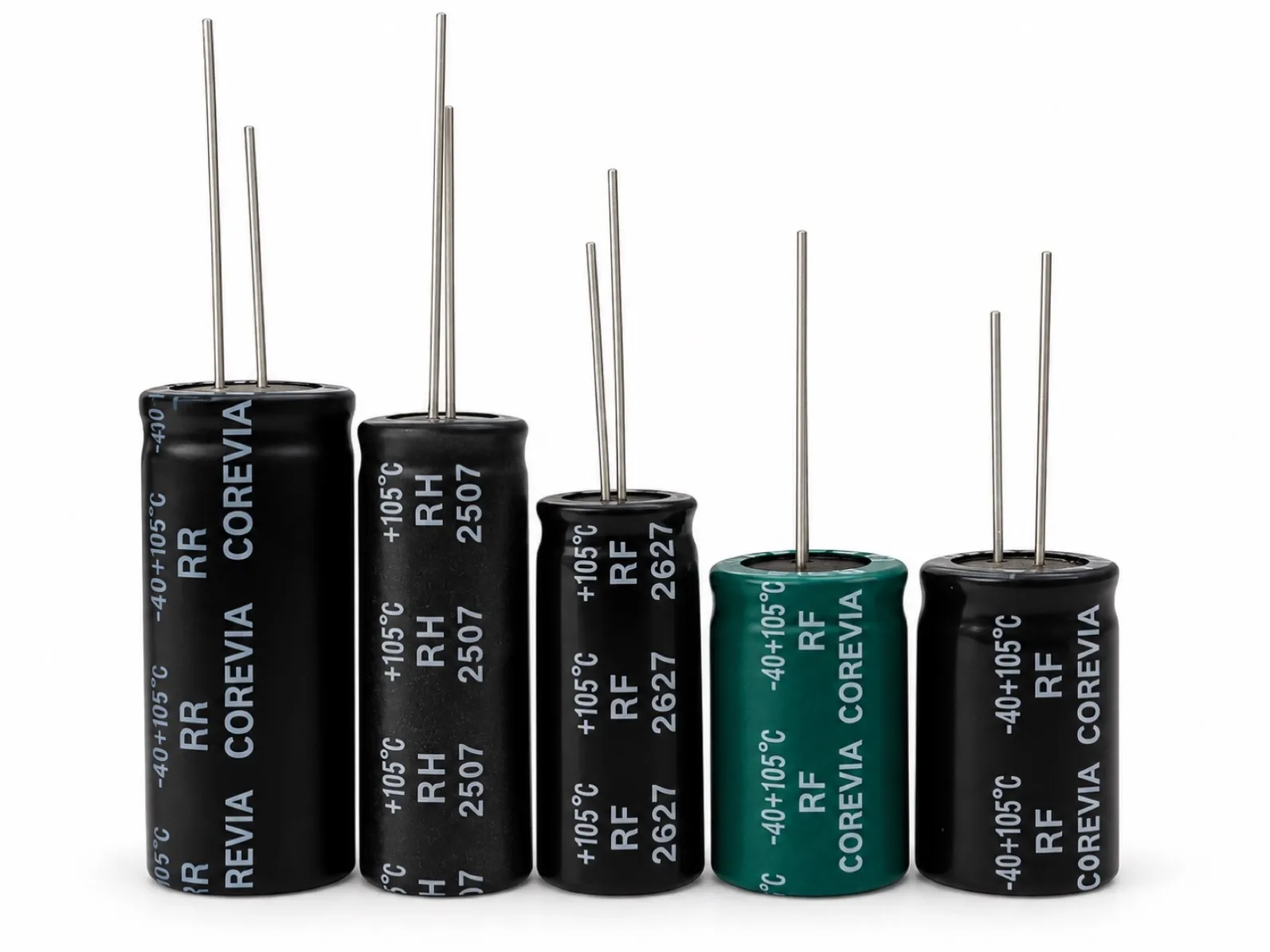
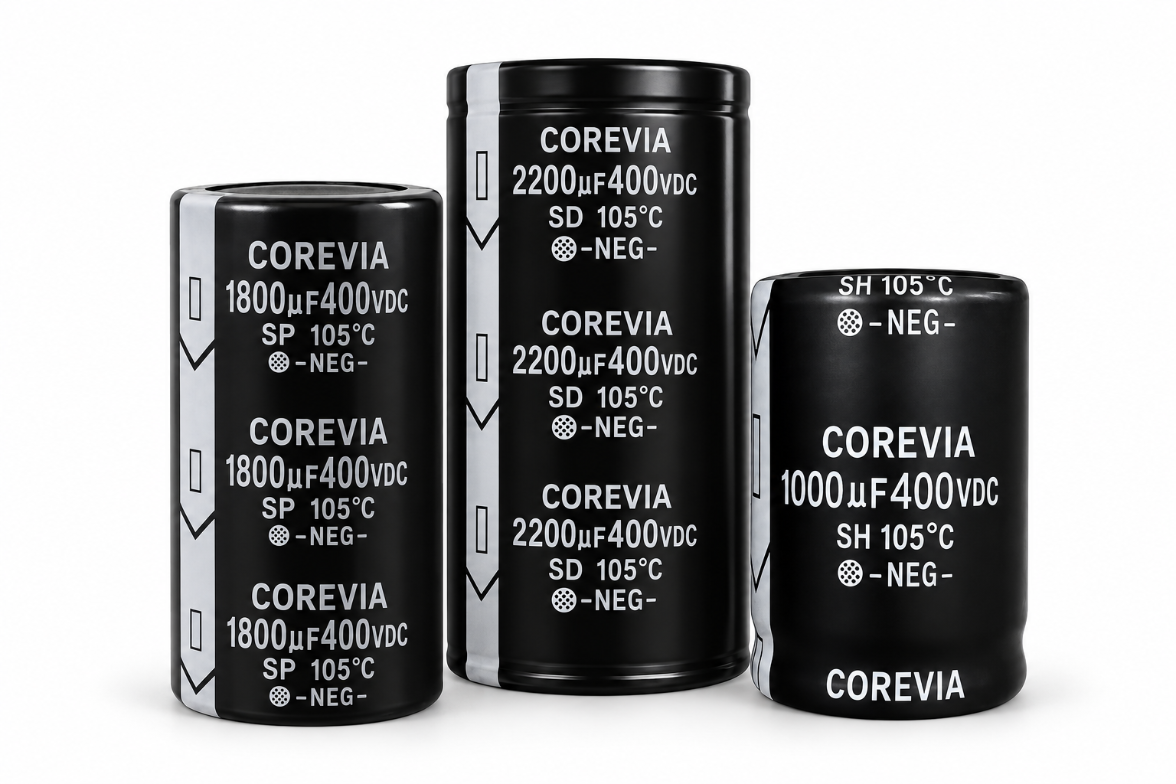
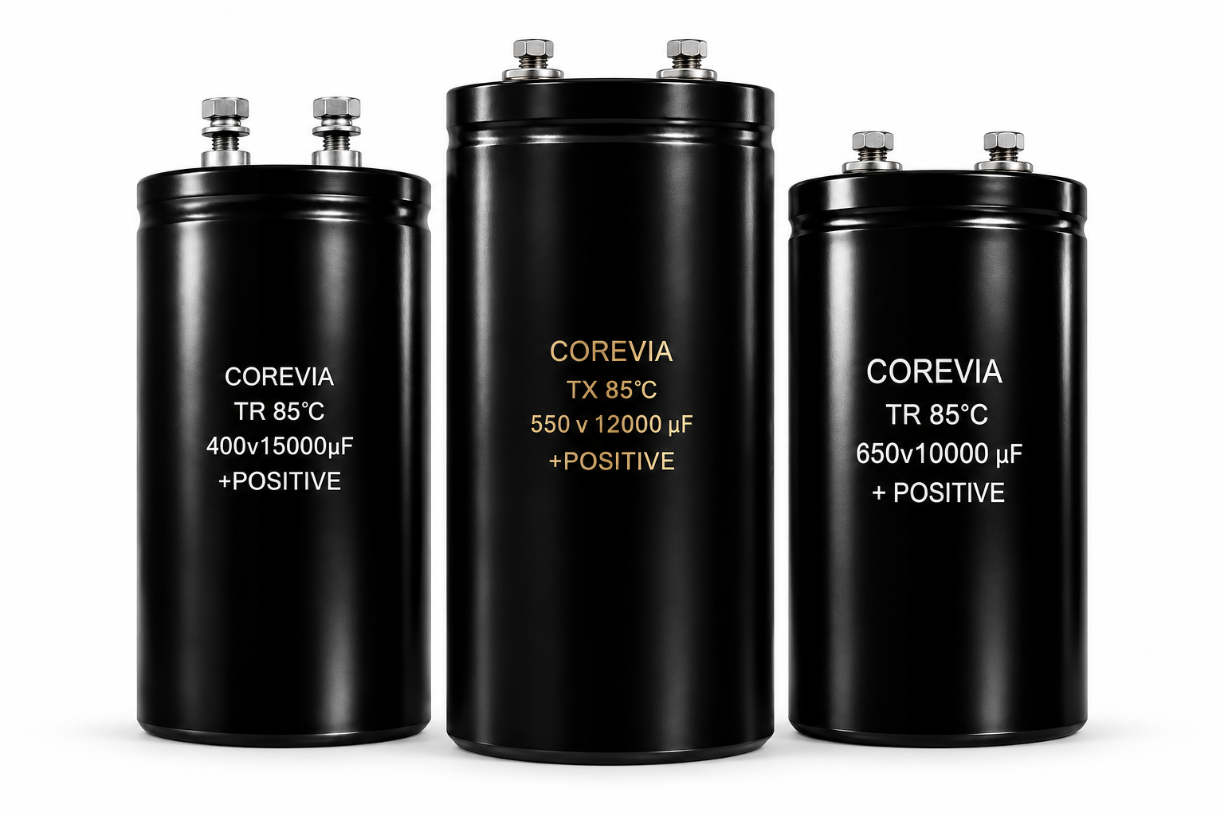
An outdoor inverter or energy-storage cabinet can be warm while running and cool quickly after shutdown. If humid air meets a surface below its dew point, liquid water can form inside the enclosure. The risk is an installed-system question: where water collects, how long it remains, and whether it reaches live connections matter more than an outdoor label on the cabinet door. COREVIA offers screw-terminal and snap-in aluminum electrolytic capacitor families; neither family name alone is a condensation rating.
Where condensation changes the capacitor risk
Moisture can create unintended conductive paths around terminals and nearby metalwork. It can also promote corrosion at exposed connections or damage labels and sleeves over repeated wet-dry cycles. Water close to the rubber seal deserves particular attention. These are reasons to investigate the assembly; they are not proof that any particular COREVIA part has failed or that one enclosure solution is universally sufficient.
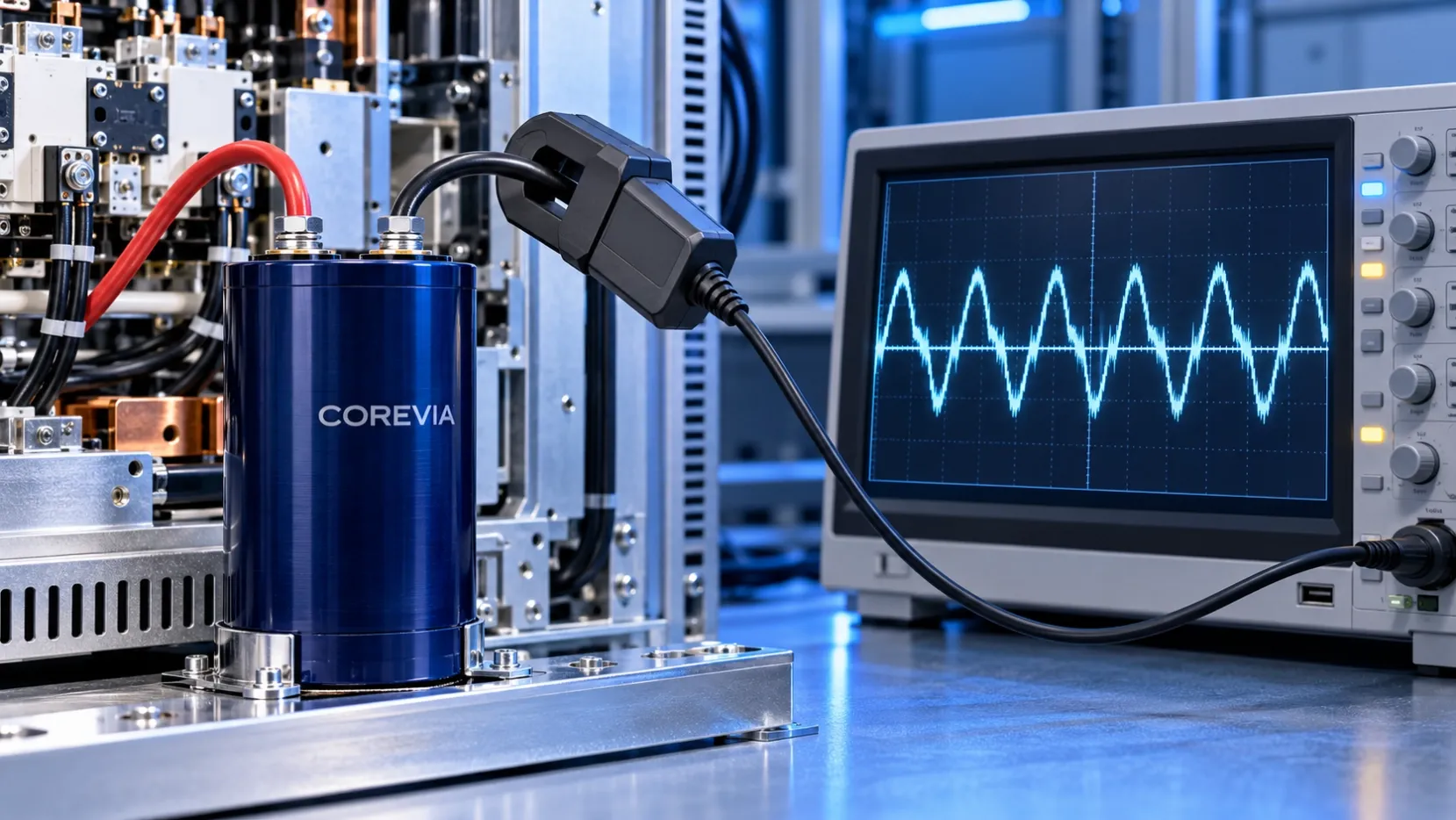
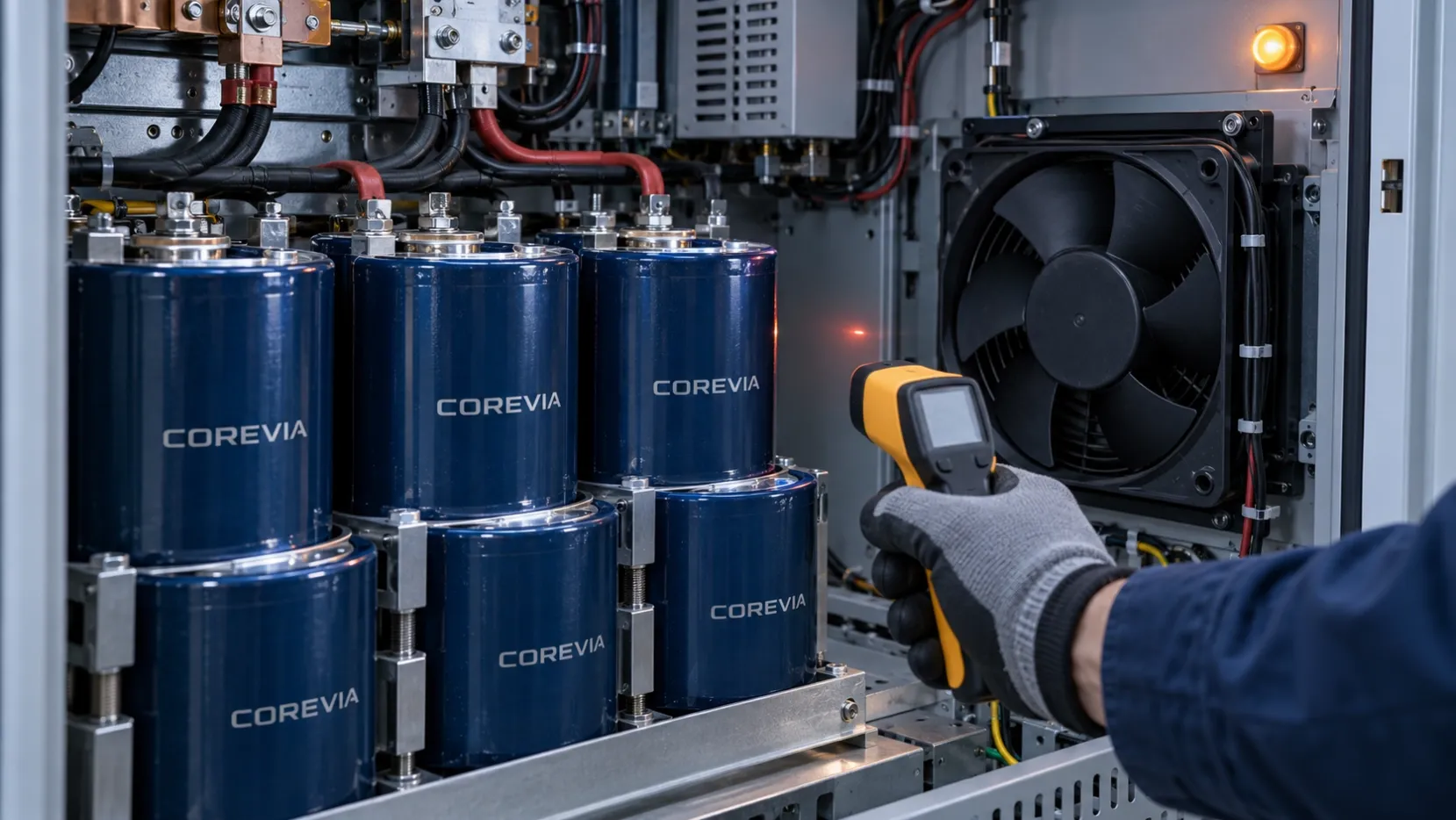
Record the difference between humidity and actual condensation. A relative-humidity reading taken during warm operation may miss droplets that appear during a cold start, overnight shutdown or door opening. Inspect the coldest locations and the routes by which condensate could drip from the roof, door or cable entry onto the capacitor bank.
| Cabinet condition | What to document | Why it matters |
|---|---|---|
| Cold surface after shutdown | Surface temperature and internal air dew point | Shows when liquid water may form |
| Visible droplets or drip path | Location, duration and nearby terminals | Identifies direct wetting and electrical paths |
| Heating or ventilation control | Operating sequence and fault behavior | Tests whether moisture control works through start and stop |
| Capacitor location | Distance from wet panels, cable entries and drains | Shows whether layout exposes the part |
What to change before approving the layout
Start with the cabinet design: manage water ingress and condensate drainage, avoid placing capacitors below likely drip points, and evaluate climate control through the full operating and shutdown cycle. Treat heaters, vents or dehumidifiers as equipment-level controls that must be validated in the actual enclosure. A brief dry inspection during normal operation is not enough to establish performance after a cold night.
Do not assume a printed sleeve or conformal coating on the PCB makes the capacitor seal and terminals waterproof. A coating process has its own masking and compatibility limits. Keep pressure-relief paths clear as described in the vent-clearance guide, and review any enclosure changes against both thermal and electrical requirements.
What COREVIA needs for a part-specific review
Send the full capacitor part number and data-sheet revision, cabinet location, mounting method and photos or drawings showing the capacitor relative to cold panels, roof seams, cable entries and drains. Provide measured internal temperature and humidity across start, operation and shutdown, plus any evidence of actual droplets. Include the electrical load and local operating temperature so that environmental changes are reviewed alongside ripple and cooling conditions.
The acceptance decision belongs to the exact series and completed equipment. If the environment remains condensing, ask for a documented assessment of the proposed protective measures and verify the assembly under the conditions the product will actually face. Do not convert another manufacturer's humidity test or another component's enclosure rating into a COREVIA specification.
FAQ
Is high relative humidity the same as condensation?
No. Relative humidity describes the air; condensation is liquid water formed when a surface falls below the local dew point. Both conditions matter, but visible droplets need a separate water-path review.
Does a capacitor sleeve make an outdoor cabinet safe?
No. A sleeve is not evidence that terminals, seals and nearby conductive parts can be wetted. Review the exact capacitor documentation and the cabinet's moisture-control design.
Can a cabinet heater solve the problem by itself?
It may be part of the enclosure design, but its placement, controls, power-off behavior and fault response must be tested. A heater does not replace inspection of drip paths or the selected capacitor's environmental limits.
Planning an outdoor power converter? Contact COREVIA with the capacitor part number, cabinet drawing and temperature-humidity observations for a focused application review.