Can Conformal Coating Cover an Aluminum Electrolytic Capacitor?
Conformal coating can protect a PCB, but the capacitor seal and pressure-relief path need controlled clearance. Review chemistry, masking and curing first.
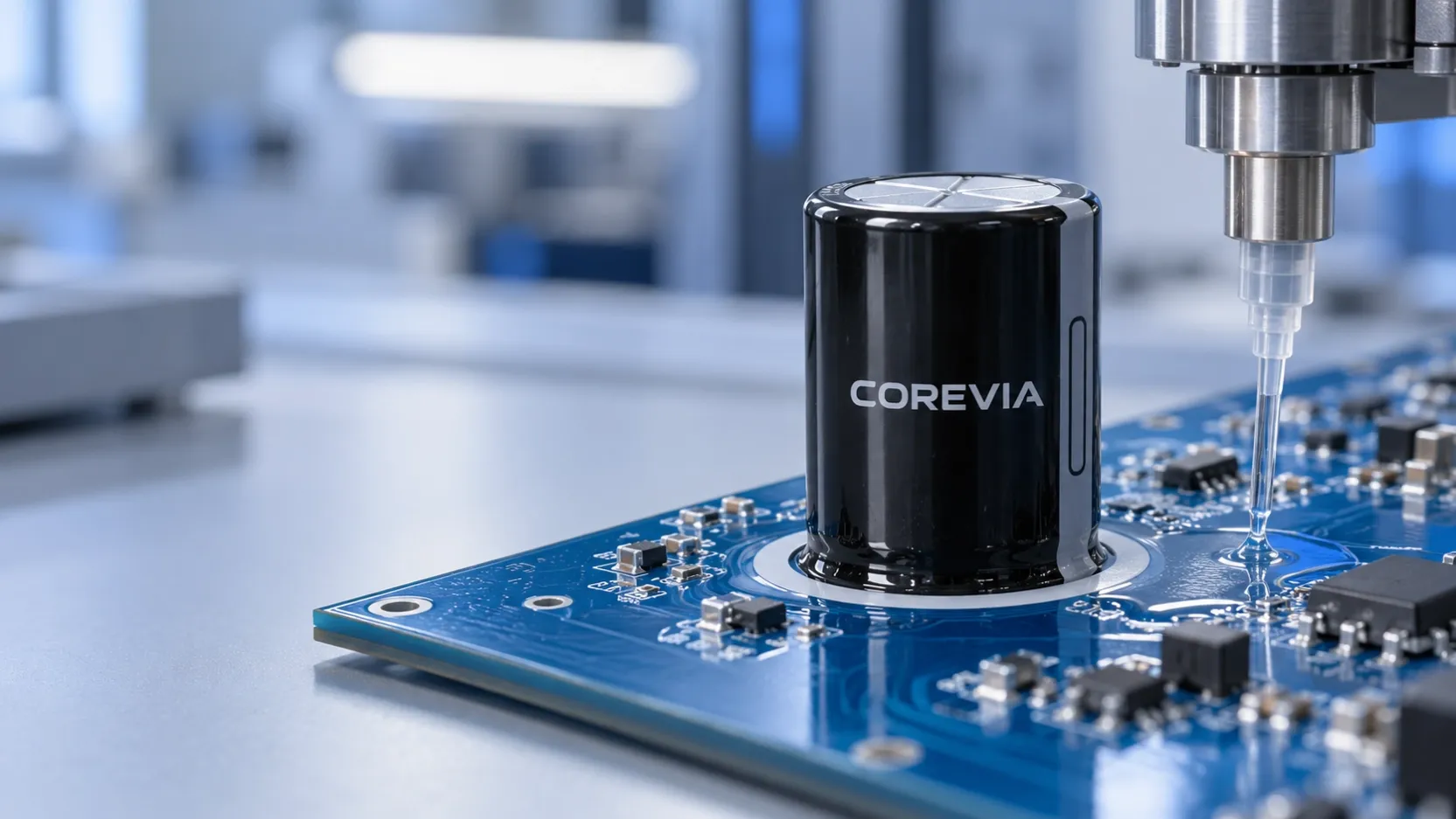
Conformal coating may be applied around an aluminum electrolytic capacitor, but the coating process must be qualified for the exact COREVIA series and must not seal critical pressure-relief or rubber-seal areas. Before production, review the coating chemistry, masking boundary, cleaning condition and curing profile. A coating that protects the PCB can still create a capacitor reliability risk if it traps residue, attacks the seal or blocks gas diffusion.
Which capacitor areas need controlled clearance?
The pressure-relief structure and sealing system are functional parts of an aluminum electrolytic capacitor. They should remain free to operate as intended. Do not assume that the sleeve, rubber seal or vent can be completely encapsulated simply because the coating is electrically insulating.
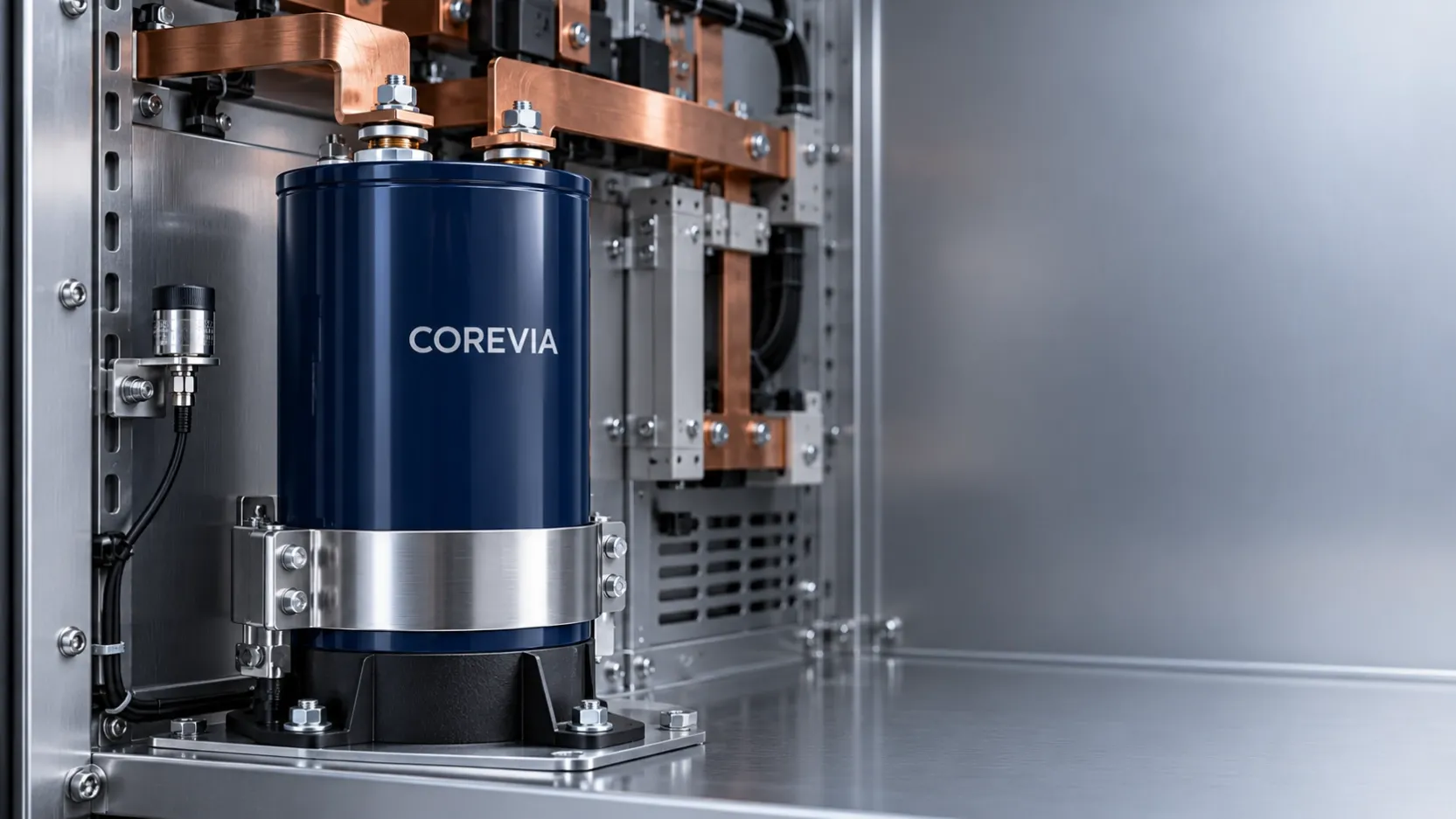
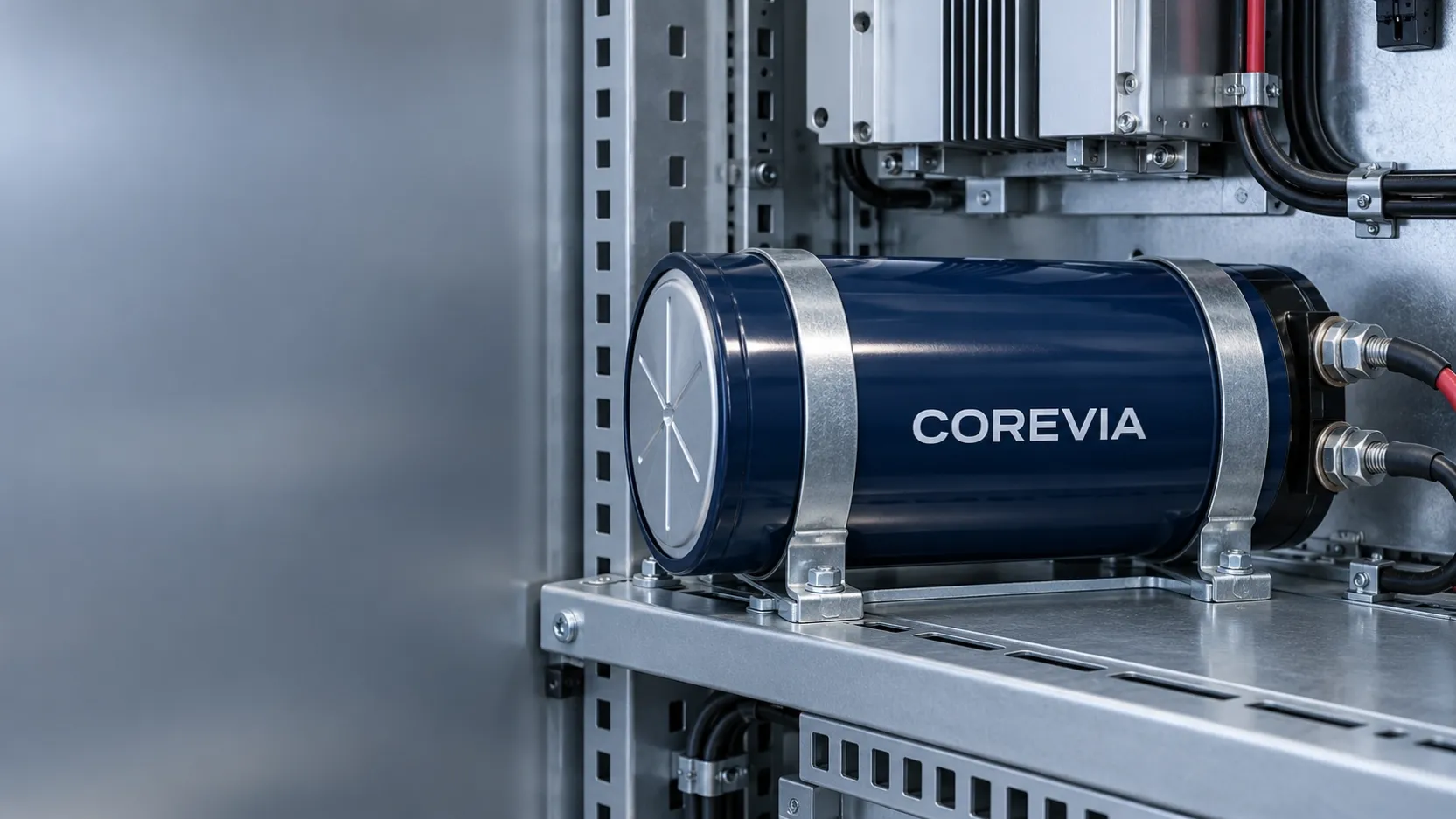
For board-mounted parts, define a keep-out area around the seal and any pressure-relief feature identified in the exact product drawing. Keep coating from wicking under the capacitor where flux, cleaning liquid or moisture could remain. For larger components held by clamps or brackets, check that masking and coating do not interfere with mechanical support or inspection.
The required boundary depends on the series, terminal style, mounting direction and coating method. A general photograph is not enough to approve the process; the engineering review should use the exact part number and board layout.
How should an OEM qualify its coating process?
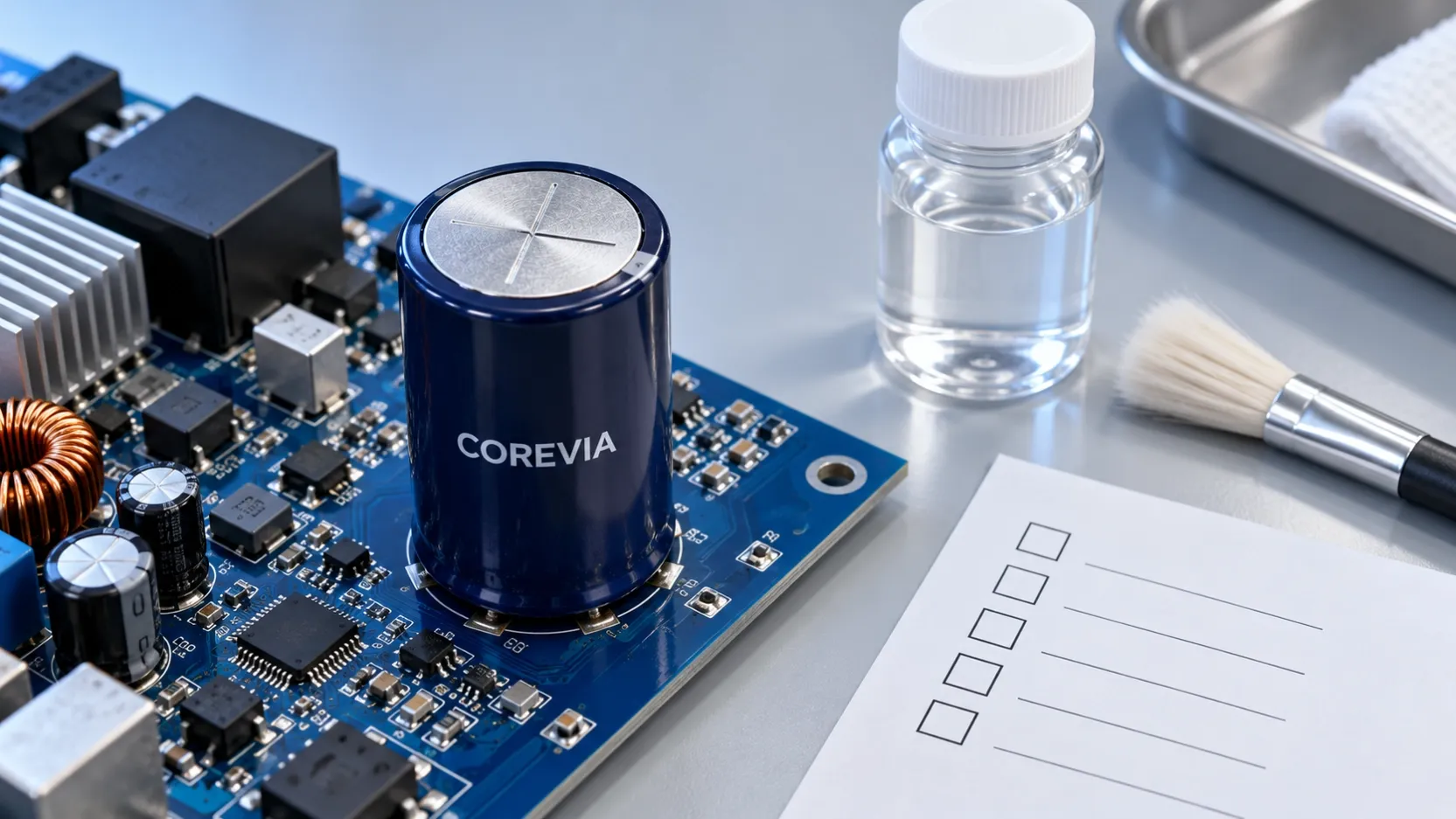
Treat coating as a controlled manufacturing process. Record the material, solvent system, application method, thickness target and cure cycle, then inspect representative assemblies after processing.
| Process item | What to confirm | Reason |
|---|---|---|
| Coating chemistry | Obtain the full material and solvent information from the coating supplier | Some chemicals can affect sleeves, seals or aluminum surfaces |
| Board cleanliness | Remove and dry approved residues before coating | Coating can trap contamination near the capacitor base |
| Masking boundary | Protect the seal, vent and specified keep-out area | Preserves the intended pressure-relief and sealing functions |
| Cure profile | Measure time and temperature at the capacitor location | Actual component temperature may differ from oven settings |
| Coverage inspection | Check for pooling, capillary flow and coating under the body | Hidden coating or residue may be missed from a top view |
| Qualification samples | Inspect appearance and verify agreed electrical checks after curing | Confirms the complete process on the real assembly |
Do not copy a coating rule from a different capacitor construction. A radial, snap-in and screw-terminal design can present different seal locations, mounting clearances and inspection needs. If the process changes material, thickness, nozzle path or curing conditions, review whether requalification is required.
What information should you send COREVIA?
Send the full COREVIA part number and series, rated voltage and capacitance, board drawing, mounting orientation, photographs of the proposed masking area, coating material documentation, solvent information, application method and cure profile. Include the measured temperature at the capacitor location when heat curing is used.
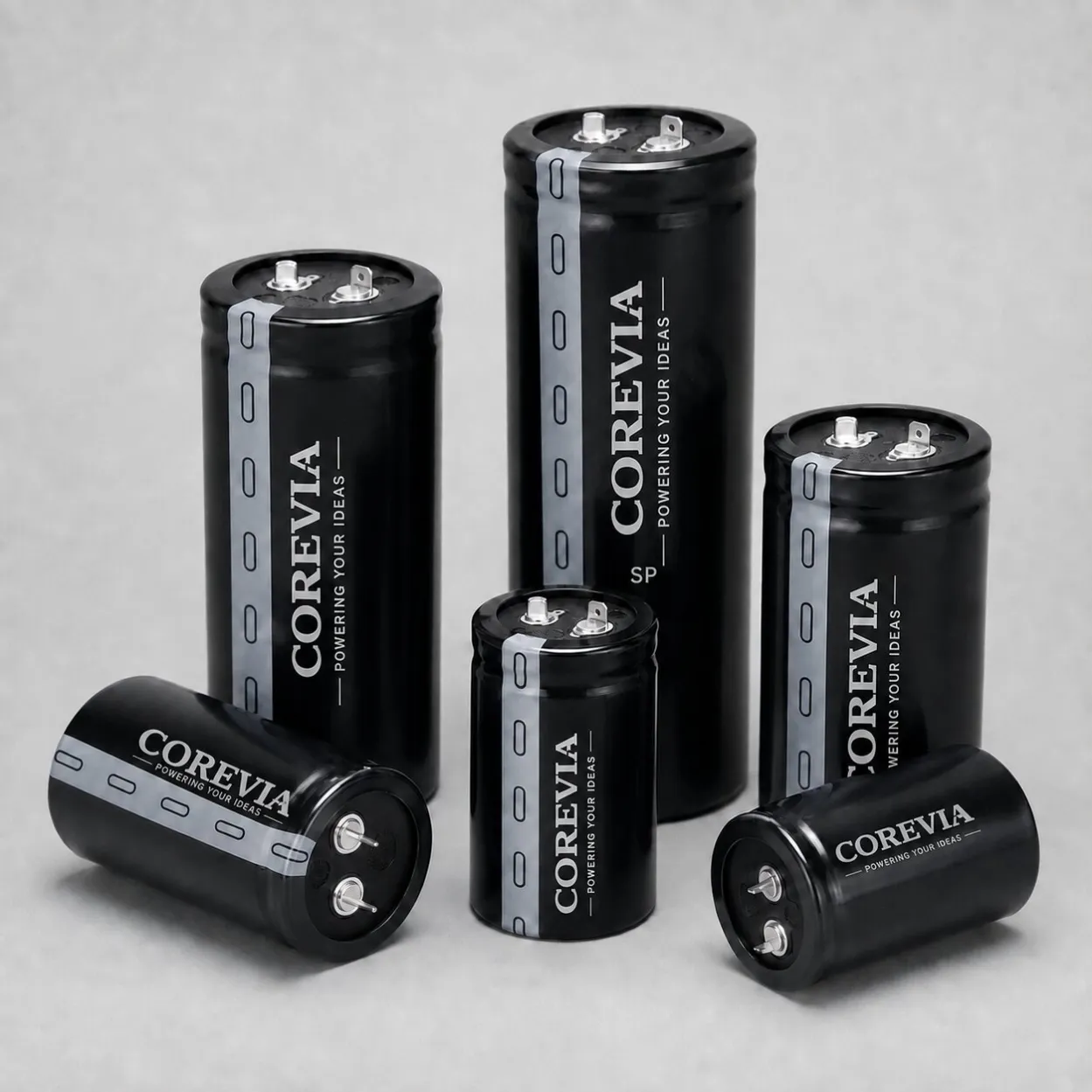
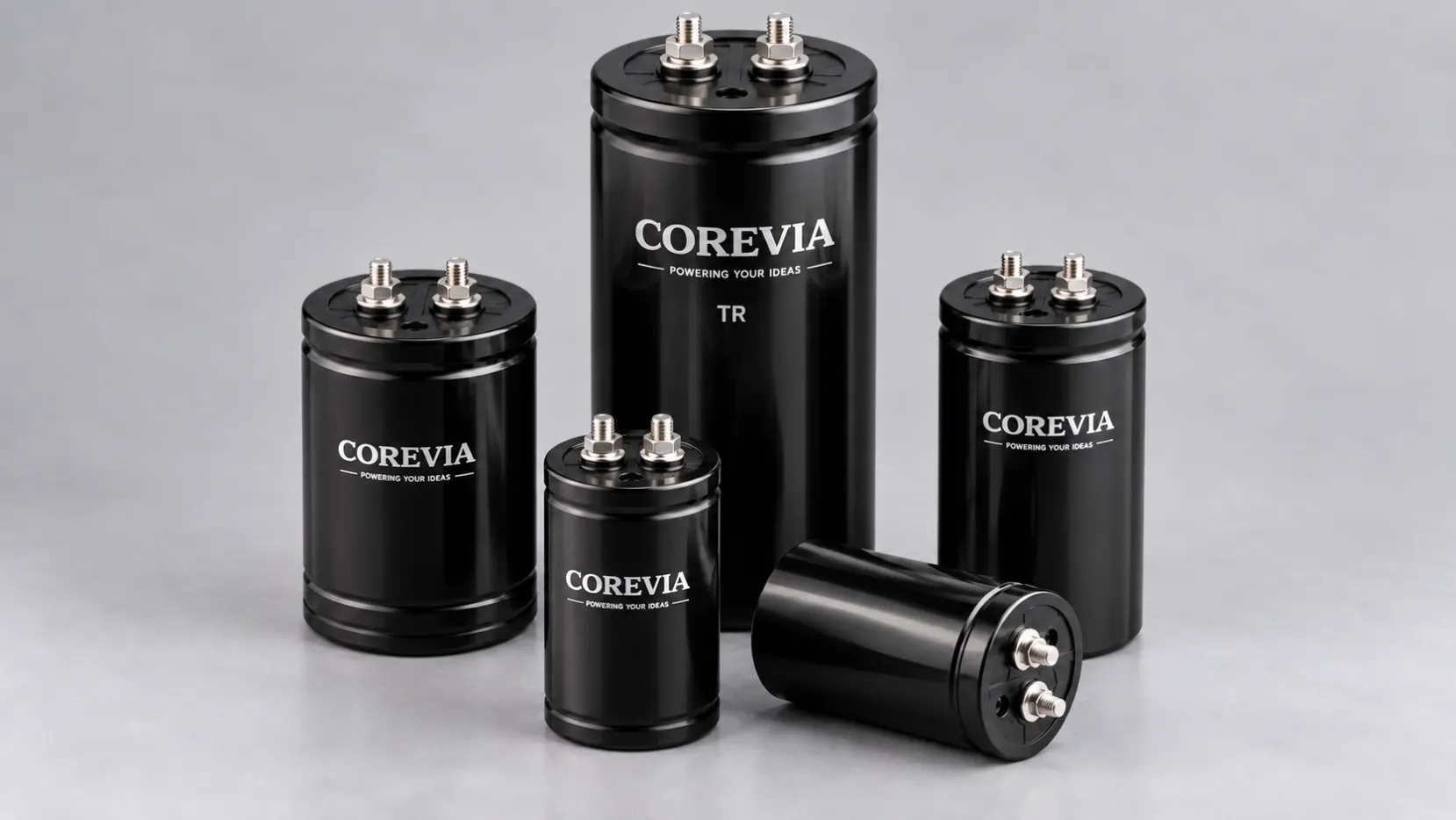
For component-family context, review the radial capacitor range, snap-in capacitor range and screw-terminal capacitor range. Approval should still be based on the exact series and assembly process.
Can the complete capacitor body be coated?
Do not approve complete encapsulation from a general rule. Keep functional seal and pressure-relief areas clear, and confirm the allowed coverage for the exact component construction.
Is a “halogen-free” label enough to approve the coating?
No. Review the full formulation and process conditions. The label alone does not describe every solvent, residue, curing condition or interaction with the assembly.
Should coating be applied before the board is fully dry?
No. Residual cleaner, flux or moisture should not be trapped beneath the coating or around the capacitor base. Use a verified cleaning and drying process before coating.
Need a coating keep-out review before production? Contact COREVIA with the exact part number, board layout and coating process details.