Should You Ground the Can of a Screw-Terminal Capacitor?
Do not use a screw-terminal capacitor can as a ground connection. Check case contact, mounting insulation and the exact COREVIA drawing before fixing it to a chassis.
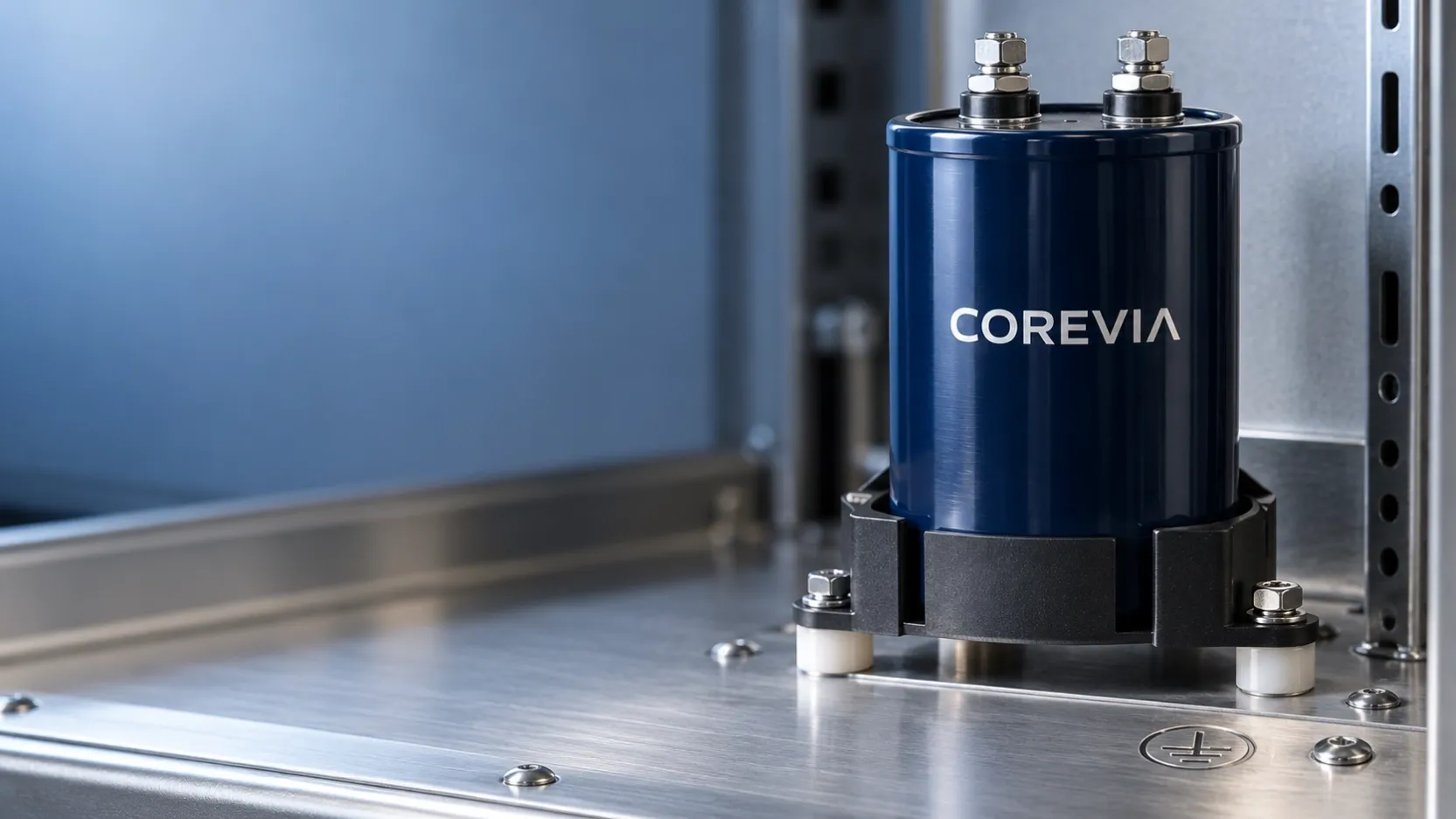
Do not use the aluminum can of a screw-terminal electrolytic capacitor as a chassis-ground connection. Route the circuit through the marked positive and negative terminals. Treat the can's electrical relationship to those terminals as undefined unless the exact COREVIA part drawing states otherwise, and design the mount so the can cannot make an unintended conductive contact with the enclosure.
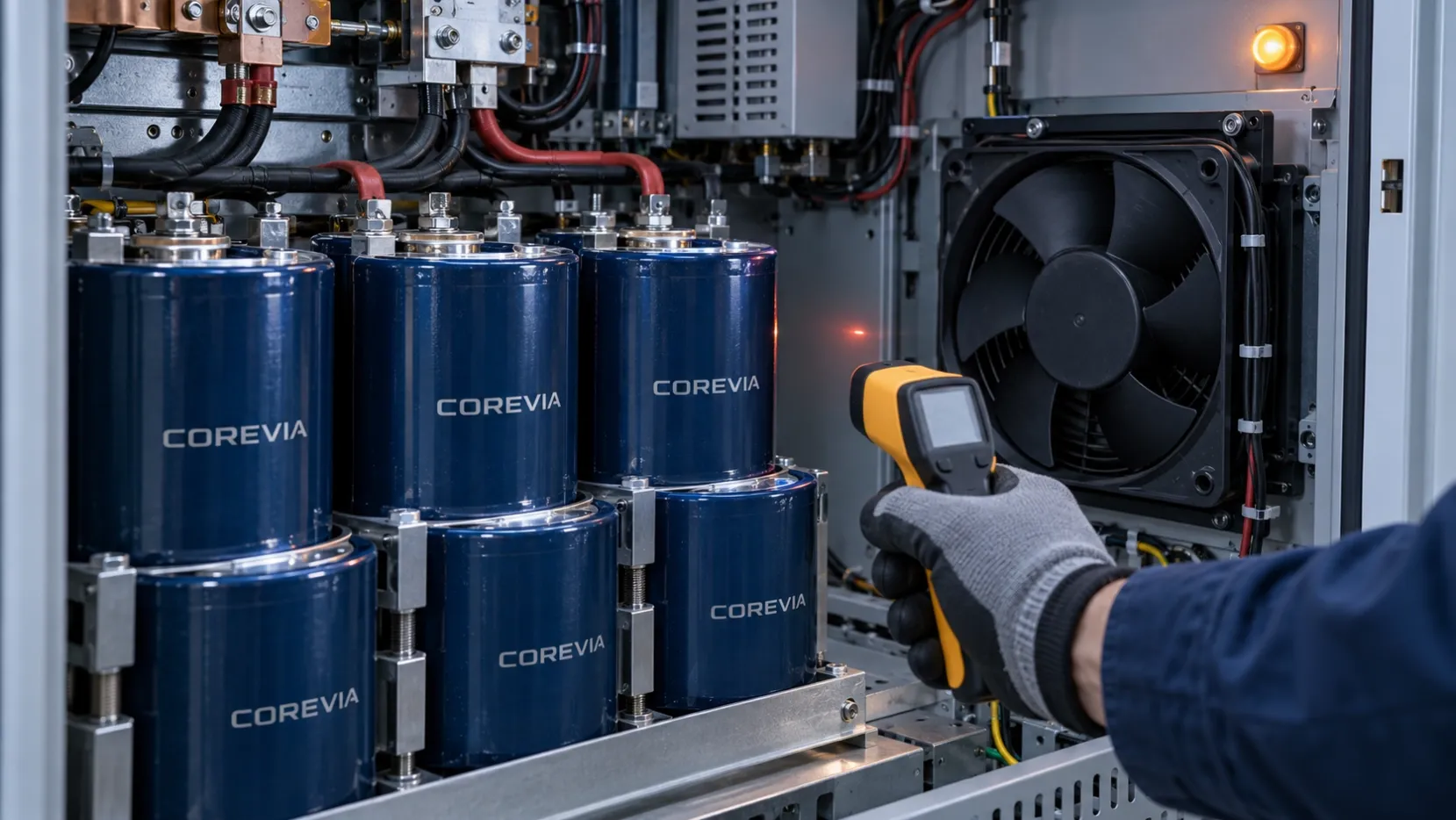
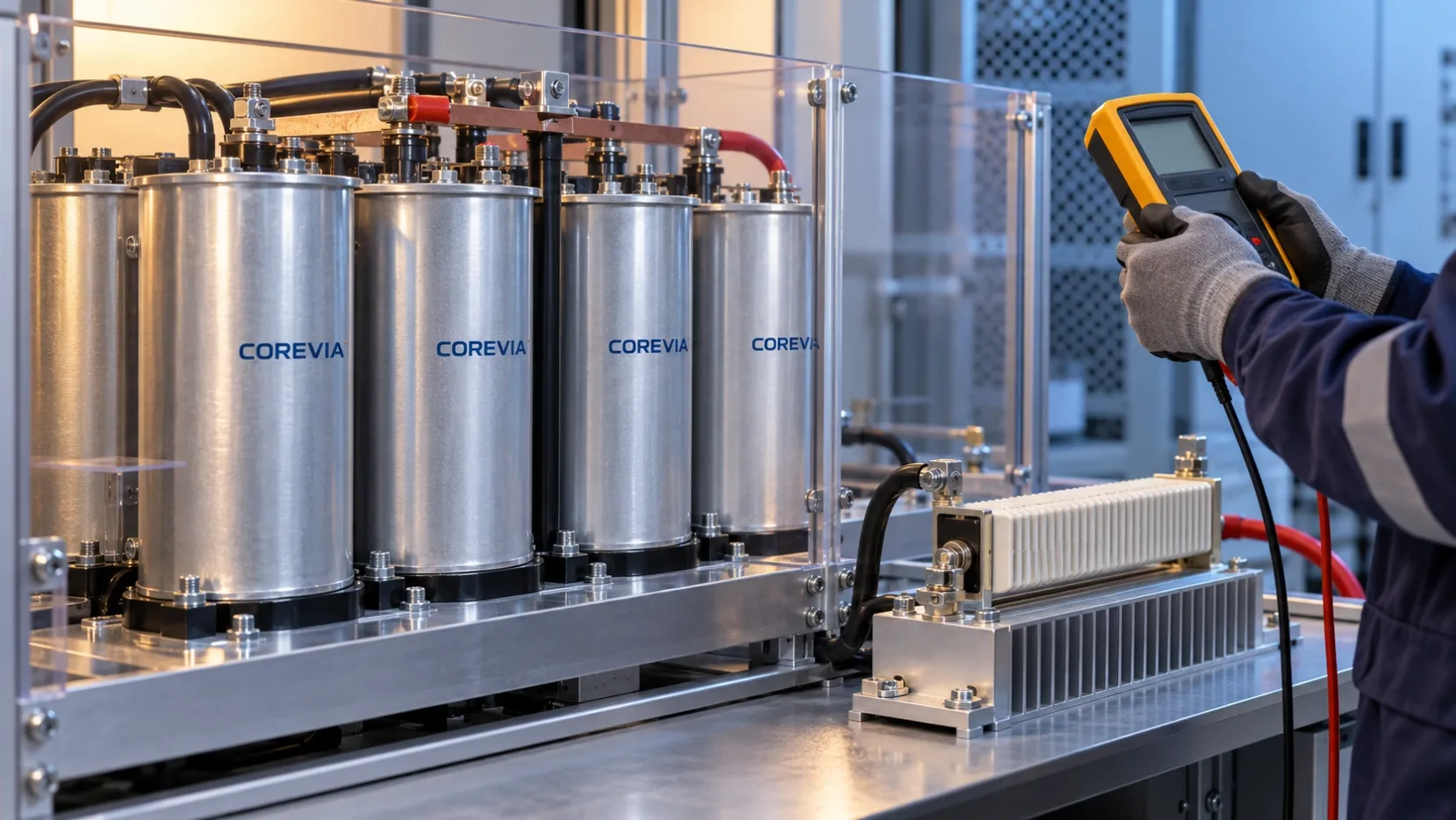
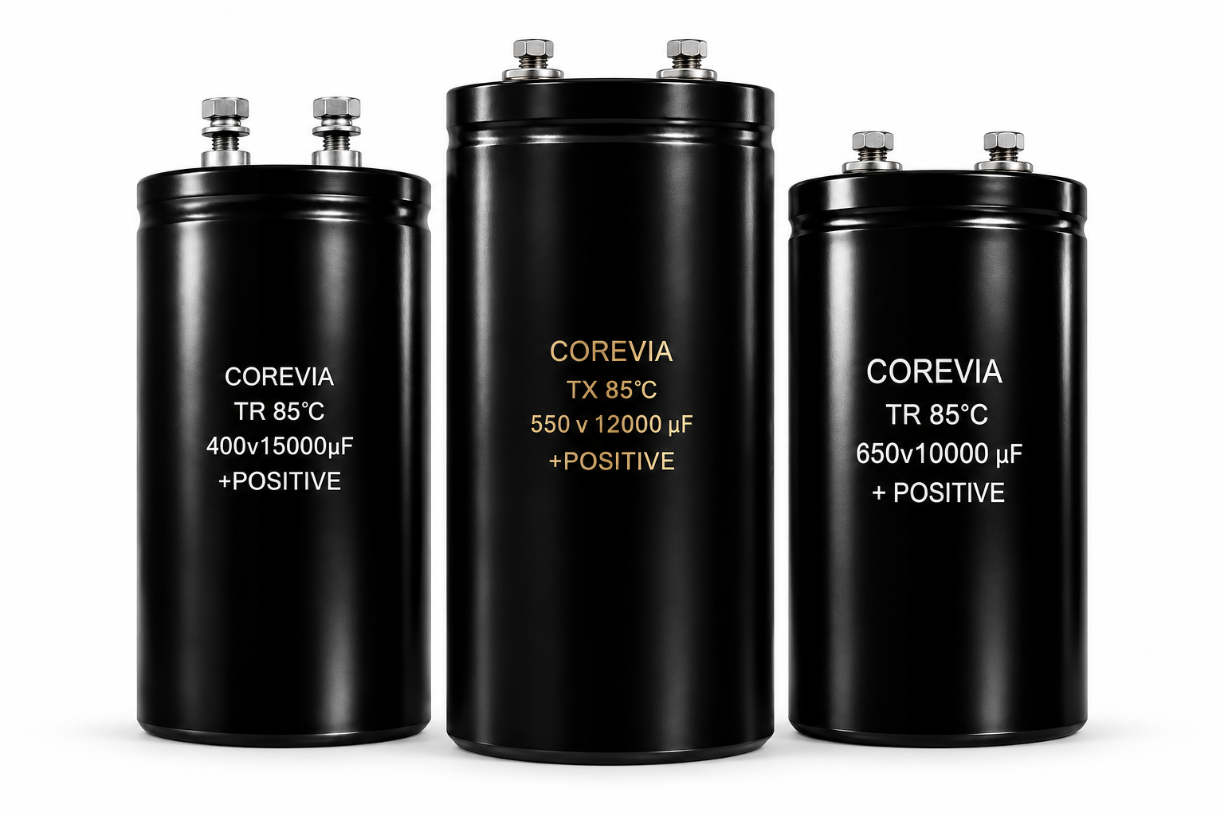
This question arises when a large capacitor is secured inside a metal inverter or power-supply cabinet. A grounded chassis, a metal body clamp and a capacitor can may sit close together, but their mechanical contact does not establish an approved electrical connection. COREVIA offers a screw-terminal aluminum electrolytic capacitor family; the relevant case, sleeve and mounting details must be checked for the selected series and part number.
Why the capacitor can is not a ground terminal
An aluminum electrolytic capacitor has two designated electrical terminals. Its aluminum housing is a package part, not a substitute for the negative terminal or the equipment protective-earth connection. In common liquid-electrolyte constructions, the case may have an electrical relationship to internal elements through the electrolyte. That relationship is not a controlled, rated current path for the cabinet design. It should not be relied on as a predictable negative, floating or protective-earth node.
The same caution applies to the outer sleeve. A standard sleeve can reduce casual contact with the metal can, but its presence alone does not prove the functional insulation required between the capacitor and an earthed chassis. Thermal aging, abrasion at a clamp or assembly damage can change the contact condition. Select an insulation method using the actual equipment requirements and the exact capacitor documentation.
What to check before mounting it near a grounded cabinet
Use the mechanical drawing and the cabinet electrical design together. The table below separates the question to ask from the evidence needed; it does not assign a universal clearance or insulation rating to every COREVIA series.
| Design point | Question for the assembly review | Evidence to check |
|---|---|---|
| Can-to-chassis contact | Can the metal case or exposed end touch grounded metal in normal use or after vibration? | Mounting drawing, clamp design and installed inspection |
| Sleeve or coating | Is an additional insulating part needed at the clamp or chassis interface? | Exact part drawing and equipment insulation requirement |
| Electrical return | Is any conductor using the can, clamp or mounting stud as a current return? | Circuit and wiring schematic; marked terminal connections |
| Service access | Could a tool or displaced wire bridge the can and another potential? | Cabinet layout, service clearance and protection plan |
If a metal clamp is proposed, review its contact surface, possible sleeve wear and mechanical support together. The body-clamp mounting guide addresses mechanical support; this article focuses on the separate case-to-chassis electrical question. For a board-mounted design, snap-in capacitors have a different mounting interface and need their own footprint and insulation review.
How to send COREVIA a useful grounding question
Identify the candidate series and full part number, then provide the cabinet drawing showing the capacitor, clamp, chassis and nearby conductive parts. Include the circuit schematic, grounding arrangement, intended insulation requirement and whether the unit experiences vibration or elevated local temperature. These details allow a part-specific review; a photo of the capacitor alone cannot establish the finished cabinet's electrical safety.
Before releasing a design, confirm the product drawing and validate the assembled equipment under the applicable electrical and mechanical requirements. If the can is intentionally connected to any node, seek a documented, part-specific basis for that decision rather than assuming continuity from a meter reading on one sample.
FAQ
Is the capacitor can automatically connected to the negative terminal?
No reliable connection should be assumed. The designated negative terminal is the connection to use. Confirm any case relationship only from the exact COREVIA documentation and do not use an incidental reading as a rated return path.
Is the printed sleeve enough to insulate the can from a metal clamp?
Do not treat the standard sleeve as proof of functional insulation. Review the exact part and the equipment's insulation requirement; use an appropriate additional insulating mount when the design requires one.
Can the cabinet remain grounded while the capacitor can is isolated?
Yes. The cabinet's protective-earth scheme and the capacitor's terminal wiring are separate design decisions. Keep the chassis grounding method required by the equipment design, and check that the capacitor mount does not introduce an unintended connection.
Planning a screw-terminal capacitor installation? Contact COREVIA with the part number, mounting drawing and grounding schematic for a focused application review.