Can a Polarized Electrolytic Capacitor Handle AC Ripple on a DC Bus?
AC ripple can ride on a DC bus when capacitor polarity stays correct, the voltage peak stays within rating, and ripple current meets the exact series limit.
Yes. A polarized aluminum electrolytic capacitor can handle AC ripple superimposed on a DC bus when the complete voltage waveform never reverses polarity, its highest peak stays within the exact capacitor's rated operating voltage, and the resulting RMS ripple current stays within the applicable series limit. Check all three conditions at the capacitor terminals under the equipment's worst operating states. A DC average alone cannot establish suitability.
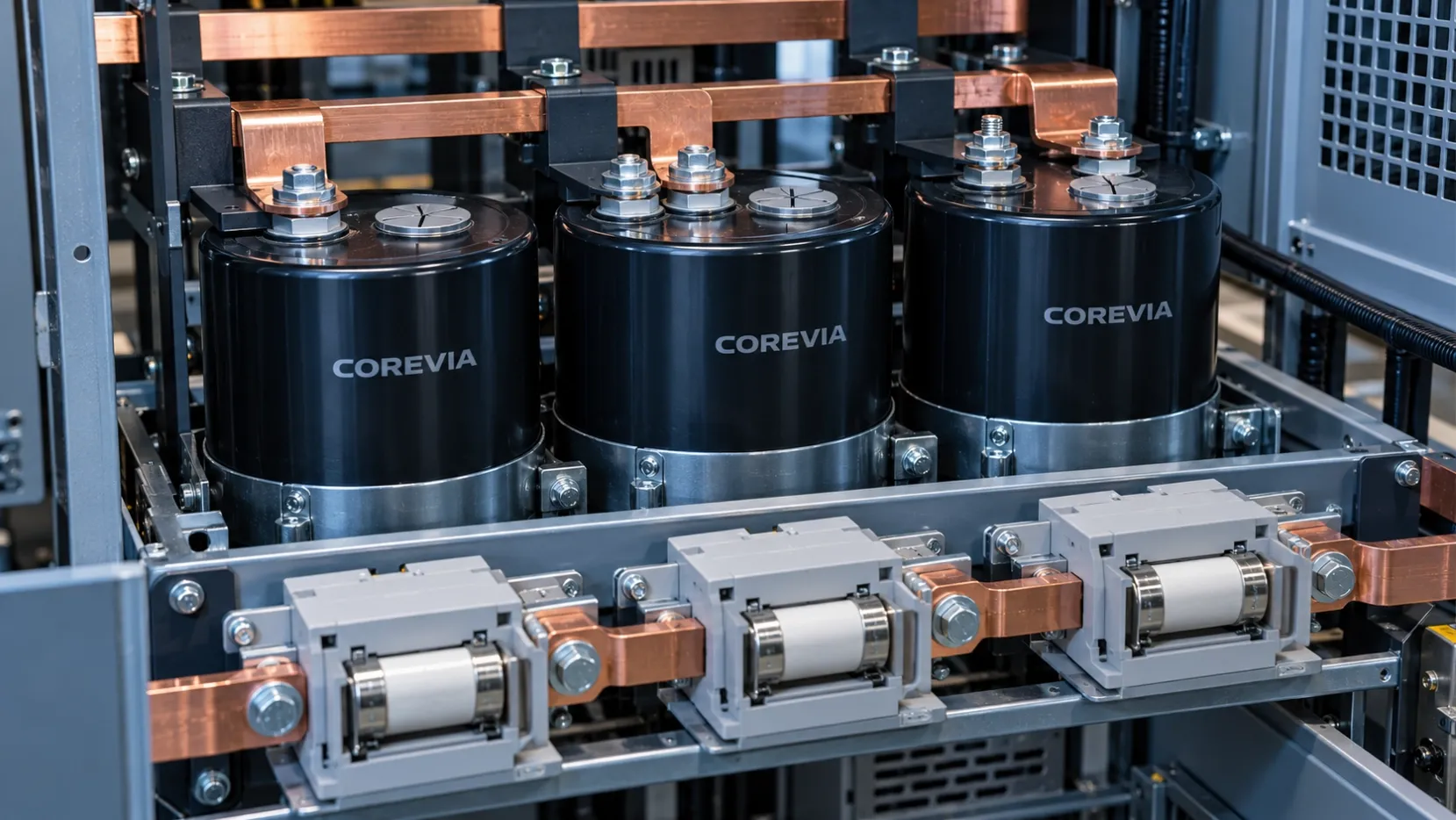
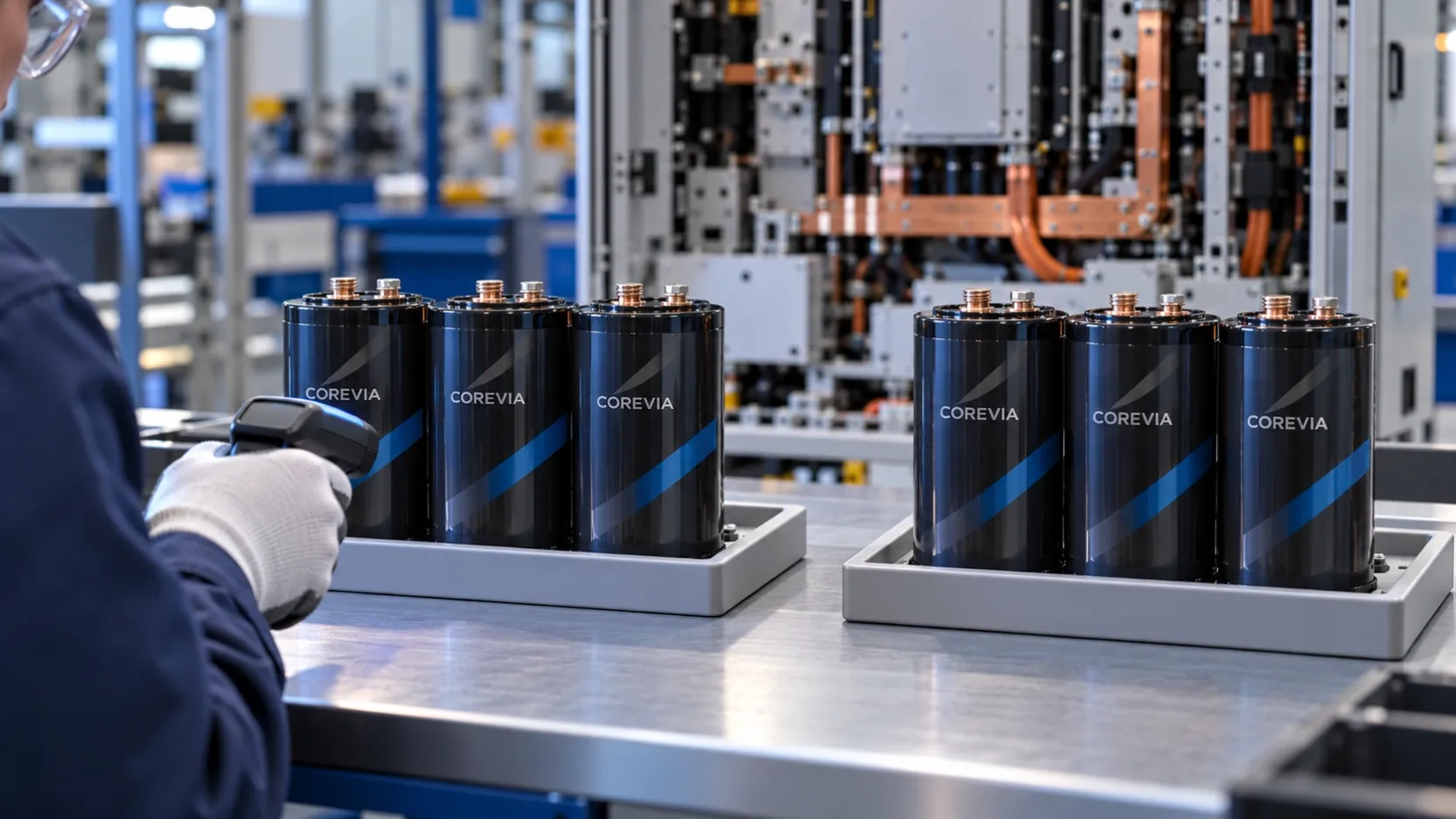
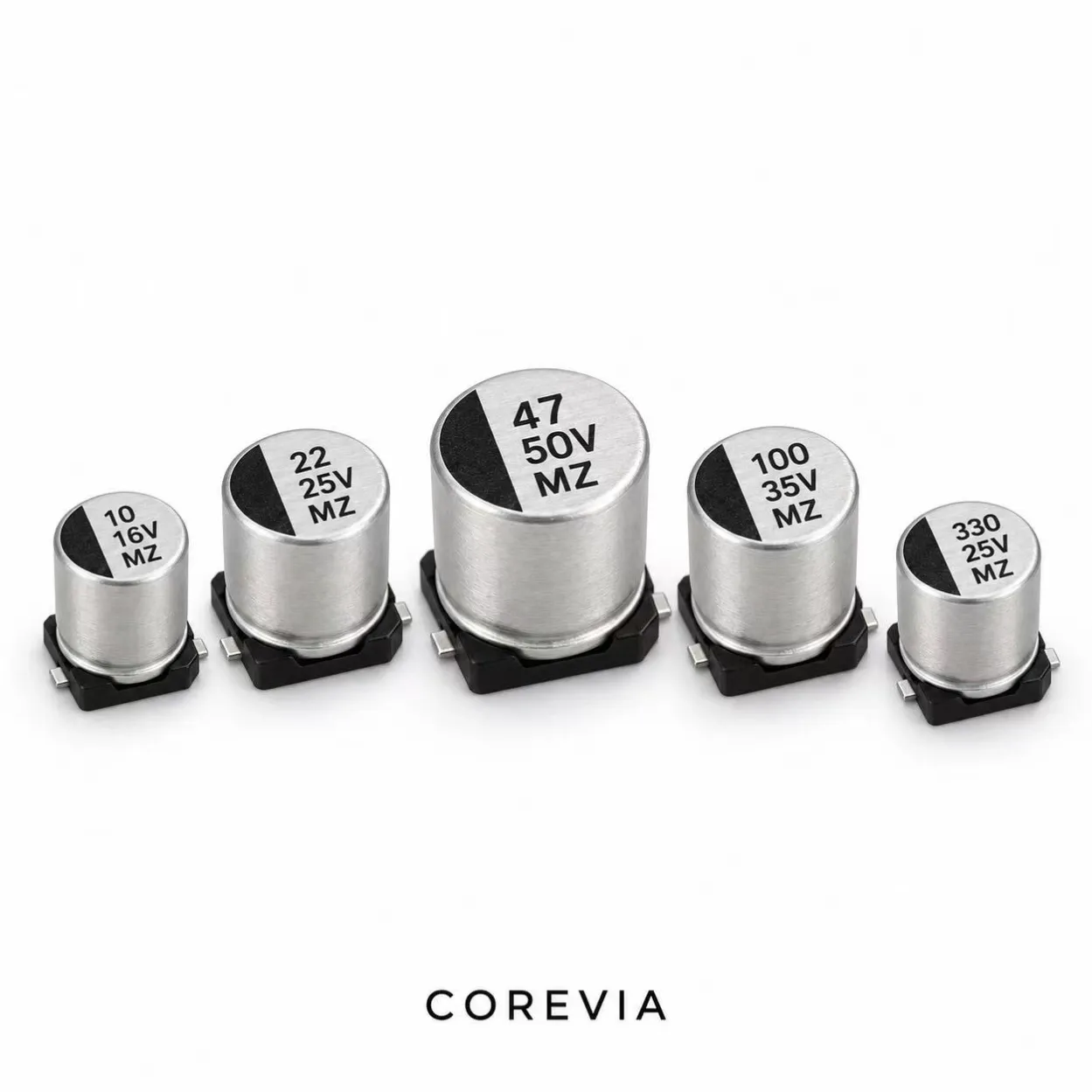
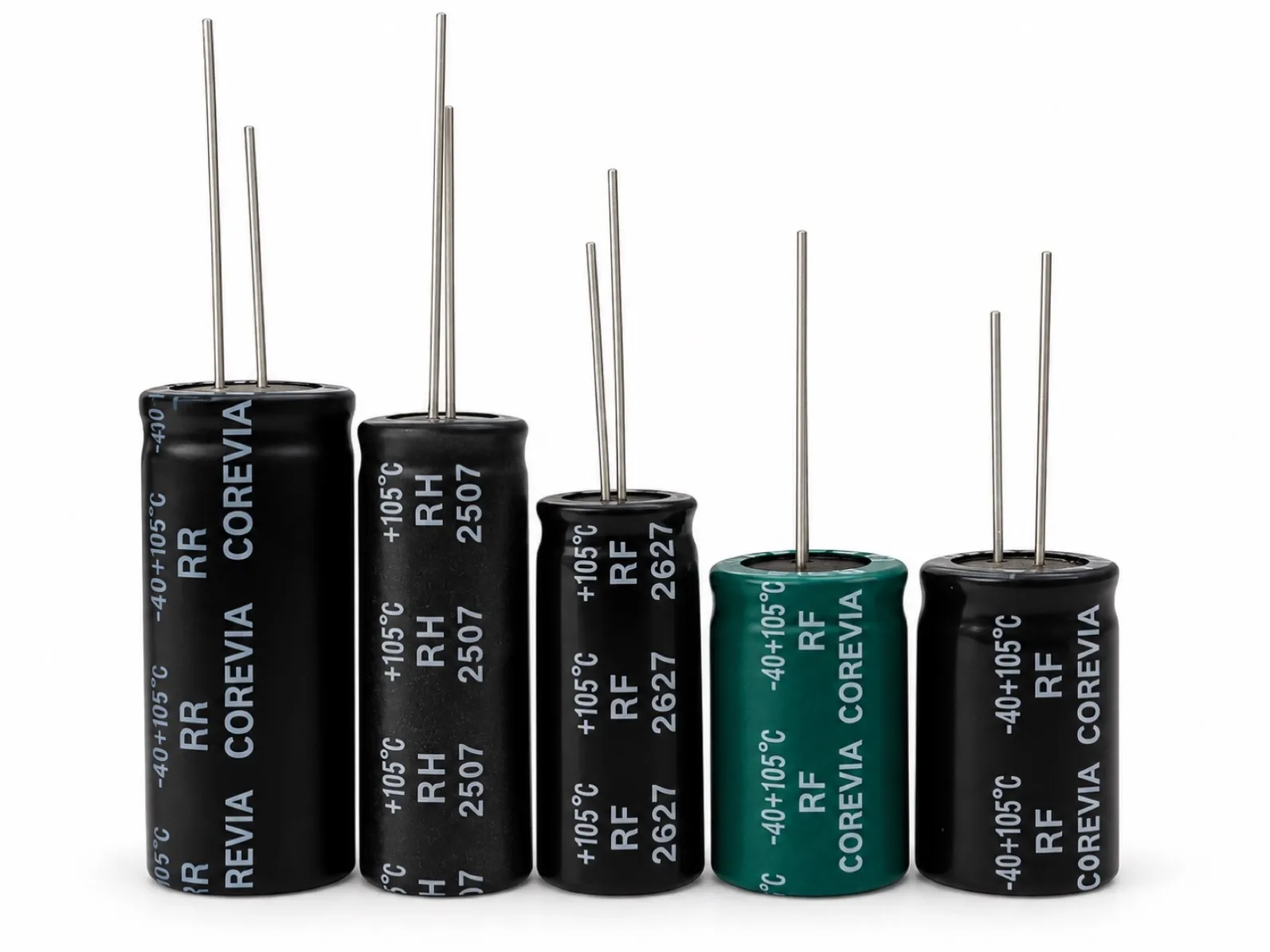
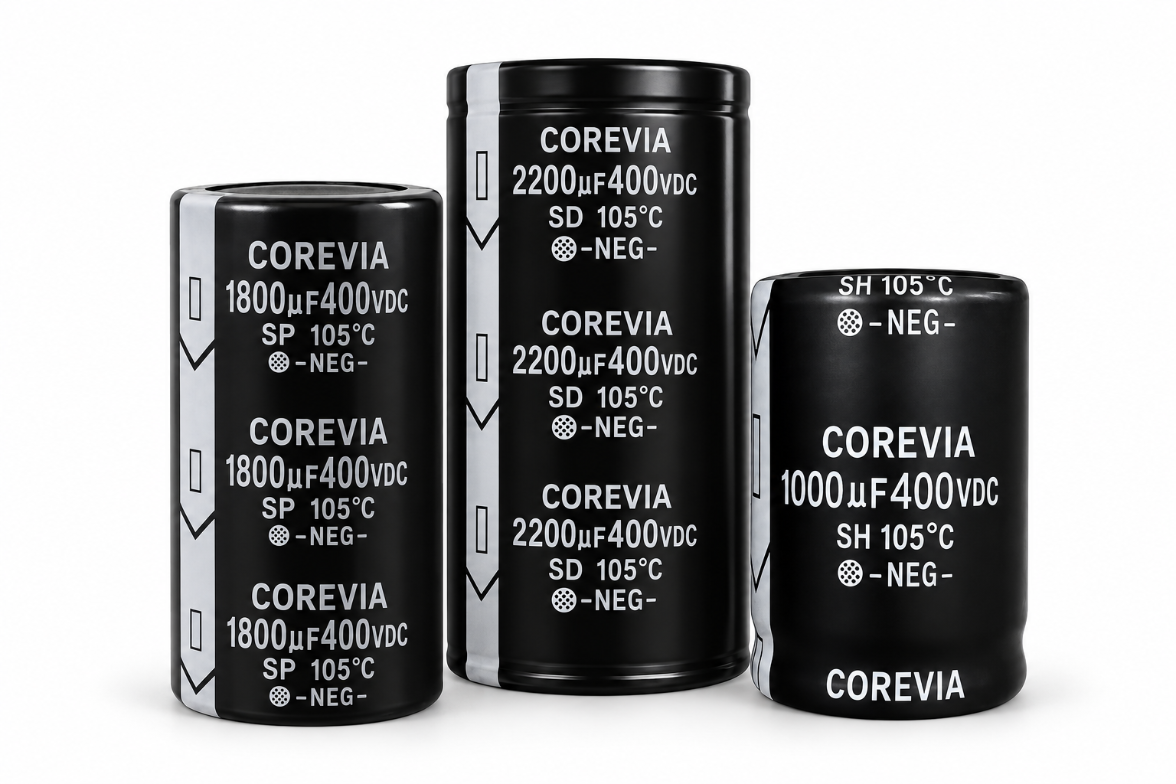
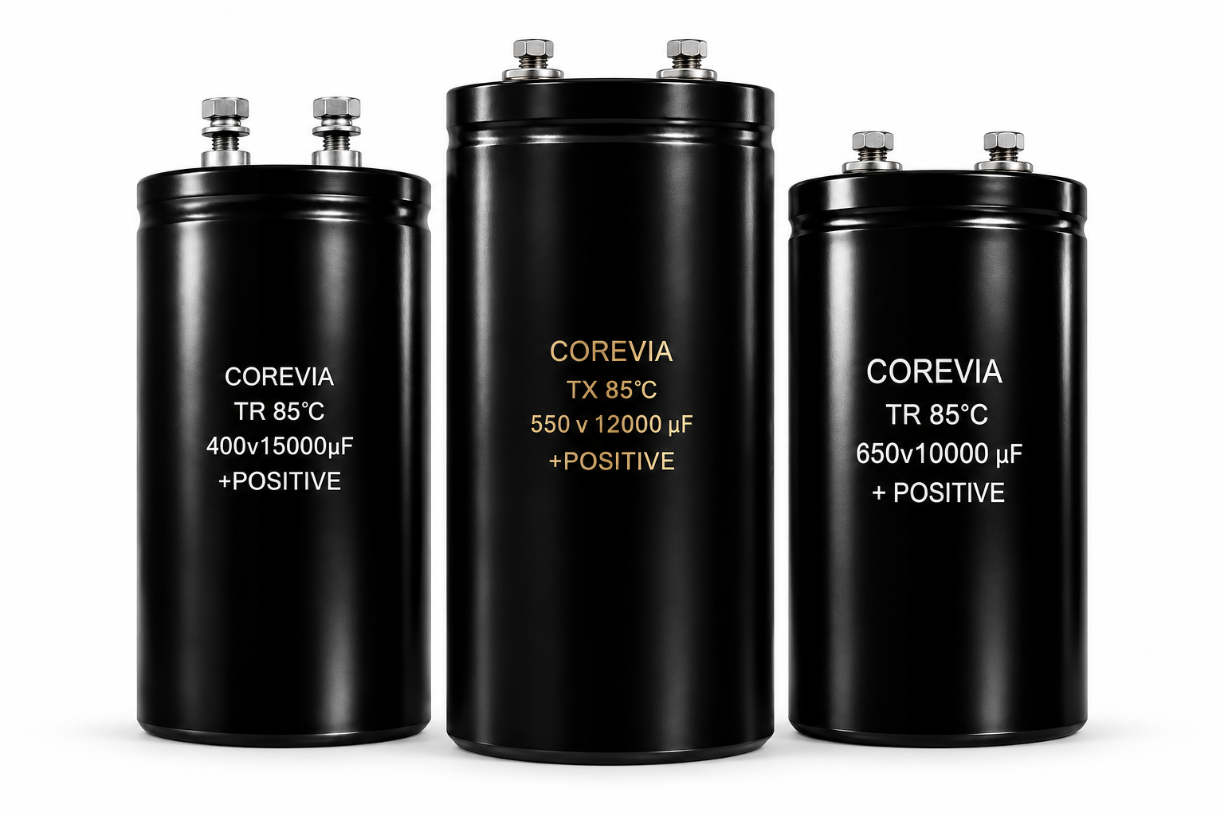
This question is different from placing a polarized capacitor directly across an AC supply. In an inverter or industrial power supply, the capacitor may see a DC level with a smaller oscillating component. COREVIA's snap-in capacitor family and screw-terminal capacitor family include parts for power-electronics designs, but the allowable voltage, ripple current, temperature and frequency conditions must come from the exact selected series and part number.
What does the capacitor actually see?
Measure voltage between the capacitor's positive and negative terminals, not just the DC supply's nominal output. The waveform has a lowest instantaneous value, a highest instantaneous value and a current component that repeatedly charges and discharges the capacitor. Switching, rectifier loading, startup, shutdown and load steps can change those values.
The lower voltage extreme must not drive a polarized capacitor into reverse voltage. The upper extreme must remain within the applicable operating rating; a surge-voltage number is not a general continuous allowance. Current requires its own check because a voltage trace that looks modest can still be accompanied by substantial ripple current and internal heating. This is why a single DC voltmeter reading is insufficient.
Which three checks decide whether the ripple is acceptable?
| Check at the capacitor | What to compare | If the check fails |
|---|---|---|
| Lowest instantaneous terminal voltage | Confirm the correct polarity is maintained throughout expected operating states | Revisit topology, bias level and waveform before selecting a polarized part |
| Highest instantaneous terminal voltage | Compare DC level plus ripple peak and transients with the exact series voltage limits | Select a suitable part or correct the circuit; do not treat surge rating as continuous headroom |
| RMS ripple current and temperature | Compare measured or calculated current spectrum, reference frequency and local temperature with the exact series data | Rework the capacitor selection, thermal design or load conditions |
These are separate limits. Passing the voltage checks does not prove that ripple-current heating is acceptable, and a ripple-current figure does not authorize reverse voltage. Frequency matters because the allowed current and losses can change across the spectrum. For mixed-frequency waveforms, use the exact series correction method and a qualified engineering review rather than applying a single frequency factor to the entire waveform.
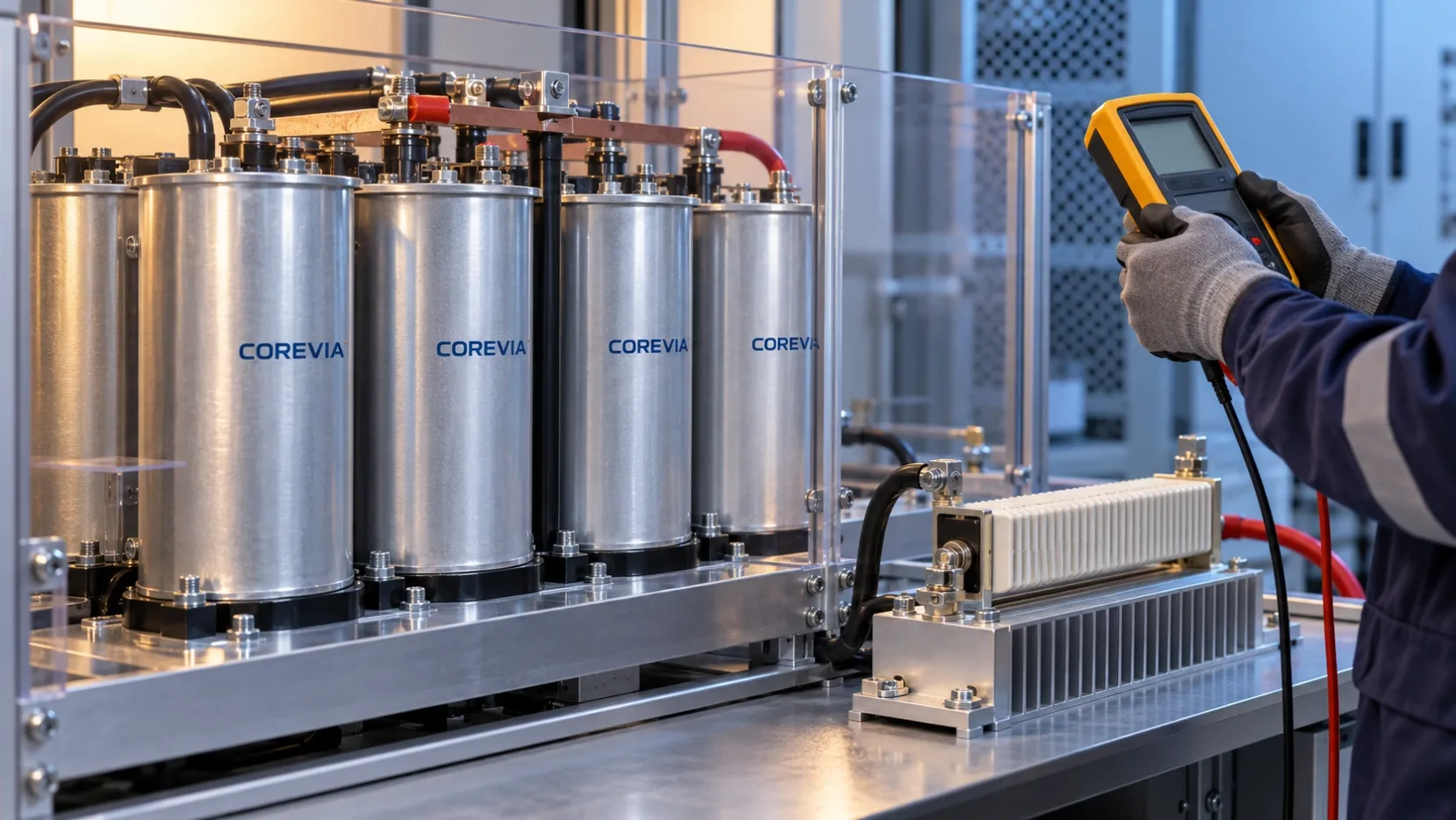
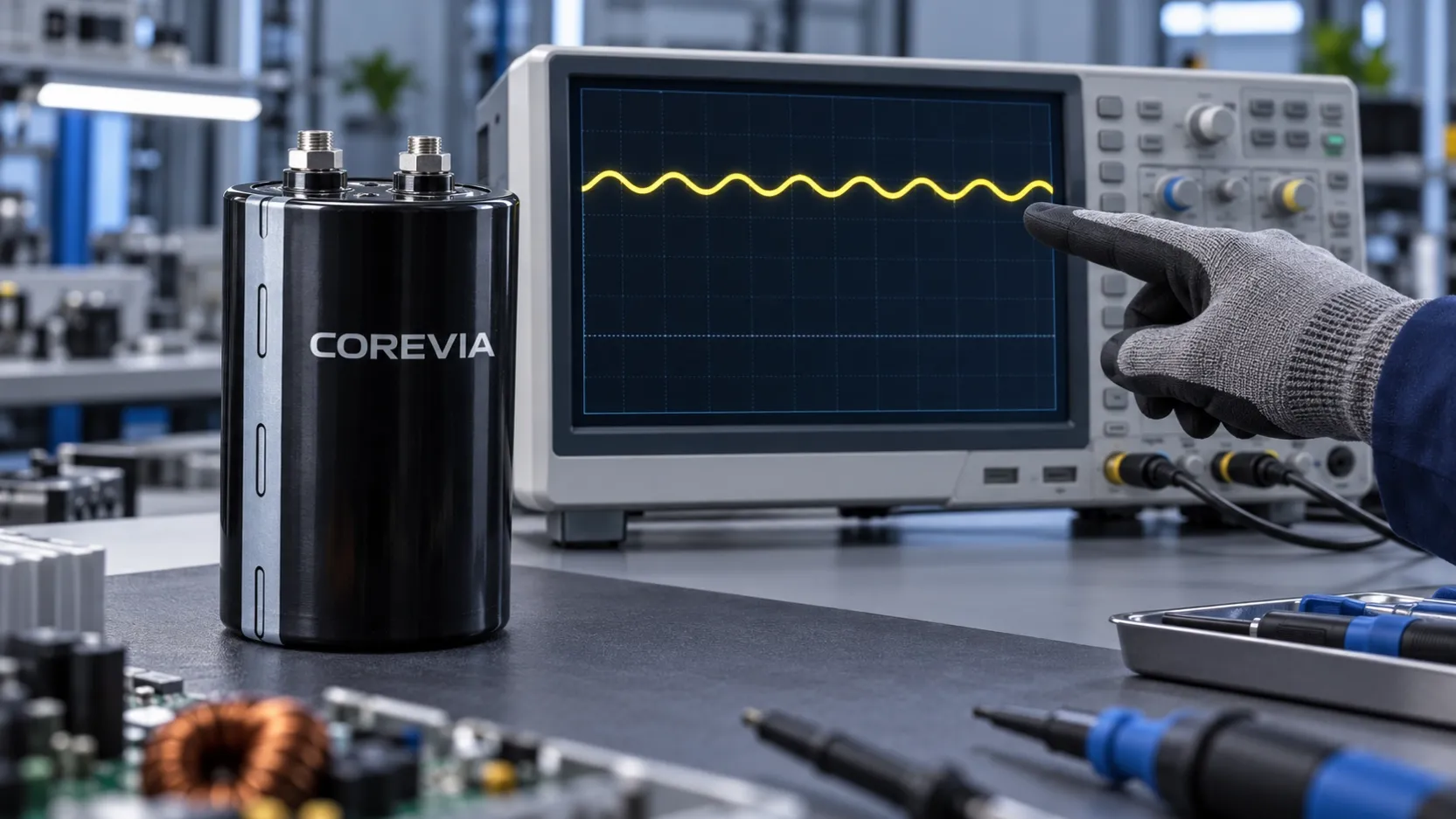
If an oscilloscope is used on a live DC bus, the measurement setup must be rated for the installation and operated by qualified personnel. Capture the waveform under the actual load and temperature conditions that determine the extremes. The cover image is an illustration of the waveform question, not a measured COREVIA test result.
What should an OEM provide before choosing a COREVIA part?
Send the expected DC level, minimum and maximum capacitor-terminal voltage, ripple-current waveform or frequency components, ambient and local temperature, duty cycle, available case size and mounting method. Include the exact candidate COREVIA series and part number if one has already been shortlisted. This allows the capacitor's voltage, current, thermal and mechanical constraints to be reviewed together for the inverter application.
If the waveform is not yet measured, state which figures are estimates and which operating modes have not been tested. A sound part selection depends on the full waveform and the exact data sheet, not on the phrase “DC bus” alone.
FAQ
Is AC ripple the same as connecting the capacitor to AC mains?
No. Superimposed ripple can remain on one side of zero because of the DC bias. Direct AC mains reverses polarity during each cycle and is not an appropriate connection for a standard polarized aluminum electrolytic capacitor.
Can the DC average be below the rated voltage while peaks exceed it?
Yes. The average can hide voltage peaks. Check the highest instantaneous terminal voltage against the exact operating limits, including relevant transients.
Does a small ripple-voltage amplitude guarantee a safe ripple current?
No. Current depends on the circuit and waveform. Compare the actual RMS current and its frequency content with the selected series' conditions, and check the local thermal environment.
Need a capacitor for a measured DC bus? Contact COREVIA with the waveform, operating temperature, target capacitance and mounting envelope for an application review.