Parallel DC-Link Capacitors: How Do You Check Ripple Current Sharing?
Do parallel DC-link capacitors share ripple current equally? Check each branch, frequency content, layout and temperature before approving an inverter bank.
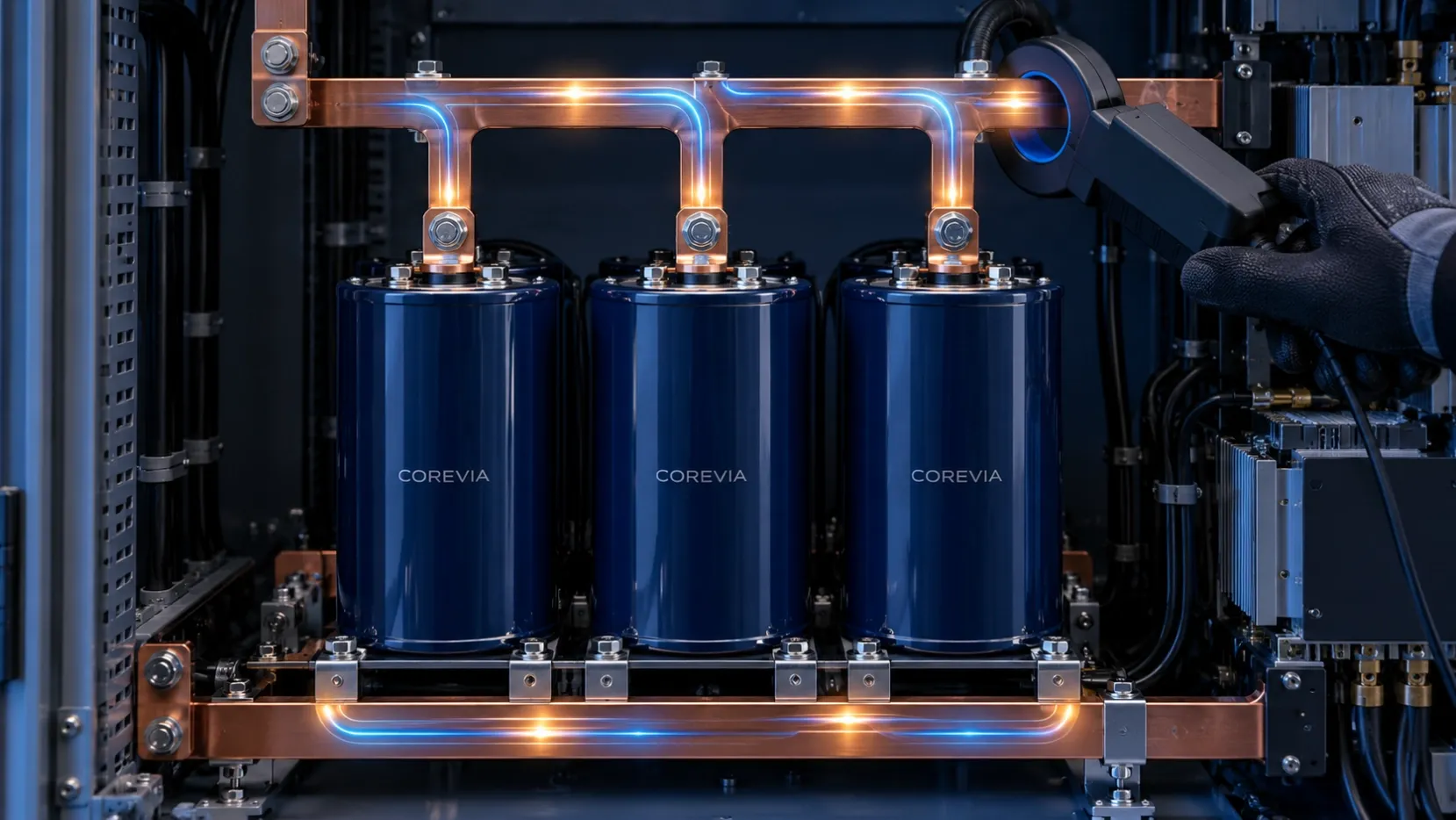
Do not divide the inverter’s total ripple current by the number of parallel capacitors and assume each part carries an equal share. The current in each branch depends on capacitor impedance, busbar and lead geometry, frequency, and temperature. Measure branch current in the finished bank, then compare each result with the exact COREVIA series limits at the relevant conditions.
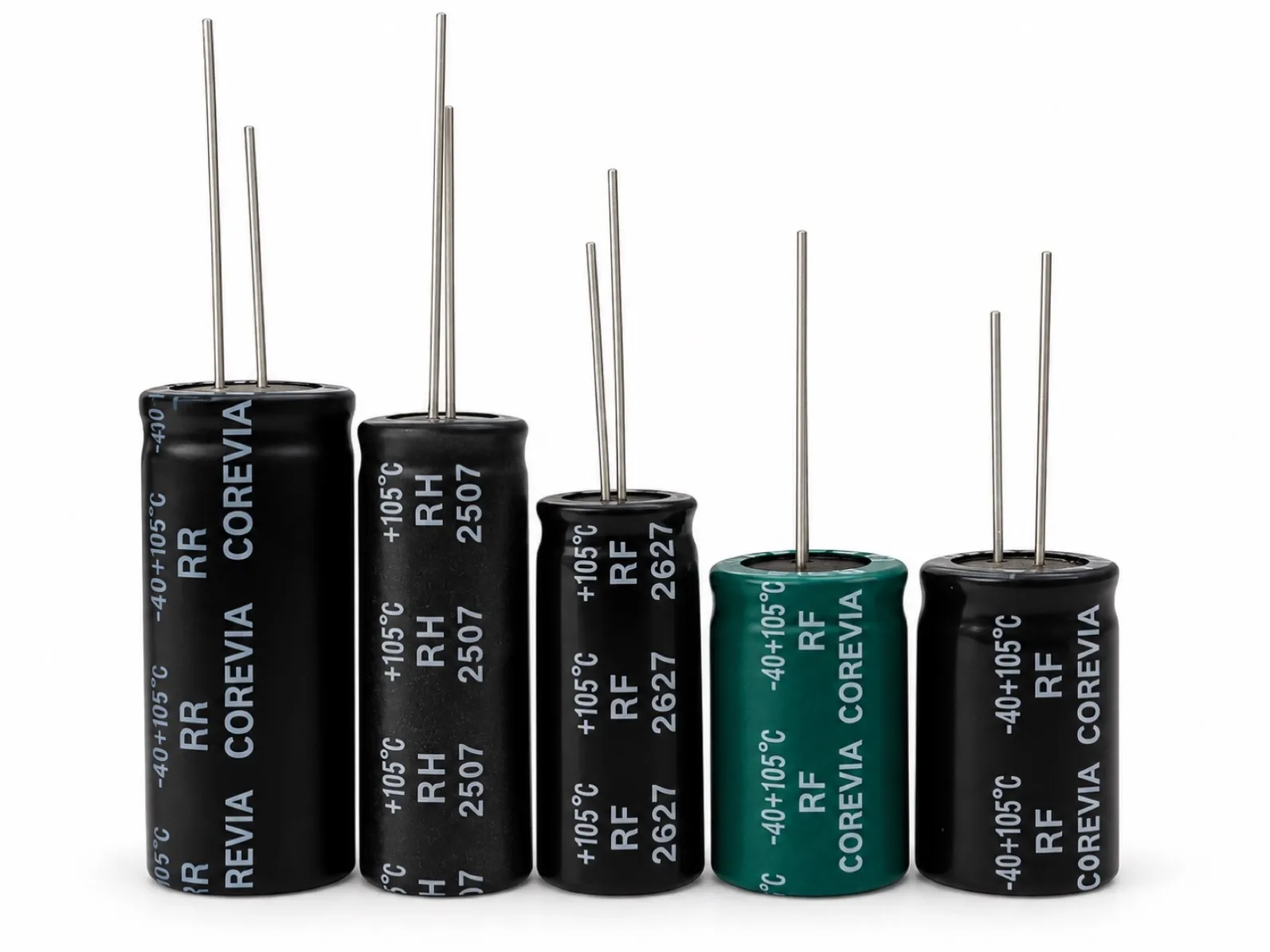
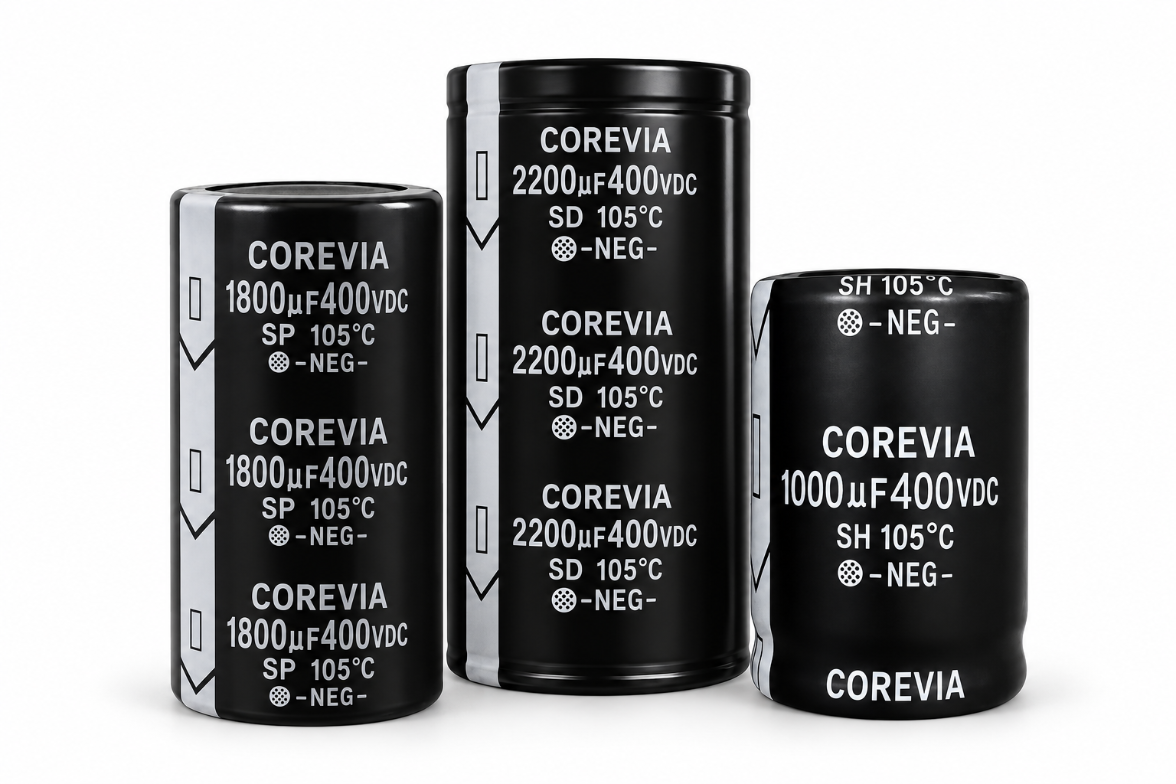
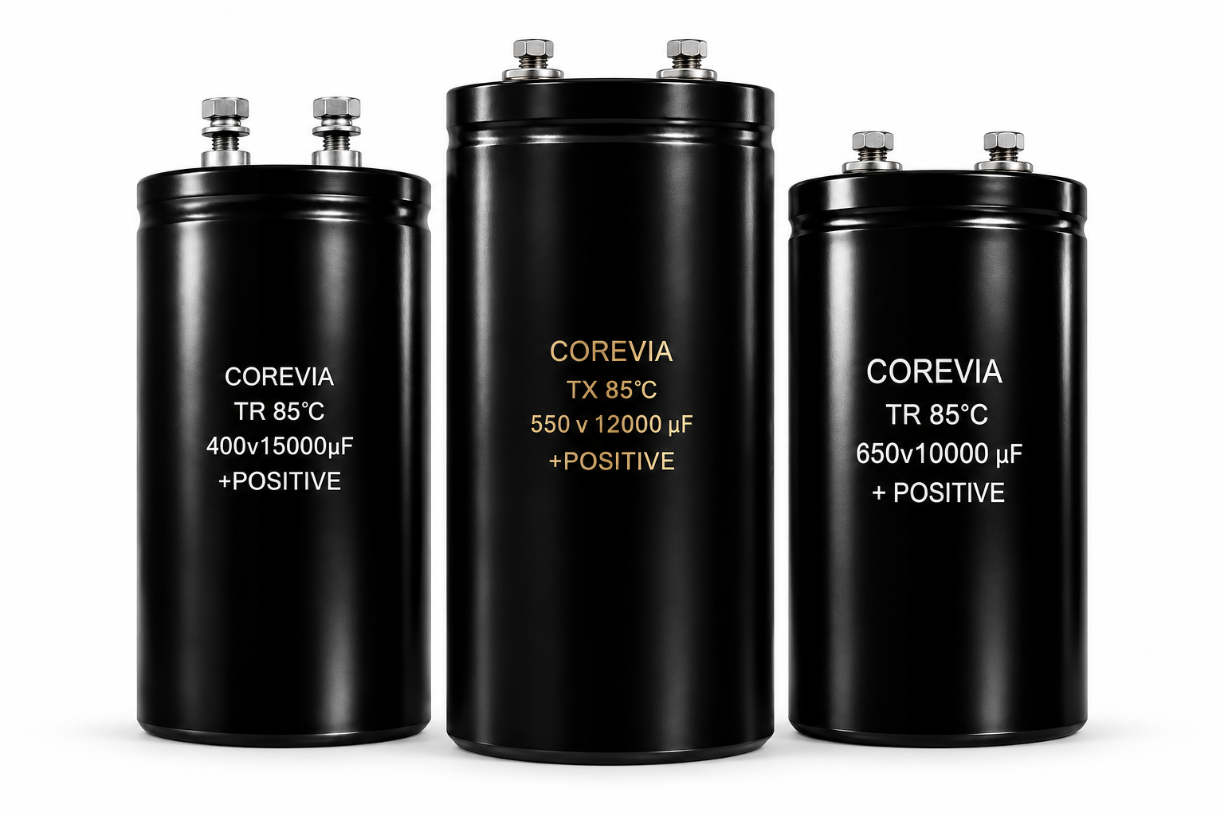
A procurement team may ask whether three capacitors rated for a given ripple current can simply be treated as a bank with three times that capability. Parallel connection can increase current capability, but the arithmetic is a starting estimate, not an approval test. COREVIA offers screw-terminal and snap-in capacitor families; use the selected part’s own datasheet and the actual assembly for the decision.
Why parallel branches can carry different ripple currents
In a parallel bank, every branch is connected across the same two bus nodes, but the branch paths are not necessarily identical. Capacitor impedance varies with frequency and temperature. Added resistance and inductance in terminals, traces, cables and busbars also change the path seen by each frequency component. A branch closest to a switching node or with a shorter connection may carry a different waveform from a more distant branch.
Likewise, equal nameplate capacitance does not prove equal current under load. Compare the exact part numbers and production configuration, then inspect connection symmetry and thermal conditions. Do not infer a COREVIA bank rating from another supplier’s application example.
What to measure on the finished inverter
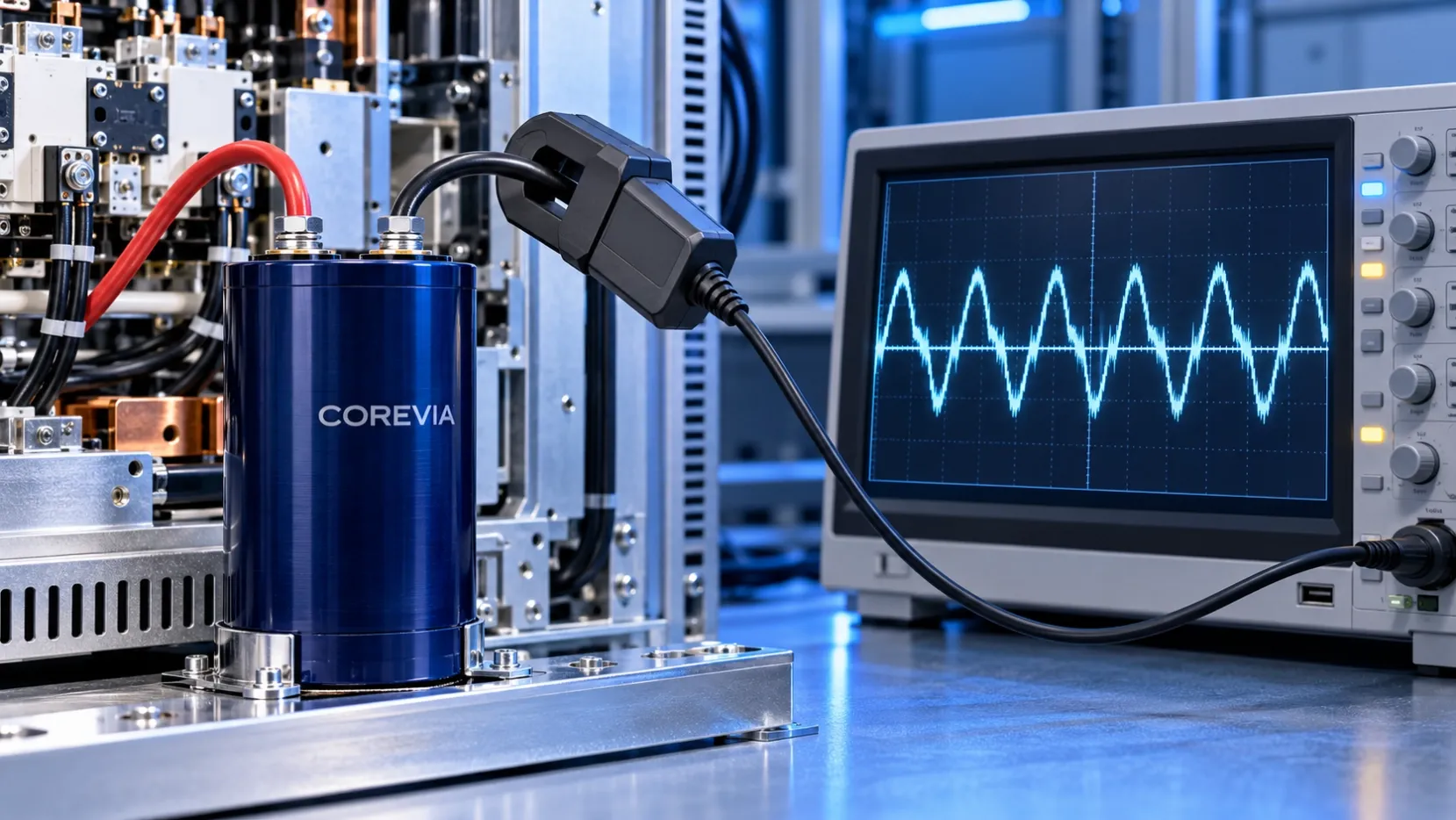
Measure the RMS ripple current in each capacitor branch during representative operating states, including the load and cooling cases that matter for the equipment. Record the current waveform or frequency content and the local temperature at each position. Choose a measurement method and probe placement that do not change the circuit or hide high-frequency components. The branch-current measurement guide explains the measurement approach in more detail.
| Check | Evidence to collect | Decision it supports |
|---|---|---|
| Branch current | RMS current and waveform for every capacitor | Identifies the most heavily loaded part |
| Frequency content | Dominant ripple components under real load | Supports comparison with series frequency conditions |
| Local temperature | Temperature beside each capacitor at steady operation | Reveals unequal cooling and thermal loading |
| Connection path | Busbar or PCB layout, terminal positions and photos | Shows where geometry may affect sharing |
Compare each measured branch separately with the exact series datasheet. Check the datasheet’s reference temperature and frequency and any stated correction method; do not add catalog ratings without accounting for those conditions. If branch readings differ, review the layout and repeat the measurements after any change.
How to specify a bank for COREVIA review
Send the exact capacitor part number and datasheet revision, number of parallel branches, schematic, busbar or PCB drawing, DC-bus voltage range, ripple-current measurements and frequency content. Include local temperature, cooling mode, mounting orientation and duty cycle. These inputs let the application review focus on the branch with the highest measured stress rather than an assumed average.
Parallel connection also affects stored energy and fault behavior. Coordinate the bank design and protective devices with the equipment’s safety requirements; the parallel-bank protection guide covers that separate question. A suitable current-sharing result does not by itself approve the complete bank.
FAQ
Can I multiply one capacitor’s ripple rating by the number of parallel parts?
Only as an initial estimate. Verify current in each branch and compare it with the exact part’s rating conditions before approving the bank.
Do identical capacitors guarantee equal current sharing?
No. Branch layout, connection impedance, frequency content and local temperature can still differ.
Which branch should determine the review?
Start with the branch carrying the highest measured ripple current under the relevant operating cases, then confirm every branch meets its own limits.
Planning a parallel DC-link bank? Contact COREVIA with the part number, layout and branch-current data for a focused application review.