Can You Install a Dented Screw-Terminal Capacitor After Shipping?
A dented screw-terminal capacitor should be isolated before use. Learn what to inspect, record and send COREVIA for a part-specific disposition.

Do not install or energize a visibly dented screw-terminal aluminum electrolytic capacitor until the part has been isolated and reviewed. A dent, crushed edge or displaced terminal can indicate mechanical damage that is not resolved by checking the label or measuring capacitance alone. Photograph the part and packaging, identify its lot, and ask COREVIA for a disposition before use.
Which signs need attention when the shipment arrives?
Start with the unopened package. Record any crushed carton, torn protective material or evidence that the capacitor moved during transit. Then inspect the can, bottom seal, pressure-relief area and screw terminals without applying force to them. Compare the part marking and outline with the ordered COREVIA part and its drawing. A clean-looking package does not prove every component is undamaged, so keep the inspection tied to the actual parts.
| Observation | Immediate action | Record for review |
|---|---|---|
| Dent, crushed can or damaged vent area | Segregate the affected part; do not install it | Photos from several angles and the part marking |
| Loose, bent or visibly damaged terminal | Do not straighten or connect it before review | Terminal close-up and the relevant mounting drawing |
| Leaking residue or damaged seal | Keep the part out of production and handle under site procedures | Location of residue, packaging condition and lot identity |
| Damaged outer package only | Inspect the contained parts under the agreed incoming criteria | Carton, internal packing and quantity affected |
Why is a quick electrical reading insufficient?
A single capacitance or ESR reading checks only the conditions of that test. It does not establish the integrity of a dented can, terminal attachment or seal throughout service. Do not use an apparently normal meter reading as permission to release a visibly damaged part. COREVIA should review the exact part and the visible damage; the purchaser should apply the agreed incoming inspection and nonconformance procedure.
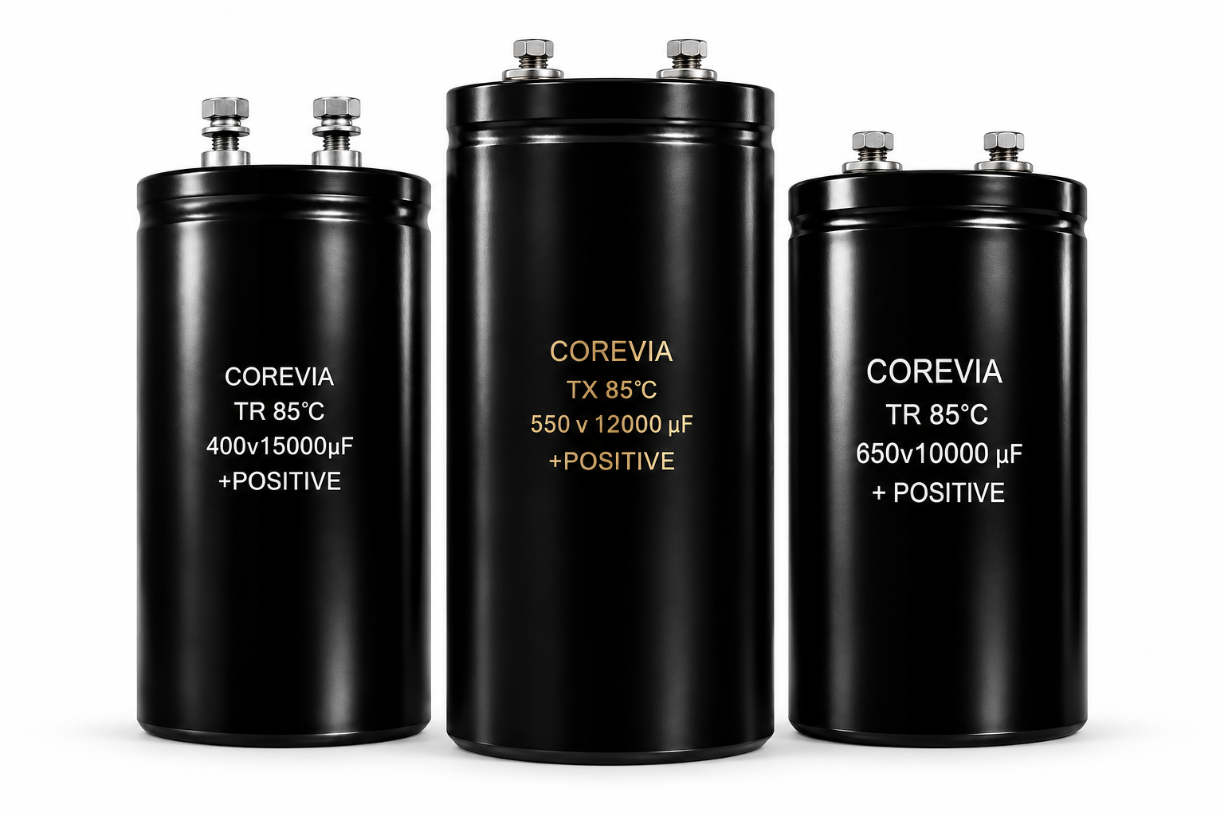
This is a specific damage decision within a broader receiving process. For the full lot workflow, see the incoming inspection and lot acceptance guide. For dimensions and terminal formats, start with the COREVIA screw-terminal capacitor range and request the drawing for the exact series.
What should you send for a disposition?
Send the order or part number, lot marking, quantity affected, when the damage was found, photographs of the capacitor and its packaging, and the planned application. Keep the affected pieces identified and separate from accepted stock while the review is open. If the original packaging is available, retain it for the investigation. The decision may depend on the specific damage and part construction; do not assume that all dents have the same consequence.
Use the COREVIA contact page to send the evidence and request a part-specific review before the affected capacitor is installed.
FAQ
Can I straighten a bent screw terminal and use the capacitor?
Do not treat straightening as a standard repair. Isolate the part and request a disposition for the exact terminal and capacitor.
Should the whole shipment be rejected if one carton is dented?
Not automatically. Identify which cartons and parts were exposed, inspect them under the agreed criteria, and document the affected quantity for review.
Does a normal capacitance reading clear a dented can?
No. The reading does not establish mechanical or seal integrity. Keep the part out of production until the damage is reviewed.