Reliability Engineering
Do Stored COREVIA Electrolytic Capacitors Need Voltage Treatment Before Assembly?
Before using stored COREVIA aluminum electrolytic capacitors, verify the exact series, storage history and leakage-current criteria. Ask for an approved voltage-treatment procedure when needed.

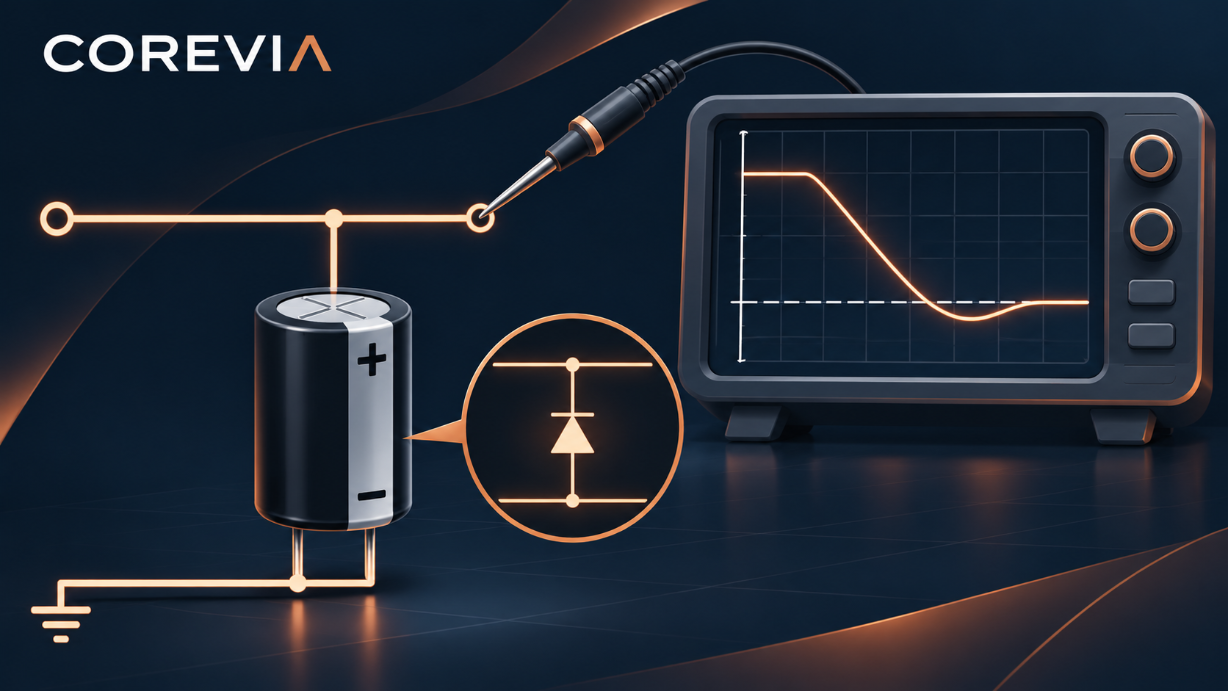
Do not apply a generic voltage-treatment rule to stored COREVIA aluminum electrolytic capacitors. First confirm the exact series, storage duration and conditions, then compare the relevant leakage-current and inspection requirements with its current datasheet or COREVIA guidance. A capacitor stored without voltage may show a higher initial leakage current. Whether treatment is needed, and how it must be performed, is a part-specific decision.
What information should be checked before the lot enters production?
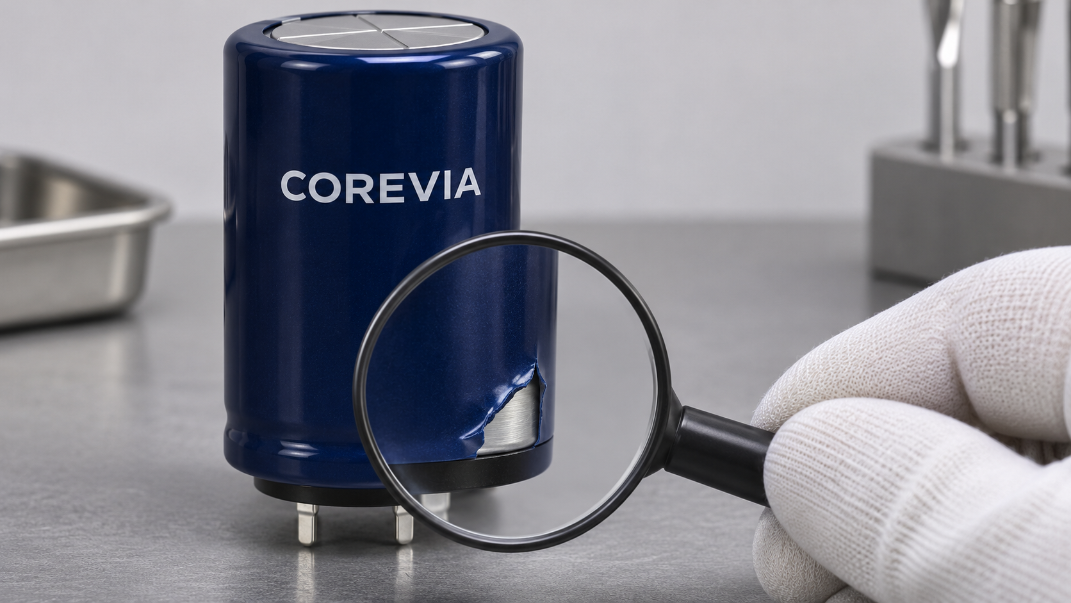
Record the complete part number, lot or date code, quantity, receipt date and storage history. Check whether packaging remained intact and whether the parts were exposed to heat, moisture, contamination or physical damage. Compare the actual period and conditions with the storage guidance for the exact COREVIA series. Do not treat another manufacturer's storage limit as a COREVIA specification.
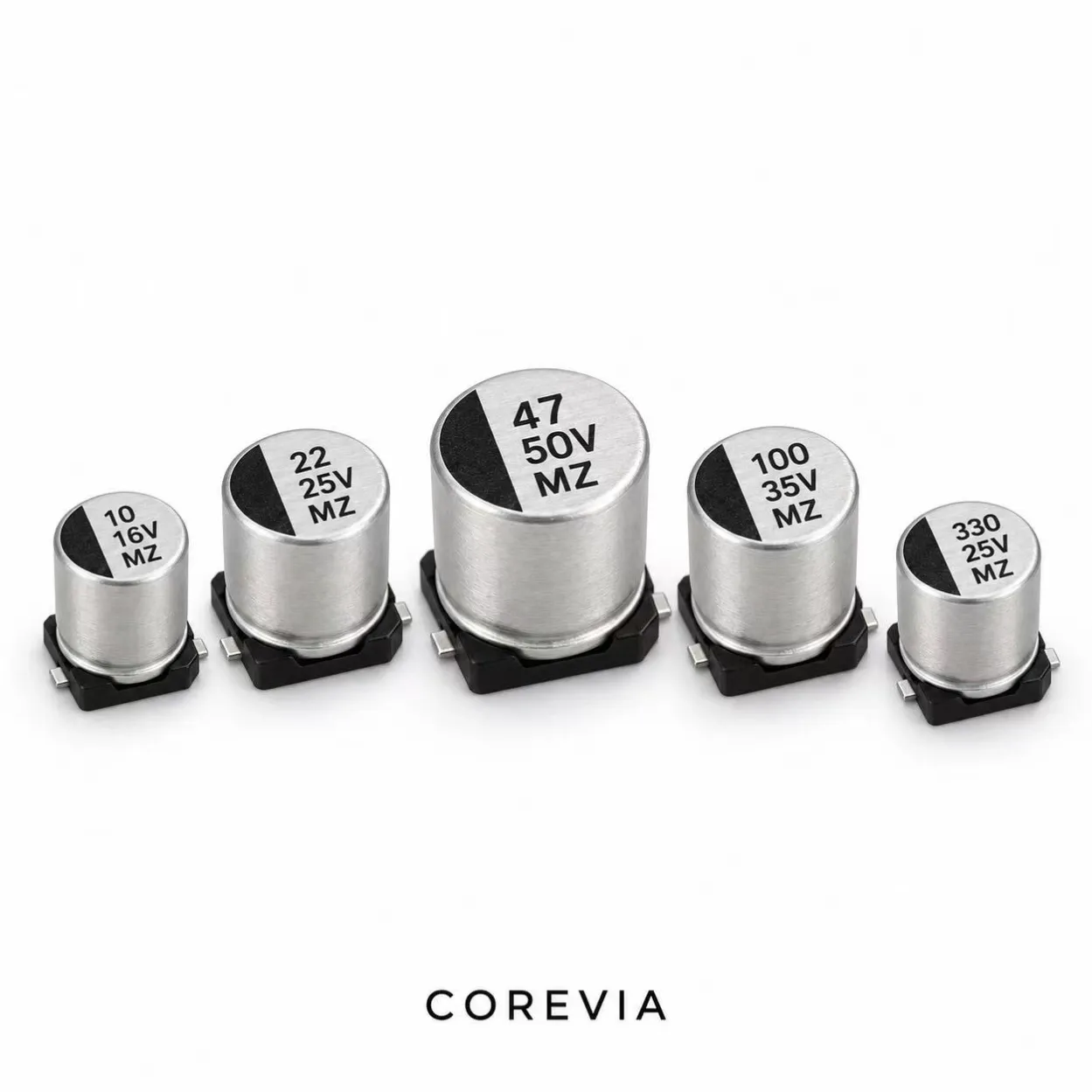
Start with the applicable COREVIA product family and request the latest series datasheet if the incoming record does not identify it. Keep the original carton and trace information until the lot is dispositioned.
When might a voltage-treatment review be needed?
Long storage without applied voltage can change the initial leakage-current behavior of aluminum electrolytic capacitors. This is a reason to review the series instructions and the application's startup tolerance, not a reason to energize the whole lot using an improvised bench procedure. If the measured result is outside the exact series acceptance criteria, hold the lot and ask COREVIA for a documented test or treatment plan.
Review item | Evidence to collect | Decision needed |
|---|---|---|
Part identity | Full marking and series datasheet revision | Which requirements apply? |
Storage history | Dates, temperature records and packaging condition | Was the approved storage boundary met? |
Initial inspection | Visual findings and agreed electrical test results | Should the lot remain on hold? |
Proposed treatment | Approved voltage, current limit, duration and equipment method | Who authorizes the procedure and release? |
The table is a record checklist, not a treatment recipe. Voltage, current limit and duration must come from the exact series guidance or an approved COREVIA disposition.
How should the team document release?
Use a controlled sample or lot plan agreed by quality and engineering. Identify the test equipment, conditions, readings and acceptance criteria before work starts. Capacitors can retain charge after a test; follow the site's approved discharge and handling procedure. Record who reviewed the results and which units were accepted, retested or rejected.
Where the end product has a sensitive first startup, evaluate that actual startup circuit separately. A passing room-temperature leakage check does not prove that every production duty or storage condition has been covered.
FAQ: stored electrolytic capacitors
Does every stored capacitor need reforming?
No universal answer applies. Use the exact series storage and leakage-current guidance, plus the documented lot history.
Can a team copy a voltage-treatment recipe from another capacitor?
No. A procedure must be approved for the actual COREVIA part and test setup; otherwise the applied stress and release decision are unverified.
Is a low capacitance reading the same as high leakage current?
No. They are different characteristics measured under different conditions. Record each against its own series test method and limit.
For a stored-lot review, contact COREVIA with the full part number, lot information, storage record, quantity, proposed startup duty and any measured results.