Sep 23, 2026Capacitor Selection
Snap-In or Screw-Terminal Capacitors: Which One Fits Your UPS, Inverter or EV Charger?
A practical guide to choosing snap-in or screw-terminal aluminum electrolytic capacitors for UPS, inverter, energy-storage and EV charging equipment.
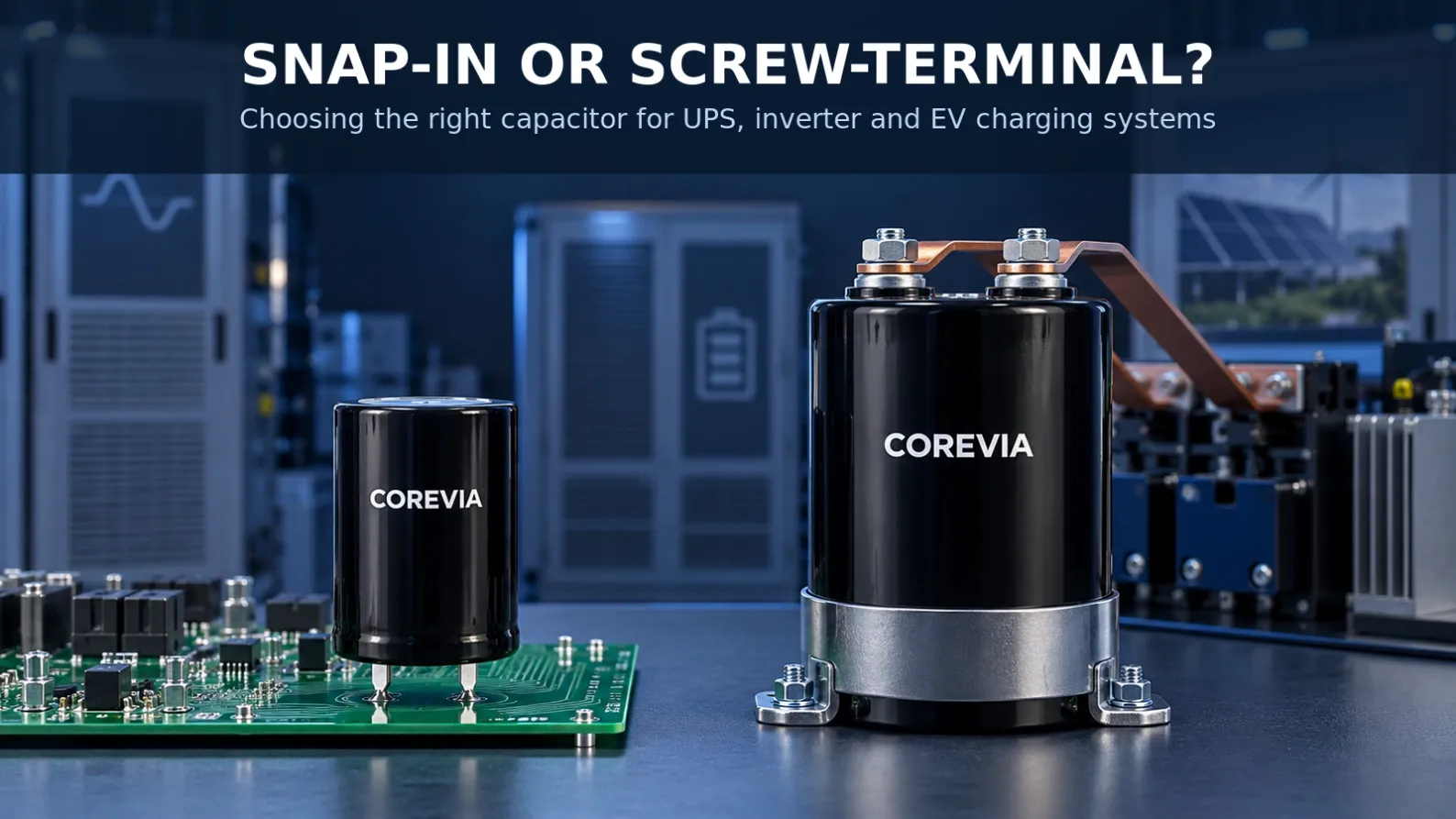
Choosing an aluminum electrolytic capacitor is not only about voltage and capacitance. The terminal style also affects the current path, mechanical layout, assembly method and future maintenance.
For UPS systems, solar and energy-storage inverters, industrial drives and EV charging equipment, the common choice is between snap-in capacitors and screw-terminal capacitors.
Neither type is automatically better. The right choice depends on how the equipment is built and how it will operate.
When Snap-In Capacitors Make Sense
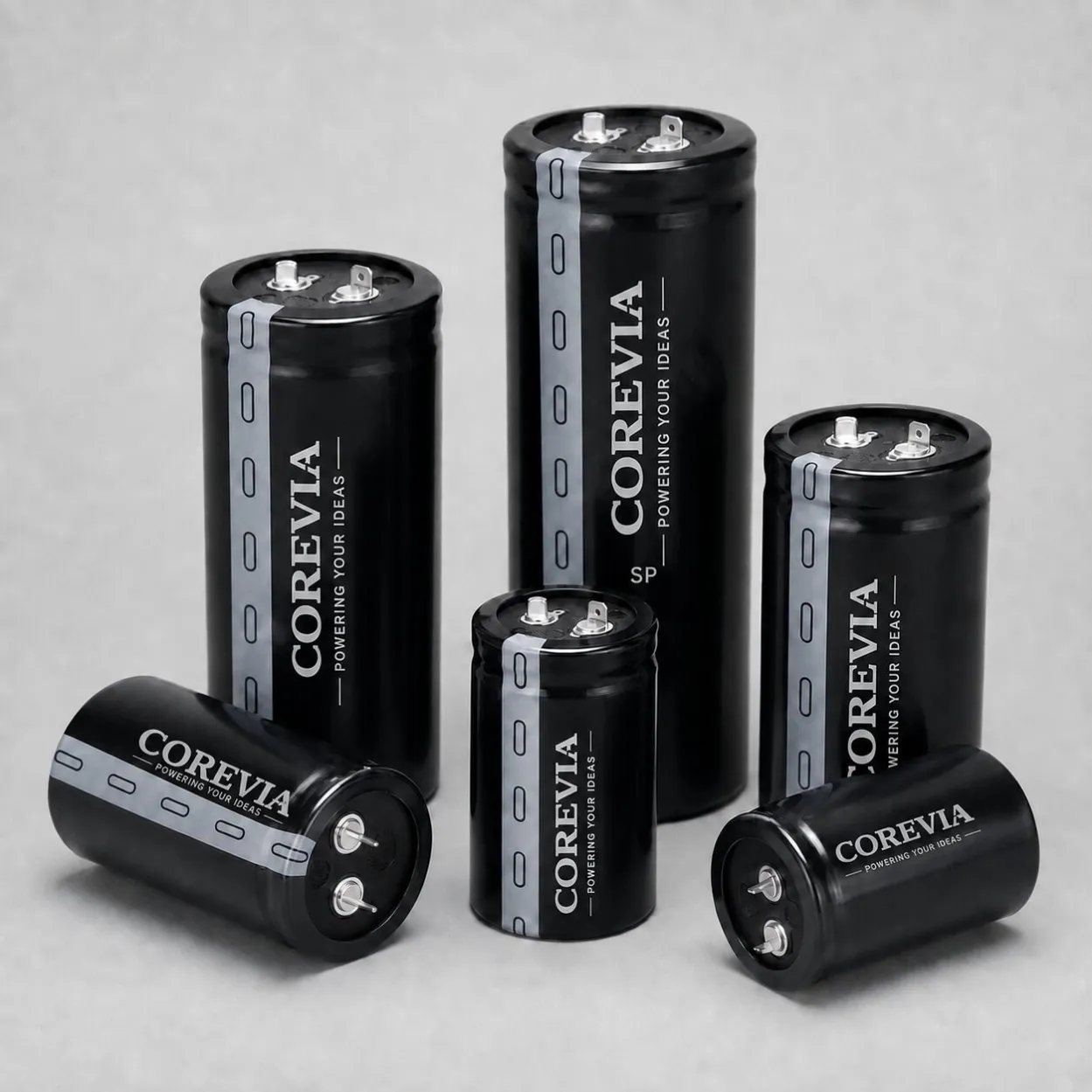
Snap-in capacitors are mounted directly on the PCB. They are a practical choice when the design needs:
• A compact DC-link layout
• Fast, repeatable PCB assembly
• Short connections between the capacitor and power devices
• Moderate power handled by one board or several identical modules
• Lower assembly cost and smaller cabinet size
They are commonly used in compact UPS units, string inverters, servo drives and modular charger power units. Several snap-in capacitors can also work as a bank when the PCB, copper thickness and cooling are designed correctly.
The important point is that the PCB becomes part of the power path. Copper thickness, solder joints, spacing and mechanical support all matter.
When Screw-Terminal Capacitors Make Sense
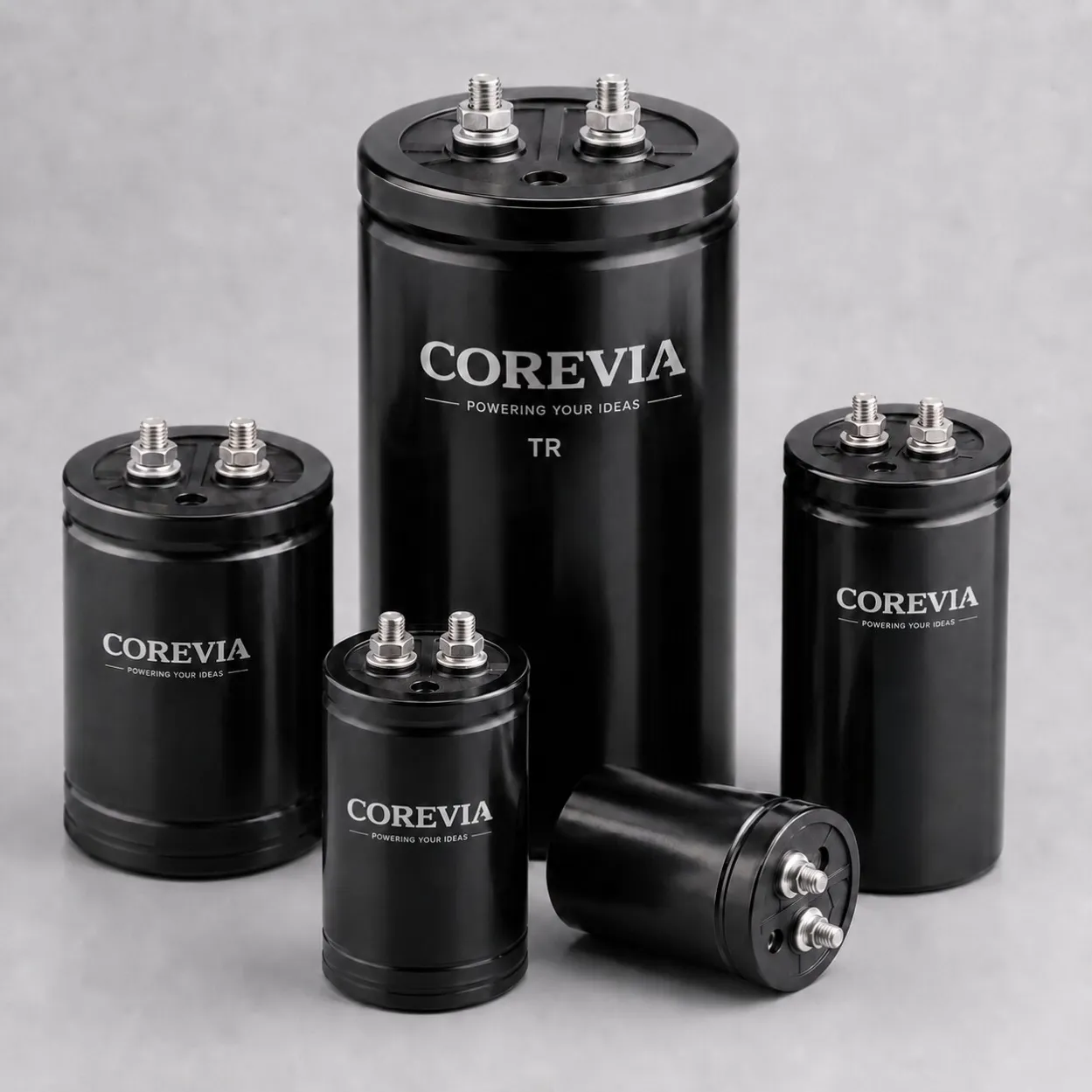
Screw-terminal capacitors are usually connected by copper busbars or heavy cables and secured with a clamp or mounting stud. They are often a better fit when the equipment needs:
• A larger energy-storage bank
• High current carried through a low-resistance busbar
• Strong mechanical support for large capacitors
• Easier inspection or replacement during service
• Flexible series and parallel bank construction
Typical examples include large three-phase UPS systems, central inverters, energy-storage converters, high-power industrial drives and cabinet-level DC charging systems.
A screw terminal is not a license to tighten harder. Terminal torque, flat busbar contact and independent busbar support must follow the exact capacitor specification. The terminal should carry current, not the weight or misalignment of the busbar.
How This Applies to Different Equipment
UPS Systems
A compact or modular UPS may use snap-in capacitors on each power board. A large central UPS may use screw-terminal capacitors in a serviceable DC-link bank. Power level, backup duty, available space and maintenance strategy decide the best approach.
Solar and Energy-Storage Inverters
String inverters often favor compact PCB-mounted capacitor banks. Larger central inverters and energy-storage converters may favor screw-terminal capacitors and laminated busbars. Some systems use both types in different circuit sections.
EV Charging Equipment
Modular DC charger power units may use snap-in capacitors to keep each module compact. A high-power charger cabinet with a centralized DC link may use screw-terminal capacitors for the main energy-storage bank. Charging power alone does not decide the terminal type; the internal architecture does.
A Simple Selection Checklist
Before choosing, check:
• The real working voltage, including transients
• The ripple-current profile
• The temperature around the capacitor at full load
• The required endurance at that temperature
• Whether current flows through a PCB, busbar or heavy cables
• Whether the capacitor must be replaced during field service
• The vibration and mechanical load
• The available size, terminal spacing and mounting method
The Practical Conclusion
Use snap-in capacitors when compact PCB integration and modular assembly are the main priorities, and the PCB can safely carry the current.
Use screw-terminal capacitors when the design needs a larger, busbar-connected and serviceable DC-link bank with strong mechanical support.
Do not choose by appearance, equipment name or capacitance alone. Start with the real electrical load, then check the thermal, mechanical and maintenance requirements of the complete system.
Need help reviewing a capacitor selection? Send us the equipment type, DC-bus voltage, capacitor model, ambient temperature, expected load profile and installation photos.
COREVIA
Aluminum Electrolytic Capacitor Solutions