Can You Replace an Electrolytic Capacitor With a Higher Voltage Rating?
A higher voltage rating can work only when capacitance, ripple current, impedance, temperature, size and mounting also meet the circuit requirements.
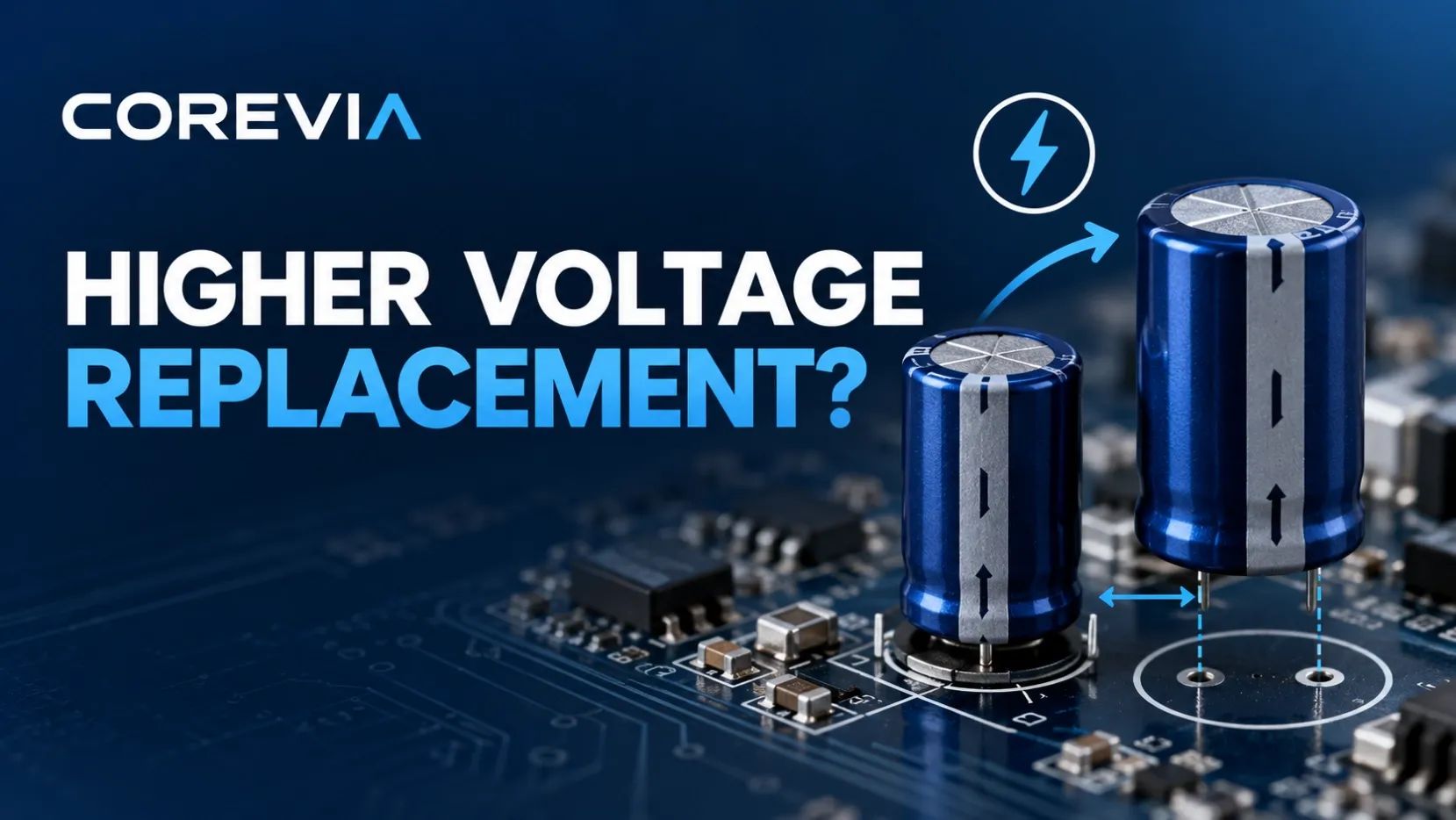
A higher voltage rating can be acceptable, but it is not an automatic drop-in replacement. The candidate must keep the required capacitance and polarity while also meeting the circuit's ripple-current, impedance, temperature, endurance, mechanical and installation requirements. The operating voltage, including ripple and credible transients, must remain within the rating of the exact selected part.
Do not approve a replacement from voltage and capacitance labels alone. Compare the complete original requirement with the current COREVIA specification for the candidate part number, then qualify it in the actual equipment.
When is a higher-voltage replacement acceptable?
A candidate with a higher voltage rating may be considered when the circuit's normal and abnormal voltage conditions are within that candidate's published limits and every other critical requirement is also satisfied. The capacitance value and tolerance must support the same circuit function, whether the capacitor is used for DC-link smoothing, hold-up energy, filtering or another defined purpose.
The replacement must also handle the actual ripple-current waveform at the relevant frequencies and temperature. A higher printed voltage value does not prove that ripple-current capability, ESR, impedance or thermal behavior is suitable. Differences between series can change heating, control-loop behavior, inrush conditions and the available electrical margin.
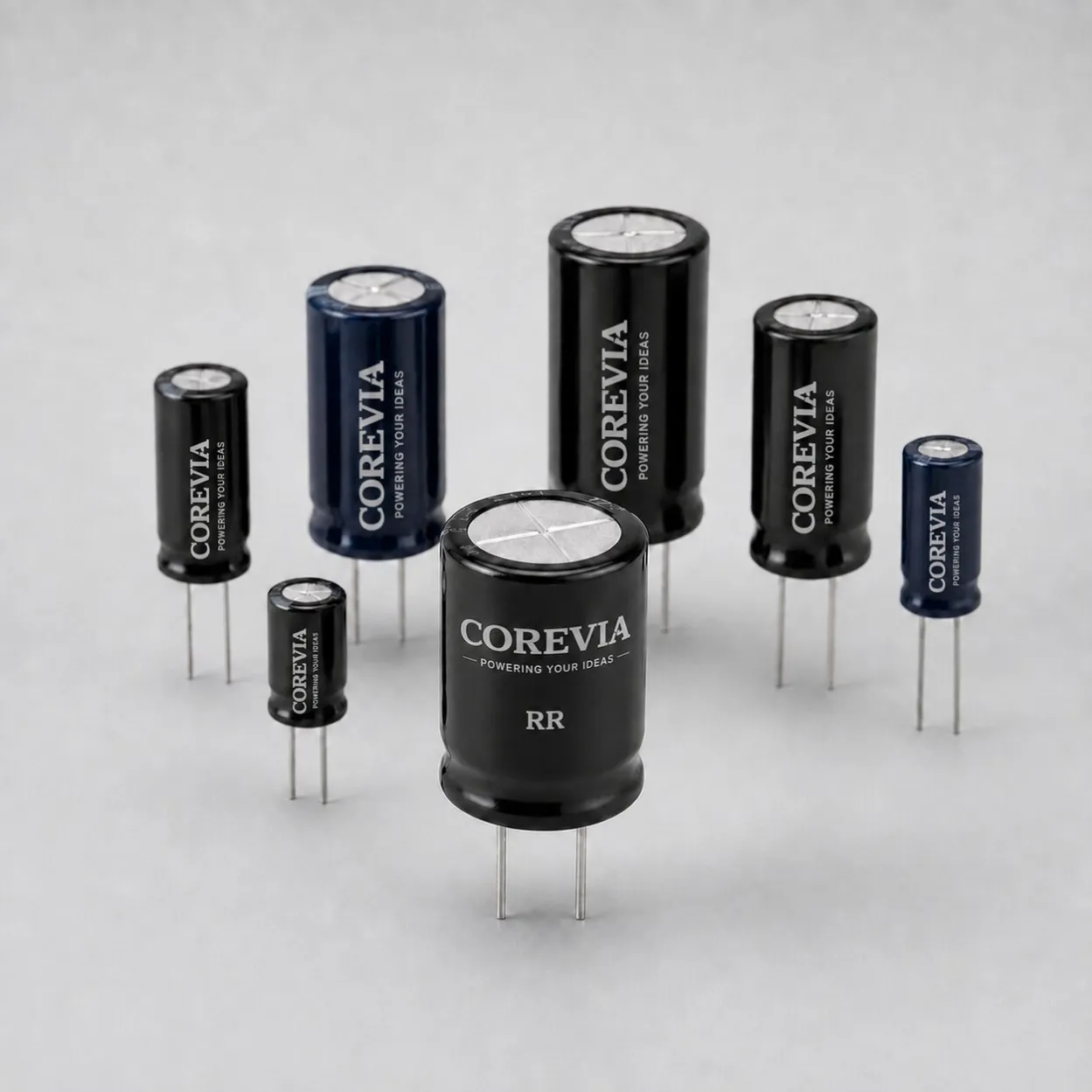
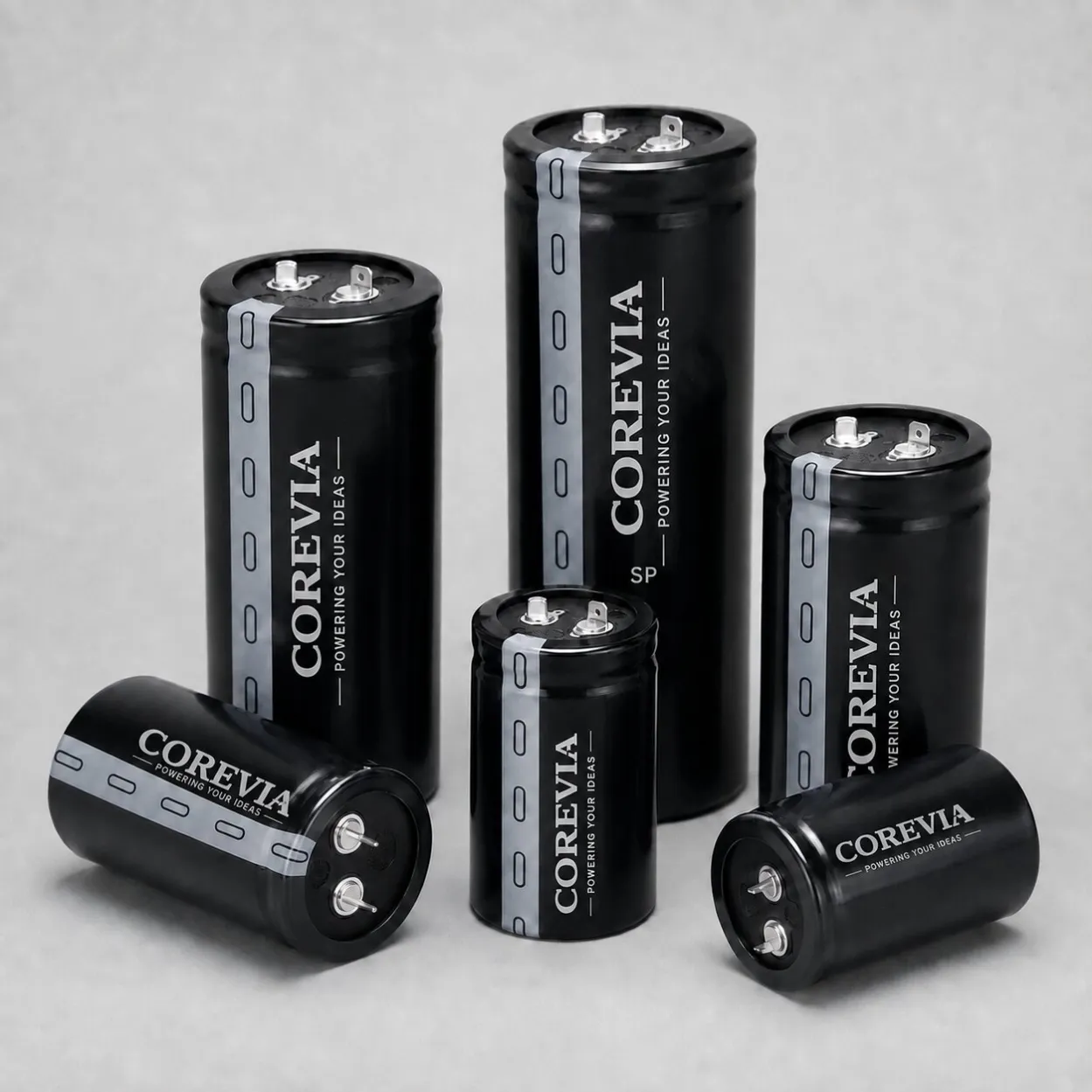
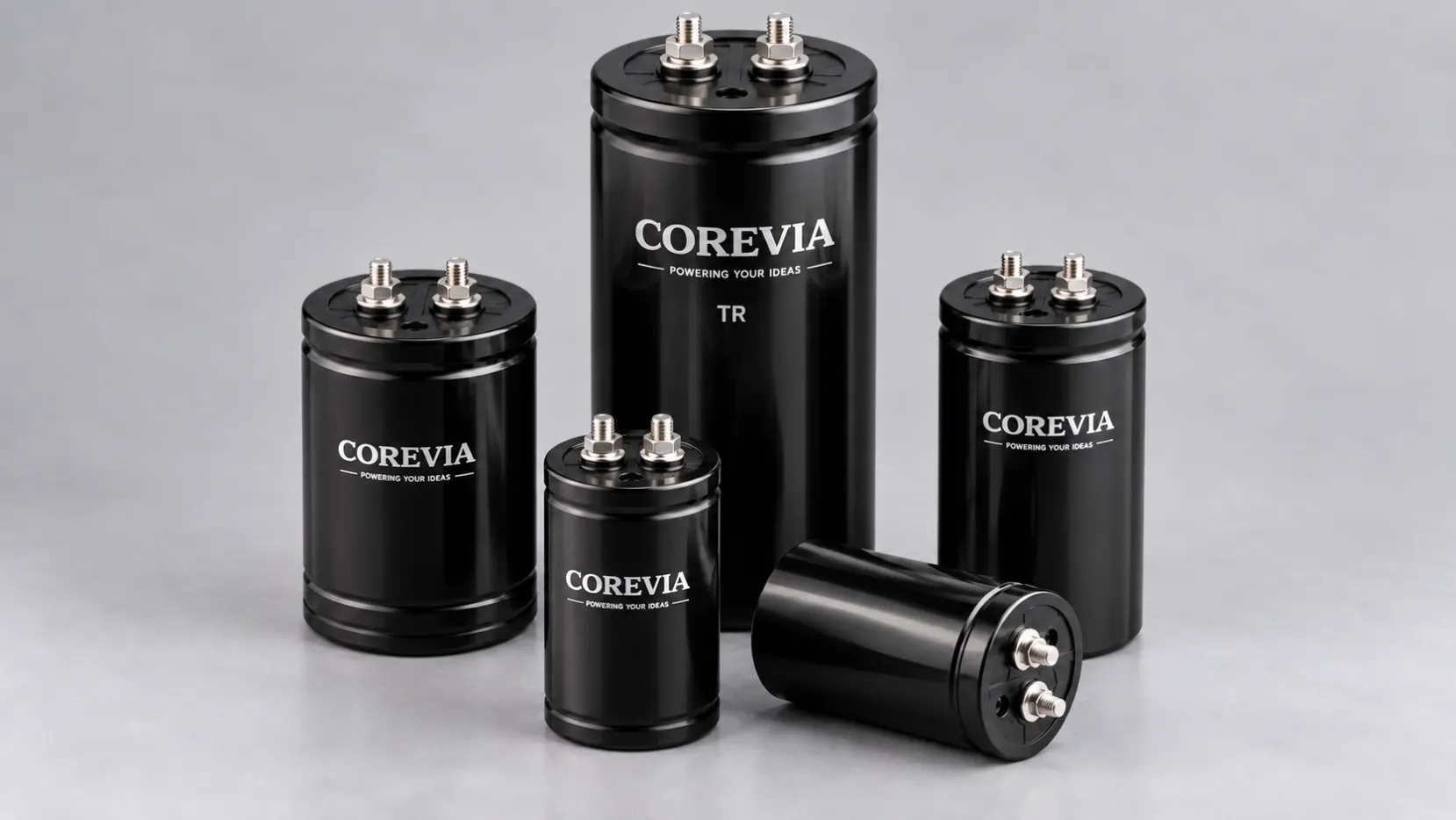
For large industrial DC-link applications, review the COREVIA snap-in aluminum electrolytic capacitor range or the COREVIA screw-terminal aluminum electrolytic capacitor range. Selection must be based on the exact part-number specification rather than the family name alone.
What must an OEM compare before approval?
Start with the circuit requirement and the original design evidence. Record the steady DC voltage, peak voltage, ripple waveform, switching frequency, ambient and local temperature, required capacitance window, available space, terminal pattern and expected operating profile. Then compare those conditions with the candidate's current specification.
| Review item | What to compare | Why it matters |
|---|---|---|
| Rated voltage | Maximum continuous voltage, ripple superposition and credible transients | A higher rating must still cover the real waveform without relying on surge conditions |
| Capacitance and tolerance | Required minimum and maximum capacitance over the intended conditions | Circuit energy storage, filtering and response depend on the usable capacitance |
| Ripple current | Actual waveform, frequency content, local temperature and specified rating basis | Excess ripple can increase internal heating |
| ESR and impedance | Relevant frequency and temperature conditions | Electrical loss, ripple voltage and circuit response can change |
| Temperature and endurance | Exact series limits and the equipment's measured thermal profile | A voltage label alone does not establish thermal suitability or life |
| Case and terminals | Diameter, length, lead or terminal spacing, polarity and mounting method | A candidate that does not fit correctly cannot be treated as a valid replacement |
| Vent and insulation clearance | Pressure-relief path, sleeve clearance and nearby conductive parts | Installation details affect safety and mechanical reliability |
| Qualification evidence | Prototype measurements, worst-case tests and production tolerances | The final decision belongs to the complete application, not a catalog comparison alone |
Be careful when the higher-voltage part is physically larger. Check enclosure height, clamp location, PCB footprint, busbar alignment, creepage and clearance, service access and the pressure-relief path. Do not force a larger part into the original space or let the terminals carry unsupported mechanical load.
Do not assume that using a higher voltage rating automatically extends service life. Temperature and ripple-current heating are major parts of the application review, and series construction can differ. Use the exact COREVIA endurance and application guidance for the selected part rather than applying a general multiplier.
What should a customer send COREVIA for review?
Send the original and proposed part numbers, required capacitance and tolerance, continuous and peak DC voltage, ripple-current waveform or frequency information, local temperature, expected duty cycle, available dimensions, terminal or PCB drawing and the required operating life.
Also include the equipment type, input range, load profile, cooling method, enclosure drawing and clear photographs of the installed capacitor area. If the replacement is being considered after a field issue, describe the observed condition and the checks already completed without assuming a failure cause.
For system context, review the COREVIA industrial power supply application page. Then contact COREVIA with the full electrical and mechanical requirement for an application-focused comparison.
FAQ
Does a higher voltage rating automatically improve service life?
No. Service life depends on the exact capacitor construction and the real electrical and thermal conditions. A higher voltage number by itself does not prove lower temperature rise, higher ripple capability or longer life.
Can the capacitance value change at the same time?
Only after the circuit requirement is reviewed. Changing capacitance can affect energy storage, ripple voltage, charging current, discharge time and control behavior. Keep the approved capacitance window unless the equipment design is requalified.
What if the higher-voltage part is physically larger?
Treat the mechanical change as part of the replacement decision. Verify the footprint, polarity, terminal alignment, body support, enclosure clearance, pressure-relief space and assembly process before approving the part.
Evaluating a higher-voltage capacitor replacement? Send COREVIA the original requirement, candidate part number, operating waveform, thermal data and dimensional drawing for review.