Does Electrolytic Capacitor Leakage Current Matter in a Standby Power Supply?
Leakage current can consume a standby power budget. Learn when to check it, how to compare datasheet conditions, and what to send for capacitor selection.
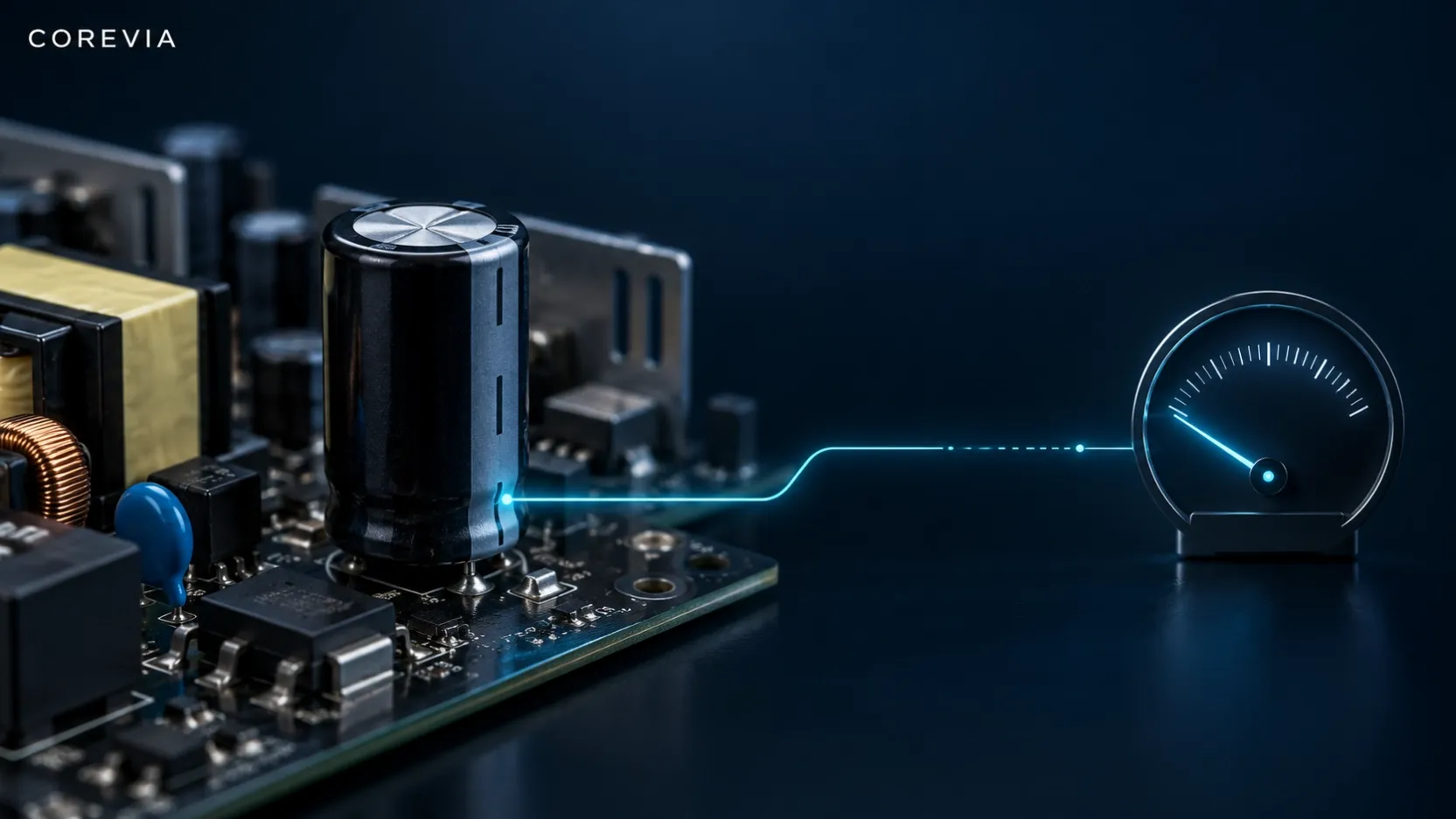
Yes. Electrolytic capacitor leakage current can matter when a standby power supply has a small available current or a strict no-load power target. It is a current drawn through a biased capacitor, so the contribution of every capacitor on an always-energized rail belongs in the power budget. Whether it is significant depends on the exact part, voltage, temperature, time after voltage application and circuit design. Check the applicable COREVIA part-number specification and measure the complete supply under its actual standby conditions.
This question is different from asking whether the capacitor has enough capacitance for hold-up time. An acceptable energy-storage value does not, by itself, establish the standby current drawn by the assembled equipment.
When does leakage current affect a standby design?
Start with the operating state. A capacitor that remains under DC bias while the equipment appears “off” can contribute to the current drawn from the standby rail. That contribution deserves attention in a low-power auxiliary supply, a battery-backed controller or a system with a specified no-load input-power limit. The relative importance depends on all the other loads and losses in the circuit.
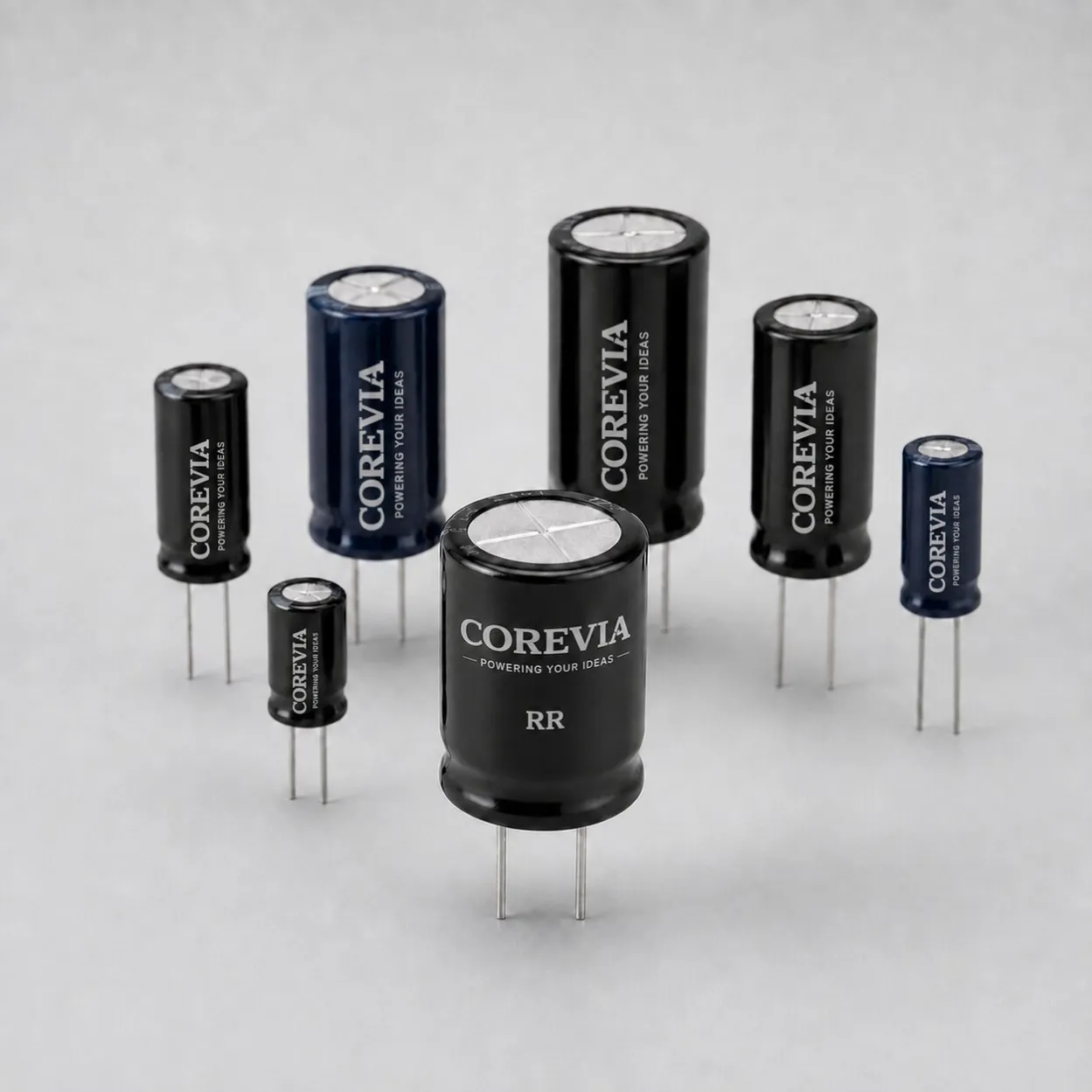
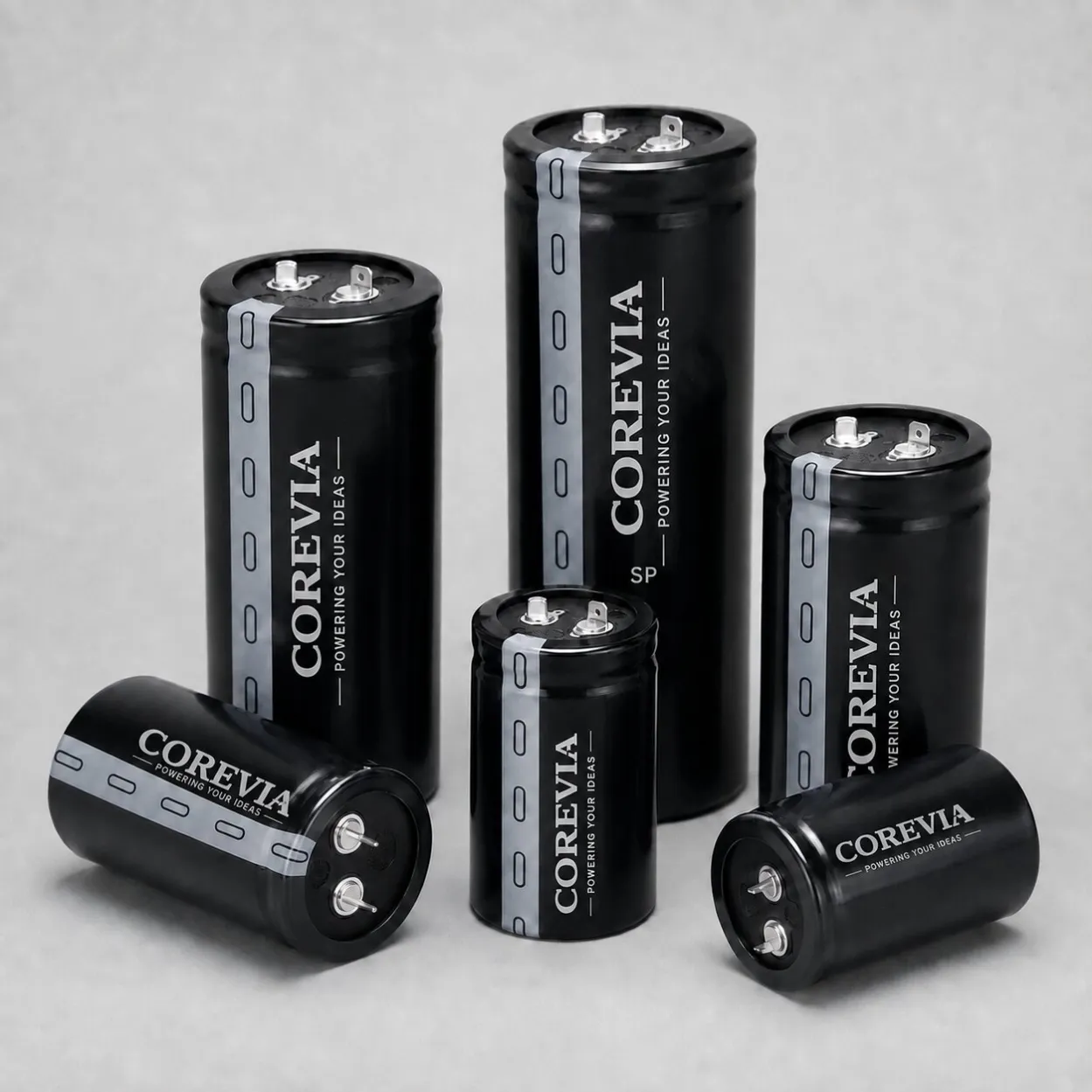
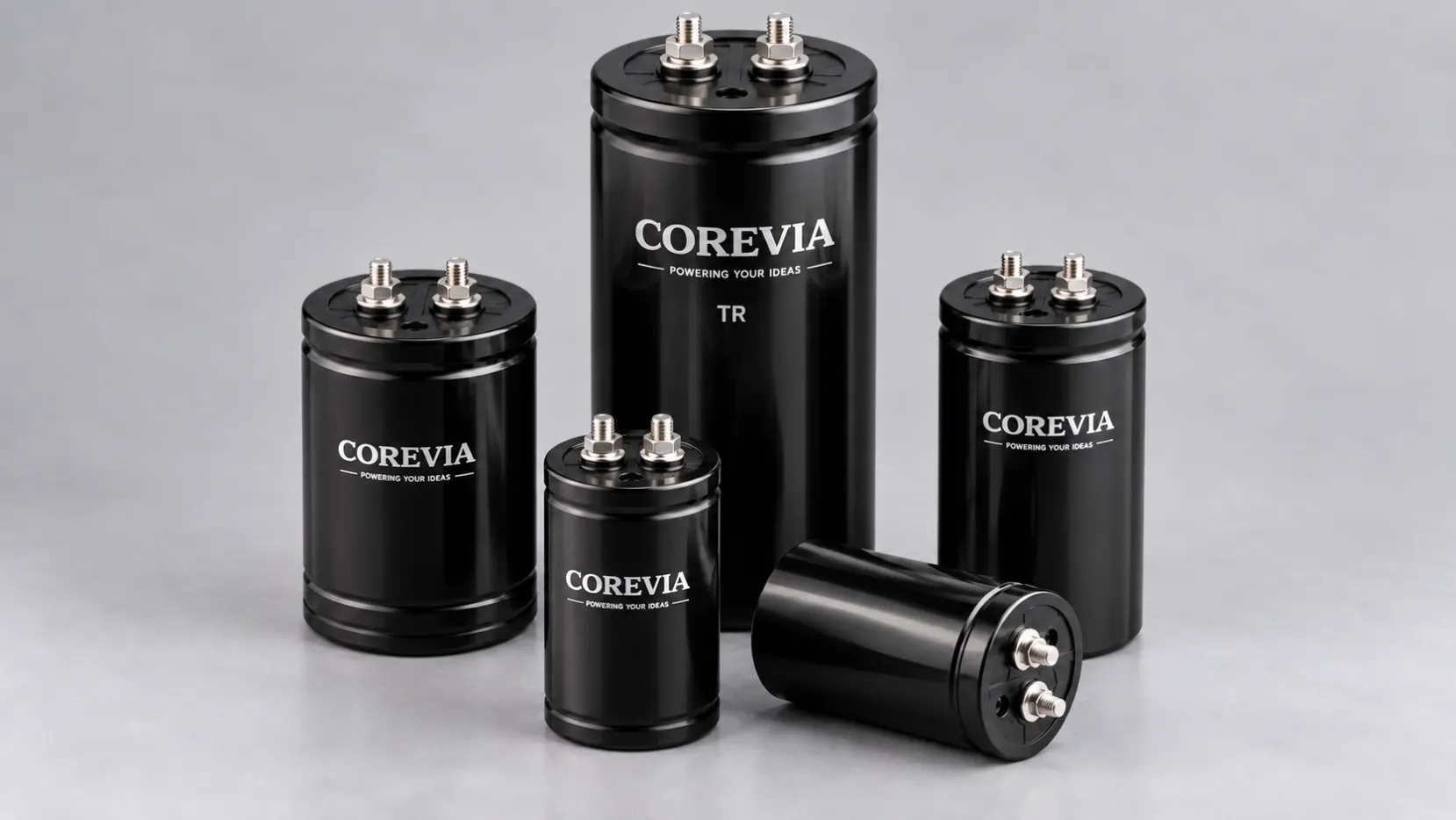
Separate capacitor leakage from the rest of the measured input current. Controller supply current, sensing networks, bleeder resistors and other components may also draw power. A capacitor specification cannot predict the finished equipment's no-load power on its own. For a DC-link or bulk position, review the COREVIA snap-in capacitor range; for smaller PCB positions, review the COREVIA radial-leaded capacitor range. The correct choice still depends on the exact part and its conditions of use.
How should an engineer budget capacitor current in standby?
Map every operating state first. The standby rail may be energized continuously, switched only during wake-up or supplied from a battery for a defined interval. Mark which capacitors actually remain biased in each state, then reserve part of that state's allowable current for them. The remainder belongs to controllers, sensing networks, bleeder paths and other loads. The total must be checked in the assembled equipment.
| Budget item | Evidence to collect | Design decision |
|---|---|---|
| Standby state | Which rails and capacitors remain biased? | Which capacitor positions belong in the budget? |
| Standby rail current | Measured total current and the allowable rail-current target | How much margin remains after the other loads? |
| No-load input power | Measured AC or DC input power under the specified test state | Does the finished product meet its system-level target? |
| Battery-backed interval | Available battery energy and required standby duration | Can the total load meet the runtime requirement? |
| Capacitor selection | Part-specific leakage condition plus capacitance, ripple, endurance and fit | Does the candidate satisfy every electrical and mechanical requirement? |
Keep rail-current measurements and input-power measurements separate. A low DC rail-current reading alone cannot establish the AC input no-load power, because the conversion stage and other circuitry also consume power. When comparing capacitor candidates, use the exact part-number leakage specification under its stated voltage, temperature and timing conditions, then validate the equipment in each relevant state. Do not claim a particular COREVIA series meets a target without the current specification and application data.
What should an OEM send for a standby-power review?
Send the schematic position, expected operating and standby voltages, the no-load input-power or rail-current target, allowable current allocated to the capacitor, local temperature range, required capacitance and tolerance, ripple-current conditions, available dimensions and the original or proposed part number. State when the current is measured after power is applied and whether the unit has been stored before the test.
If the equipment is an industrial auxiliary supply, include the startup and load sequence and refer to the COREVIA industrial power supply application page. Then contact COREVIA for a part-specific comparison. A useful review checks standby current alongside capacitance, ripple-current capability, temperature, mounting and the complete system test.
FAQ
Does a low capacitor leakage limit guarantee low no-load input power?
No. Converter losses and other standby loads can dominate the input-power measurement. Check the exact capacitor specification, then measure the complete equipment in its specified no-load state.
Can I choose only the part with the lowest quoted leakage-current value?
No. First check whether the quoted values use equivalent conditions. Then verify the required capacitance, voltage, ripple-current capability, temperature limits, endurance and physical fit. The finished supply must meet its measured standby-power target.
Does a larger capacitor always draw more leakage current in standby?
Do not use size alone as a decision rule. Compare the exact candidate specifications under the stated test conditions and assess the assembled circuit. Size may also change energy storage, charging behavior and mechanical fit.
Selecting a capacitor for a standby rail? Send COREVIA your circuit conditions and power budget so the team can review the exact candidate and its published specification.