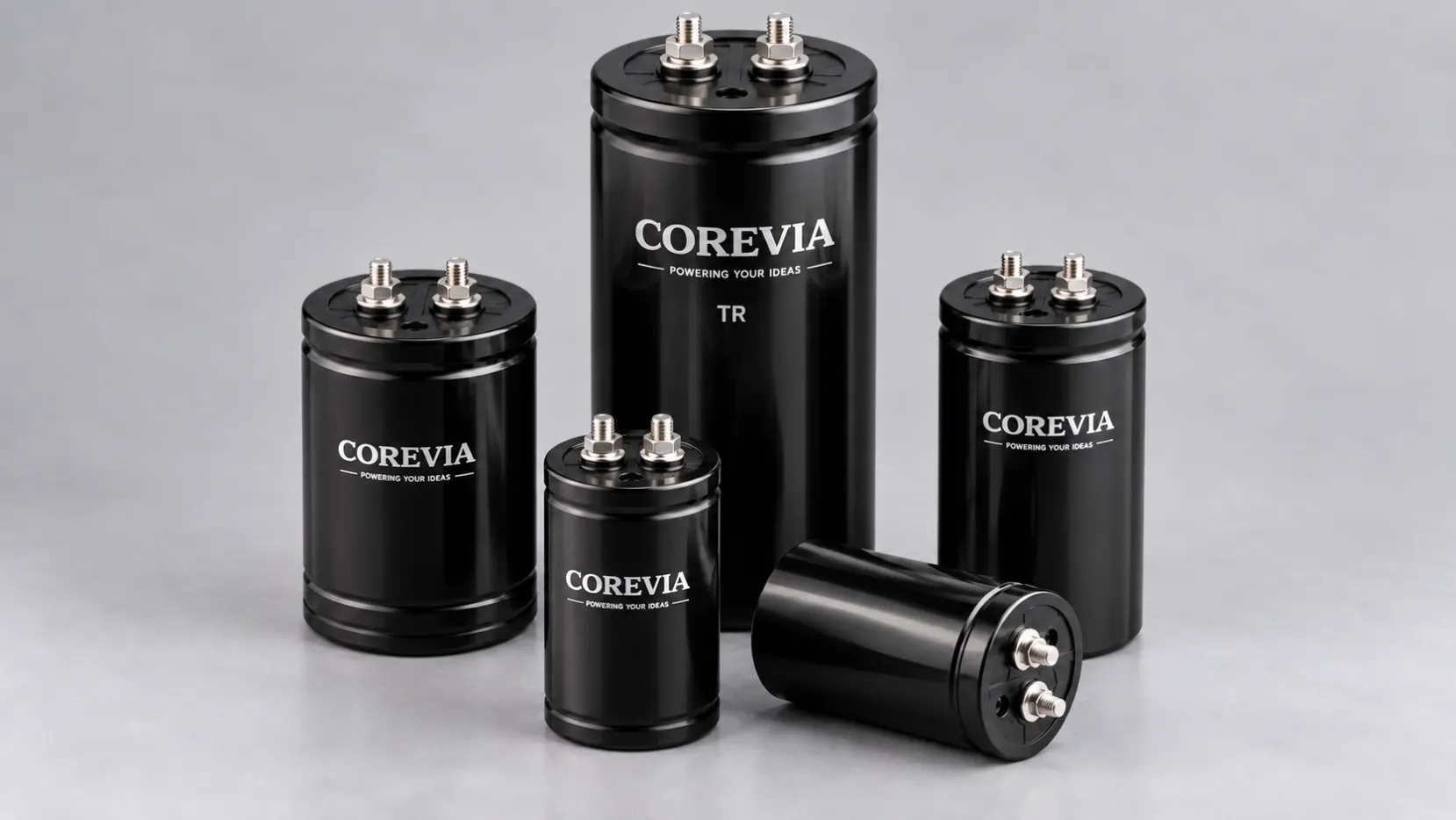
Can a Screw-Terminal Capacitor Be Mounted Horizontally in an Inverter?
A horizontal screw-terminal capacitor needs an exact-series orientation review. Check vent direction, clamp support and busbar routing before approving an inverter layout.
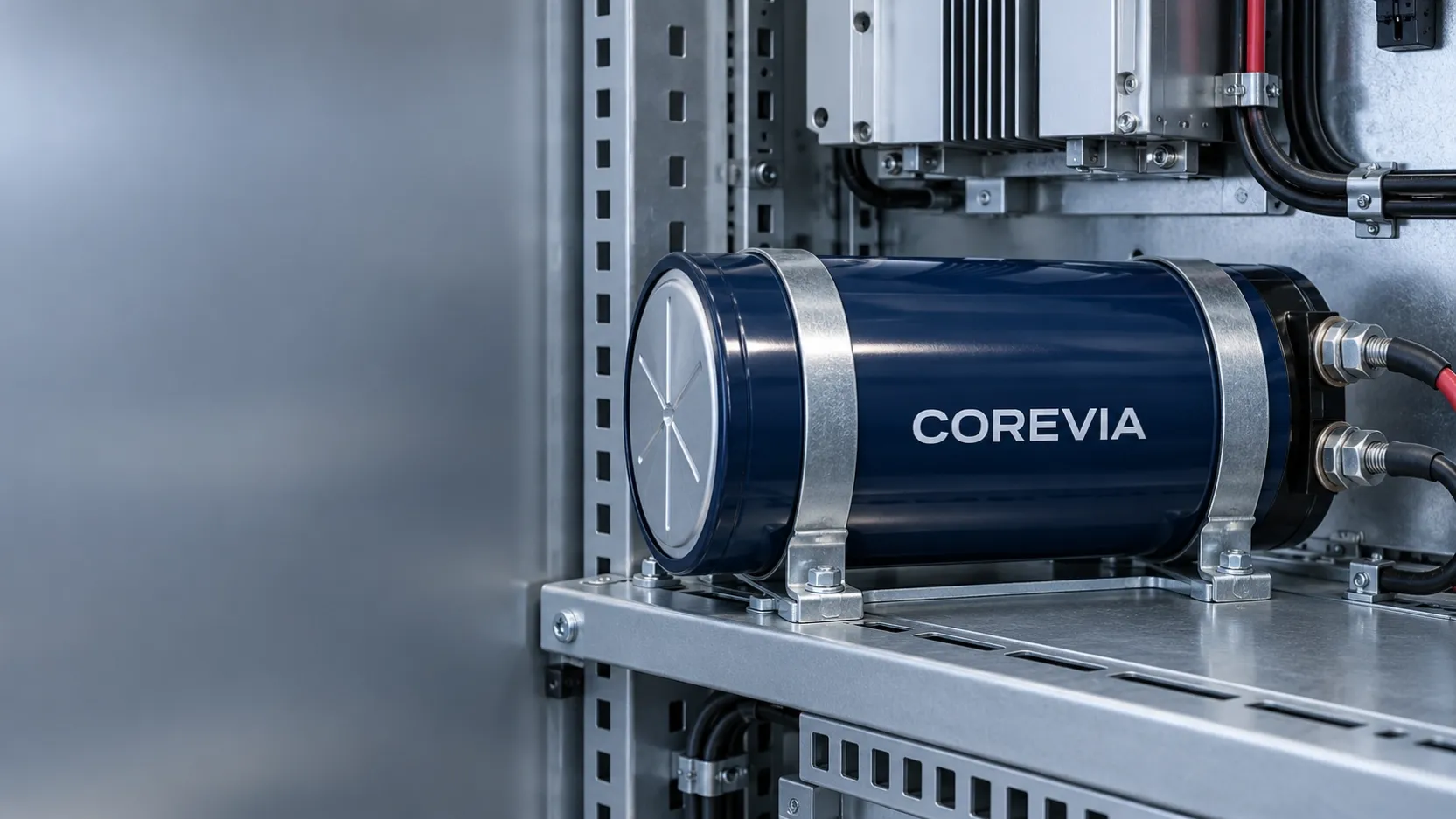
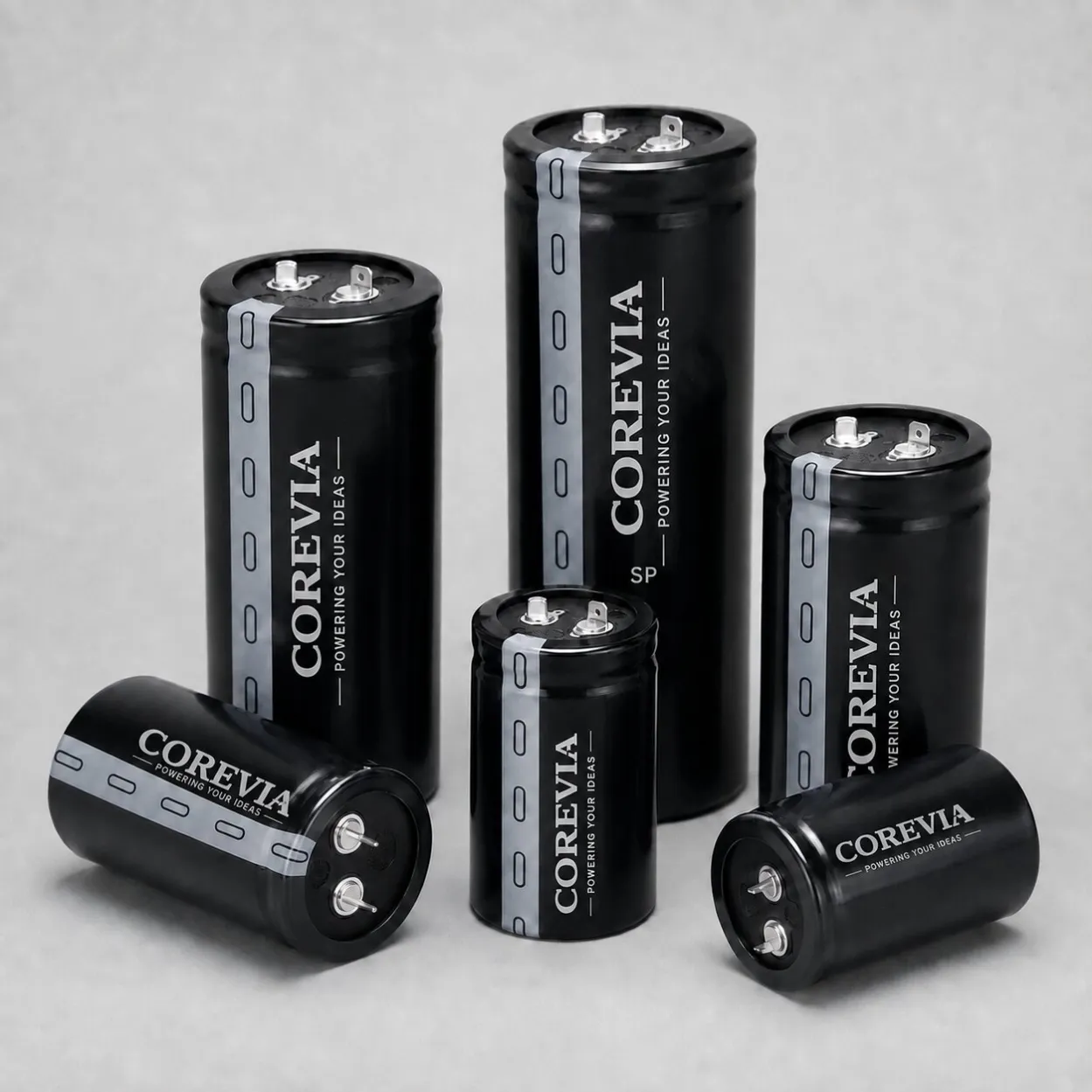
Short answer: A screw-terminal aluminum electrolytic capacitor can be evaluated for horizontal mounting, but the orientation must be approved for the exact COREVIA series and its pressure-relief vent. Do not assume that turning a vertically mounted part on its side is harmless. Check the terminal-and-vent drawing, clamp support, busbar routing and cabinet clearances before releasing an inverter or UPS layout.
What changes when the capacitor is installed on its side?
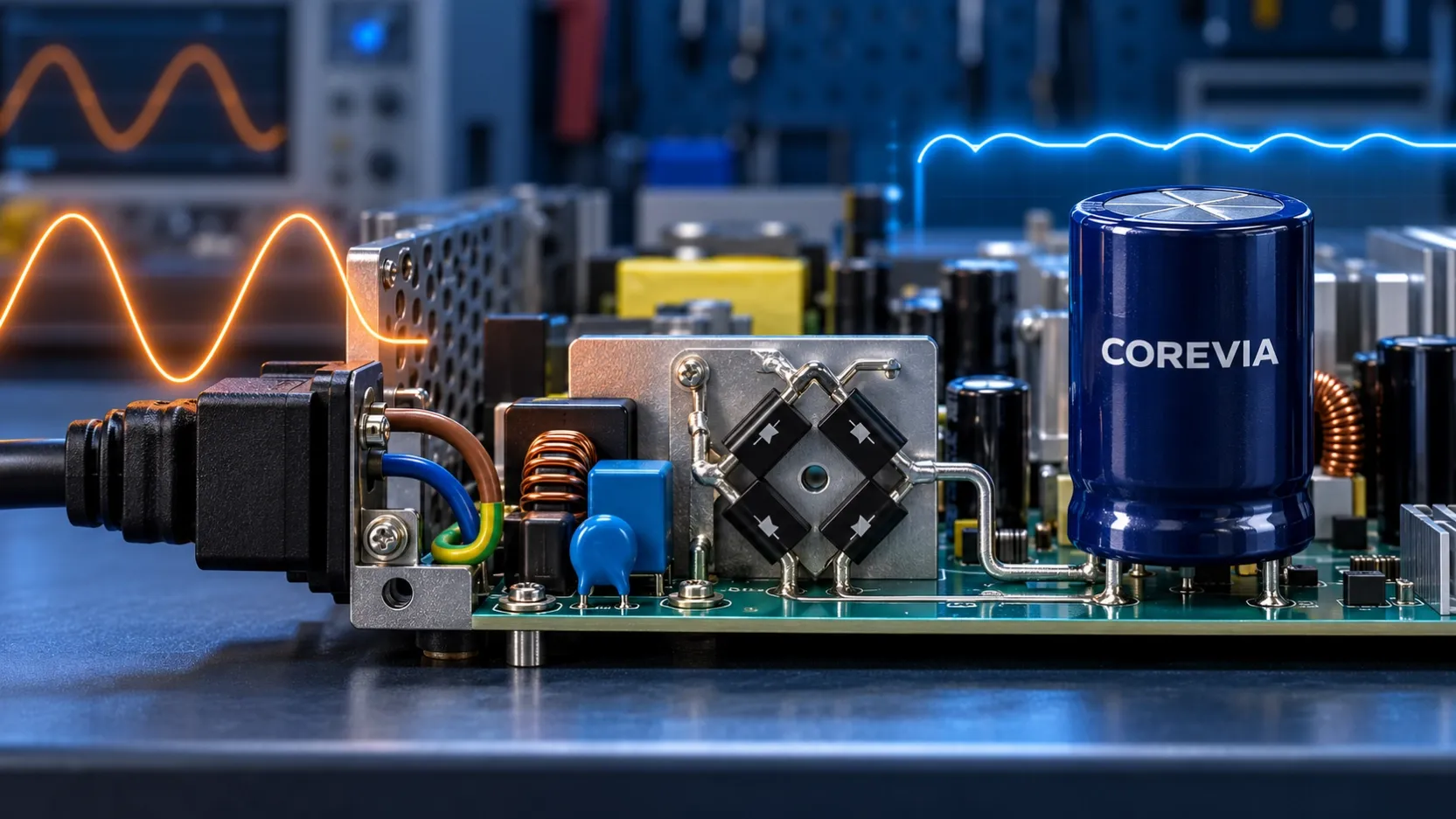
In a vertical layout, the terminal end, seal, vent and mounting hardware have a familiar relationship to gravity and nearby parts. Rotating a large can changes where the vent points and how the body is supported. A vent that faces downward or is obstructed by a shelf, bracket or cable is a design concern. Horizontal placement also changes the load carried by a clamp and the route of the busbars.
The safe decision is series-specific. The enclosure drawing alone cannot establish that an electrical part is approved for an orientation. Ask for the current COREVIA installation drawing and confirm the actual vent location; do not infer it from the sleeve artwork or a photograph. In the same review, verify that the cabinet gives the vent a clear path and that a clamp supports the body without transferring weight or vibration into the terminals.
| Layout review item | Evidence to check | Decision it supports |
|---|---|---|
| Exact series and vent position | Current COREVIA part drawing and installation instructions | Whether the proposed horizontal orientation is permitted |
| Vent path | Cabinet section showing adjacent sheet metal, cables and components | Whether the vent stays unobstructed |
| Body support | Clamp location, mounting method and vibration profile | Whether the capacitor is supported without terminal strain |
| Electrical connection | Busbar alignment, polarity and terminal hardware plan | Whether the connection remains mechanically sound |
How should an inverter or UPS team approve the layout?
Start with the exact part number and installation drawing, then mark the vent and both terminals on the cabinet drawing. Review the fully assembled orientation, not just a loose capacitor on a bench. Check clearance around the vent and confirm that maintenance access will not later be blocked by another component or cable bundle.
Next, show how the mounting clamp carries the can and how the busbars meet the terminals without forcing them into alignment. Follow the part-specific tightening and clamp instructions; this article does not supply a universal torque value. If the enclosure vibrates, provide the vibration condition at the capacitor and ask COREVIA to review the mounting arrangement. Finally, verify the DC voltage, ripple-current spectrum, local temperature and endurance requirements as a separate electrical selection step. A mechanically acceptable orientation does not by itself qualify the application.
What should you send before ordering?
Send a cabinet cross-section or assembly photo showing the proposed axis and vent direction, the exact part number or required voltage and capacitance, clamp and busbar details, local temperature, ripple current, vibration conditions and available clearance. COREVIA lists TR, TT, TX, TF, TK, TG, TN, TM, TD, TH and TA screw-terminal series; their installation and electrical limits must be checked by exact part, not by terminal format alone. Review the COREVIA screw-terminal capacitor family and the inverter application guide while preparing the request. COREVIA can then check a suitable series against the actual electrical and mechanical requirements.
FAQ: Can I rotate an existing vertically mounted capacitor by 90 degrees?
Not on appearance alone. Obtain the exact series installation instructions, locate the vent and seal, and review clamp support and busbar loading in the new position before approving the change.
FAQ: Is keeping the vent clear enough to approve horizontal mounting?
No. Vent direction and clearance are important, but the clamp, terminal forces, vibration and part-specific instructions also matter. Electrical ratings must still be checked for the inverter or UPS duty cycle.
Planning a horizontal capacitor bank? Send COREVIA the cabinet drawing and operating profile for an exact-series review before finalizing the layout.