Can an Electrolytic Capacitor Go Across AC Mains? Check the Circuit Position
A polarized electrolytic capacitor must not be placed directly across AC mains. Learn how to distinguish an AC input from a rectified DC bus and what to check.
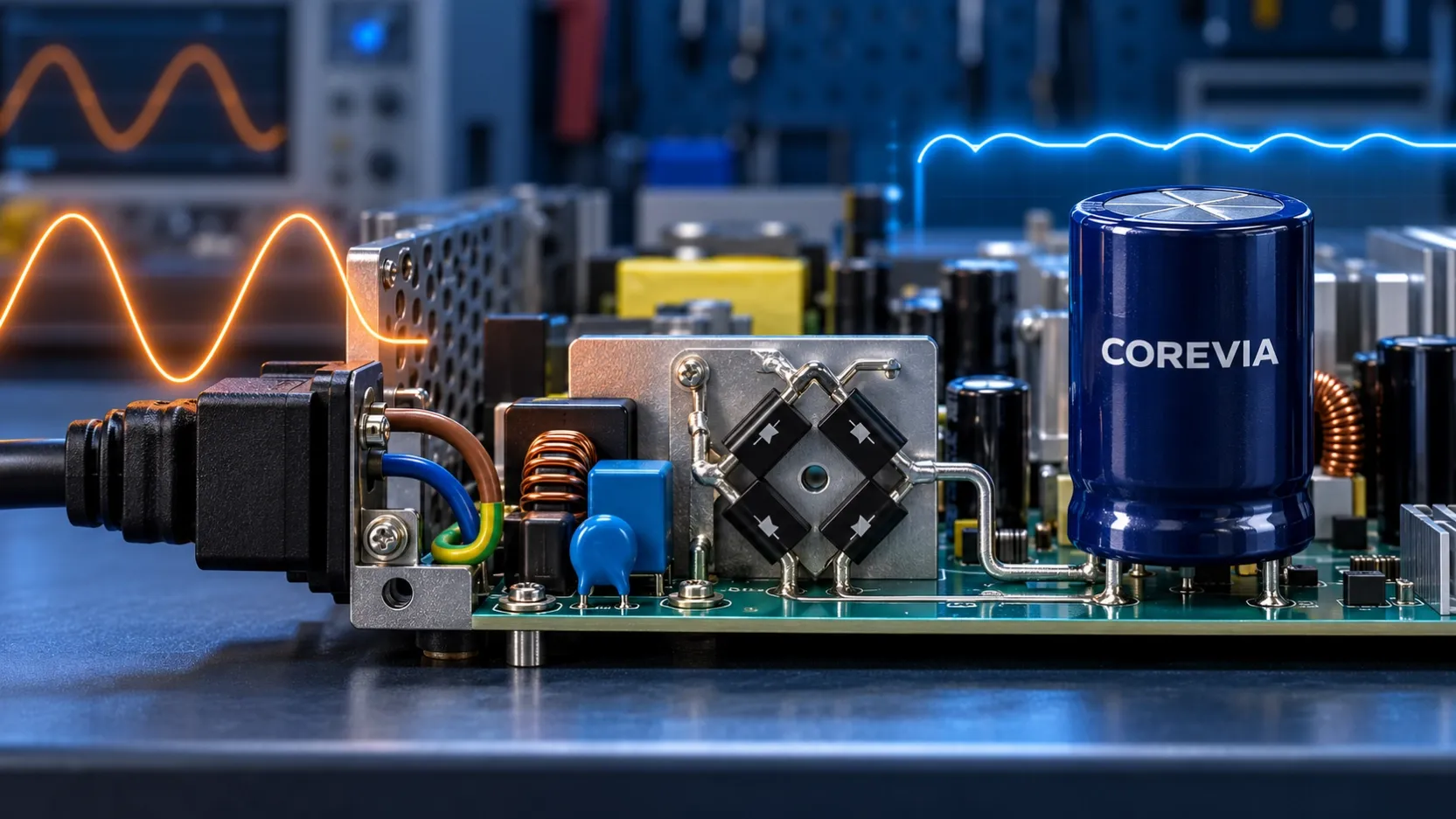
Short answer: Do not connect a polarized aluminum electrolytic capacitor directly across an AC supply. Its terminals would see voltage in both directions, including reverse voltage. A COREVIA aluminum electrolytic capacitor may be considered for the rectified DC bus in a suitable design, but only after confirming polarity, maximum bus voltage, ripple current, temperature and the exact series specification. The fact that a circuit starts with AC power does not mean every capacitor in it is connected to AC.
Where is the capacitor connected in the power circuit?
Locate both capacitor terminals on the actual schematic. The key distinction is the voltage across those two terminals, not the label on the equipment input. A rectifier can turn an AC input into a DC bus with a fluctuating voltage. The capacitor on that bus still sees a DC polarity when the circuit is designed correctly; it also carries ripple current, which must be checked separately.
| Connection point | Voltage at capacitor terminals | Selection implication |
|---|---|---|
| Directly across AC input | Alternates polarity each cycle | Do not specify a polarized aluminum electrolytic capacitor for this position. |
| After the rectifier on a DC bus | DC polarity with bus ripple and possible transients | Check peak voltage, ripple current and series limits for the exact design. |
| DC control or output rail | Normally one polarity, possibly with ripple | Verify polarity during start-up, normal operation and shutdown. |
This distinction matters in industrial power supplies, UPS equipment and inverters. A drawing that only says “AC-powered” is insufficient for capacitor selection. Send a schematic section or a clear description of where the proposed capacitor is connected.
Why does an AC waveform create a different risk from DC ripple?
Conventional aluminum electrolytic capacitors are polarized. Reversing the voltage across their terminals can damage the dielectric and cause excessive current, heating or pressure. That is why a high DC voltage rating alone does not make one suitable for a direct AC connection.
Ripple on a correctly polarized DC bus is different: the bus voltage varies, but the capacitor's positive terminal should remain positive relative to its negative terminal throughout the relevant operating states. The engineer must check the highest instantaneous bus voltage against the chosen part's rated voltage and the resulting ripple current against the series rating at the applicable frequency and temperature. Also consider start-up, shutdown, regenerative operation and fault conditions; a nominal steady-state measurement can miss the worst case.
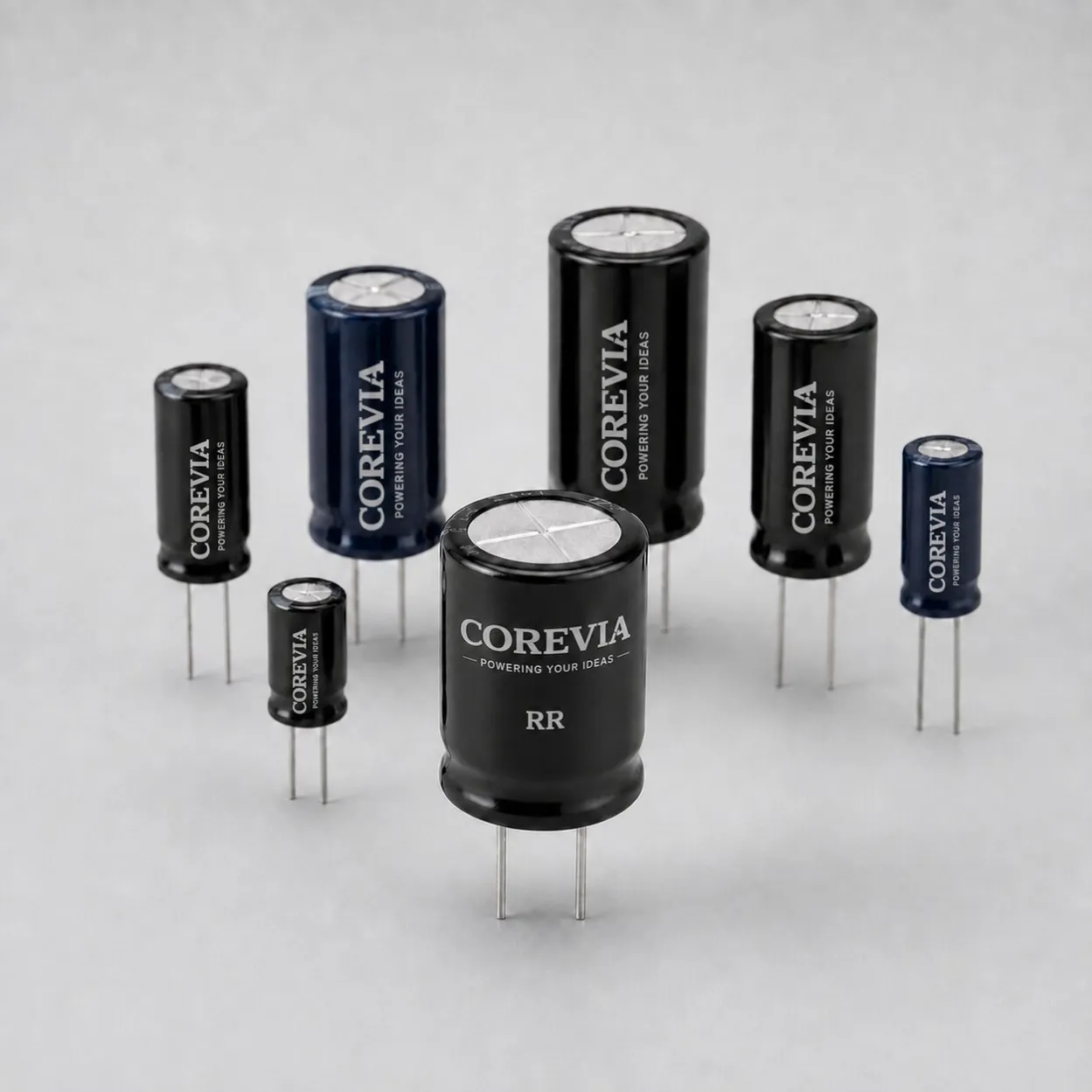
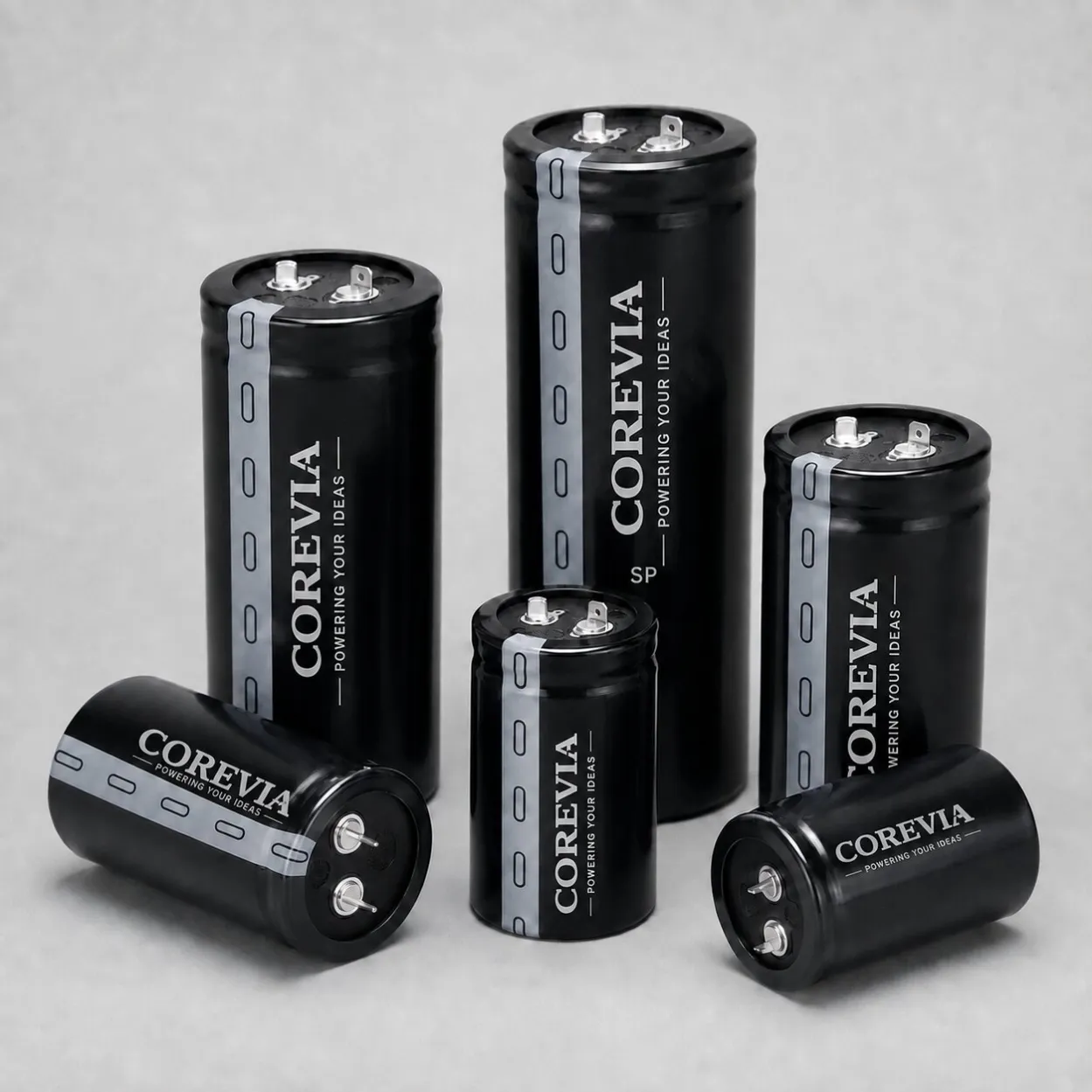
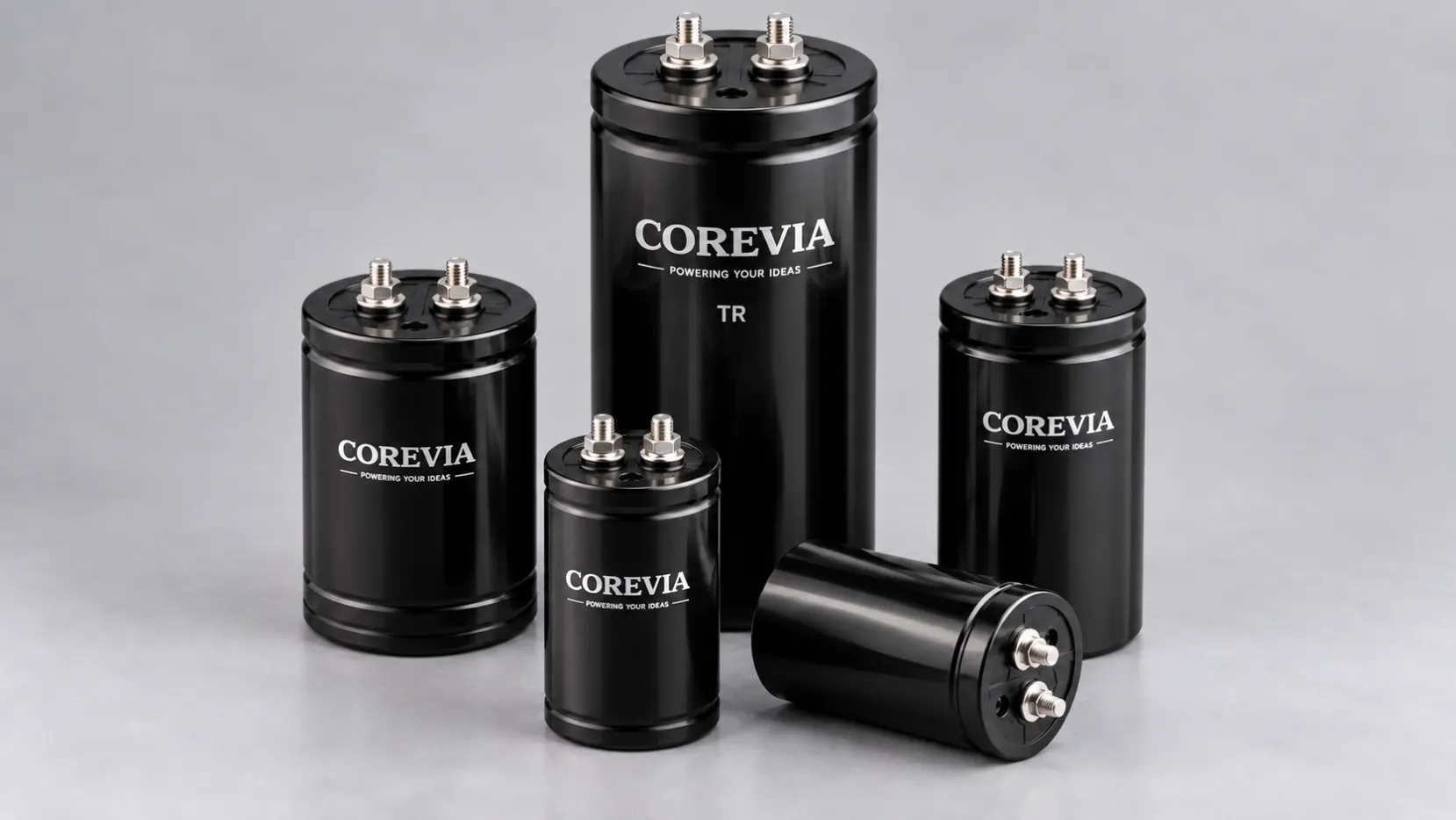
COREVIA lists snap-in and screw-terminal aluminum electrolytic capacitor families used in power-electronics selection. The available series are not interchangeable: use the drawing and datasheet for the exact proposed part before approving a DC-bus application.
What information should you send for a DC-bus selection review?
Provide the circuit position, the minimum and maximum voltage measured or predicted across the capacitor, the ripple-current waveform or spectrum, local temperature, required capacitance and the mechanical space. State whether the bus can reverse polarity under any start-up, shutdown, regenerative or fault condition. If this information is not yet known, resolve it in the circuit design before ordering a capacitor.
FAQ: Can a higher-voltage electrolytic capacitor be used directly on AC?
No. A higher DC voltage rating does not remove the reverse-polarity half-cycle of an AC waveform. Select a component specifically approved for that AC position under the circuit's applicable requirements.
FAQ: Does the AC ripple on a DC bus mean the capacitor is on AC?
No. Ripple current is an AC component superimposed on a DC operating voltage. The designer still needs to confirm that terminal polarity stays correct and that both peak voltage and ripple current remain within the exact series limits.
If you need help reviewing a rectified DC-bus capacitor, send COREVIA the circuit conditions and target specifications. We can discuss a suitable product family after the operating waveform and installation requirements are clear.