Oct 21, 2026Capacitor Selection
Capacitor Ripple Current Ratings: What If Datasheet Frequencies Differ?
Compare capacitor ripple-current ratings only after checking each datasheet’s reference frequency, temperature and correction method. See what to send COREVIA for review.
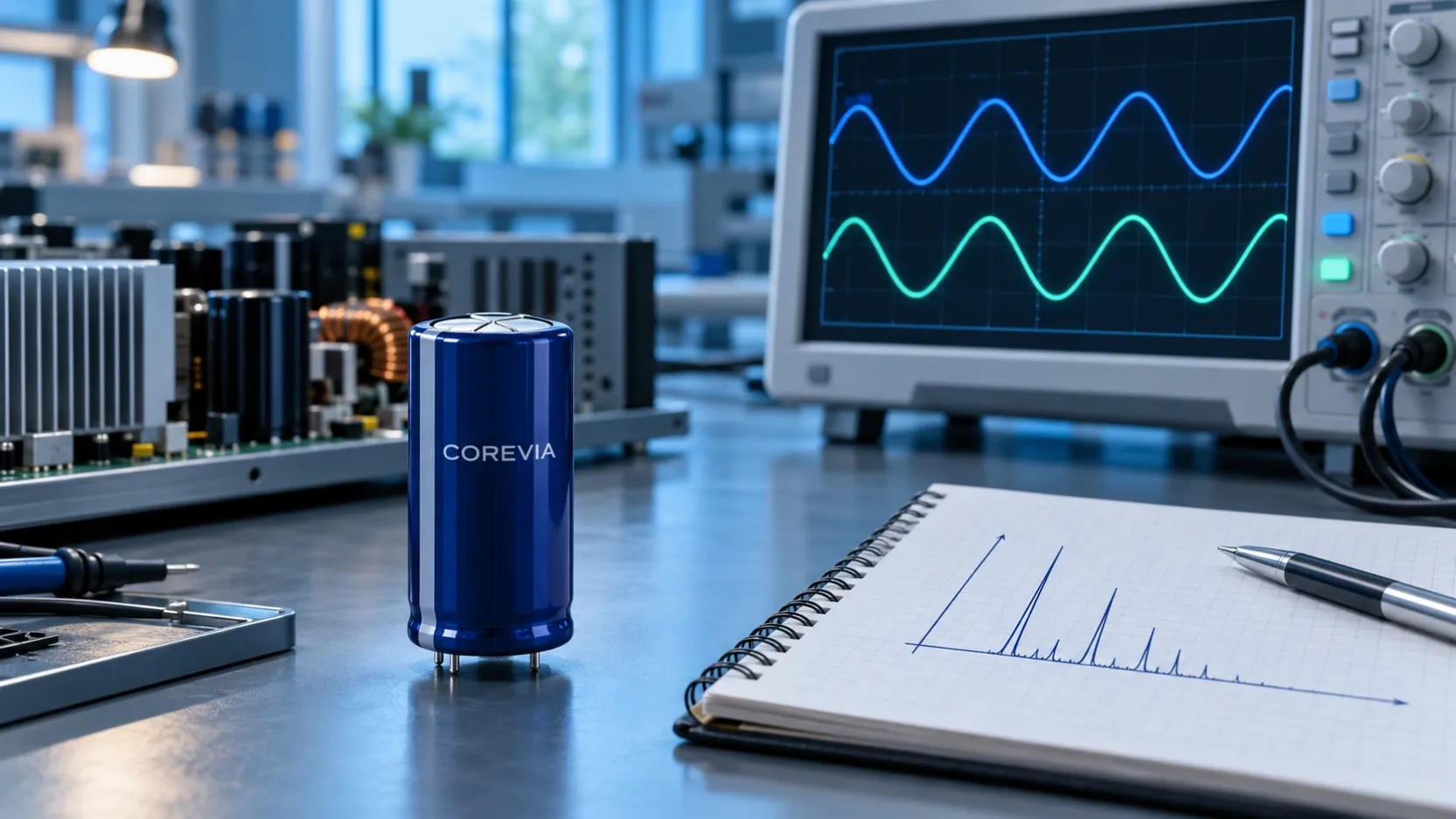
Short answer: No. Two aluminum electrolytic capacitors' ripple-current numbers cannot be compared fairly until you check the reference frequency, rated temperature and frequency-correction method in each exact series datasheet. In a power supply with both rectified-line and switching ripple, measure or estimate the current carried by the capacitor at each relevant frequency before deciding whether a COREVIA part is suitable.
Why can two ripple-current ratings describe different test conditions?
A datasheet's rated ripple current is tied to stated conditions; it is not a universal current limit independent of frequency and temperature. Aluminum electrolytic capacitor losses vary with frequency, so a number quoted at one reference frequency may not mean the same thing as a number quoted at another. A higher headline value alone does not prove lower operating temperature or longer life in your circuit.
Check before comparing | What to record | Why it matters |
|---|---|---|
Reference frequency | The frequency printed beside each ripple-current rating | Ratings at different frequencies need series-specific conversion before comparison. |
Temperature condition | The rated ambient or case condition stated by the series | Heat margin depends on the actual operating environment. |
Waveform | Current through the capacitor, including low- and high-frequency components | The capacitor may carry several components rather than one simple sine wave. |
Exact part | Series, capacitance, voltage and case size | Correction tables and limits can change between parts. |
How should you compare a mixed-frequency waveform?
First identify where the capacitor sits in the circuit and obtain the current waveform through its terminals under the worst relevant input, load and temperature conditions. Use a suitable current measurement or validated simulation. A DC-bus capacitor can see low-frequency rectification ripple together with switching-related components; a single headline frequency may hide that mix.
Next, separate the significant components by frequency and record their RMS values. Apply only the frequency factors and combining method given for the exact candidate series. Do not carry a correction coefficient from a different manufacturer or COREVIA series into another datasheet. If the series information is incomplete, request its specification and an engineering review instead of assuming a multiplier.
Finally, review ripple current together with rated voltage, local temperature, endurance target and physical fit. A frequency-adjusted current comparison does not by itself approve the whole application.
What should an OEM send to COREVIA for a series review?
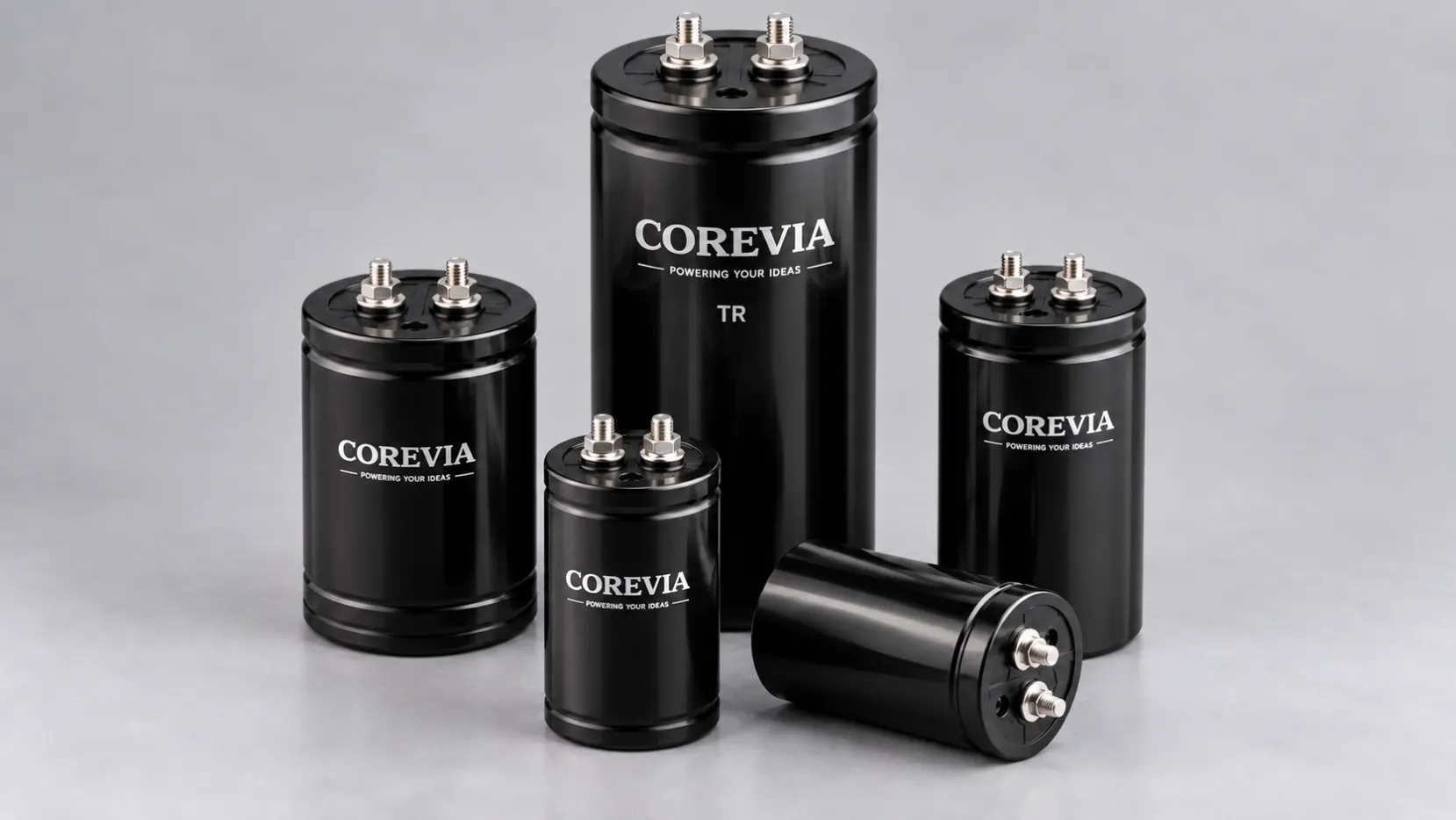
Send the circuit position, measured capacitor-current waveform or frequency components, input and load range, local temperature, DC voltage, capacitance target, case envelope and required service profile. COREVIA's snap-in and screw-terminal families can then be reviewed against the exact series data. The choice between these families also depends on mechanical connections and application requirements, not ripple current alone.
FAQ: Can I compare the largest ripple-current number on two product pages?
Only after bringing the stated conditions onto a comparable basis with each series' own data. Check reference frequency, temperature, exact part and the frequency-correction instructions.
FAQ: Is total RMS current enough if the waveform contains multiple frequencies?
Not always. The frequency content matters because capacitor losses vary with frequency. Share the waveform or significant frequency components for a series-specific review.
Choosing a capacitor for a mixed-frequency DC bus? Send COREVIA your current waveform and design requirements to review the appropriate series.