Oct 21, 2026Capacitor Selection
Aluminum Electrolytic Capacitor Surge Voltage: Can You Use It Continuously?
Surge voltage is not a continuous operating rating. Learn how to check DC-bus peaks, transient duration and the exact COREVIA series before selecting a capacitor.
Short answer: Do not treat an aluminum electrolytic capacitor's surge-voltage figure as a continuous operating rating. Specify the part so the highest normal voltage across it, including ripple, stays within its rated voltage. If start-up or switching transients exceed that rating, investigate the waveform and the exact series limits before approving a capacitor. A surge-voltage entry describes a limited withstand condition; it is not spare voltage for everyday operation.
What is the difference between rated and surge voltage?
Rated voltage is the upper DC operating voltage used when selecting the capacitor for its normal service conditions. Surge voltage is a separate, short-duration withstand characteristic defined by the product specification and its test conditions. Those conditions can differ by series, so the surge figure cannot be carried over from another capacitor's datasheet.
Question | Use the rated-voltage value | Use the surge-voltage information |
|---|---|---|
Can the bus run at this level for hours? | Yes, assess against the rated-voltage limit. | No, surge is not a continuous rating. |
What if the bus briefly overshoots at start-up? | Measure the peak and check whether it exceeds rating. | Review the exact series' permitted surge condition and frequency of events. |
Does the capacitor still meet the whole application? | Also check ripple current, temperature, endurance and size. | A surge entry does not approve these other requirements. |
For example, a supplier request that only states “the DC bus is usually below the rating” is incomplete. The peak of the ripple waveform and the largest start-up or shutdown excursion may be higher than the average reading.
How should you check a transient in the real circuit?
Identify the worst-case operating states: input at its upper limit, start-up, shutdown, load release and any regenerative event. Measure the voltage across the capacitor terminals with a suitable instrument and safe procedure, or provide a validated simulation when hardware is not available. Record peak magnitude, duration, repetition rate and the conditions that produced it. A single oscilloscope screenshot without time scale or operating context is difficult to review.
If a recurring event goes above rated voltage, address the circuit cause or choose a suitable series and rating after an engineering review. Do not simply assume that the datasheet's surge value permits the repeated excursion. Also verify capacitor polarity and ripple-current heating under the same operating conditions.
What should an OEM send for a COREVIA selection review?
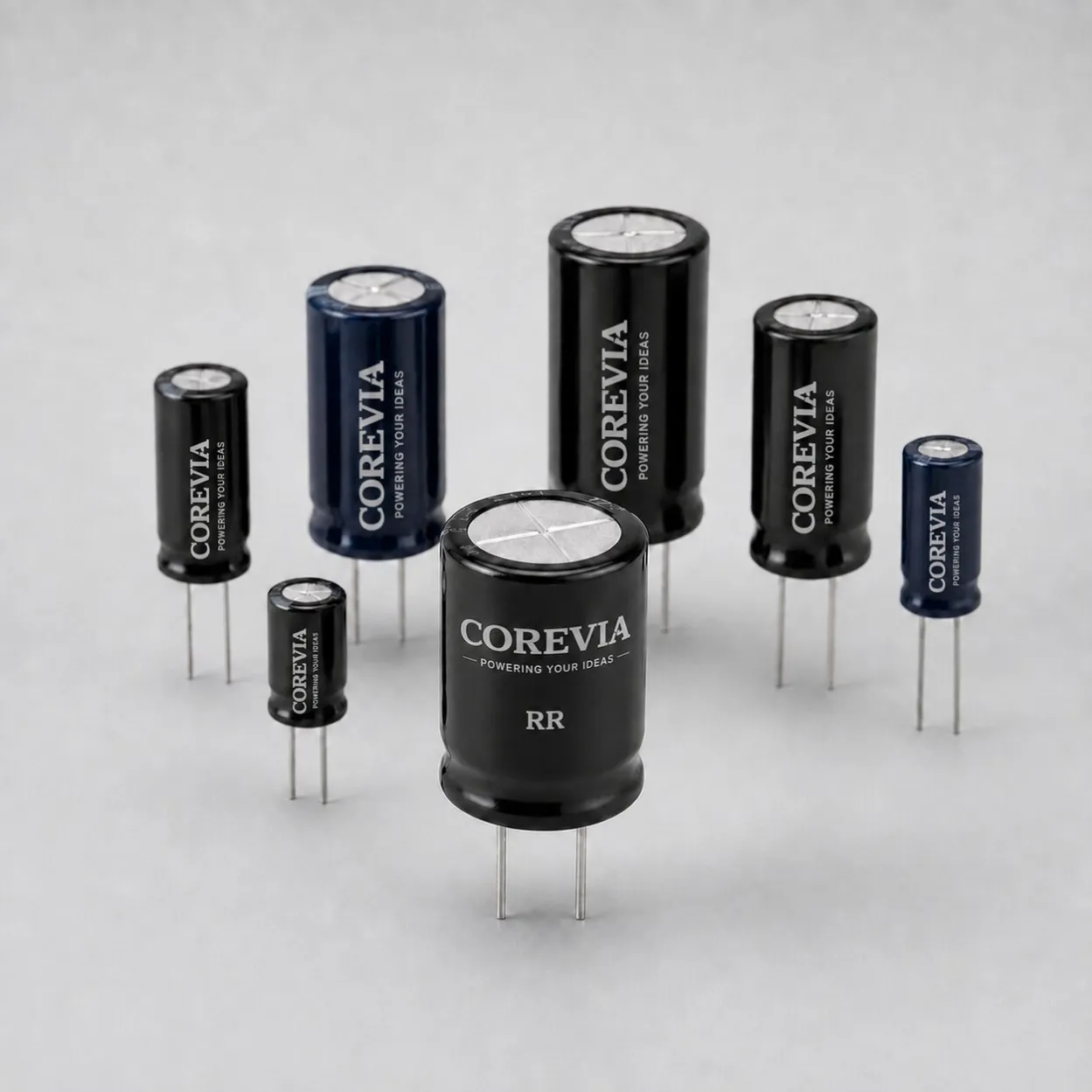
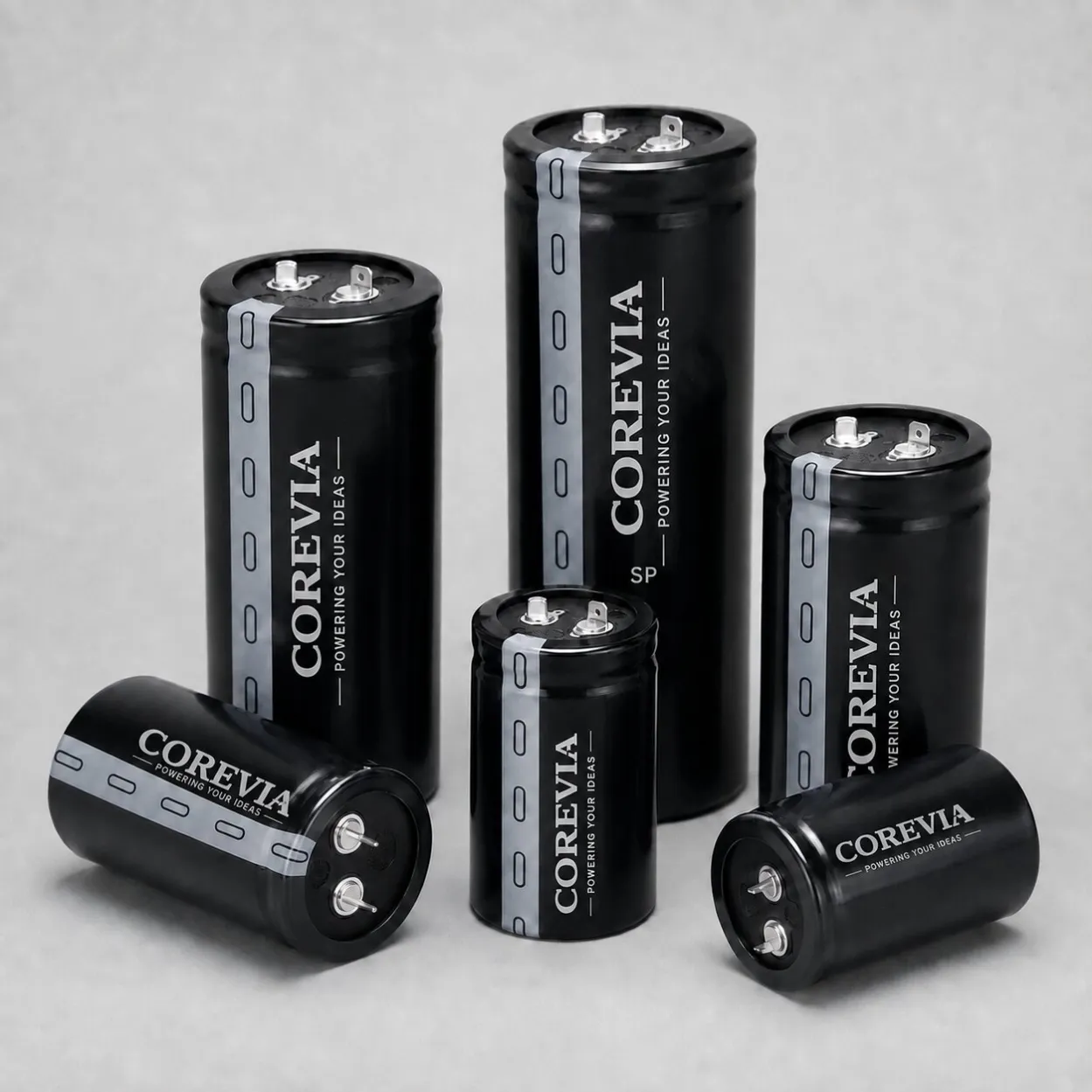
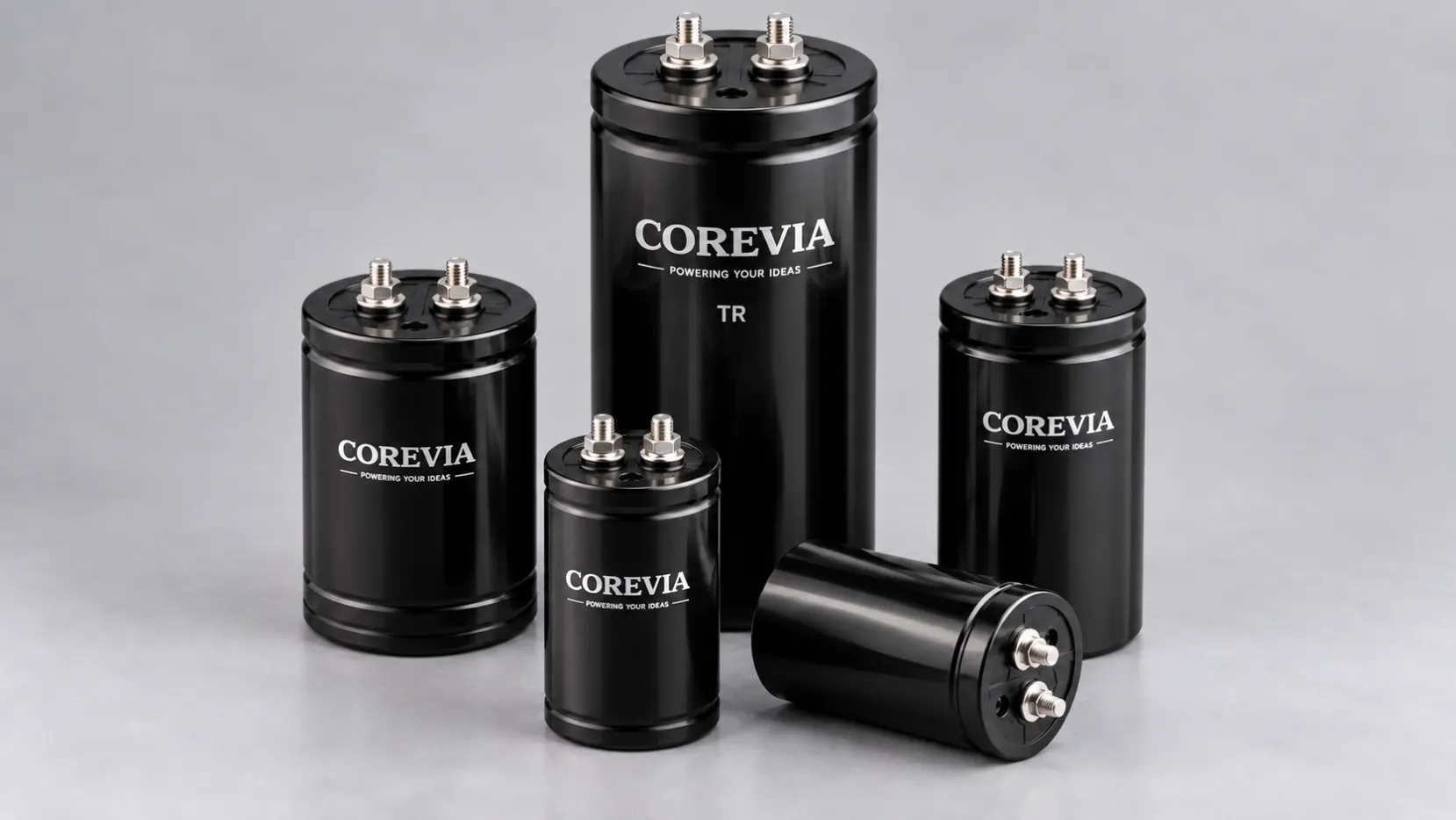
COREVIA offers snap-in and screw-terminal aluminum electrolytic capacitor families for power-electronics selection. Send the proposed part or series, bus-voltage range, peak transient waveform, ripple-current profile, local temperature, capacitance target and mechanical envelope. We can compare those inputs with the exact series datasheet; no general surge allowance should be assumed for every COREVIA part.
FAQ: Can I use surge voltage as a safety margin for a continuously high bus?
No. Size the normal operating voltage against the rated-voltage limit. The surge figure is a separate withstand condition with defined test limits.
FAQ: Is one brief overshoot automatically acceptable?
Not automatically. Its peak, duration and repetition matter, as do the exact part specification and other stresses. Review the measured waveform before approval.
Have a DC-bus voltage trace and a target case size? Send COREVIA the waveform and requirements for a series-specific review.