Oct 16, 2026Buying Guides
How to Qualify an Aluminum Electrolytic Capacitor Supplier
A practical OEM guide to checking aluminum electrolytic capacitor suppliers: supply responsibility, specifications, samples, traceability and quality records.

Two capacitors can show the same voltage, capacitance and case size on a datasheet. That does not tell an OEM whether the delivered parts will match the samples or who will answer a quality question six months later. Supplier qualification should close those gaps before the first production order.
1. Know who controls production
Ask whether you are dealing with a factory, a brand working with manufacturing partners, or a trading company. None of these labels alone proves quality. What matters is who controls the approved specification, production changes, inspection records and response to a problem.
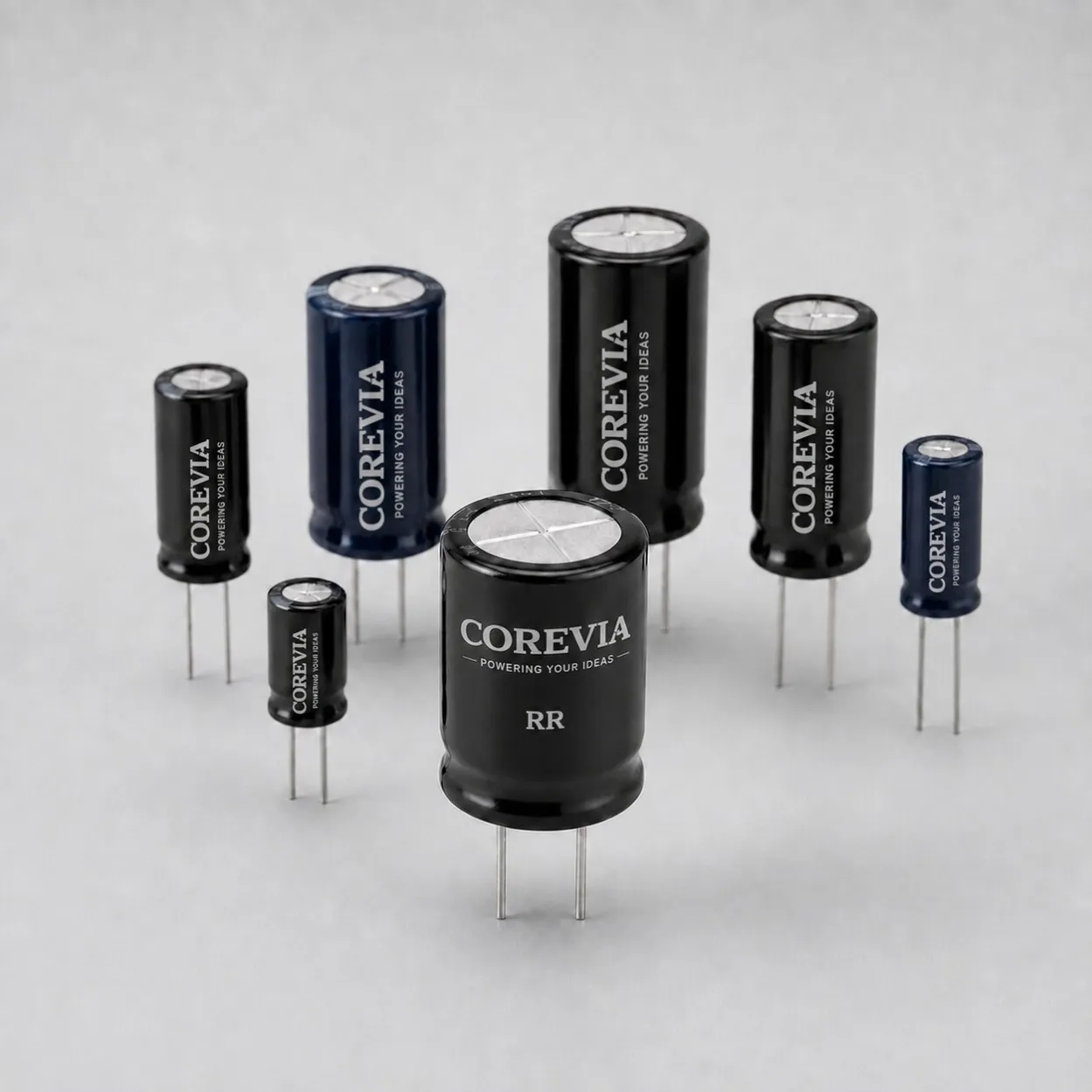
COREVIA is an independent aluminum electrolytic capacitor brand working with manufacturing partners. We can review applications and coordinate specifications, samples and production requirements. Ask us to confirm the production and documentation arrangements for the exact series you need.
2. Freeze the specification you actually approve
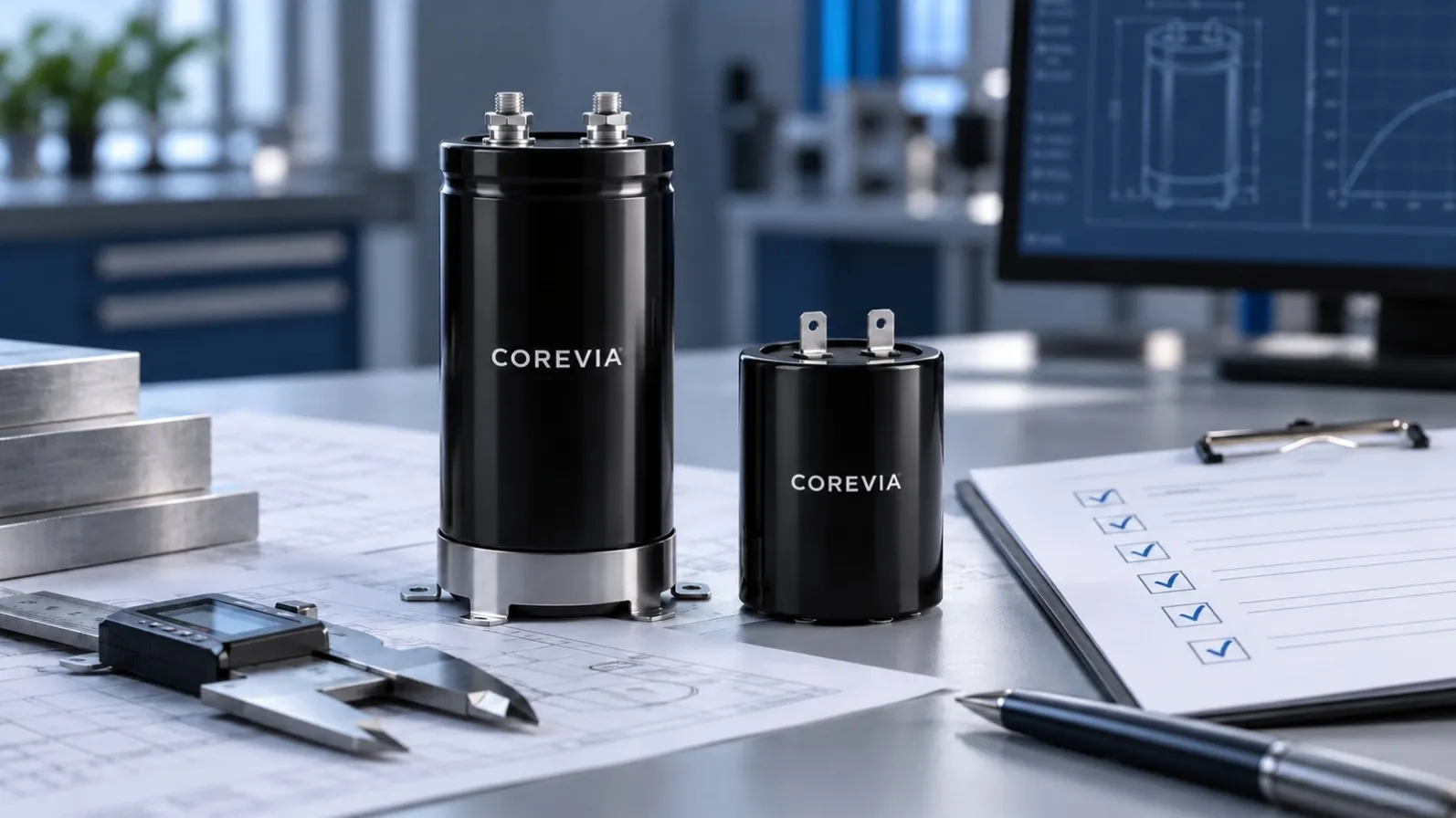
Record the full part number and datasheet revision, not only the capacitance and rated voltage. Confirm case size, terminal style, polarity, mounting, temperature range, ripple-current rating and endurance conditions. For an alternative to an existing model, compare the real operating conditions and mechanical fit before approving it.
Put the approved revision and any special requirements on the purchase order. If a material, process or specification change could affect the approved part, agree how it will be communicated before it reaches production.
3. Test samples in the equipment
A bench reading is a starting point. In a UPS, VFD or inverter, check fit, connection, startup behavior and operating conditions in the actual assembly. Document the sample lot and test conditions. Then agree what evidence will show that later production is consistent with the sample you approved.
4. Ask for useful records
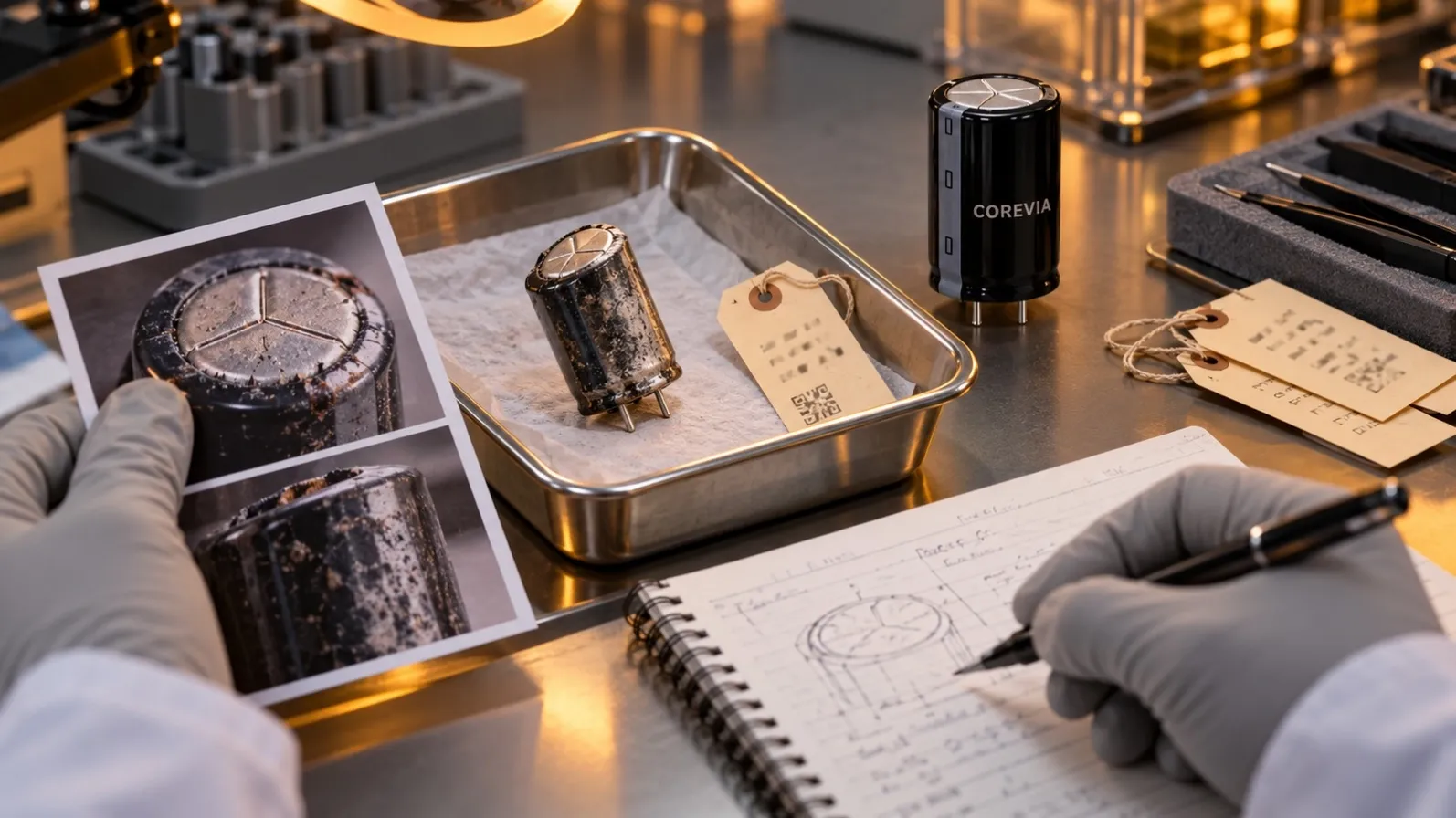
Define the documents your quality team needs: applicable test reports, lot identification, material declarations and shipment records. Availability varies by series and order. Request the list early and obtain written confirmation for the specific product; do not assume every report exists for every model.
5. Make the decision before placing a volume order
Write down the acceptance limits, the person responsible for open questions and the process for handling a nonconforming lot. Confirm quantity, delivery schedule, packaging and commercial terms on the quotation or proforma invoice. Lead time should be confirmed against the actual model and order, not a generic promise.
A good supplier review is straightforward: know who is responsible, know exactly what you approved, and know how to check the parts you receive.
For a COREVIA application review, send the existing part number or your voltage, capacitance, dimensions, terminal type, application and annual quantity. We will discuss the suitable aluminum electrolytic capacitor option and what can be documented for your project.