Sep 12, 2026Reliability Engineering
A Capacitor That Leans: What Slight Bottom Bulging Can Tell You
A practical case study showing how a slight bottom bulge and an unstable, leaning capacitor can provide an early warning before rupture.

A capacitor does not need to burst or leak before it tells us something is wrong.
In this customer case, the bottom of the aluminum electrolytic capacitor had only risen slightly. There was no open vent, no split metal and no visible electrolyte leakage. The most obvious clue was much simpler: when the capacitor was placed on a flat surface, it no longer stood straight.
That small lean matters.
What the Lean Tells Us
A healthy capacitor should sit steadily when its base is designed to be flat. If the bottom becomes slightly convex, the contact area shifts toward the center or one edge. The component may rock or lean even though the deformation is difficult to see from the side.
This is useful during inspection because instability can reveal an early mechanical change before severe damage appears.
However, the shape alone does not prove one specific root cause. Slight bottom bulging is a warning signal. The electrical, thermal and installation conditions still need to be checked.
Why Can the Bottom Rise Slightly?
One possible mechanism is a gradual increase in internal pressure. Electrical or thermal stress can cause the electrolyte system to generate gas. Because the capacitor is sealed, that gas can place force on the internal sealing and pressure-relief structure.
At an early stage, the result may be only a small change in the base profile. The capacitor has not ruptured, but its geometry is no longer normal.
External mechanical stress can produce a similar appearance. Excessive clamp pressure, an uneven mounting surface or force applied during assembly may deform the can or bottom structure. This is why visual evidence must be compared with the installation condition.
Before concluding that the capacitor itself is defective, also confirm the manufacturer's original bottom design. Some constructions are not perfectly flat, so comparison with an unused part of the same model is valuable.
A Practical Inspection Sequence
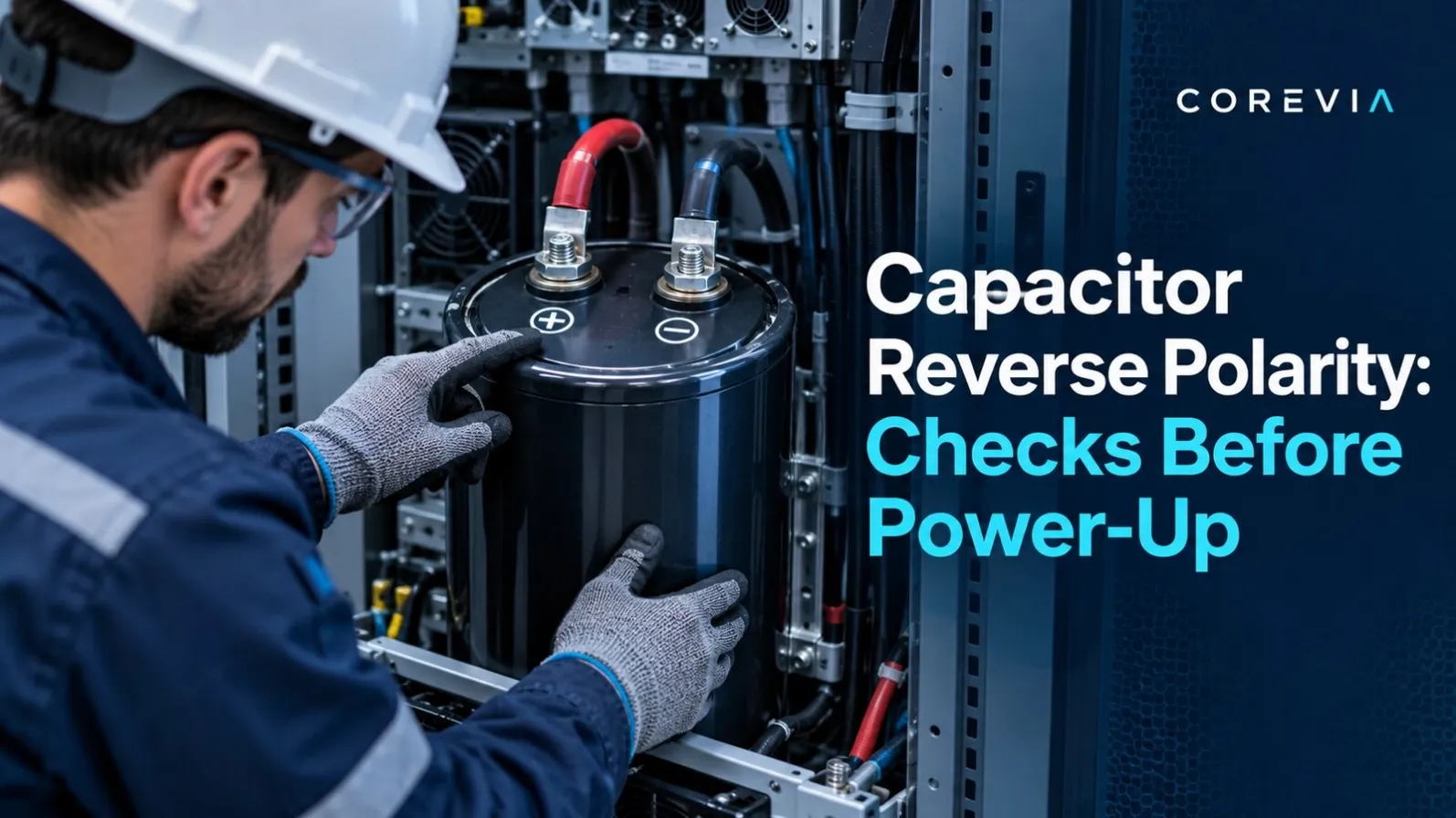
Isolate and discharge the equipment safely before touching the capacitor.
Place the removed capacitor on a known flat surface. Check whether it stands steadily, rocks or leans.
Compare the bottom profile with a new capacitor of the same model or with the manufacturer's mechanical drawing.
Look for supporting evidence such as seal movement, electrolyte residue, corrosion, unusual odor or discoloration.
Review the actual operating voltage and polarity. A nameplate rating alone does not show what the capacitor experienced in the circuit.
Check ripple-current conditions and case temperature under the real load. Abnormal internal heating may exist even when the ambient temperature appears acceptable.
Inspect cooling, airflow, spacing and nearby heat sources.
Check the mounting clamp and base support. The capacitor should not be distorted by mechanical preload.
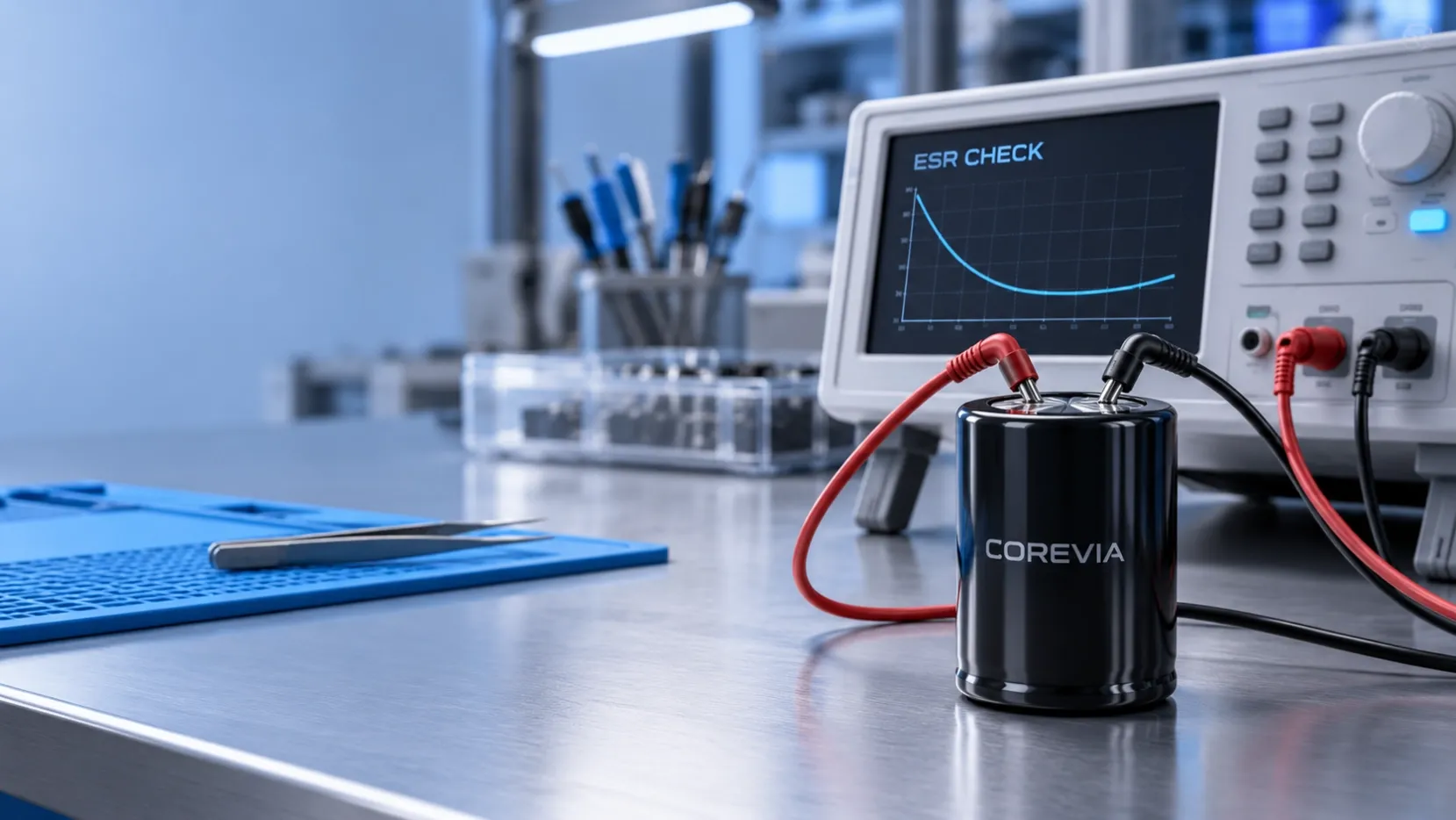
Evaluate capacitance, ESR and leakage current using the appropriate test method and compare the results with the manufacturer's limits.
Do Not Replace and Restart Without Checking
Installing a new capacitor may restore operation temporarily, but it does not explain why the original part changed shape.
If the actual cause is overvoltage, incorrect polarity, excessive ripple, abnormal temperature, poor cooling or mechanical stress, the replacement may develop the same problem.
The more useful question is not only, “Which capacitor should we install?”
It is also, “What condition caused the bottom to move?”
When Should the Capacitor Be Removed From Service?
A new or increasing bulge, unstable mounting, abnormal temperature, leakage or electrical-parameter drift should be treated seriously. Do not press the bottom flat or continue operating the component simply because it has not opened.
Follow the equipment manufacturer's safety procedure and obtain a qualified technical assessment.
The Practical Lesson
A slight lean can be more than a mechanical inconvenience. It may be the earliest visible sign of a change inside the capacitor or around its mounting.
Good failure analysis starts by noticing small details, documenting the operating conditions and separating the visible symptom from the real cause.
Need help reviewing an aluminum electrolytic capacitor application or failure sample?
Contact COREVIA with the capacitor model, equipment type, operating voltage, load information, measured temperature, installation photos and failure history.
COREVIA | Aluminum Electrolytic Capacitor Solutions