What Should a Screw-Terminal DC-Link Capacitor RFQ Include?
Preparing a screw-terminal DC-link capacitor RFQ? Send electrical duty, temperature, mechanical drawings and purchase scope for a useful COREVIA review.
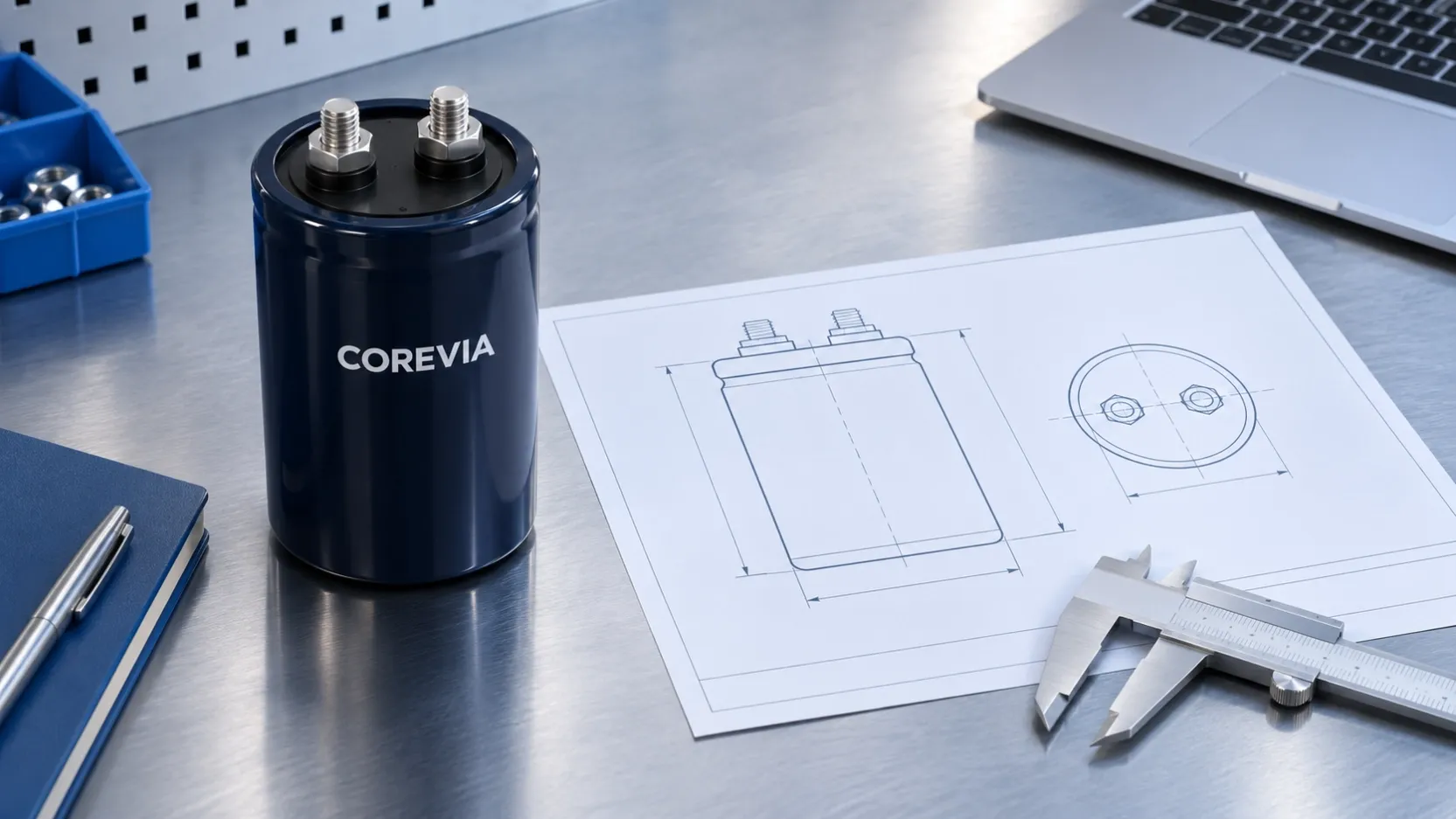
Send the electrical duty, mechanical drawing, operating conditions and purchasing scope together. For a screw-terminal DC-link capacitor RFQ, state the required capacitance and voltage, measured or calculated ripple-current profile, local temperature, available space, terminal and mounting layout, quantity, and the exact application. A part number alone can start a conversation, but it rarely explains the full inverter design.
Which electrical details belong in the RFQ?
Begin with the DC bus operating range, including the maximum voltage the capacitor will see in normal operation. State the capacitance target or the circuit requirement used to derive it. Include ripple current as a frequency and operating-condition profile when available, because a single unqualified current figure can hide the actual heating duty. Tell the supplier whether the capacitor is used alone or in a bank, and describe the intended service conditions. The final choice must be checked against the datasheet for the exact COREVIA series and part.
| RFQ field | What to provide | Why it matters |
|---|---|---|
| Electrical duty | DC bus voltage range, capacitance target, ripple-current profile and duty cycle | Allows review against the exact series ratings and application conditions |
| Thermal environment | Measured or expected temperature near the capacitor, enclosure and cooling description | Identifies the actual operating environment rather than room temperature alone |
| Mechanical fit | Allowed can diameter and height, terminal spacing, connection drawing and mounting method | Checks fit, connection and support before a part is proposed |
| Purchasing scope | Prototype and production quantities, destination and requested documentation | Lets the quote address the relevant order and paperwork |
What drawings and installation details prevent a mismatch?
Attach the capacitor location drawing and the connection or busbar drawing. Identify the available height and diameter, terminal orientation, insulation and body support. Where vibration is relevant, describe the equipment and mounting arrangement. A mechanically compatible can does not by itself establish electrical suitability, and an electrically suitable part may still need a different mounting arrangement.
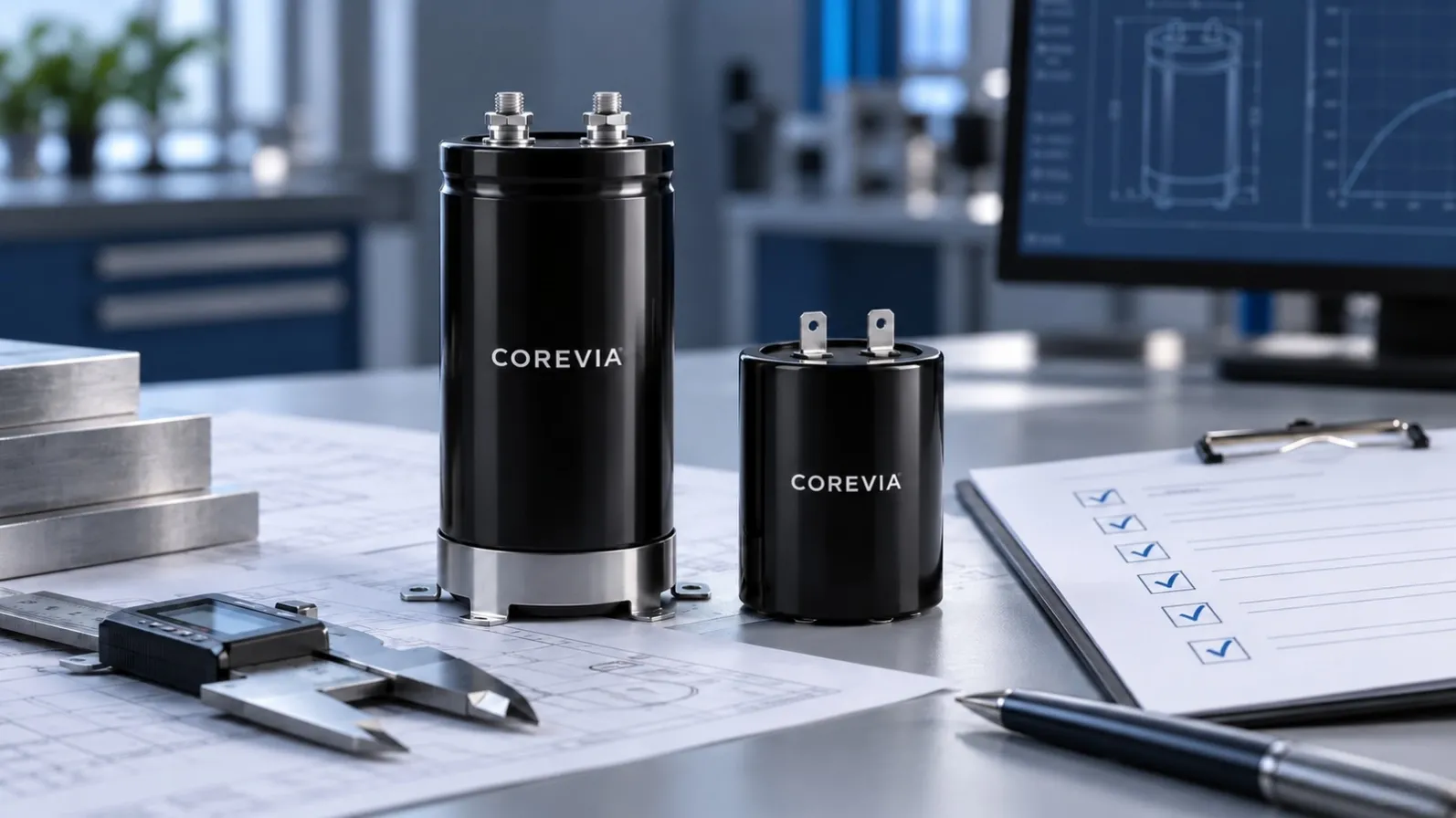
Use the COREVIA screw-terminal capacitor range as a starting point, then request the drawing and datasheet for the specific series under review. If the design instead uses PCB-mounted terminals, review the COREVIA snap-in range separately; the mounting format changes the mechanical review.
How should you send a quote-ready request?
Put the requirements in one revision-controlled document and mark any unknown items as “to be confirmed.” Separate mandatory limits from preferences, such as a preferred outline. If the project involves an existing assembly, include a photo and drawing of the installed part and explain which dimensions and performance requirements must be retained. Ask for the exact proposed COREVIA part number, matching datasheet, drawing and any open technical questions in the response.
For a faster engineering review, send your RFQ, electrical duty and mounting drawing through the COREVIA contact page. We can review an appropriate COREVIA series against the information provided; final approval remains with the application design and its validation.
FAQ
Is capacitance and voltage enough to request a replacement?
Usually not. Ripple duty, temperature, dimensions, terminal layout and mounting also affect whether a proposed part fits the application.
What if ripple-current measurements are not ready?
Send the available circuit model, switching conditions and duty cycle, and clearly label the ripple figure as an estimate. Confirm it on the actual equipment before final approval.
Should the RFQ include a target delivery date?
Yes. State the requested sample and production dates as requirements for the quotation. Do not treat an unconfirmed date as a supplier commitment.